 flip
flipOfe Egusi and utara ji (egusi soup, pounded yam)
Ofe Egusi and utara ji (egusi soup, pounded yam)
Why this dish? Achebe's profile says his table mixed yams, cassava, and spicy egusi soups with fish or meat. Egusi is THE Igbo celebration soup, the one for large household gatherings in Ogidi, his home village, where yam was king — the yam his novels celebrate as the crop of men.
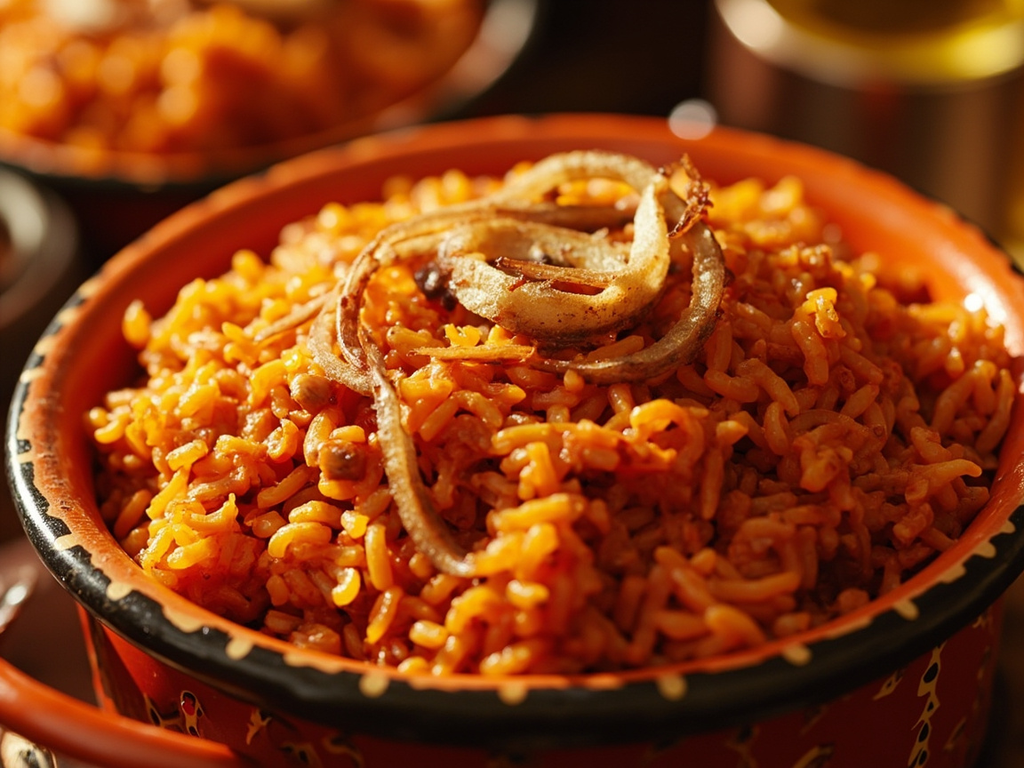
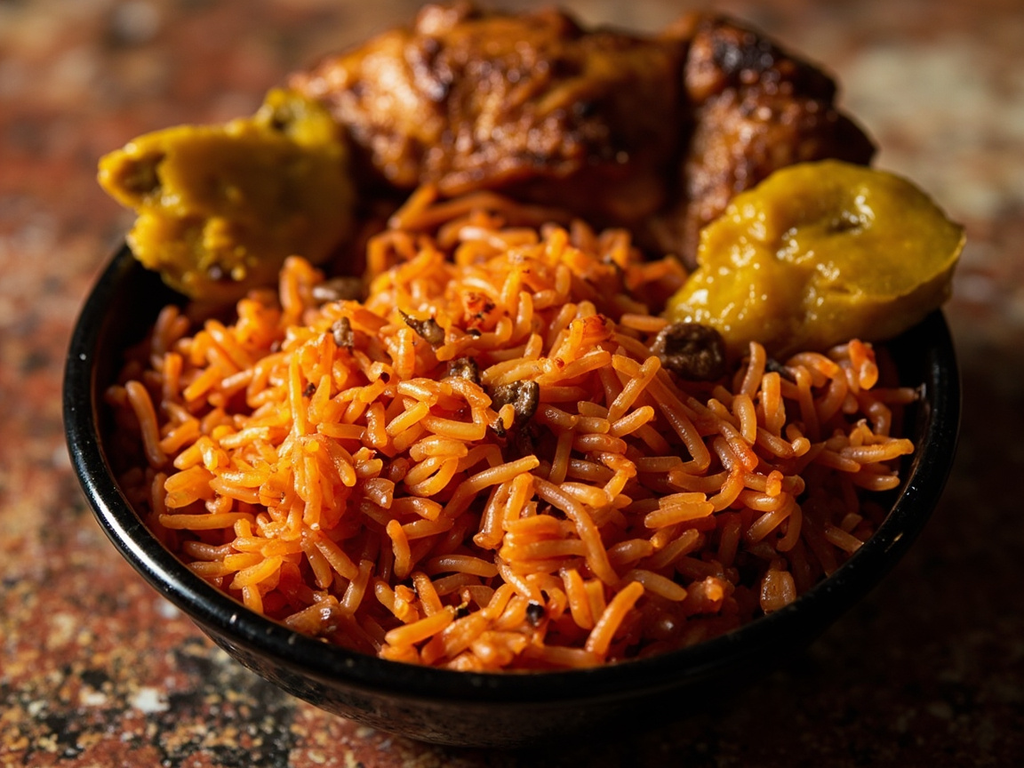
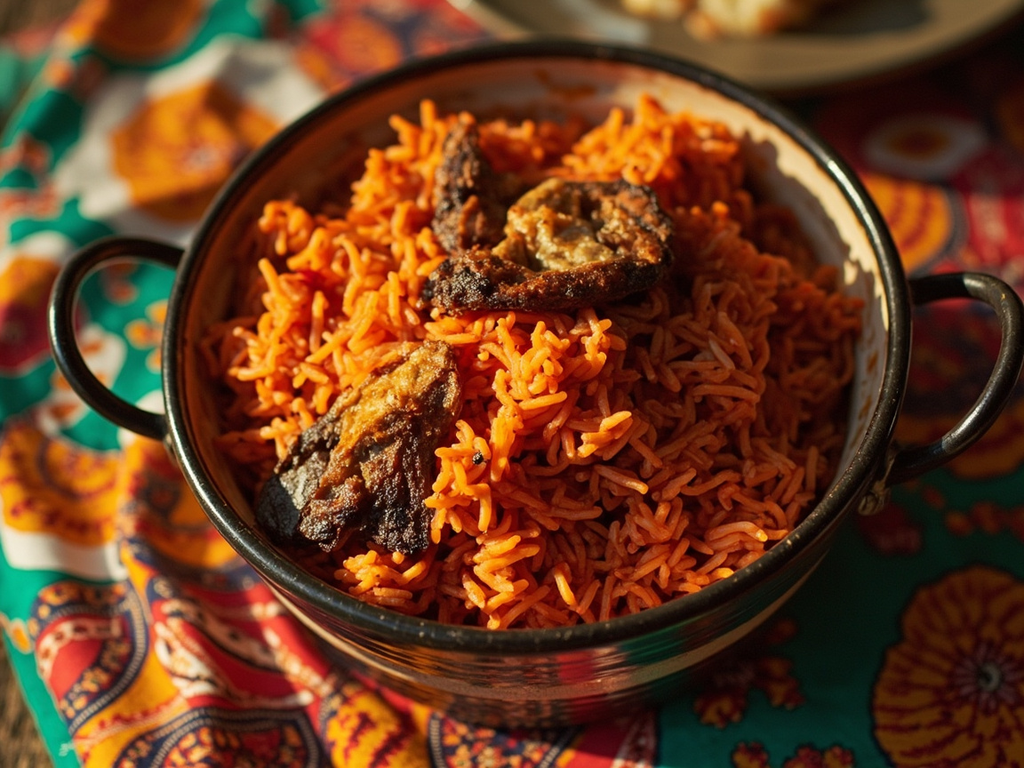
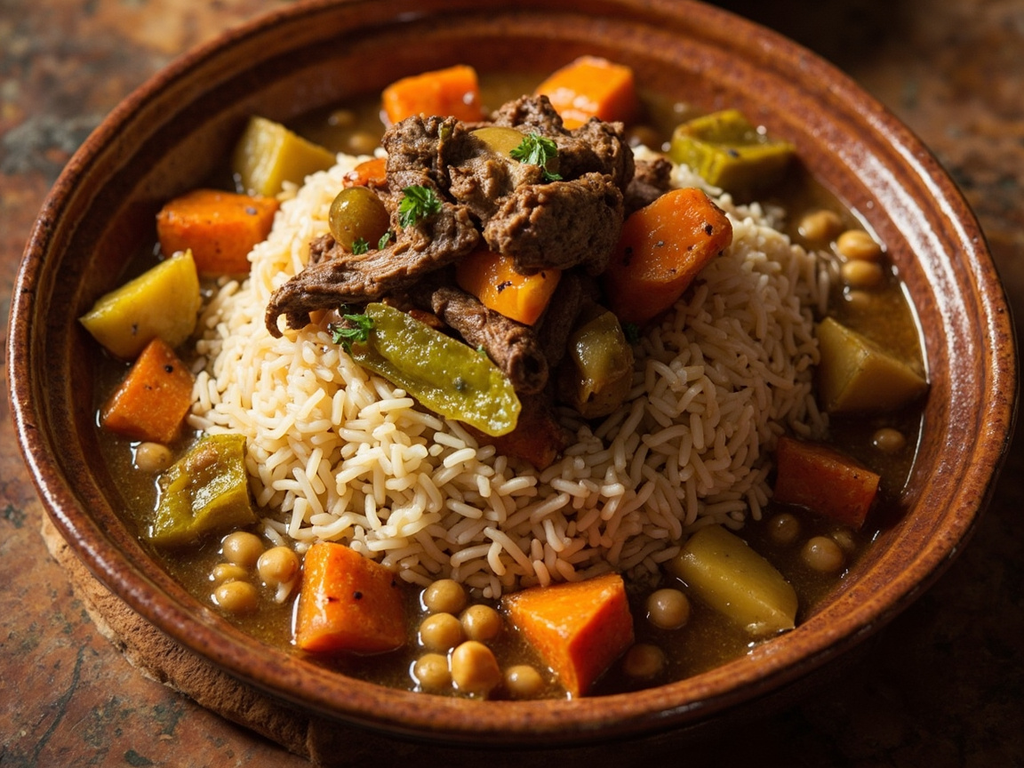
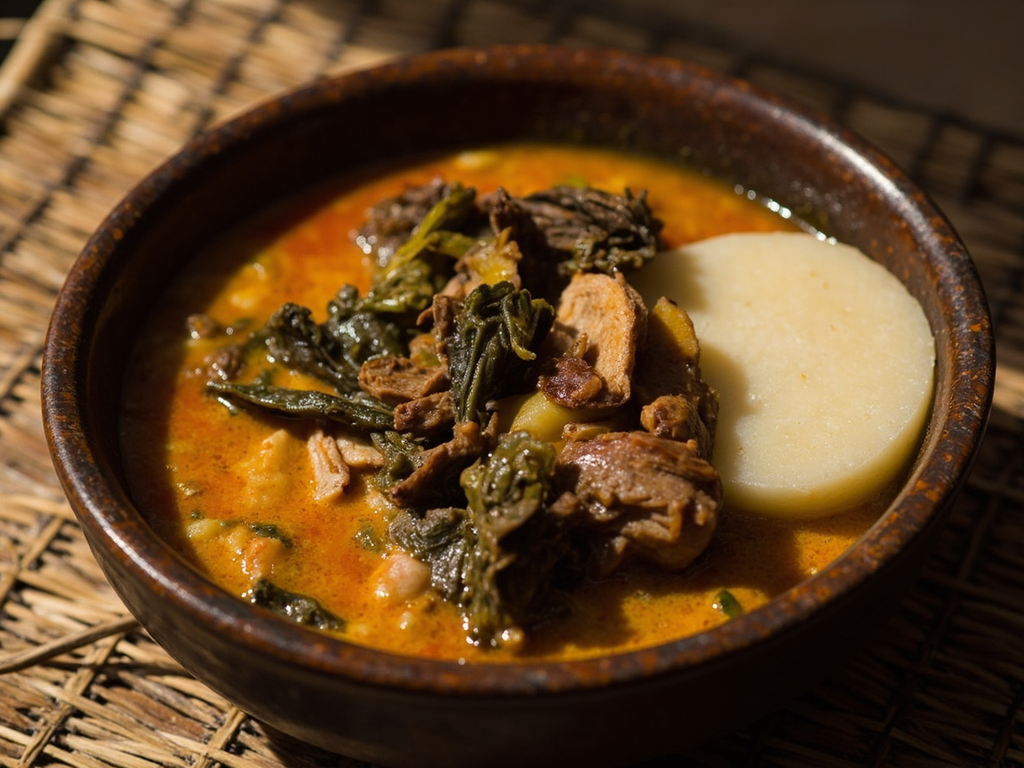
A thick, golden soup of ground melon seeds, bound with red palm oil and dotted with green leaves, garnished with smoked fish and meat. It is eaten by pinching a piece of pounded yam and dipping it into the steaming soup.
Come, sit down: among us, a guest is never left with an empty mouth. You see this egusi soup? My mother would grind the melon seeds in the mortar until they became flour, then let them bloom in red palm oil like flowers. They say yam is the king of crops, and a king deserves a worthy cloak — this is that cloak. Take the utara with your right hand, dip it well, and don't blow too hard: the heat of a good soup is worth a good word.
- •Dried egusi (melon) seeds — two good handfuls (thickener and umami base of the soup)
- •Red palm oil — one ladle (fat and color)
- •Smoked fish and goat meat — according to household (protein garnish)
- •Bitter green leaves (ugu, or amaranth leaves) — a large bunch (greens)
- •Fresh chili and onion — to taste (heat and base)
- •Dried shrimp and dried fish — a handful (umami depth)
- •Yams — according to guests (to pound into fufu (utara ji))
Ofe Egusi and utara ji (egusi soup, pounded yam)
A thick, golden soup of ground melon seeds, bound with red palm oil and dotted with green leaves, garnished with smoked fish and meat. It is eaten by pinching a piece of pounded yam and dipping it into the steaming soup.
Why this dish? Achebe's profile says his table mixed yams, cassava, and spicy egusi soups with fish or meat. Egusi is THE Igbo celebration soup, the one for large household gatherings in Ogidi, his home village, where yam was king — the yam his novels celebrate as the crop of men.
Come, sit down: among us, a guest is never left with an empty mouth. You see this egusi soup? My mother would grind the melon seeds in the mortar until they became flour, then let them bloom in red palm oil like flowers. They say yam is the king of crops, and a king deserves a worthy cloak — this is that cloak. Take the utara with your right hand, dip it well, and don't blow too hard: the heat of a good soup is worth a good word.
Ingredients (period version)
- Dried egusi (melon) seeds — two good handfuls (thickener and umami base of the soup)
- Red palm oil — one ladle (fat and color)
- Smoked fish and goat meat — according to household (protein garnish)
- Bitter green leaves (ugu, or amaranth leaves) — a large bunch (greens)
- Fresh chili and onion — to taste (heat and base)
- Dried shrimp and dried fish — a handful (umami depth)
- Yams — according to guests (to pound into fufu (utara ji))
Ingredients
- Ground egusi seeds — 250 g (thickener and soup base)
- Red palm oil — 120 ml (fat and color)
- Beef or goat strips — 400 g (meat)
- Smoked fish (mackerel or catfish) — 200 g (smoked garnish)
- Spinach or amaranth leaves — 300 g (greens)
- Dried shrimp powder — 2 tbsp (umami)
- Onion, scotch bonnet chili, bouillon cube — 1 onion, 1 chili, 1 cube (seasoning)
- White yams (or plantains if unavailable) — 1 kg (fufu)
Method
- Cook the meat with chopped onion, a little salt, and the bouillon cube in a bit of water until tender; reserve the broth.
- Mix the ground egusi with a little water to form a thick paste.
- Heat the palm oil in a pot, drop the egusi paste in small lumps and let it set for a few minutes without stirring too much.
- Add the meat broth, meat, flaked smoked fish, shrimp powder, and chili; simmer for 20 minutes until the oil rises.
- Stir in the green leaves at the end, 3 to 4 minutes; adjust salt.
- For utara: peel and boil the yams, then pound (or blend) into a smooth, elastic ball.
- Serve the steaming soup alongside a ball of pounded yam; eat with the right hand, dipping each bite.
How it was made : Before electric mills, egusi seeds were ground on a stone or in a mortar, and yam was pounded for hours by two people in a large wooden mortar — a rhythmic task that marked life in Igbo compounds. Red palm oil was pressed in the village itself.
The contemporary twist : Shape the yam ball with a hollow on top and pour the soup into it: an 'egusi volcano' that makes an impression at the table.
Sources : Chinua Achebe, Things Fall Apart (1958) — yam culture and Igbo compound meals
Chinua Achebe · Charactorium