 flip
flipEingelegter Hering — Dutch-style marinated herring
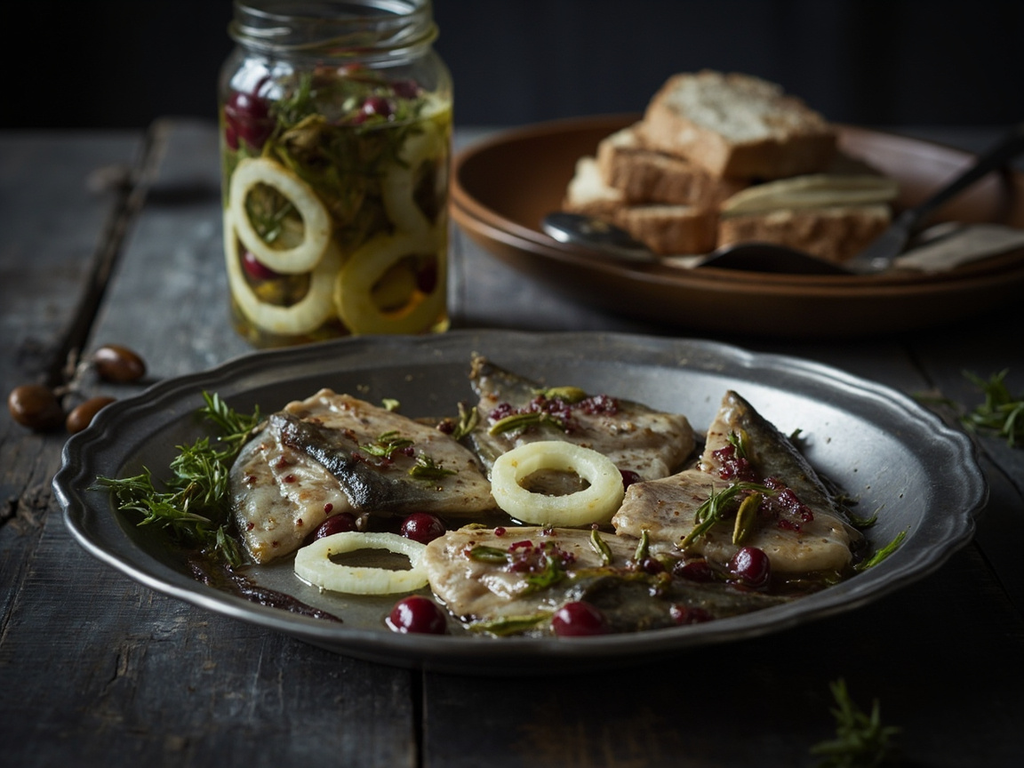
Eingelegter Hering — Dutch-style marinated herring
Why this dish? In his diary of the journey to the Netherlands (1520–1521), Dürer notes with relish the oysters and sea fish he receives and eats. Salted then marinated herring was the heart of Dutch commerce and the most widespread preserved fish in Northern Europe.
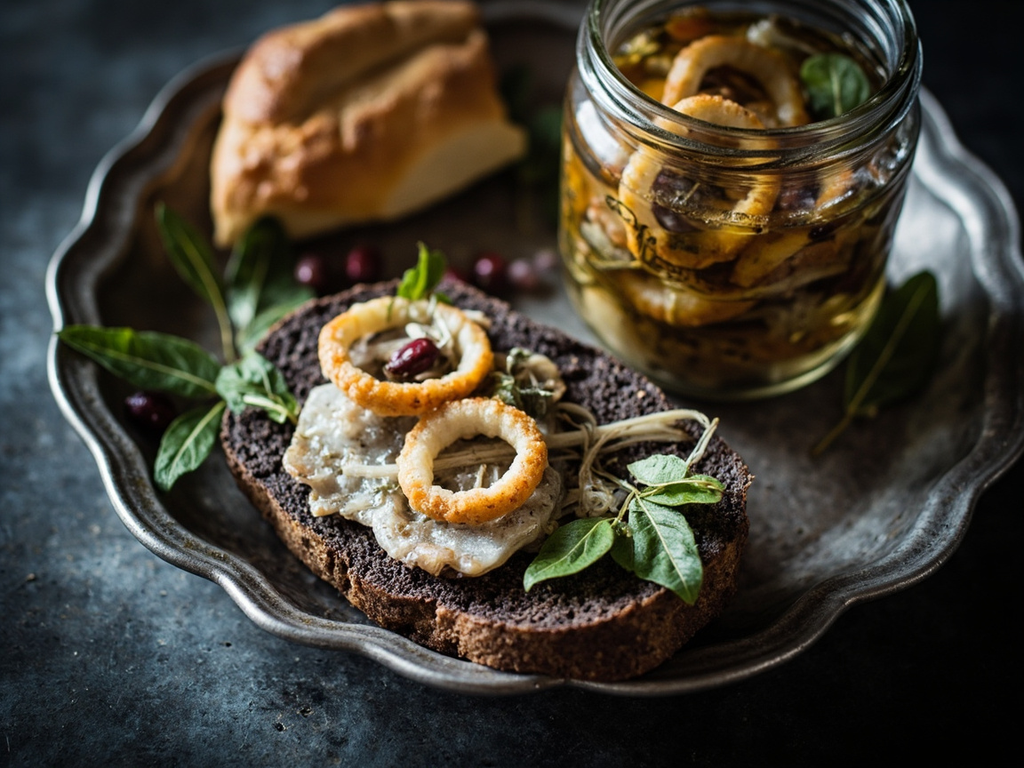
Desalted herring fillets marinated in vinegar with onion, juniper berries, and bay leaf. A tangy, briny preserve that keeps cool and is eaten with rye bread.
In Brabant, I ate sea fish such as I had never tasted, and oysters that amazed me — I recorded it in my travel book, for such things deserve to be remembered. The herring, they salt it right after the catch and then lay it in vinegar with onion and juniper: thus it lasts through winter without spoiling. A fillet on rye bread, and there is an honest and tasty Lenten meal.
- •Salt herrings — a few (preserved fish)
- •Vinegar — enough to cover (marinade and preservation)
- •Onions — in rings (aromatic)
- •Juniper berries — a pinch (northern flavor)
- •Bay leaves — a few (aromatic)
- •Peppercorns — a pinch (spice)
Eingelegter Hering — Dutch-style marinated herring
Desalted herring fillets marinated in vinegar with onion, juniper berries, and bay leaf. A tangy, briny preserve that keeps cool and is eaten with rye bread.
Why this dish? In his diary of the journey to the Netherlands (1520–1521), Dürer notes with relish the oysters and sea fish he receives and eats. Salted then marinated herring was the heart of Dutch commerce and the most widespread preserved fish in Northern Europe.
In Brabant, I ate sea fish such as I had never tasted, and oysters that amazed me — I recorded it in my travel book, for such things deserve to be remembered. The herring, they salt it right after the catch and then lay it in vinegar with onion and juniper: thus it lasts through winter without spoiling. A fillet on rye bread, and there is an honest and tasty Lenten meal.
Ingredients (period version)
- Salt herrings — a few (preserved fish)
- Vinegar — enough to cover (marinade and preservation)
- Onions — in rings (aromatic)
- Juniper berries — a pinch (northern flavor)
- Bay leaves — a few (aromatic)
- Peppercorns — a pinch (spice)
Ingredients
- Salt herring fillets — 4 (preserved fish)
- Cider or white wine vinegar — 250 ml (marinade and preservation)
- Water — 150 ml (to mellow the marinade)
- Onion — 1 large, thinly sliced (aromatic)
- Juniper berries — 1 teaspoon (northern flavor)
- Bay leaves — 2 (aromatic)
- Peppercorns — 1 teaspoon (spice)
- Honey or sugar — 1 teaspoon (balance acidity)
Method
- Desalt the herring fillets in cold water for 2–3 hours, changing the water; drain well.
- Gently warm the vinegar with water, honey, juniper, bay leaves, and peppercorns, then let cool.
- Cut the fillets into pieces, layer in a jar alternating with onion rings.
- Pour the cold marinade over, seal, and refrigerate for at least 48 hours.
- Serve cold on buttered rye bread.
How it was made : Before refrigeration, salting herring at sea (a technique perfected by the Dutch in the 15th century) revolutionized Northern European diets. The fish, salted and then often re-marinated in vinegar on land, was an essential preserved protein, especially valuable on lean days imposed by the religious calendar.
The contemporary twist : Serve it as an open-faced sandwich on rye bread, with sour cream and dill, 'smørrebrød' style — the medieval preserve reimagined as an appetizer bite.
Albrecht Dürer · Charactorium