 flip
flipFeijoada (black beans and Sunday meats)
Feijoada (black beans and Sunday meats)
Why this dish? Her anchor says she especially enjoyed meals shared with her close family: feijoada is, par excellence, the Brazilian dish of the table, of the slow, collective Sunday, in Rio where she lived.
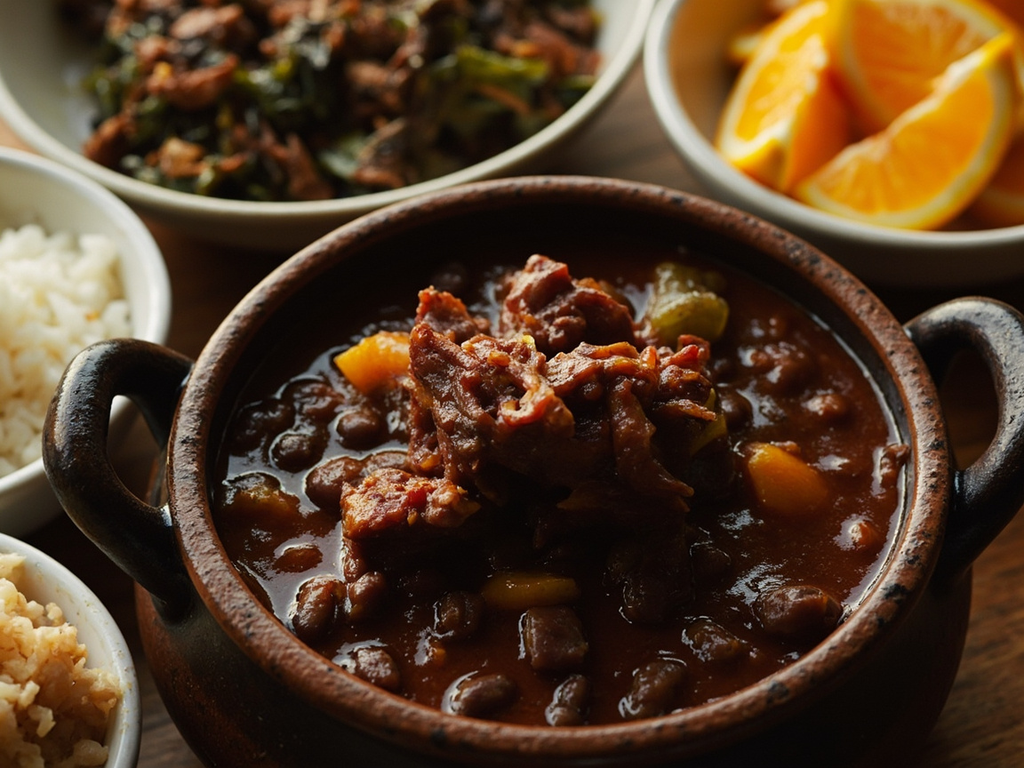
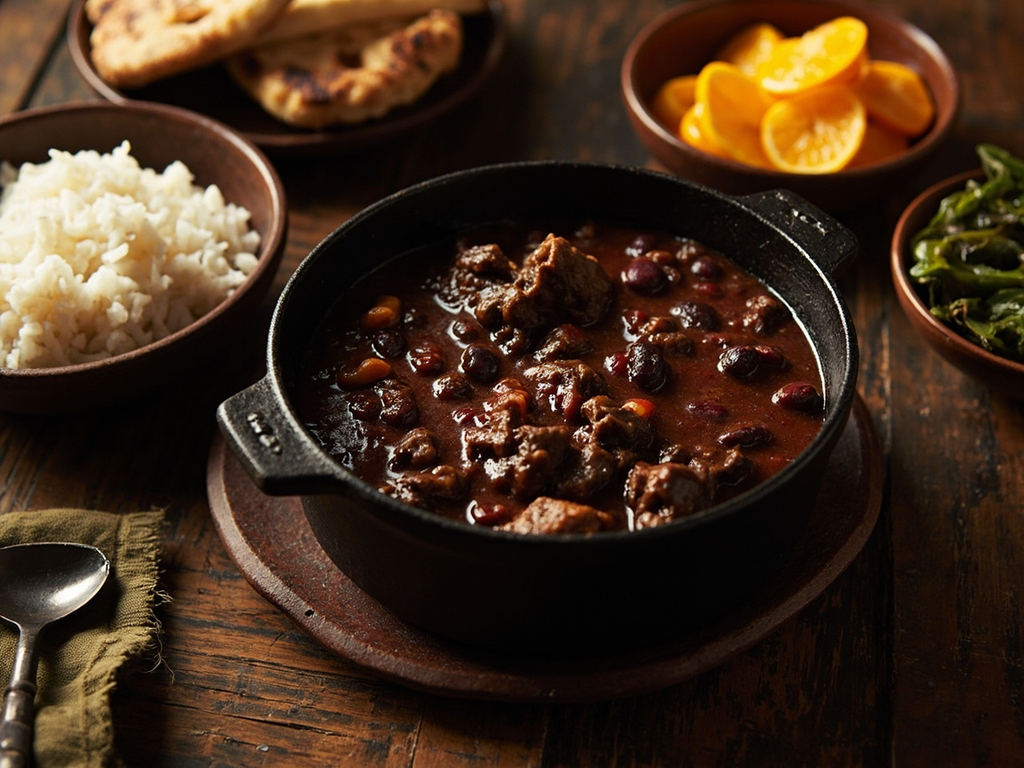
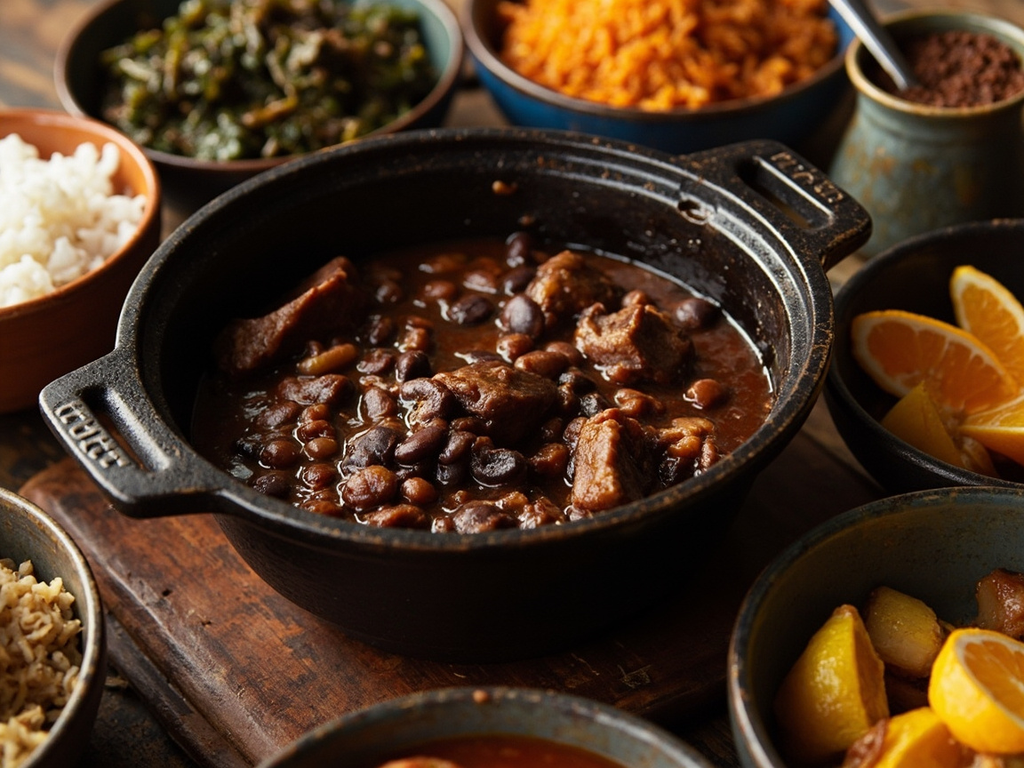
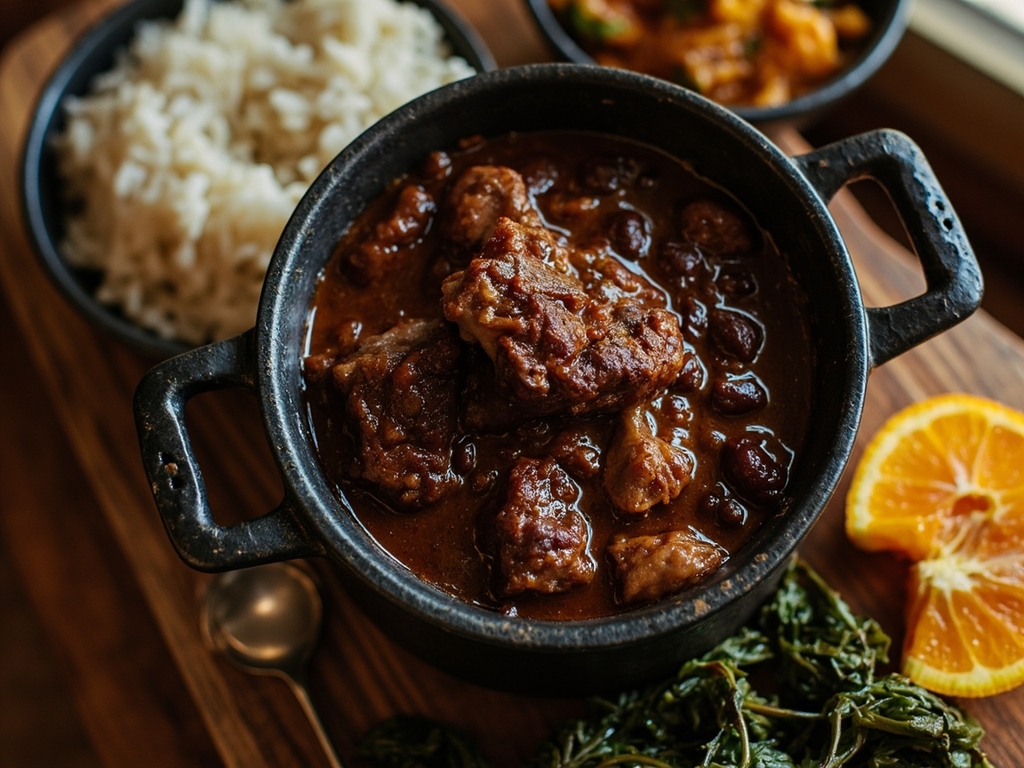
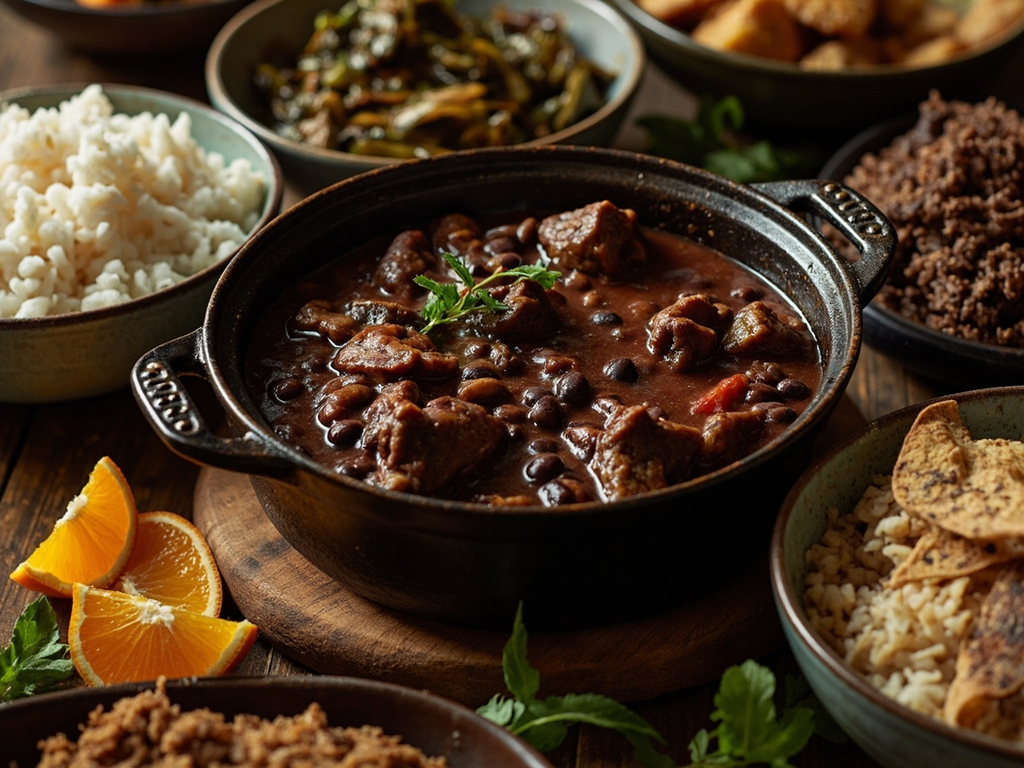
A dark, deep stew of black beans and pork pieces simmered for hours, served with rice, shredded collard greens, farofa, and orange slices. Brazil's celebration dish.
On Sunday, the pot commands the house. The black beans and meats have been simmering since morning, and the whole room fills with a grave, patient, almost maternal smell. I put the orange on the side, because an acidic brightness is needed to cut through so much depth. One does not eat feijoada quickly: we sit, we talk, we let time thicken like the broth. It is a dish that demands we be together.
- •Dried black beans — a large measure (base)
- •Pork pieces (shoulder, ribs, ear, trotter) — generous assortment (meats)
- •Dried/smoked meats (carne-seca, paio, linguiça) — according to availability (umami and smoky)
- •Garlic, onion, bay leaf — generously (aromatics)
- •Orange — a few (acidic accompaniment)
- •Manioc flour — for farofa (accompaniment)
Feijoada (black beans and Sunday meats)
A dark, deep stew of black beans and pork pieces simmered for hours, served with rice, shredded collard greens, farofa, and orange slices. Brazil's celebration dish.
Why this dish? Her anchor says she especially enjoyed meals shared with her close family: feijoada is, par excellence, the Brazilian dish of the table, of the slow, collective Sunday, in Rio where she lived.
On Sunday, the pot commands the house. The black beans and meats have been simmering since morning, and the whole room fills with a grave, patient, almost maternal smell. I put the orange on the side, because an acidic brightness is needed to cut through so much depth. One does not eat feijoada quickly: we sit, we talk, we let time thicken like the broth. It is a dish that demands we be together.
Ingredients (period version)
- Dried black beans — a large measure (base)
- Pork pieces (shoulder, ribs, ear, trotter) — generous assortment (meats)
- Dried/smoked meats (carne-seca, paio, linguiça) — according to availability (umami and smoky)
- Garlic, onion, bay leaf — generously (aromatics)
- Orange — a few (acidic accompaniment)
- Manioc flour — for farofa (accompaniment)
Ingredients
- Dried black beans — 500 g (soaked overnight) (base)
- Pork shoulder + spare ribs — 600 g (meats)
- Dried beef (carne-seca), desalted — 300 g (umami)
- Smoked sausages (paio / linguiça) — 300 g (smoky)
- Smoked bacon — 150 g (fat base)
- Garlic / onion — 6 cloves / 2 onions (aromatics)
- Bay leaf — 2 leaves (aromatic)
- Oranges — 3, sliced (acidic accompaniment)
- Manioc flour + collard greens + rice — garnishes (accompaniments)
Method
- Desalt the carne-seca by soaking it several hours, changing the water; soak the beans overnight.
- Put the beans to cook in a large pot with the bay leaf and the longest-cooking meats (carne-seca, ribs, bacon).
- After 1 h, add the sausages and shoulder; let simmer until everything is meltingly tender (2 to 3 h total), the broth thick and dark.
- Prepare a refogado of garlic and onion, stir in a ladleful of mashed beans to bind.
- Serve with white rice, collard greens (shredded and sautéed with garlic), farofa (manioc flour toasted in butter), and orange slices.
How it was made : Feijoada established itself as a national dish in the 19th-20th centuries, simmered all morning in a large cast-iron pot on a wood stove. The rice, collard greens, farofa, and orange are not decorative: they balance the richness of the stew — the orange even aids digestion.
The contemporary twist : Serve it 'carioca style': the black pot in the center of the table, and let everyone compose their own plate — conviviality before plating.
Sources : Luís da Câmara Cascudo, História da Alimentação no Brasil · Câmara Cascudo, Antologia da Alimentação no Brasil
Clarice Lispector · Charactorium