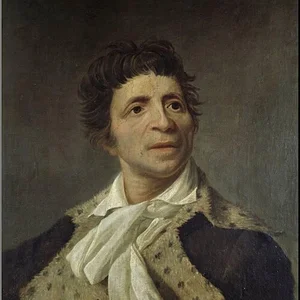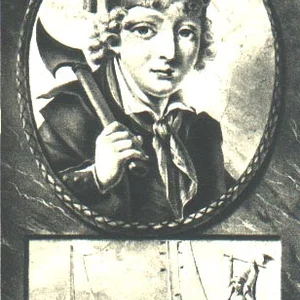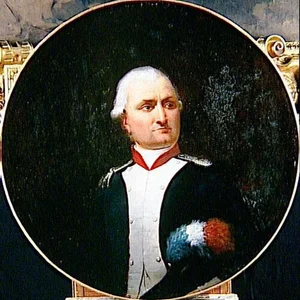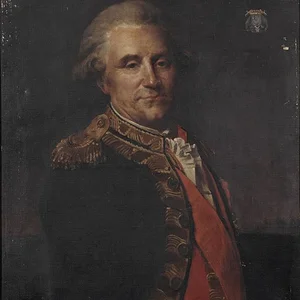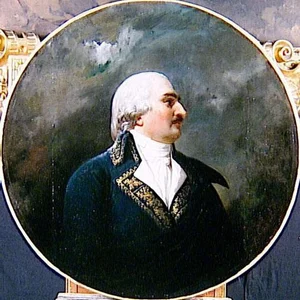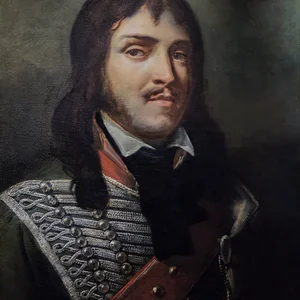

A general of the French Revolution, Marceau enlisted at 16 and became one of the youngest generals of the Republic. A hero of the pacification of the Vendée and the Rhine campaigns, he died in battle at 27 in 1796, embodying the ideal of the republican soldier.
François Séverin Marceau(1769 — 1796)
François Séverin Marceau
France
8 min read
Frequently asked questions
Key Facts
- 1769: Born in Chartres on March 1st
- 1785: Enlisted as a soldier at 16 in an infantry regiment
- 1793: Decisive role in the War in the Vendée, notably at the Battle of Savenay
- 1795–1796: Commanded the Army of Sambre-et-Meuse on the Rhine front
- 1796: Died in battle at Altenkirchen (Germany) on September 21st, aged 27
Works & Achievements
Marceau commanded the republican columns that defeated the Catholic and Royal Army at the battles of Le Mans (December 1793) and Savenay. This decisive campaign saved the Republic from a major internal threat at a time when it was also facing the European coalition.
Marceau took part in this decisive victory of the Army of Sambre-et-Meuse against the Austrians in the Low Countries, which opened the road to Belgium and durably strengthened the Republic's military position on the northeastern front.
Leading several corps of the Army of Sambre-et-Meuse, Marceau conducted offensive operations in the Rhineland against Archduke Charles. These campaigns helped pin down the Austrian armies while Bonaparte was operating in Italy.
Marceau wrote numerous official reports on his operations, demonstrating his mastery of tactical organization. These documents, preserved in the French National Archives, constitute a valuable primary source for the military history of the Revolution.
Anecdotes
Enlisted as a common soldier at 16 in the Beauce regiment in 1785, Marceau rose through every rank in less than a decade on merit alone. In 1793, at just 24, he was appointed divisional general — a spectacular rise that embodied the revolutionary meritocracy, where talent now outweighed noble birth.
During the War in the Vendée in 1793, Marceau distinguished himself not only by his battlefield courage but also by his refusal to allow the summary execution of prisoners. Unlike some colleagues who favored brutal methods, he insisted that captives be treated humanely — earning him a reputation for chivalrous honor even among his Royalist adversaries.
At the Battle of Le Mans in December 1793, Marceau commanded one of the Republican columns that decisively broke the Catholic and Royal Army of the Vendée over two days of fierce fighting. This decisive victory, followed by the rout at Savenay, ended the main phase of the War in the Vendée and saved the Republic from an internal threat that had gravely endangered it.
At his death near Altenkirchen on September 21, 1796, Archduke Charles of Austria — who had fought against him — ordered that military honors be rendered to Marceau. Both enemy armies suspended combat: Austrian soldiers fired a salute in his honor, an exceptional gesture of mutual respect between soldiers of worth, even those on opposing sides.
Marceau's name is engraved on the Arc de Triomphe in Paris, among the 660 generals of the Revolution and Empire honored by France. In his hometown of Chartres, a statue and a street bearing his name keep his memory alive, testifying to how the Republic knew how to honor its young heroes who fell in battle before seeing final victory.
Primary Sources
The enemy, having been driven from all its positions at Le Mans, retreated in complete disorder toward Laval. Our troops displayed the greatest bravery and the most wholehearted devotion to the cause of the Republic.
Marceau was gifted with remarkable ardor and intrepidity; to these military qualities he added a gentleness and humanity that won him the affection of his soldiers and the respect of his enemies themselves.
General Marceau certifies that the operations conducted against the rebels were carried out in strict compliance with the orders of the Republic, with constant care to protect non-combatant civilian populations.
Among the officers who distinguished themselves in this difficult war, Marceau deserves particular mention for the speed of his movements, the energy of his attacks, and his unwavering loyalty to the national cause.
Key Places
Marceau's birthplace, where he was born on March 1, 1769 into a family of magistrates. He joined the National Guard there in 1789; a statue and a street in the city perpetuate his memory to this day.
A region in western France where Marceau fought in 1793–1794 against the Catholic and Royal Army. It was here that he distinguished himself at the battles of Le Mans and Savenay, becoming one of the Republic's celebrated military heroes.
Site of the decisive battle of December 12–13, 1793, where Marceau commanded a Republican column that defeated the Vendéan army and put an end to the main internal military threat against the National Convention.
A locality in the Rhineland near which Marceau was mortally wounded on September 19, 1796 during a rearguard action against the army of Archduke Charles. He died there on September 21, 1796 at the age of 27.
Marceau's name is engraved on the Arc de Triomphe among the 660 generals of the Revolution and the Empire. This monument, inaugurated in 1836, permanently enshrines him in France's republican national memory.
Typical Objects

The regulation side arm of an infantry general during the Revolution, the saber was both a combat weapon and a symbol of command authority. Marceau carried it during his charges at the head of his columns.

A blue coat with scarlet facings and lapels, gold embroidery, fringed epaulettes, and a plumed bicorne hat: the republican uniform symbolized military rank earned through merit rather than birth, a mark of the revolutionary break with the old order.

Military maps and topographical instruments allowed generals to plan their operations and coordinate troop movements. Reading them fluently was an essential skill for Marceau during the Vendée and Rhine campaigns.

A patriotic badge required to be worn on the hat from 1792 onward, the blue-white-red cockade set the republican soldier apart from the royalist. For Marceau and his men, it was the visible, everyday symbol of their commitment to the Revolution.

The personal sidearm of a republican officer, carried at the belt or in the saddle holsters. In close combat or during a charge, it was the general's last individual weapon.

A document signed by the Committee of Public Safety and presented to Marceau upon each of his successive appointments, the brevet certified a promotion grounded in republican merit. It embodied the break with the old system of ranks bought or inherited by birth.
School Curriculum
Vocabulary & Tags
Key Vocabulary
Daily Life
Morning
General Marceau rises before dawn during active campaigns. His day begins with a briefing from his officers on the state of the troops, the supply situation, and enemy movements reported by the night scouts. He then spends time studying maps and drafting march orders for his columns.
Afternoon
The afternoon is often consumed by riding from regiment to regiment to inspect equipment and gauge the soldiers' morale. In combat phases, he personally leads his columns from the front, exposed to the same dangers as his men — a fact that earns him their unwavering loyalty.
Evening
In the evening, Marceau holds a war council with his senior officers to establish the next day's plan and adjust troop dispositions. He writes or dictates his reports to command and attends to his official correspondence; during the quieter intervals between campaigns, he sometimes shares the bivouac with his men, deepening their attachment to their young general.
Food
Like all Republican soldiers on campaign, Marceau shares the sometimes precarious food conditions of the army: often stale hardtack, vegetable or salt-pork soup, and requisitioned meat when circumstances allow. Generals enjoy a slightly better table — wine, brandy, provisions bought locally — but privations remain frequent during long marches.
Clothing
On duty, Marceau wears the regulation uniform of a divisional general: a royal-blue coat with scarlet lapels and cuffs, gold fringed epaulettes, white breeches, and turned-down boots. The bicorne hat with ostrich feathers is reserved for ceremonies; on active campaign, a simpler outfit is preferred for mobility and to avoid drawing the eye of enemy sharpshooters.
Housing
On campaign, the general is lodged according to circumstances: in a requisitioned civilian home, in a château converted into headquarters, or under a command tent during rapid marches. The quality of his quarters varies considerably depending on the season and the operational phase; during the winters in the Vendée or along the Rhine, conditions can be particularly harsh.
Historical Timeline
Period Vocabulary
Liens externes & ressources
Références
Œuvres
Campagne de pacification de la Vendée
1793-1794
Participation à la bataille de Fleurus
26 juin 1794