 flip
flipSarde in Saor — Venetian Sweet-and-Sour Sardines
Sarde in Saor — Venetian Sweet-and-Sour Sardines
Why this dish? A priest since 1632, Monteverdi strictly observed Lenten fasting. Venice, where fish abounded, had perfected *saor* — a vinegar marinade that preserved sardines for several days, ideal for meatless days and for the lagoon's sailors.
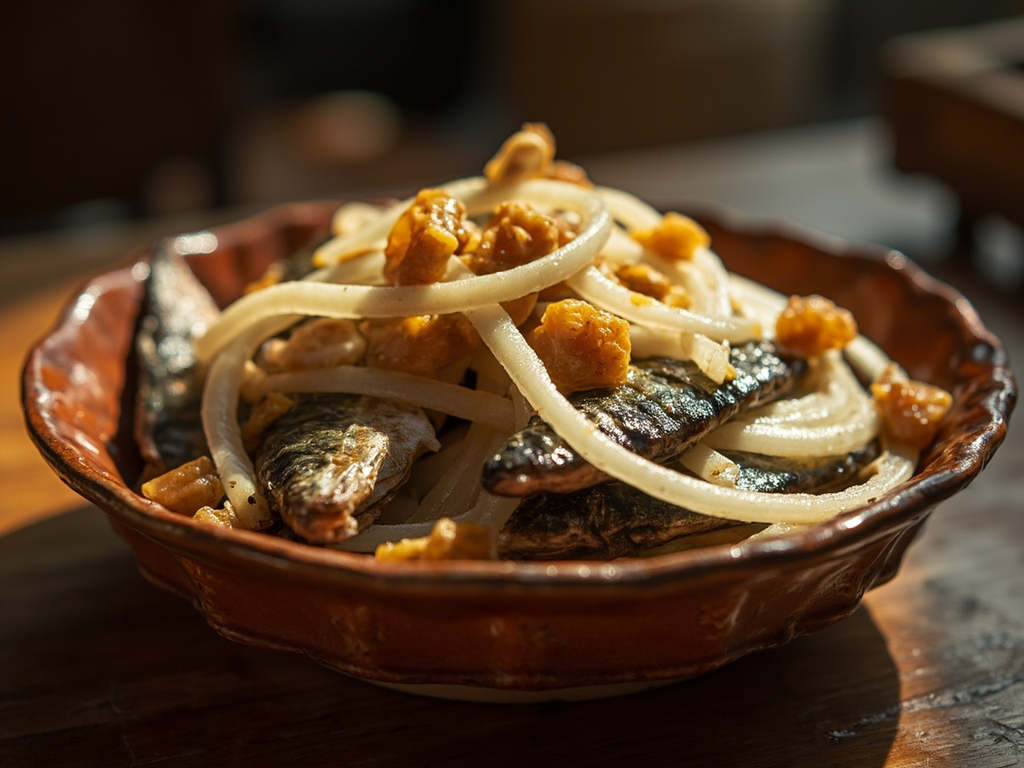
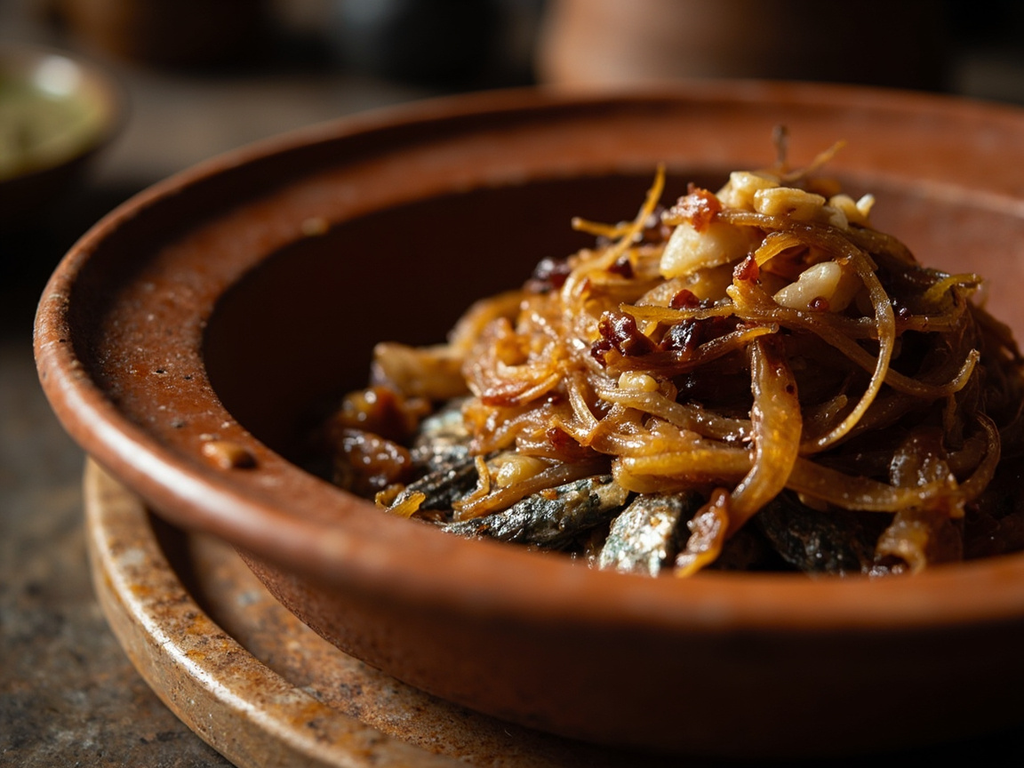
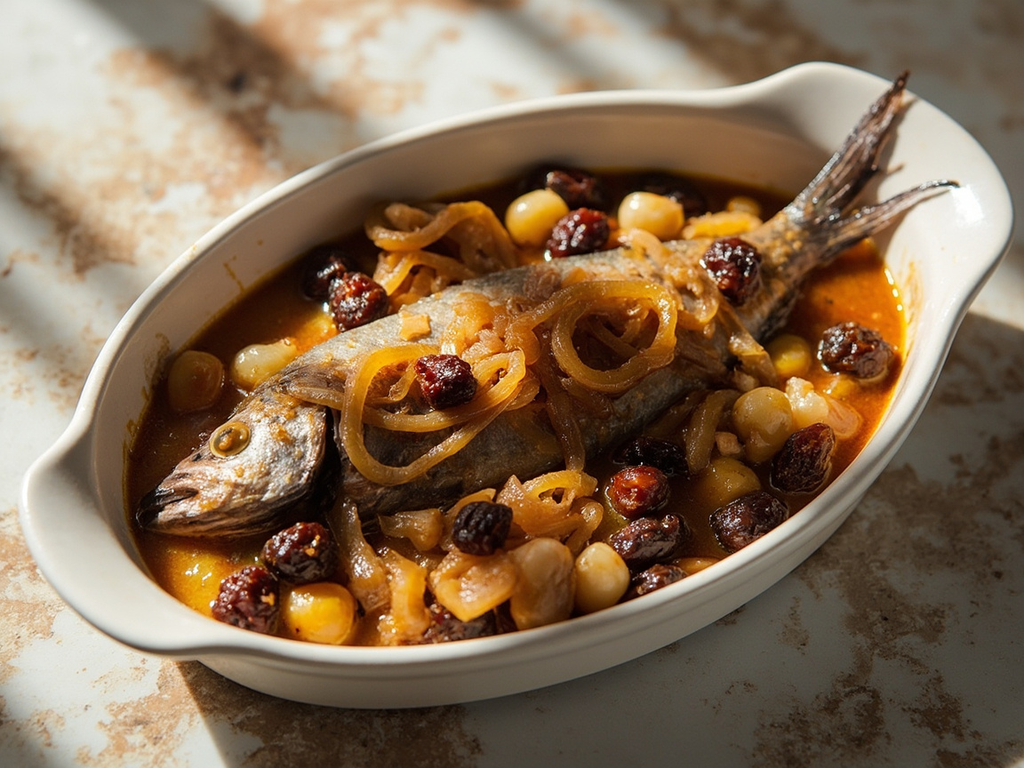
Fried sardines buried under a confit of melting onions in vinegar, raisins, and pine nuts. The acidity preserves, the sweetness of the raisins softens: the sweet-and-sour masterpiece of Venetian cuisine, eaten cold after a day or two of rest.
Since I received holy orders, I keep Lent as I should, and the lagoon gives us all its fish. Fry your sardines, then lay them under a mountain of onions long softened in vinegar. Be not stingy with currants and pine nuts, for it is the spice of the Levant that gives soul to the *saor*. And above all: wait two days before tasting — time, here as in music, completes the work.
- •Fresh sardines — a good catch (base)
- •Onions — in great quantity (sweet-and-sour confit)
- •Wine vinegar — as needed (preservation and acidity)
- •Raisins — a handful (sweetness)
- •Pine nuts — a handful (crunch)
- •Flour — for dusting (frying)
- •Olive oil — for frying (cooking)
Sarde in Saor — Venetian Sweet-and-Sour Sardines
Fried sardines buried under a confit of melting onions in vinegar, raisins, and pine nuts. The acidity preserves, the sweetness of the raisins softens: the sweet-and-sour masterpiece of Venetian cuisine, eaten cold after a day or two of rest.
Why this dish? A priest since 1632, Monteverdi strictly observed Lenten fasting. Venice, where fish abounded, had perfected *saor* — a vinegar marinade that preserved sardines for several days, ideal for meatless days and for the lagoon's sailors.
Since I received holy orders, I keep Lent as I should, and the lagoon gives us all its fish. Fry your sardines, then lay them under a mountain of onions long softened in vinegar. Be not stingy with currants and pine nuts, for it is the spice of the Levant that gives soul to the *saor*. And above all: wait two days before tasting — time, here as in music, completes the work.
Ingredients (period version)
- Fresh sardines — a good catch (base)
- Onions — in great quantity (sweet-and-sour confit)
- Wine vinegar — as needed (preservation and acidity)
- Raisins — a handful (sweetness)
- Pine nuts — a handful (crunch)
- Flour — for dusting (frying)
- Olive oil — for frying (cooking)
Ingredients
- Fresh sardines (gutted, headless) — 600 g (base)
- White onions — 600 g (about 4 large) (confit)
- White wine vinegar — 150 ml (acidity/preservation)
- Raisins — 50 g (sweetness)
- Pine nuts — 40 g (crunch)
- Flour — for coating (frying)
- Olive oil — for frying + confit (cooking)
- Salt — to taste (seasoning)
Method
- Soak the raisins in a little warm water.
- Lightly flour the sardines and fry them in olive oil until colored, then drain and salt.
- Slice the onions and let them melt gently in oil for 20-25 min without browning, until confit.
- Pour the vinegar over the onions, add drained raisins and pine nuts, let reduce for 5 min.
- In a dish, alternate a layer of onions, a layer of sardines, and finish with onions.
- Cover and marinate in the refrigerator for 24 to 48 hours before serving cold.
How it was made : *Saor* (from Latin *sapor*, "flavor") is a Venetian technique of preservation with vinegar attested since the Middle Ages, taken aboard by sailors for long voyages. The addition of raisins and pine nuts is typical of the Eastern influence of Venetian trade.
The contemporary twist : Serve on thin slices of grilled polenta (made with millet flour to stay period) as appetizer bites, Venetian *cicchetto* style.
Sources : Bartolomeo Scappi, Opera dell'arte del cucinare, 1570 · Documented Venetian culinary tradition (medieval saor)
Claudio Monteverdi · Charactorium