 flip
flipAdobong manok (chicken adobo)
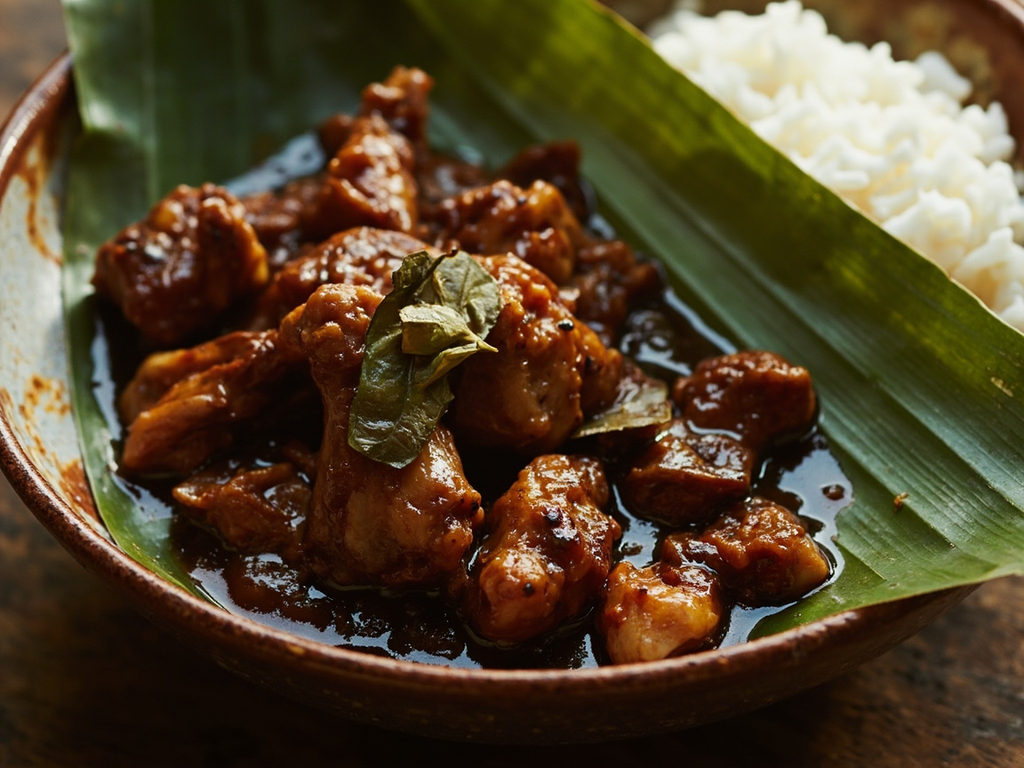
Adobong manok (chicken adobo)
Why this dish? Adobo, meat simmered in vinegar and garlic, is mentioned as one of Corazón Aquino's everyday dishes. It is the quintessential national dish of the Philippines, a simple family meal she preferred over presidential extravagance.
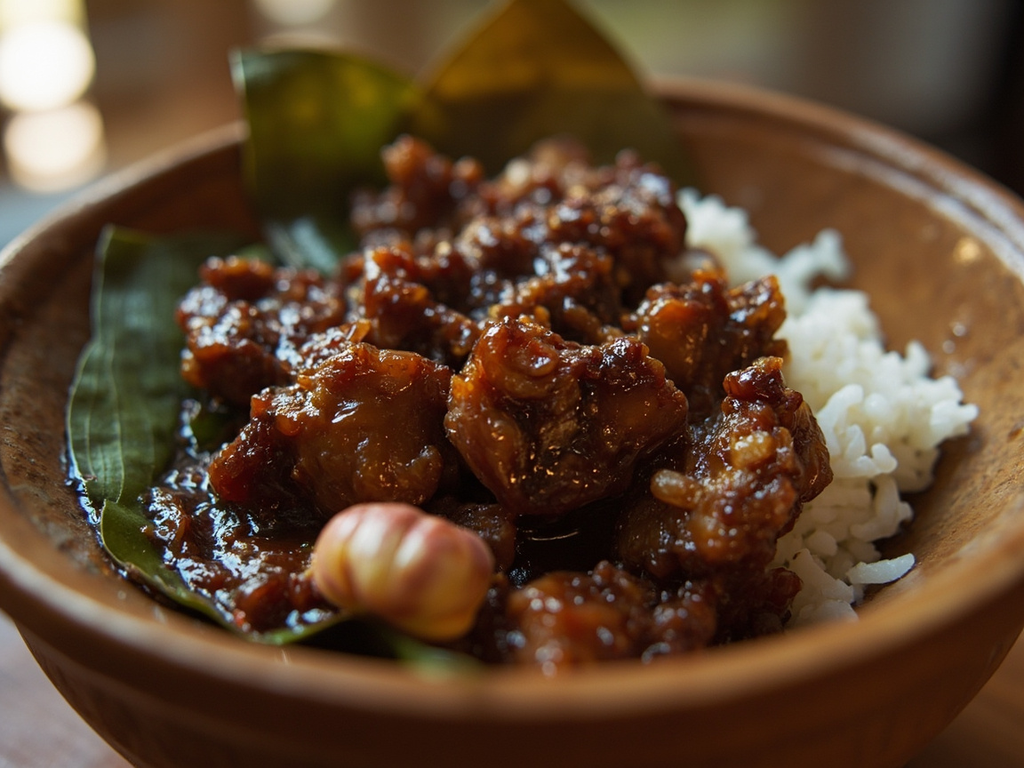
Chicken (or pork) slowly simmered in a mixture of vinegar, soy sauce, crushed garlic, pepper, and bay leaves until the sauce becomes glossy and reduced. A perfect balance of sour, salty, and savory.
At home, adobo is the dish that never fails. Vinegar, garlic, a little soy sauce, pepper, and you let it simmer gently, without rushing — like learning patience. My cook always said that good adobo keeps without ice, because the vinegar protects the meat under our heat. Even at the palace, I asked to serve it simply, with plenty of white rice. It is the food of my people, and it was mine.
- •Chicken pieces — one farm chicken, cut up (base meat)
- •Cane vinegar (suka) — one bowl (acidity, preservation)
- •Soy sauce (toyo) — a few ladlefuls (salt, umami, color)
- •Garlic — one whole head (signature aromat)
- •Black peppercorns — a generous pinch (mild heat)
- •Bay leaves — a few (aroma)
Adobong manok (chicken adobo)
Chicken (or pork) slowly simmered in a mixture of vinegar, soy sauce, crushed garlic, pepper, and bay leaves until the sauce becomes glossy and reduced. A perfect balance of sour, salty, and savory.
Why this dish? Adobo, meat simmered in vinegar and garlic, is mentioned as one of Corazón Aquino's everyday dishes. It is the quintessential national dish of the Philippines, a simple family meal she preferred over presidential extravagance.
At home, adobo is the dish that never fails. Vinegar, garlic, a little soy sauce, pepper, and you let it simmer gently, without rushing — like learning patience. My cook always said that good adobo keeps without ice, because the vinegar protects the meat under our heat. Even at the palace, I asked to serve it simply, with plenty of white rice. It is the food of my people, and it was mine.
Ingredients (period version)
- Chicken pieces — one farm chicken, cut up (base meat)
- Cane vinegar (suka) — one bowl (acidity, preservation)
- Soy sauce (toyo) — a few ladlefuls (salt, umami, color)
- Garlic — one whole head (signature aromat)
- Black peppercorns — a generous pinch (mild heat)
- Bay leaves — a few (aroma)
Ingredients
- Chicken thighs — 1 kg (base meat)
- Cane vinegar (or white/cider vinegar) — 120 ml (acidity, preservation)
- Soy sauce — 80 ml (salt, umami, color)
- Garlic — 8 cloves, crushed (signature aromat)
- Black peppercorns — 1 tsp (mild heat)
- Bay leaves — 3 (aroma)
- Water — 150 ml (simmering liquid)
- Oil — 1 tbsp (cooking)
Method
- Marinate the chicken for 30 minutes with soy sauce, vinegar, garlic, pepper, and bay leaves.
- Drain the chicken (reserve the marinade) and brown it in oil in a pot.
- Pour in the marinade and water, bring to a boil WITHOUT stirring for a few minutes (this mellows the raw acidity of the vinegar).
- Cover and simmer on low heat for 30 to 40 minutes, until the chicken is tender.
- Uncover and reduce the sauce until it coats and glistens.
- Serve hot over white rice.
How it was made : Before refrigerators, adobo was a preservation technique: vinegar and salt allowed meat to be kept for several days in the tropical climate. Every family, every region of the Philippines has its own version — more or less sour, with or without coconut milk (adobo sa gata).
The contemporary twist : Serve the chicken shredded and grilled one last time for crispy edges (“adobo flakes”) over garlic rice — Manila brunch style.
Corazón Aquino · Charactorium