 flip
flipBarley Maza with Olive Oil and Thyme
Barley Maza with Olive Oil and Thyme
Why this dish? Before being the king who seals edicts, Creon is a Theban among Thebans, nourished like them on the barley flatbread that is the true bread of the Greek people. This humble maza is the foundation of every table in Boeotia, from palace to cottage — the food of the city he claims to embody and defend.
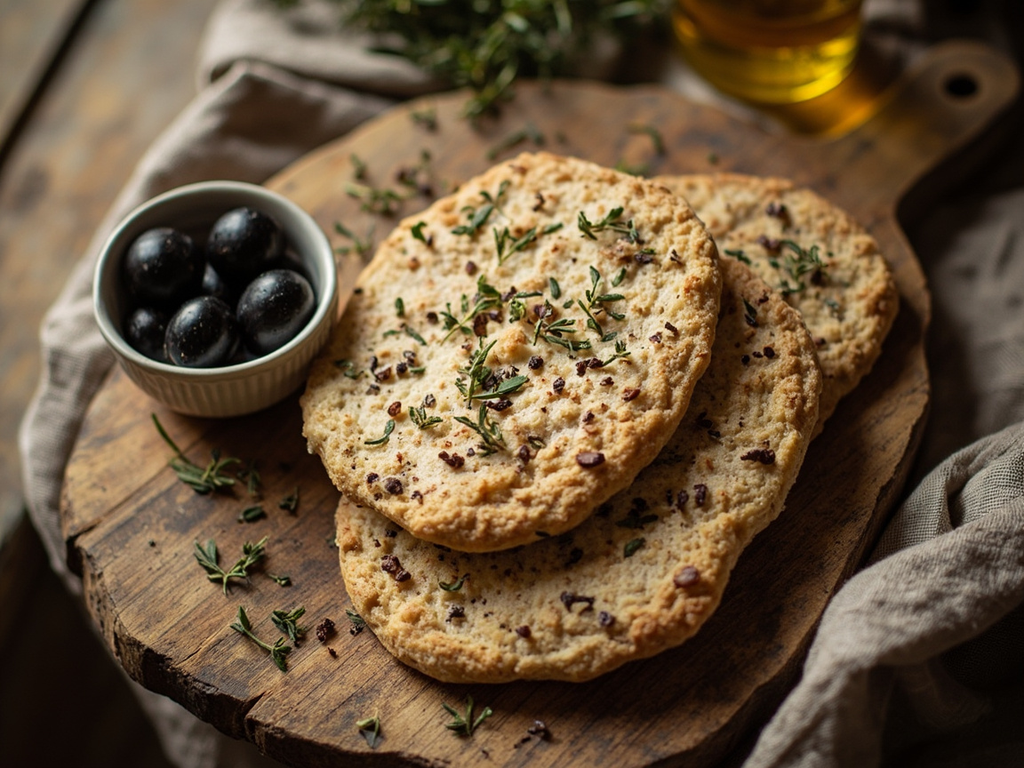
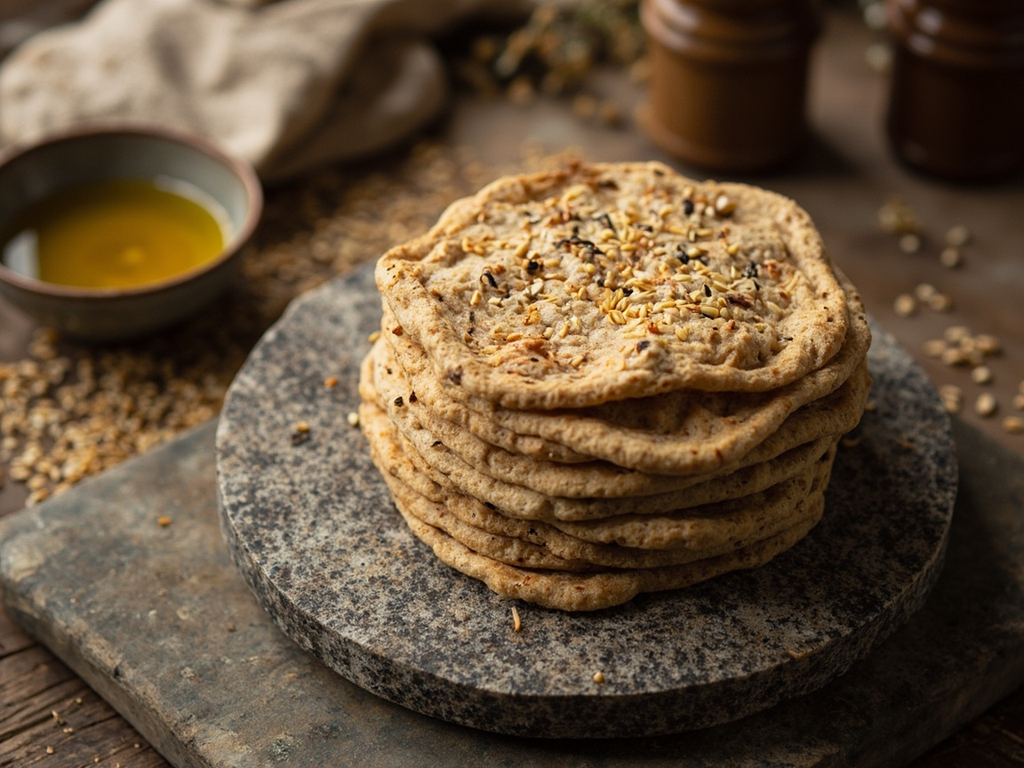
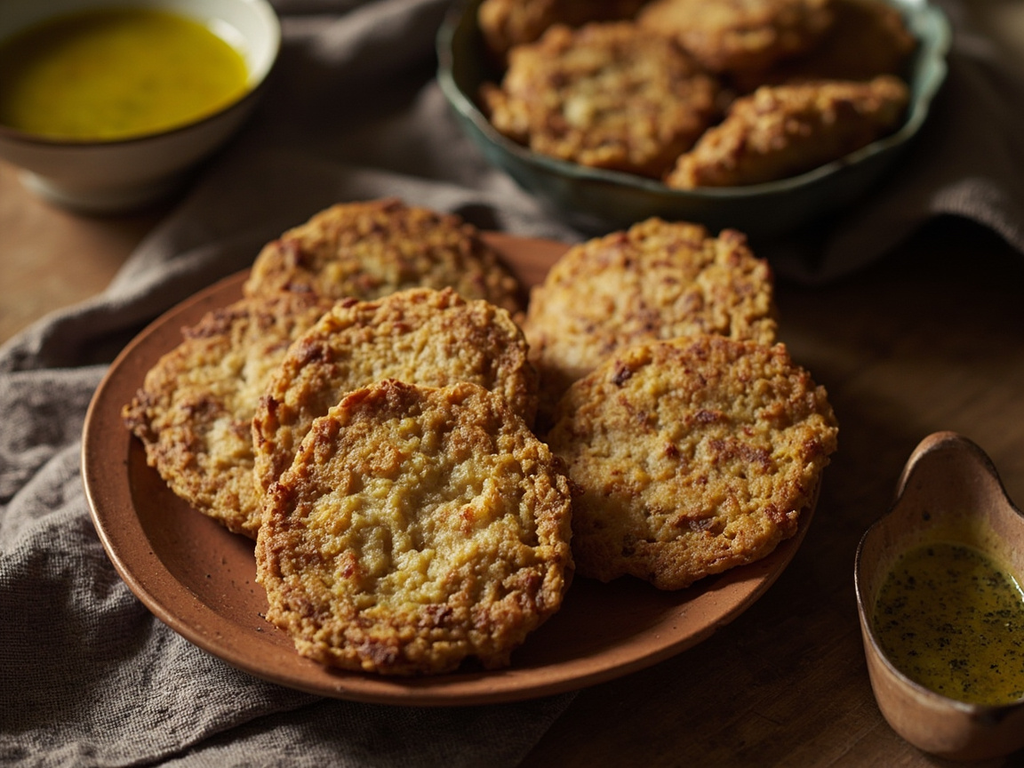
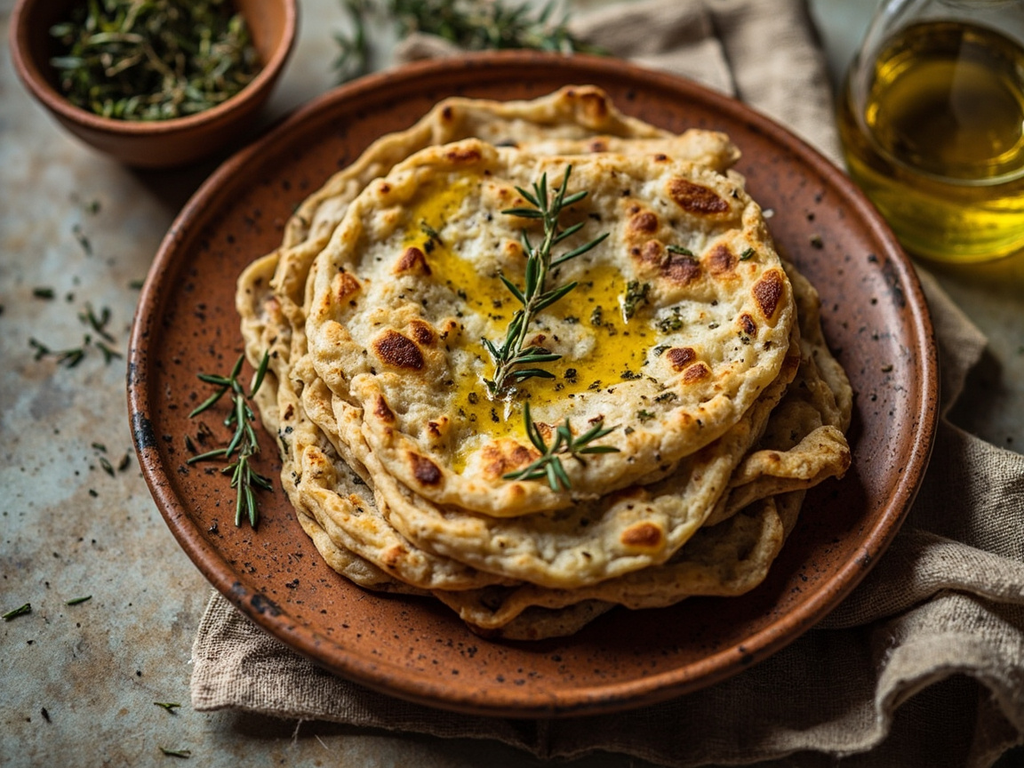
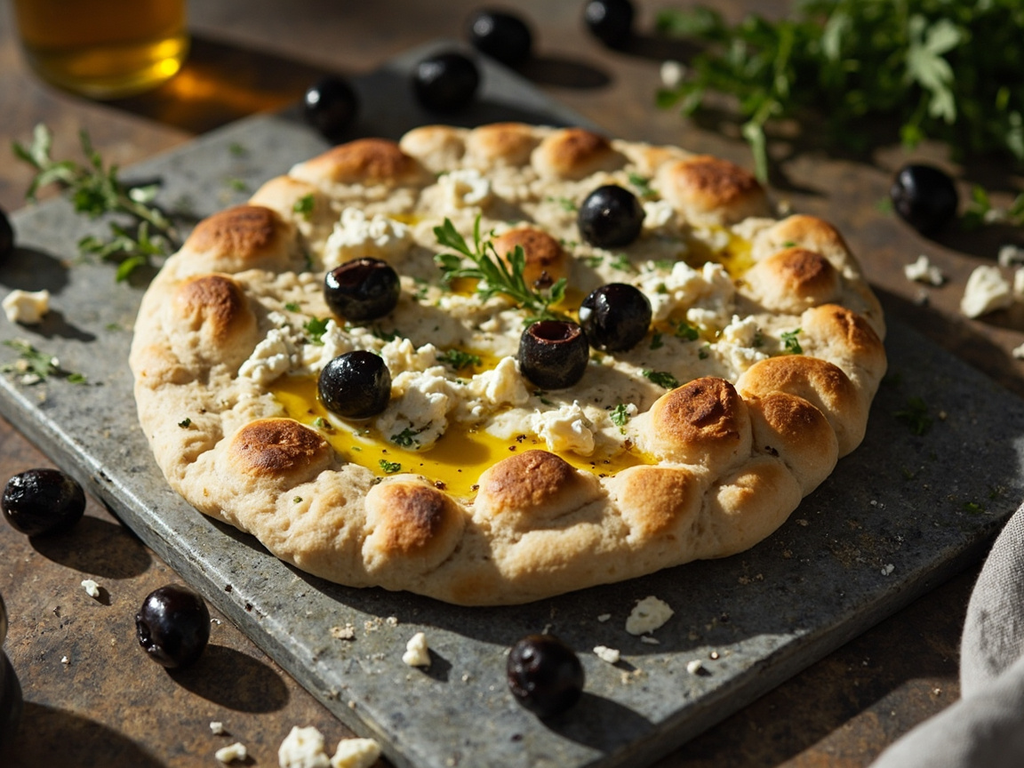
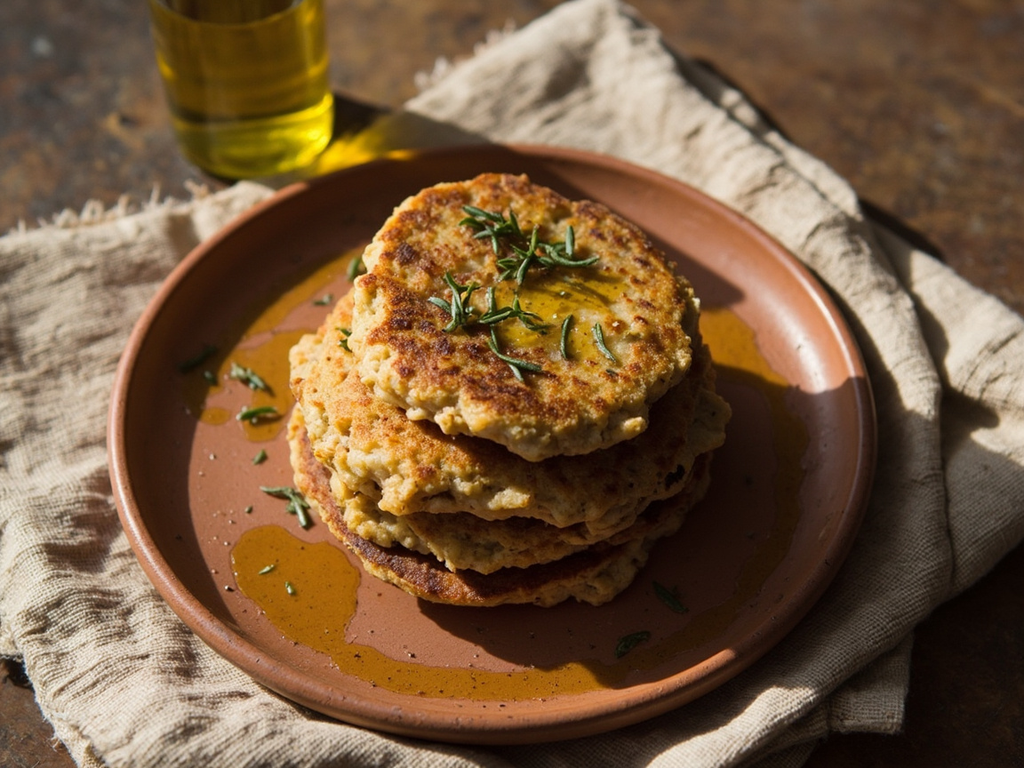
A dense flatbread of roasted and ground barley, kneaded with water and olive oil, scented with thyme. Less leavened than wheat bread, more rustic, it is the everyday bread of ancient Greece, simple and nutritious.
See this barley flatbread: it has nothing royal about it, and that is why I respect it. A city stands on the bread of its people, not on the gold of its kings. At my table as at that of the last hoplite, we roast barley, grind it, knead it with a drizzle of oil and a pinch of thyme, and give thanks. Eat it and remember: the order of things begins with what is just and measured.
- •Roasted barley flour (alphita) — two generous handfuls (base)
- •Olive oil — a good drizzle (binder and flavor)
- •Warm water — as needed (hydration)
- •Fresh thyme — a few sprigs (herb)
- •Sea salt — a pinch (seasoning)
Barley Maza with Olive Oil and Thyme
A dense flatbread of roasted and ground barley, kneaded with water and olive oil, scented with thyme. Less leavened than wheat bread, more rustic, it is the everyday bread of ancient Greece, simple and nutritious.
Why this dish? Before being the king who seals edicts, Creon is a Theban among Thebans, nourished like them on the barley flatbread that is the true bread of the Greek people. This humble maza is the foundation of every table in Boeotia, from palace to cottage — the food of the city he claims to embody and defend.
See this barley flatbread: it has nothing royal about it, and that is why I respect it. A city stands on the bread of its people, not on the gold of its kings. At my table as at that of the last hoplite, we roast barley, grind it, knead it with a drizzle of oil and a pinch of thyme, and give thanks. Eat it and remember: the order of things begins with what is just and measured.
Ingredients (period version)
- Roasted barley flour (alphita) — two generous handfuls (base)
- Olive oil — a good drizzle (binder and flavor)
- Warm water — as needed (hydration)
- Fresh thyme — a few sprigs (herb)
- Sea salt — a pinch (seasoning)
Ingredients
- Barley flour — 200 g (base)
- Extra virgin olive oil — 3 tbsp (binder and flavor)
- Warm water — about 120 ml (hydration)
- Dried or fresh thyme — 1 tsp (herb)
- Salt — 1/2 tsp (seasoning)
Method
- If you find whole barley grains, toast them dry for a few minutes in a pan, then grind them; otherwise start with barley flour.
- Mix the flour, salt, and thyme in a bowl.
- Add the olive oil, then the warm water little by little, kneading until you get a firm and pliable dough.
- Shape flat cakes about 1 cm thick.
- Cook them on a baking sheet or hot pan for 4 to 5 minutes per side, until golden and smelling of toasted barley.
- Serve warm, drizzled with a final splash of oil.
How it was made : Barley was the most widespread cereal in Greece, easier to grow than wheat. It was often consumed as maza: a paste of alphita (toasted and ground barley) simply hydrated, sometimes barely cooked. Leavened wheat bread remained a relative luxury.
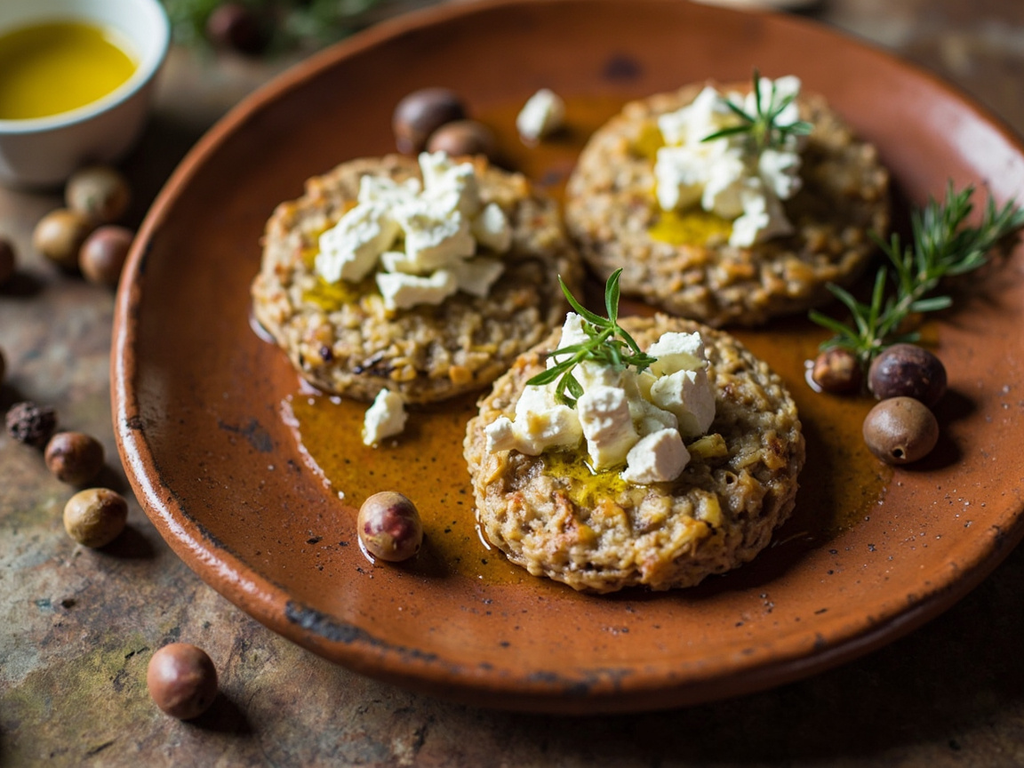
The contemporary twist : Serve the maza as mini flatbreads with a drizzle of new olive oil and a little crumbled fresh cheese: a 2,500-year-old 'Greek tartine,' perfect as an appetizer.
Creon · Charactorium