 flip
flipIm móna — Bog Butter Buried for Winter
Im móna — Bog Butter Buried for Winter
Why this dish? In a land without refrigeration, Ulster households—including Cúchulainn's at Dun Delgan—buried their butter in the cool, acidic bog to preserve it for months. Hundreds of these 'bog butters' have been found intact, some over a thousand years old: direct evidence of Celtic food storage.
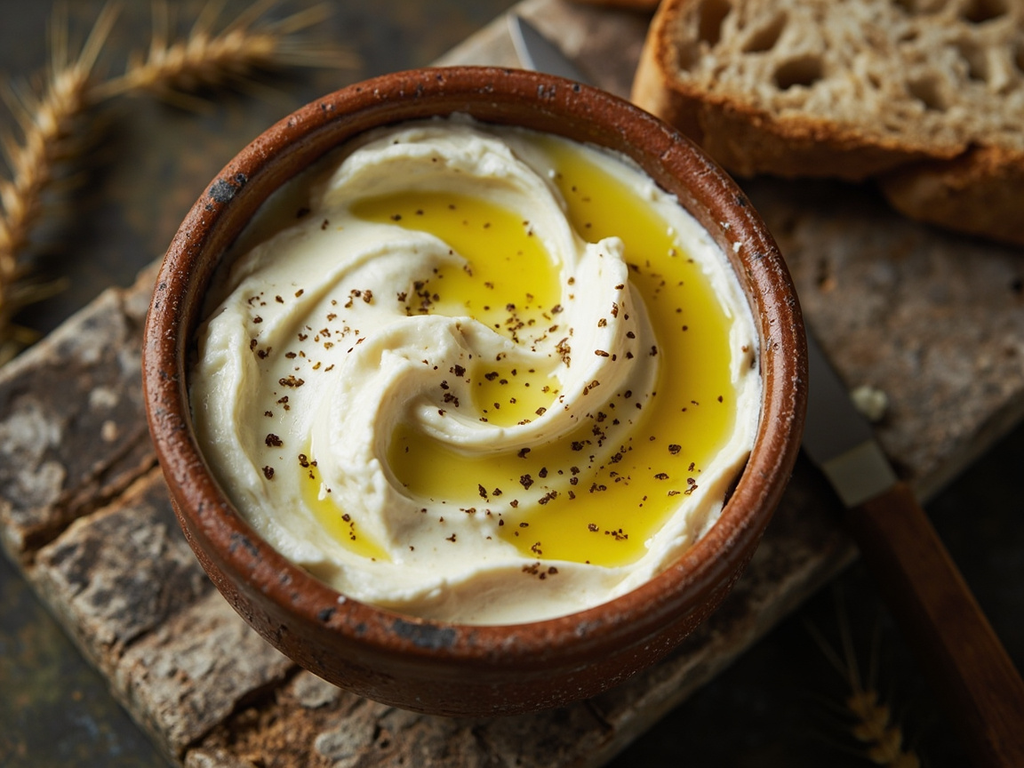
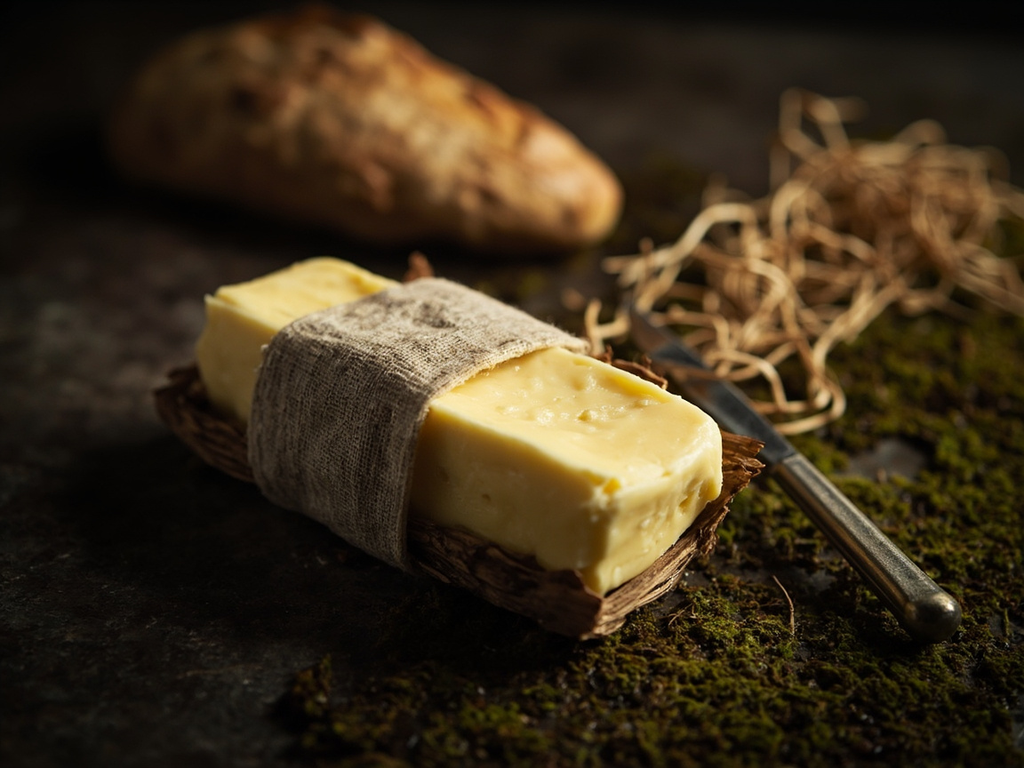
Hand-churned butter, salted, wrapped and kept cool as in the ancient bog: it develops a powerful, fermented and slightly tangy flavor, ideal for spreading on oat bread or enriching porridges.
Butter is not wasted. When the cows give rich milk in spring, we churn, salt, wrap the lump in bark, and sink it into the black, cold peat. Come winter, we dig it up, and it has taken on a strong taste that wakes up any bland porridge. My household at Dun Delgan has never lacked fat: a foresighted hearth feeds its warriors even when snow buries the fields.
- •Cow's milk cream — a bowl (material to churn)
- •Salt — by hand (preservation and taste)
Im móna — Bog Butter Buried for Winter
Hand-churned butter, salted, wrapped and kept cool as in the ancient bog: it develops a powerful, fermented and slightly tangy flavor, ideal for spreading on oat bread or enriching porridges.
Why this dish? In a land without refrigeration, Ulster households—including Cúchulainn's at Dun Delgan—buried their butter in the cool, acidic bog to preserve it for months. Hundreds of these 'bog butters' have been found intact, some over a thousand years old: direct evidence of Celtic food storage.
Butter is not wasted. When the cows give rich milk in spring, we churn, salt, wrap the lump in bark, and sink it into the black, cold peat. Come winter, we dig it up, and it has taken on a strong taste that wakes up any bland porridge. My household at Dun Delgan has never lacked fat: a foresighted hearth feeds its warriors even when snow buries the fields.
Ingredients (period version)
- Cow's milk cream — a bowl (material to churn)
- Salt — by hand (preservation and taste)
Ingredients
- Heavy cream (30%+ fat), very cold — 500 ml (material to churn)
- Coarse salt — 1 tsp (preservation and seasoning)
- Ice water — for rinsing (removes buttermilk)
Method
- Whip the cold cream vigorously (with a mixer or in a sealed jar shaken) until it separates into butter and buttermilk.
- Drain the buttermilk (save for cooking) and gather the butter.
- Rinse the butter in ice water, pressing it, until the water runs clear.
- Work the salt into the butter with a spatula.
- To evoke the 'bog' flavor, wrap in cloth and let mature 2–3 days in the refrigerator before enjoying on oat bread.
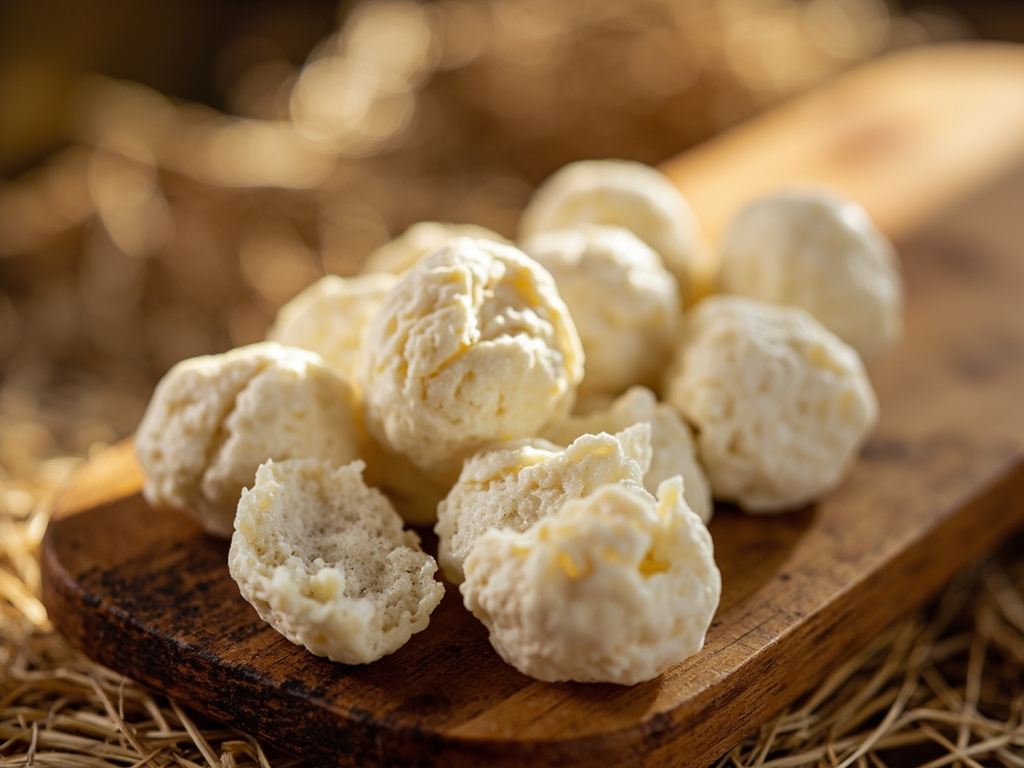
How it was made : Butter was a form of wealth in ancient Ireland, sometimes used to pay rents and taxes. Without refrigeration, it was buried in acidic, cold, oxygen-poor bogs, which preserved it remarkably while giving it a characteristic fermented flavor—hence the many 'bog butters' unearthed by archaeologists.
The contemporary twist : Serve a pat of this lightly aged salted butter melting on the hot curadmír, or spread on a toasted oatcake.
Sources : A. T. Lucas, Irish Food before the Potato, 1960 · Caroline Earwood, 'Bog butter: a two thousand year history', Journal of Irish Archaeology, 1997
Cúchulainn · Charactorium