 flip
flipHem'a — Churned Curds from the Flocks
Hem'a — Churned Curds from the Flocks
Why this dish? The Book of Job (29:6) sings of the blessed time when Job "washed his steps in curds," an image of the abundance of a great herdsman. The churned curds, lightly salted, kept for days and accompanied every meal: it is the very signature of his pastoral table.
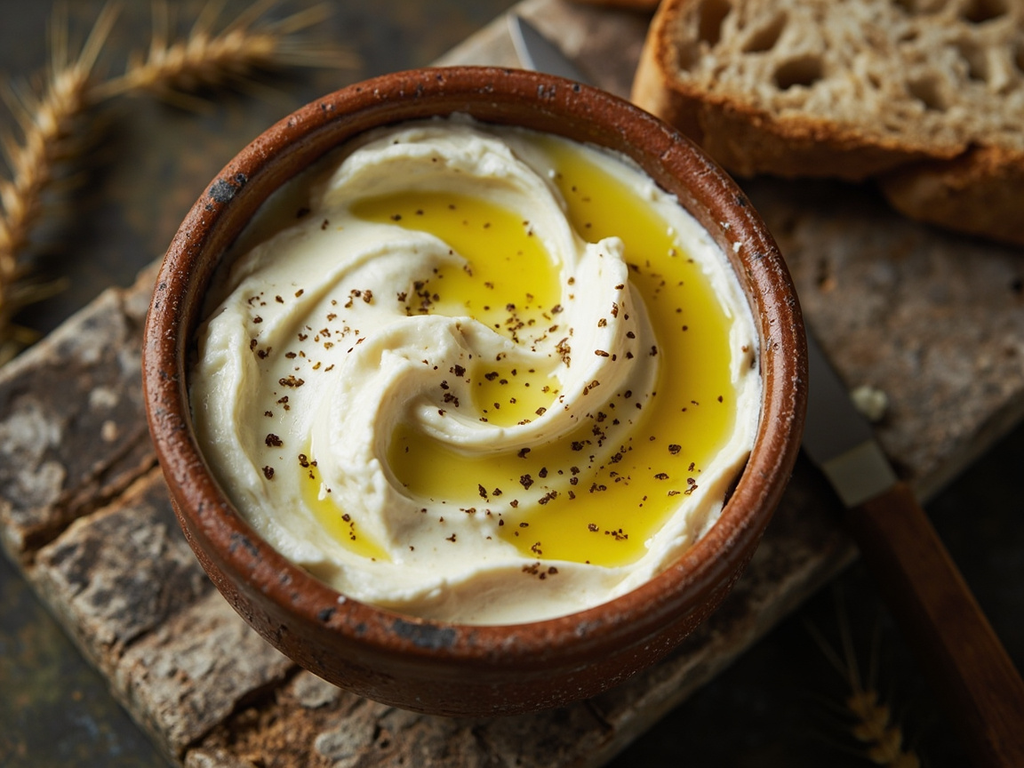
Sheep or goat milk left to curdle, then churned and drained to give a thick, tangy curd, barely salted. Spread on bread, used for dipping flatbread, stored in a cool jar.
In the time of my glory, my flocks covered the hills and milk flowed abundantly into my skins. We let the milk thicken in the shade, then shook it in a goatskin bag hung from a tripod, until the butter separated and the curds were born. We salted it just a little so it would keep for several days under the cool jar. I tell you: whoever has curds in abundance need not fear hunger in the morning.
- •Raw sheep or goat milk — a full bucket (raw material)
- •Leftover curds from the day before — a ladleful (starter)
- •Salt — a pinch (preservation)
Hem'a — Churned Curds from the Flocks
Sheep or goat milk left to curdle, then churned and drained to give a thick, tangy curd, barely salted. Spread on bread, used for dipping flatbread, stored in a cool jar.
Why this dish? The Book of Job (29:6) sings of the blessed time when Job "washed his steps in curds," an image of the abundance of a great herdsman. The churned curds, lightly salted, kept for days and accompanied every meal: it is the very signature of his pastoral table.
In the time of my glory, my flocks covered the hills and milk flowed abundantly into my skins. We let the milk thicken in the shade, then shook it in a goatskin bag hung from a tripod, until the butter separated and the curds were born. We salted it just a little so it would keep for several days under the cool jar. I tell you: whoever has curds in abundance need not fear hunger in the morning.
Ingredients (period version)
- Raw sheep or goat milk — a full bucket (raw material)
- Leftover curds from the day before — a ladleful (starter)
- Salt — a pinch (preservation)
Ingredients
- Whole sheep or goat milk — 1 L (raw material)
- Plain yogurt (as starter) — 2 tbsp (starter)
- Salt — 1/2 tsp (preservation and flavor)
Method
- Heat the milk to 40°C, remove from heat and stir in the yogurt as starter.
- Cover and let curdle for 8 to 12 hours in a warm place, until thickened.
- Pour into a cheesecloth and let drain for 4 to 6 hours in the fridge to get thick curds.
- Lightly salt, mix, and store in a covered bowl in the fridge.
- Serve spooned onto barley bread, with a drizzle of olive oil or honey.
How it was made : Fresh milk spoiled quickly in the heat: curds and butter were ways to preserve it. Churning was done in a suspended goatskin bag that was swung for hours. The leftover whey was used as a refreshing drink.
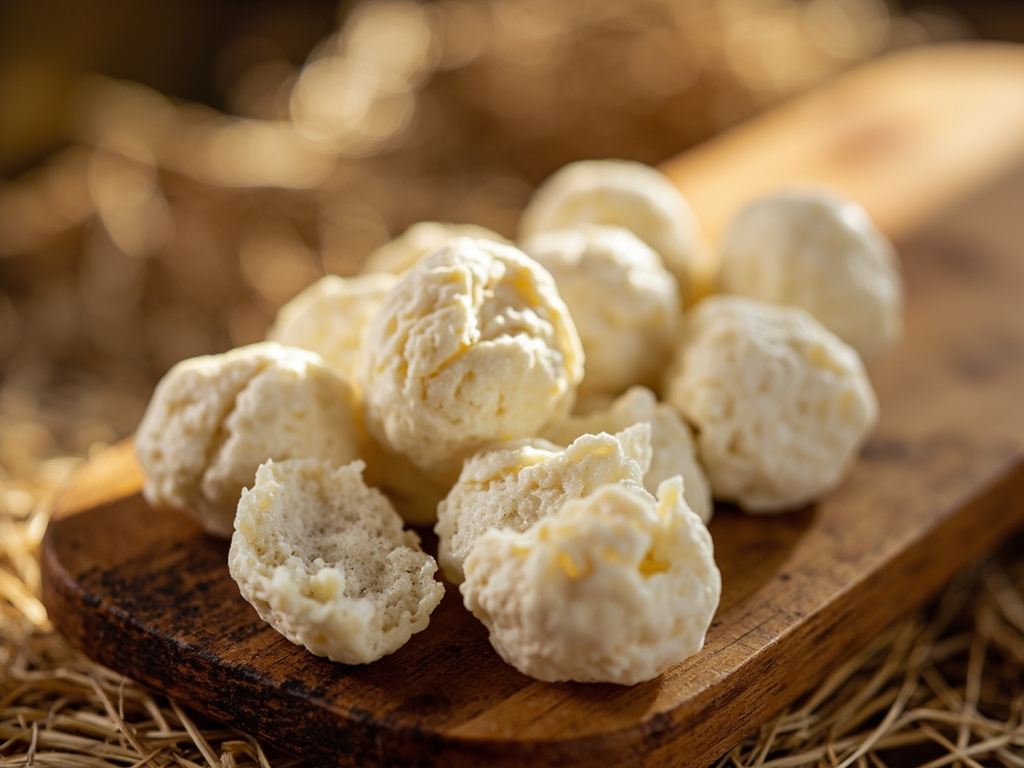
The contemporary twist : Roll the well-drained curds into small balls (labneh), coat with olive oil and dried herbs, and store in a jar: a meze that spans millennia.
Sources : Book of Job, 29:6 · Nathan MacDonald, What Did the Ancient Israelites Eat?, 2008
Job · Charactorium