 flip
flipKollyva, the Sweet Wheat of Remembrance
Kollyva, the Sweet Wheat of Remembrance
Why this dish? Saints of the Byzantine Church commemorated each year, Cyril and Methodius are themselves honored by kollyva, the boiled and sweetened wheat that Eastern Christians share in memory of the departed and the saints. Recipe inspired by this living tradition, never a ritual reproduction.
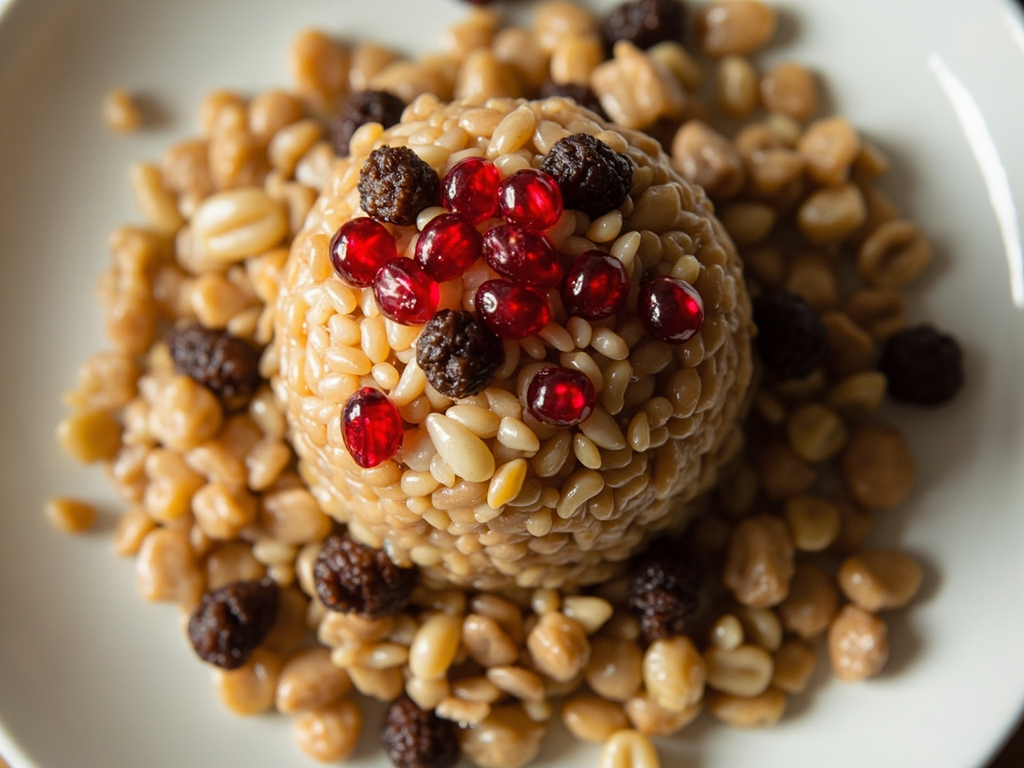
Whole boiled wheat, mixed with honey, walnuts, raisins, pomegranate, and sesame, scented with cinnamon. The grain that dies in the earth to be reborn: a symbol of resurrection shared as an offering.
The wheat grain, you see, must fall into the earth and die to bear fruit; thus Scripture teaches us the resurrection. When we commemorate the saints who have gone before us, we boil the wheat, mix it with honey and walnuts, with bright pomegranate and raisins, and we share it in silence. This is not a dish of gluttony, child, but a prayer that we eat together. Taste it with respect, and remember those who are no more.
- •Whole wheat — a bowlful (symbolic grain)
- •Honey — generous (sweetness)
- •Walnuts — a handful (garnish)
- •Raisins — a handful (sweetness)
- •Pomegranate seeds — a handful (color and acidity)
- •Sesame and cinnamon — a pinch (aroma)
Kollyva, the Sweet Wheat of Remembrance
Whole boiled wheat, mixed with honey, walnuts, raisins, pomegranate, and sesame, scented with cinnamon. The grain that dies in the earth to be reborn: a symbol of resurrection shared as an offering.
Why this dish? Saints of the Byzantine Church commemorated each year, Cyril and Methodius are themselves honored by kollyva, the boiled and sweetened wheat that Eastern Christians share in memory of the departed and the saints. Recipe inspired by this living tradition, never a ritual reproduction.
The wheat grain, you see, must fall into the earth and die to bear fruit; thus Scripture teaches us the resurrection. When we commemorate the saints who have gone before us, we boil the wheat, mix it with honey and walnuts, with bright pomegranate and raisins, and we share it in silence. This is not a dish of gluttony, child, but a prayer that we eat together. Taste it with respect, and remember those who are no more.
Ingredients (period version)
- Whole wheat — a bowlful (symbolic grain)
- Honey — generous (sweetness)
- Walnuts — a handful (garnish)
- Raisins — a handful (sweetness)
- Pomegranate seeds — a handful (color and acidity)
- Sesame and cinnamon — a pinch (aroma)
Ingredients
- Wheat berries (or spelt) — 250 g (symbolic grain)
- Honey — 4 tbsp (sweetness)
- Chopped walnuts — 60 g (garnish)
- Raisins — 60 g (sweetness)
- Pomegranate seeds — 1 pomegranate (color and fresh tartness)
- Sesame seeds and cinnamon — 2 tbsp sesame + 1 tsp cinnamon (aroma)
Method
- Soak the wheat overnight, then cook in simmering water for 1 to 1.5 hours until tender.
- Drain and dry the wheat thoroughly on a cloth.
- Mix the wheat with honey, raisins, walnuts, and cinnamon.
- Shape into a dome, then cover with a layer of toasted sesame.
- Decorate with pomegranate seeds just before sharing.
How it was made : Kollyva dates back to the early Christian centuries in the East and continues today in the Orthodox Church. The boiled wheat symbolizes resurrection (the grain that dies and is reborn), while honey and fruits represent the sweetness of paradise. It is blessed and then shared during commemorations.
The contemporary twist : Served in individual verrines, pomegranate on top: a memorial offering that takes on the air of a designer dessert, without losing its meaning.
Cyril and Methodius · Charactorium