 flip
flipSaffron and Verjuice Roasted Mutton, Table of Pasargadae
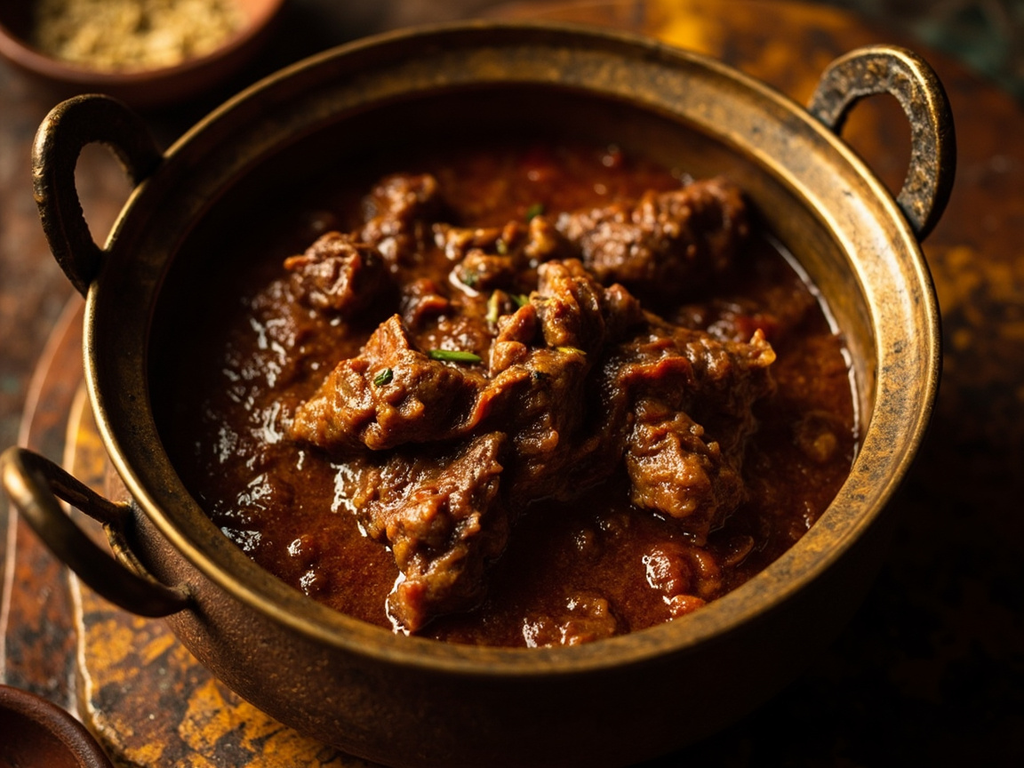
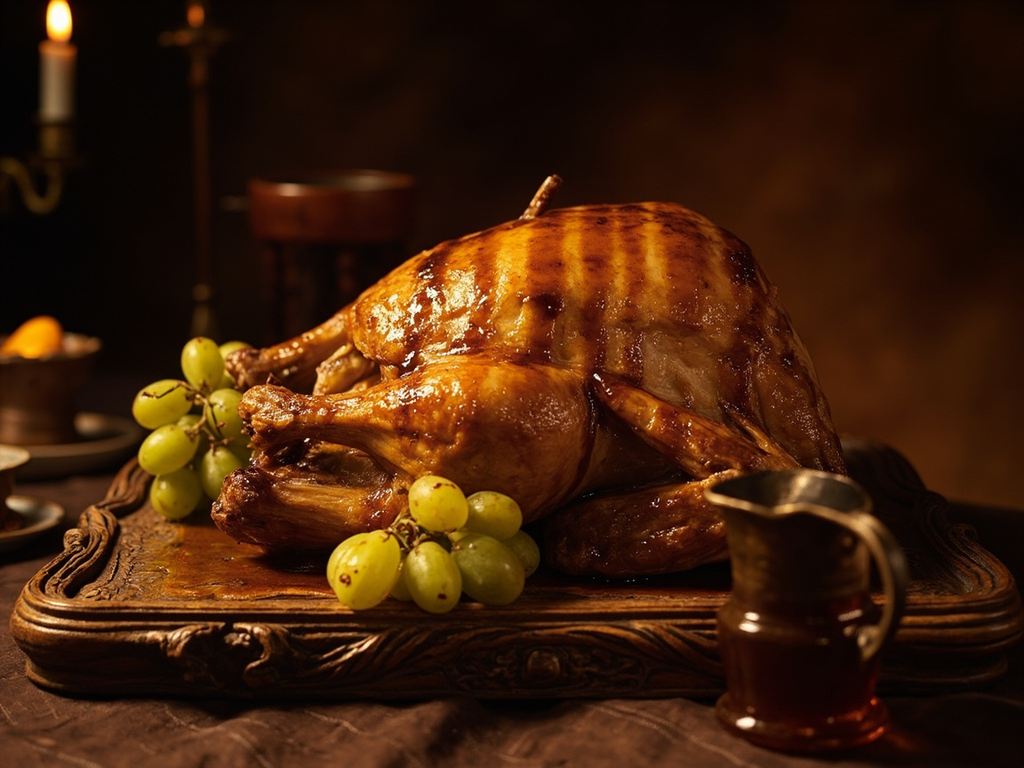
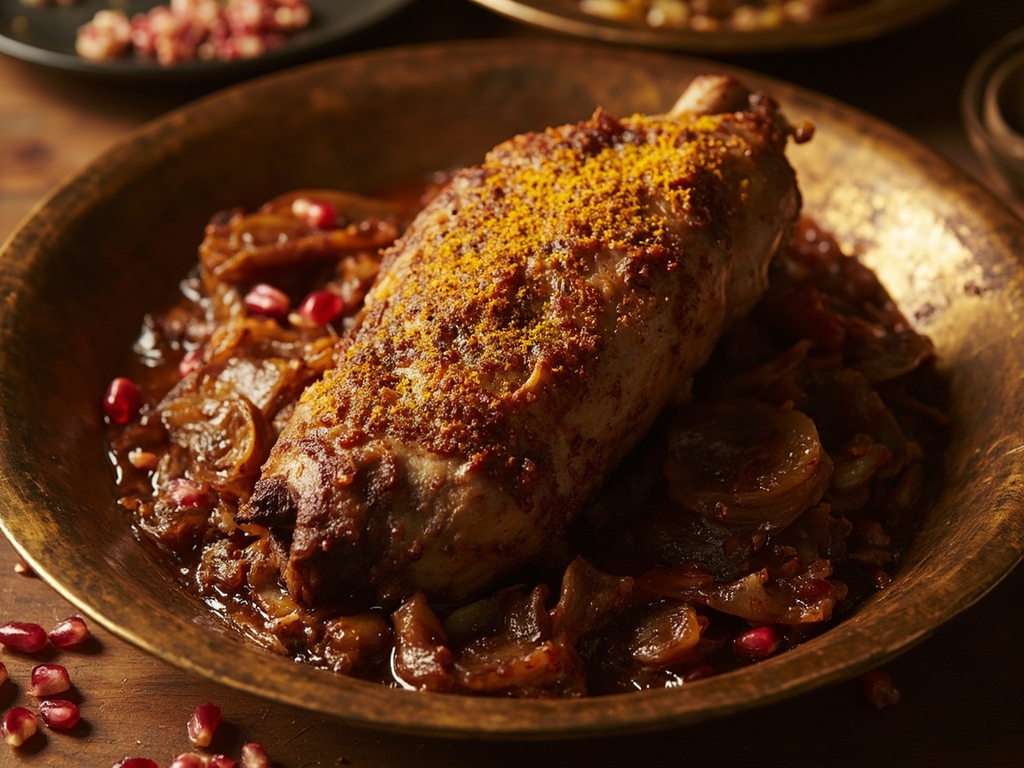
Saffron and Verjuice Roasted Mutton, Table of Pasargadae
Why this dish? Herodotus recounts that the Persians celebrated their birthdays by roasting whole animals. At the palace of Pasargadae that he had built, Cyrus offered his nobles mutton perfumed with Median saffron, a mark of Achaemenid splendor.
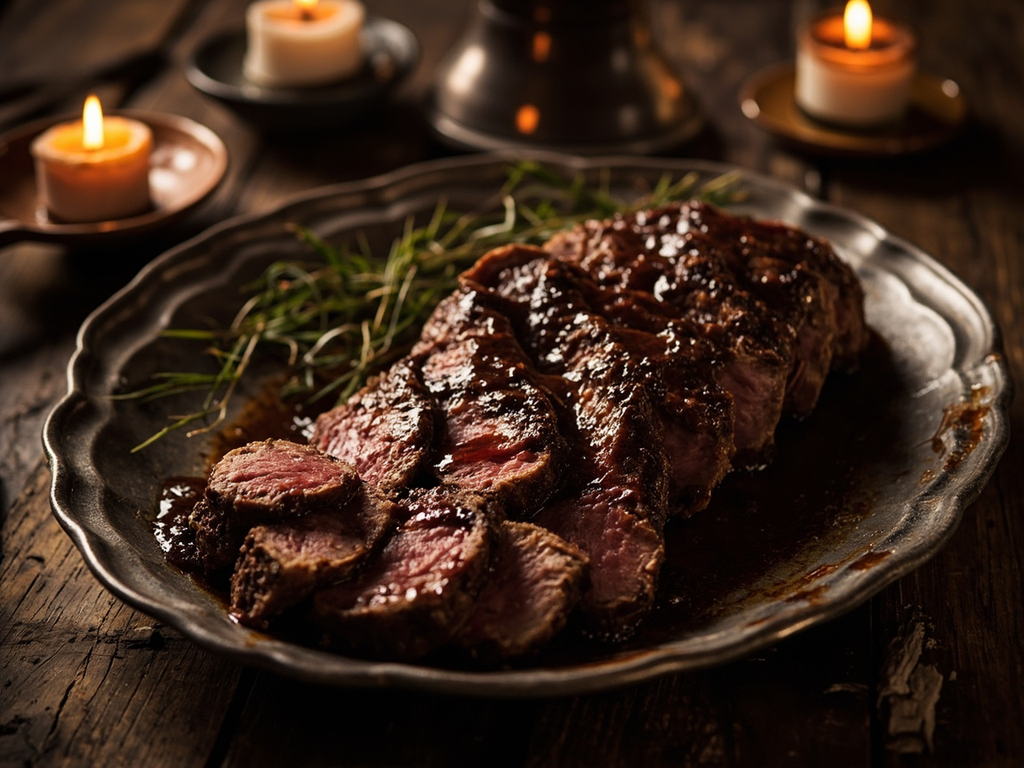
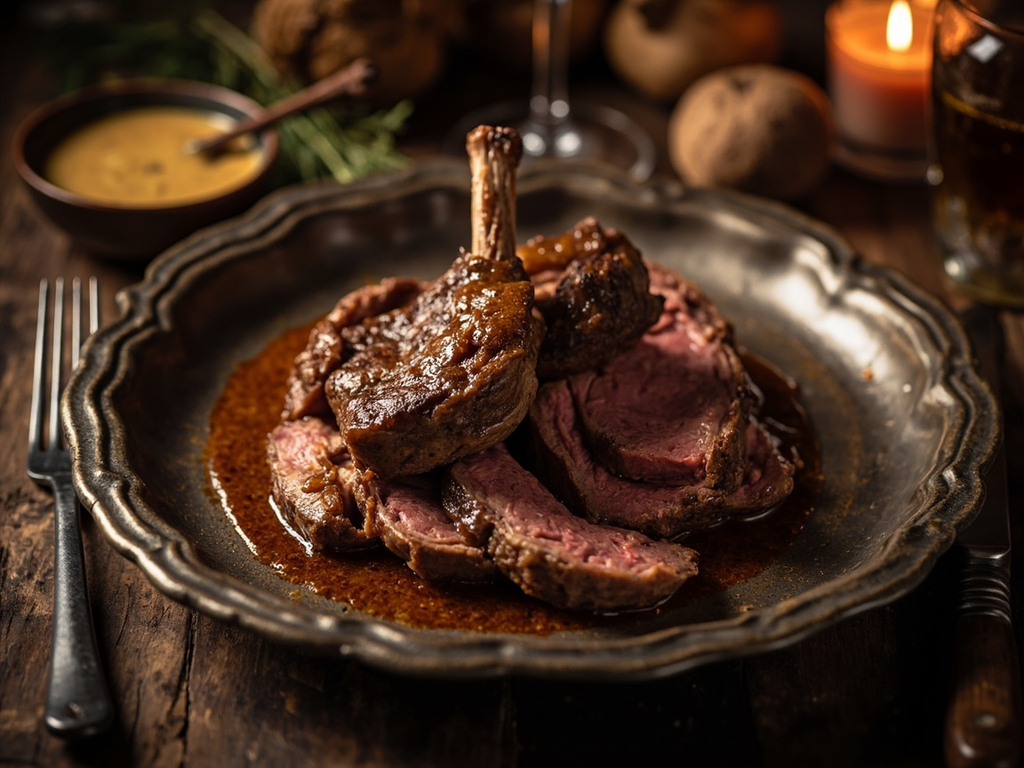
Mutton shoulder rubbed with saffron, cumin and coriander, slowly roasted and basted with tart verjuice. A golden, melting meat, both spicy and lively, placed at the center of the cloths.
Here is the dish of the Great King, and you shall taste it like a lord of my court. The best beast of the flock is chosen, rubbed with the gold of Media — that saffron my Medes harvest flower by flower — and with cumin from the east. It is turned over the embers all day, basted with the sour juice of green grapes. Know that the King of Persia honors his guest by his table as much as by his sword: he who eats at my mat eats my word.
- •Mutton shoulder — one young animal (meat)
- •Median saffron — a generous pinch (royal color and perfume)
- •Cumin and coriander seeds — a full handful (spices)
- •Verjuice (juice of green grapes) — a bowl (acidity, basting)
- •Rock salt and onion — as needed (seasoning)
Saffron and Verjuice Roasted Mutton, Table of Pasargadae
Mutton shoulder rubbed with saffron, cumin and coriander, slowly roasted and basted with tart verjuice. A golden, melting meat, both spicy and lively, placed at the center of the cloths.
Why this dish? Herodotus recounts that the Persians celebrated their birthdays by roasting whole animals. At the palace of Pasargadae that he had built, Cyrus offered his nobles mutton perfumed with Median saffron, a mark of Achaemenid splendor.
Here is the dish of the Great King, and you shall taste it like a lord of my court. The best beast of the flock is chosen, rubbed with the gold of Media — that saffron my Medes harvest flower by flower — and with cumin from the east. It is turned over the embers all day, basted with the sour juice of green grapes. Know that the King of Persia honors his guest by his table as much as by his sword: he who eats at my mat eats my word.
Ingredients (period version)
- Mutton shoulder — one young animal (meat)
- Median saffron — a generous pinch (royal color and perfume)
- Cumin and coriander seeds — a full handful (spices)
- Verjuice (juice of green grapes) — a bowl (acidity, basting)
- Rock salt and onion — as needed (seasoning)
Ingredients
- Mutton or lamb shoulder — 1.5 kg (meat)
- Saffron — a generous pinch (infused in 3 tbsp hot water) (color and perfume)
- Ground cumin — 2 tsp (spice)
- Ground coriander — 2 tsp (spice)
- Verjuice (or substitute green grape juice or lemon juice diluted with water) — 150 ml (acidity)
- Onion — 2 large, sliced (base)
- Salt — 2 tsp (seasoning)
Method
- Mix infused saffron, cumin, coriander, salt and a splash of verjuice into a paste; rub the mutton with it and marinate for 2 hours.
- Arrange a bed of sliced onions in the bottom of a dish, place the meat on top.
- Roast at 160 °C for about 3 hours, basting every 30 minutes with verjuice and the pan juices.
- Cover with foil if the surface colors too quickly.
- Increase to 200 °C for the last 15 minutes to brown.
- Let rest for 15 minutes, shred, and serve on barley flatbreads with the melted onions.
How it was made : The Persians roasted large cuts whole outdoors, on spits over embers. Verjuice, ubiquitous in ancient Iranian cuisine, provided acidity before the spread of lemons. Saffron marked court dishes.
The contemporary twist : Sprinkle with dried pomegranate petals and Kerman pistachio slivers for a red-and-gold presentation reminiscent of the Persepolis reliefs.
Cyrus II · Charactorium