 flip
flipMaza, the Barley Flatbread of the Workshop
Maza, the Barley Flatbread of the Workshop
Why this dish? Daedalus is a craftsman who works with his hands from morning to night: barley maza, kneaded without long baking, is the bread of the working people, exactly the meal that sustains a master bronzesmith bent over his molds in Athens or Crete.
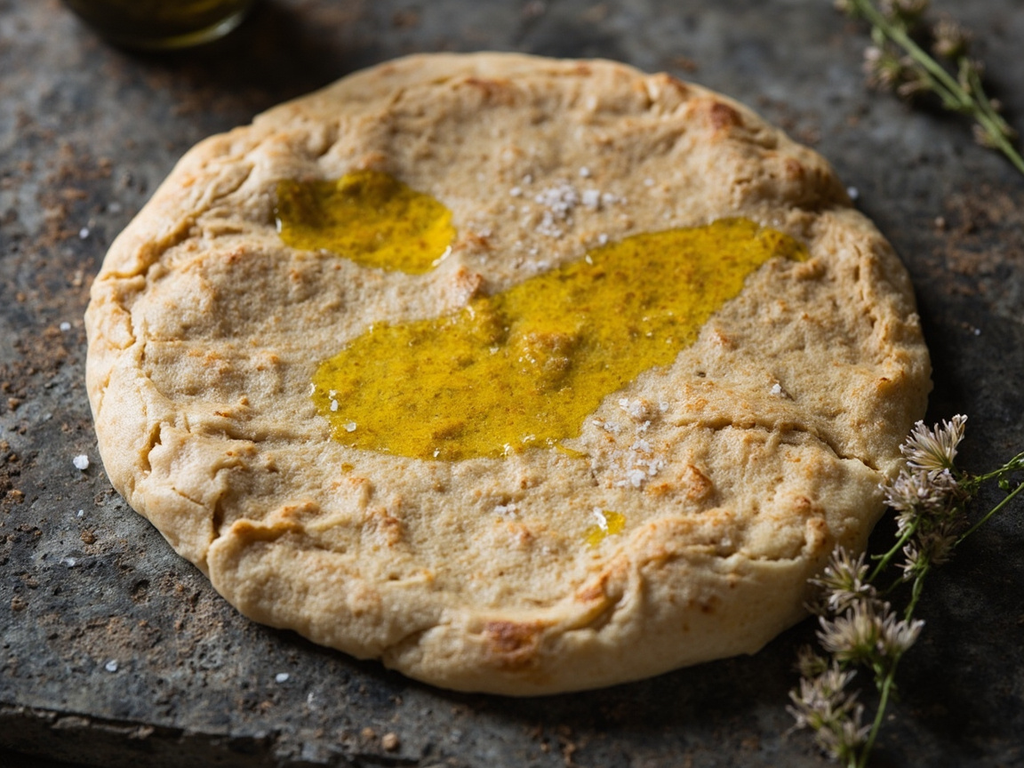
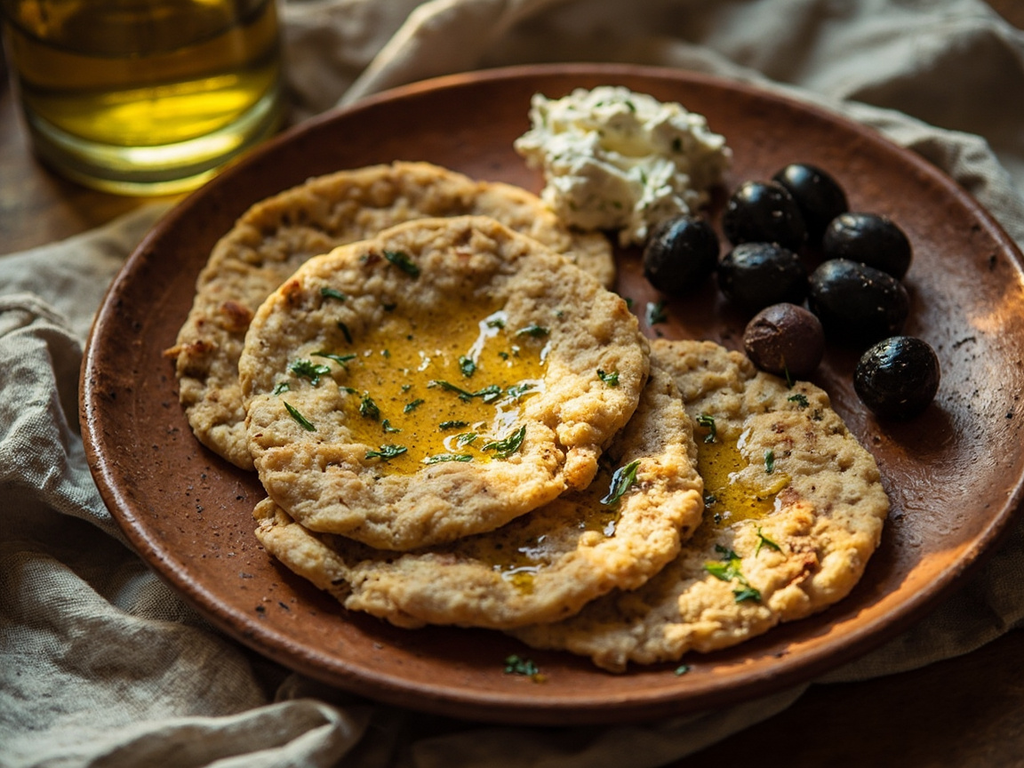
A dough of toasted barley kneaded with oil, water, and salt, shaped into a dense flatbread that is dipped in wine or eaten with olives and cheese. It is the basic, frugal, and nourishing food of Greek workers.
Listen to me, you who pass by: before touching bronze or wax, the craftsman fills his belly with maza. I toast the barley on the hot stone until it smells nutty, I crush it in the mortar, and with these hands — the same hands that carved the Labyrinth — I knead the flour with a drizzle of oil and water from the well. This flatbread is not baked long, young man: you eat it a little rough, dipped in watered wine, and it keeps a man on his feet from dawn until the work is done.
- •Toasted barley flour (alphita) — two handfuls per person (base)
- •Olive oil — a drizzle (binder and flavor)
- •Spring water — as needed (hydration)
- •Sea salt — a pinch (seasoning)
Maza, the Barley Flatbread of the Workshop
A dough of toasted barley kneaded with oil, water, and salt, shaped into a dense flatbread that is dipped in wine or eaten with olives and cheese. It is the basic, frugal, and nourishing food of Greek workers.
Why this dish? Daedalus is a craftsman who works with his hands from morning to night: barley maza, kneaded without long baking, is the bread of the working people, exactly the meal that sustains a master bronzesmith bent over his molds in Athens or Crete.
Listen to me, you who pass by: before touching bronze or wax, the craftsman fills his belly with maza. I toast the barley on the hot stone until it smells nutty, I crush it in the mortar, and with these hands — the same hands that carved the Labyrinth — I knead the flour with a drizzle of oil and water from the well. This flatbread is not baked long, young man: you eat it a little rough, dipped in watered wine, and it keeps a man on his feet from dawn until the work is done.
Ingredients (period version)
- Toasted barley flour (alphita) — two handfuls per person (base)
- Olive oil — a drizzle (binder and flavor)
- Spring water — as needed (hydration)
- Sea salt — a pinch (seasoning)
Ingredients
- Barley flour (or blended barley flakes) — 200 g (base)
- Extra-virgin olive oil — 3 tbsp (binder and flavor)
- Warm water — 100 to 130 ml (hydration)
- Fine salt — 1 tsp (seasoning)
Method
- If using grains or flakes, toast them dry in a pan for 3-4 minutes until nutty, then grind into flour.
- Mix barley flour and salt, make a well and pour in the oil.
- Add warm water little by little, kneading until a firm, homogeneous dough forms.
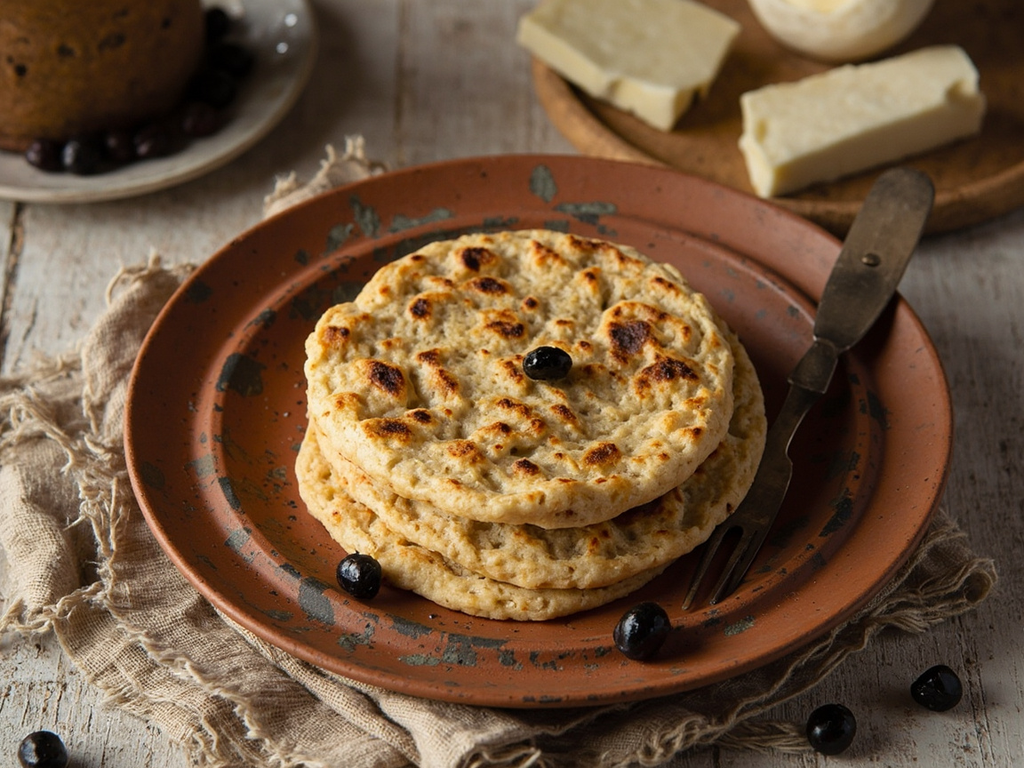
- Shape into flatbreads about 1 cm thick.
- Seal on a hot griddle or pan for 3-4 minutes per side, just to firm them up.
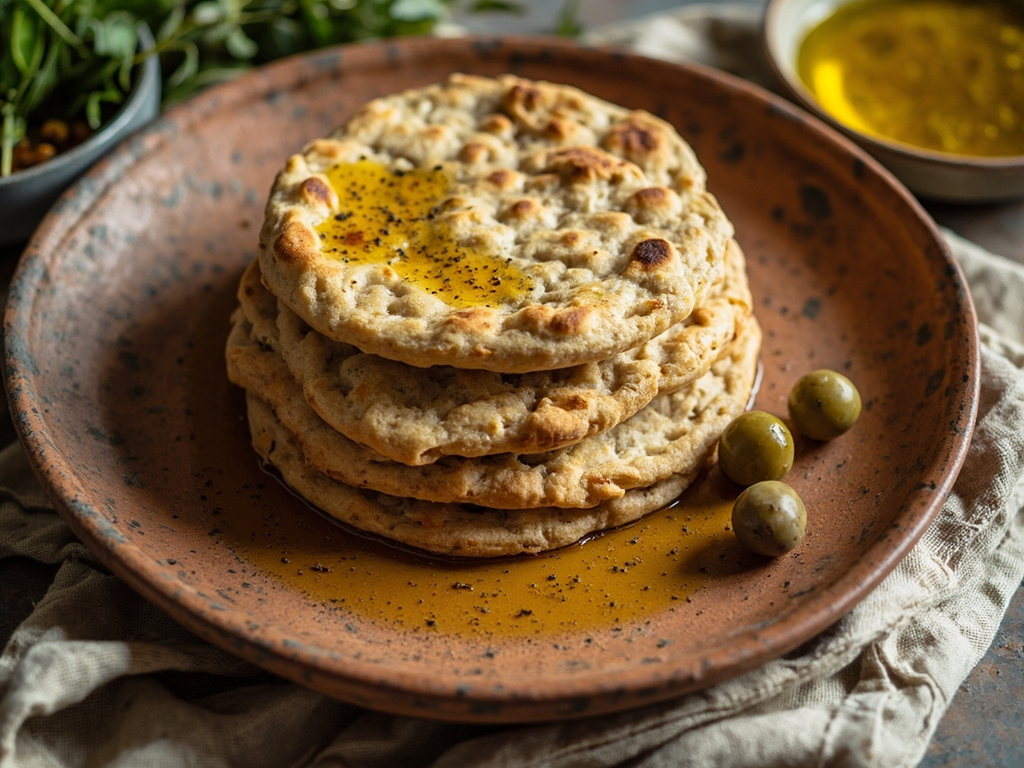
- Serve warm with olives, fresh cheese, and a bowl of watered wine.
How it was made : Barley (krithê) was the cereal of the majority, cheaper than wheat. It was used to make alphita, toasted barley flour, kneaded into unleavened maza — a 'bread' without an oven, attested by physicians like Galen and ubiquitous in Aristophanes' comedies.
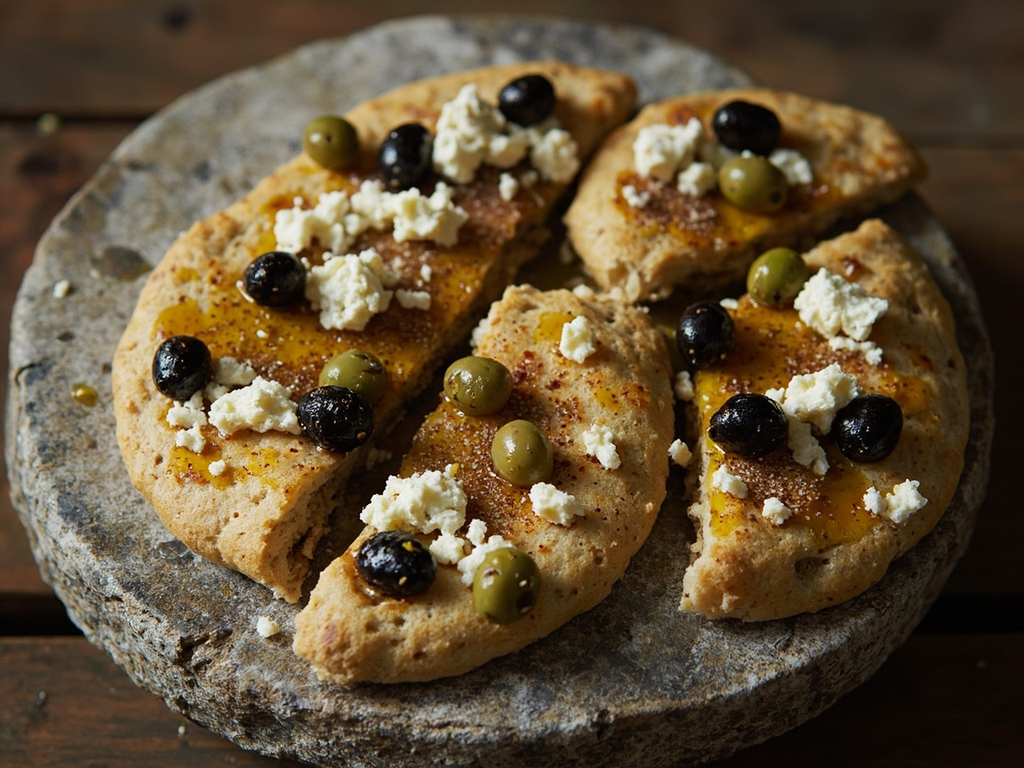
The contemporary twist : Served as mini 'Labyrinth stone' flatbreads scored with a knife, to dip in PDO olive oil.
Sources : Galen, On the Properties of Foodstuffs, I (on krithê and alphita) · Andrew Dalby, Siren Feasts: A History of Food and Gastronomy in Greece, 1996
Daedalus and Icarus · Charactorium