 flip
flipBeet and cabbage borscht
Beet and cabbage borscht
Why this dish? Borscht is one of the foundational soups of his diet: that of the urban intelligentsia of Leningrad, simmered for hours, stretched in times of scarcity without ever losing its comforting red color.
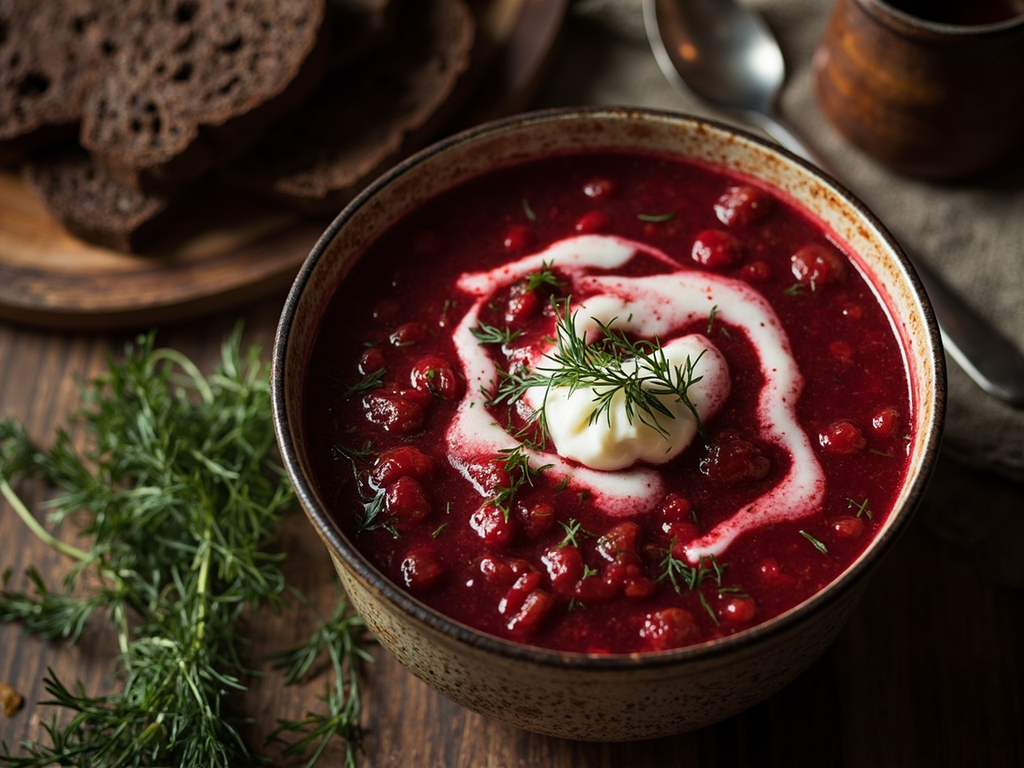
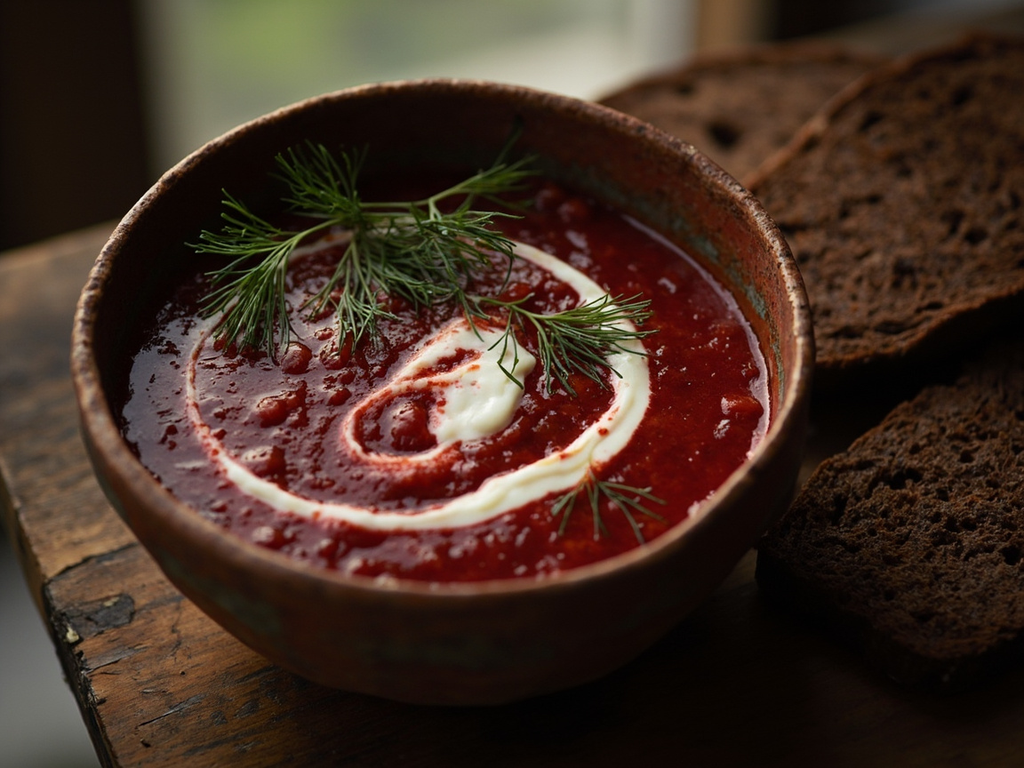
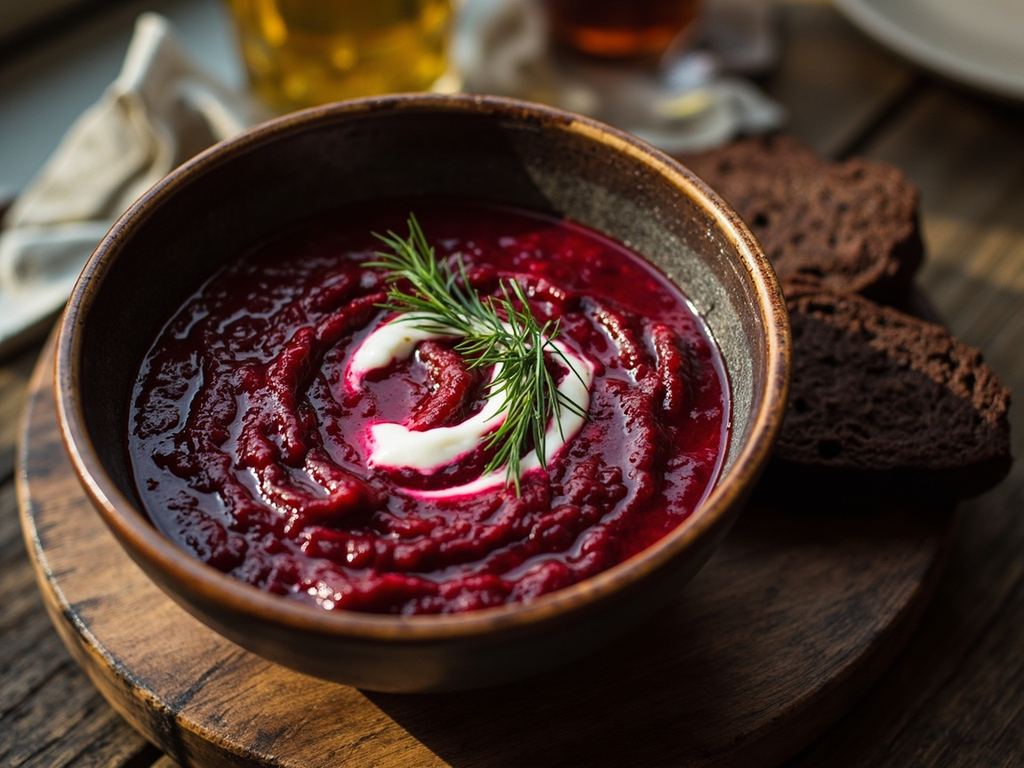
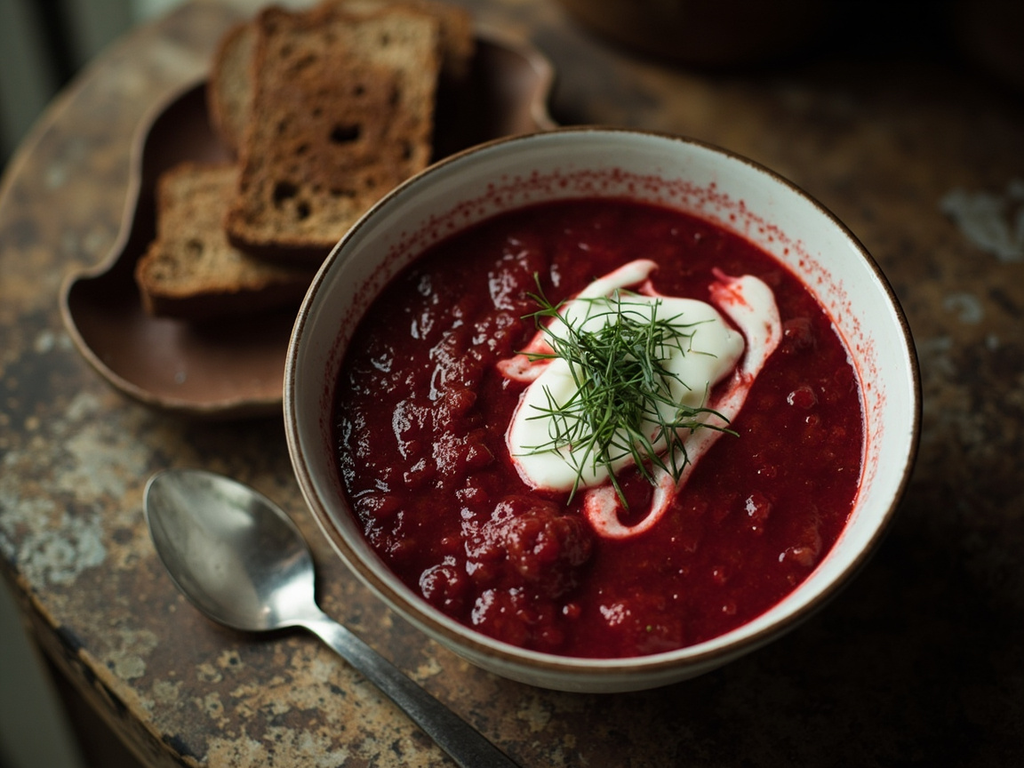
A deep ruby soup, both tangy and earthy, where beet dominates cabbage, carrot, and onion in a beef broth. Served boiling hot, crowned with a spoonful of smetana that dissolves into pink swirls, and fresh dill.
You see, borscht is patience made soup: at home, Nina would let the beet and cabbage simmer for hours. You add the spoonful of smetana only at the very last moment, never in the boiling pot — otherwise it curdles, and you spoil what little you have. When times were lean, we stretched the broth, used less meat, but the red color remained, and that was already a consolation. Serve it boiling hot with black bread: for the rest, believe me, you manage.
- •Beets — a few, deep red (color, earthy sweetness, acidity)
- •White cabbage — half a head (body and volume)
- •Onion and carrot — according to what's available (aromatic base)
- •Beef bones and meat — what rationing allows (broth, umami)
- •Vinegar or soured beet juice — a splash (fixes the color, adds acidity)
- •Smetana (sour cream) — a good spoonful per bowl (binding, final creaminess)
- •Fresh dill — a handful (freshness, signature)
Beet and cabbage borscht
A deep ruby soup, both tangy and earthy, where beet dominates cabbage, carrot, and onion in a beef broth. Served boiling hot, crowned with a spoonful of smetana that dissolves into pink swirls, and fresh dill.
Why this dish? Borscht is one of the foundational soups of his diet: that of the urban intelligentsia of Leningrad, simmered for hours, stretched in times of scarcity without ever losing its comforting red color.
You see, borscht is patience made soup: at home, Nina would let the beet and cabbage simmer for hours. You add the spoonful of smetana only at the very last moment, never in the boiling pot — otherwise it curdles, and you spoil what little you have. When times were lean, we stretched the broth, used less meat, but the red color remained, and that was already a consolation. Serve it boiling hot with black bread: for the rest, believe me, you manage.
Ingredients (period version)
- Beets — a few, deep red (color, earthy sweetness, acidity)
- White cabbage — half a head (body and volume)
- Onion and carrot — according to what's available (aromatic base)
- Beef bones and meat — what rationing allows (broth, umami)
- Vinegar or soured beet juice — a splash (fixes the color, adds acidity)
- Smetana (sour cream) — a good spoonful per bowl (binding, final creaminess)
- Fresh dill — a handful (freshness, signature)
Ingredients
- Raw beets — 500 g (color, sweetness, acidity)
- White cabbage — 300 g shredded (body)
- Onion — 1 large (aromatic base)
- Carrot — 1 (sweetness)
- Potato — 2 medium (texture)
- Beef broth — 1.5 L (with 300 g short ribs) (umami, foundation)
- Tomato paste — 1 tbsp (color and roundness (common Soviet use))
- Wine vinegar — 1 tbsp (acidity, fixes red)
- Smetana or thick crème fraîche — 4 tbsp (for serving)
- Fresh dill — 1 small bunch (finishing)
Method
- Cook the meat in salted cold water at a simmer for 1 hour to obtain a clear broth; skim, remove the meat and shred it.
- Grate the beets and carrot coarsely; sauté with the chopped onion, tomato paste, and vinegar for 10 minutes (the acid fixes the red).
- Add diced potatoes then cabbage to the broth; cook 15 minutes.
- Add the sautéed beets and shredded meat; simmer 20 minutes on low heat, adjust salt and acidity.
- Let rest off the heat: borscht is always better reheated the next day.
- Serve boiling hot, a spoonful of smetana in the center and plenty of chopped dill.
How it was made : In the communal apartments (kommunalki) of Leningrad and Moscow, borscht simmered on the shared stove. It was made in large quantities for several days, and stretched with water and cabbage when meat was scarce. During the siege of Leningrad, this kind of soup became an almost inaccessible memory.
The contemporary twist : A splash of raw beet juice added off the heat just before serving revives a brilliant red and vivid acidity — a "theme recall" like in a symphonic reprise.
Sources : « Kniga o vkousnoï i zdorovoï pichtche » (The Book of Tasty and Healthy Food), Soviet culinary reference, 1939 · Elena Molokhovets, « A Gift to Young Housewives », 1861
Dmitri Shostakovich · Charactorium