 flip
flipBrined vegetables from the traveler's jar (菹)
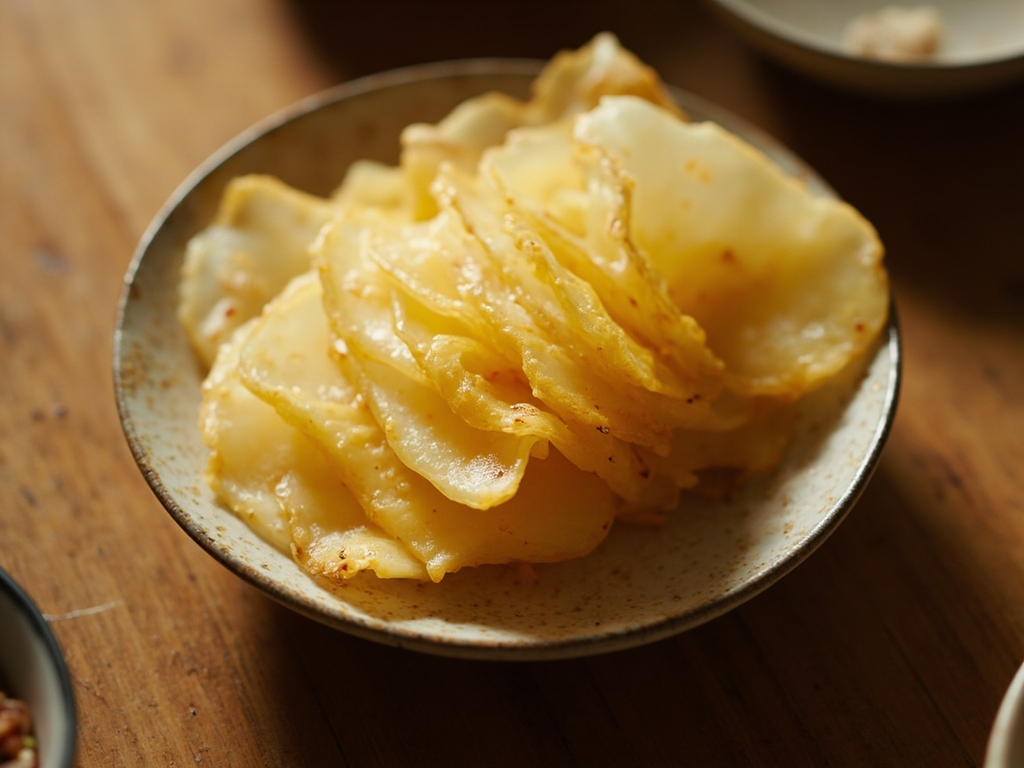
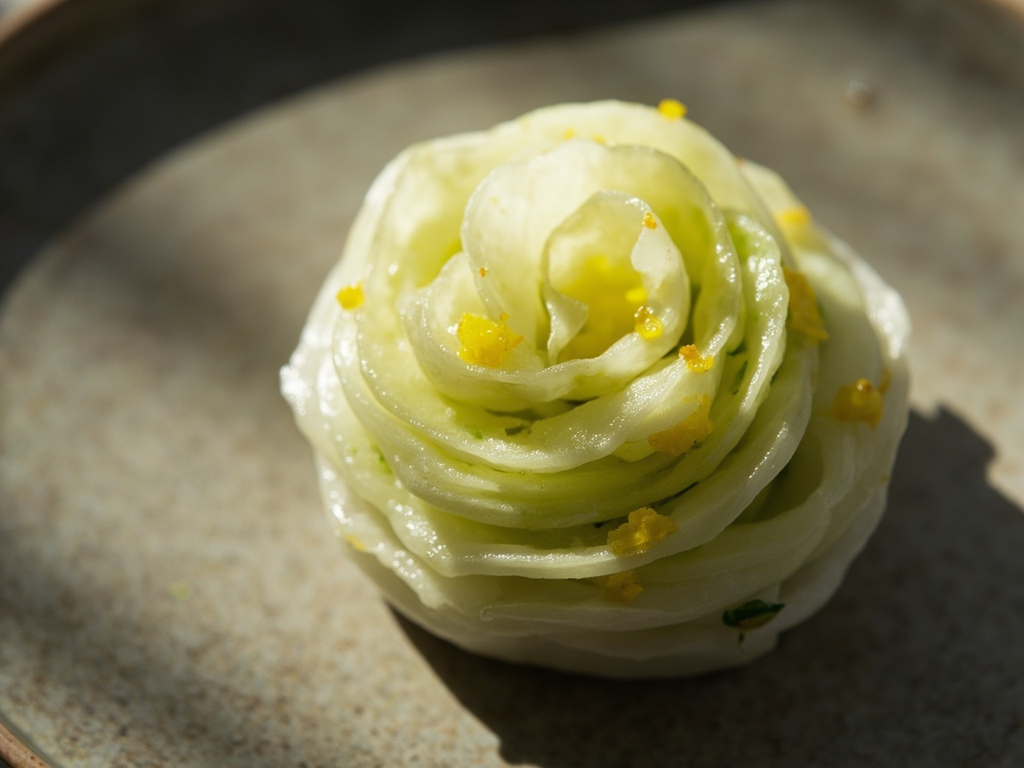
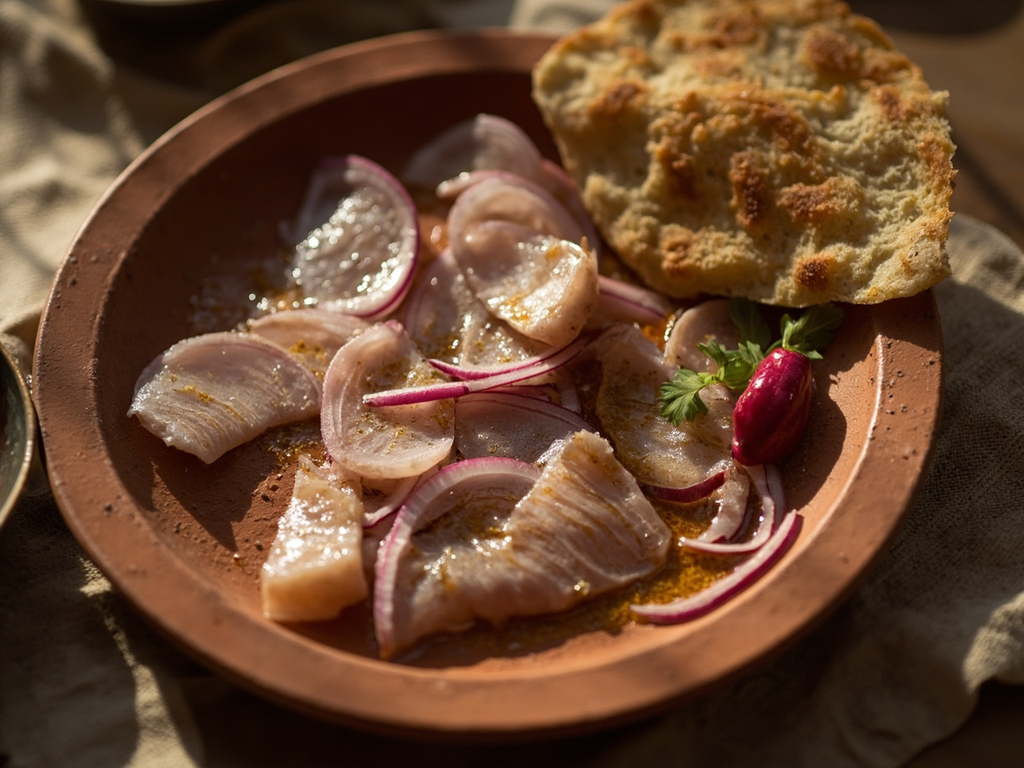
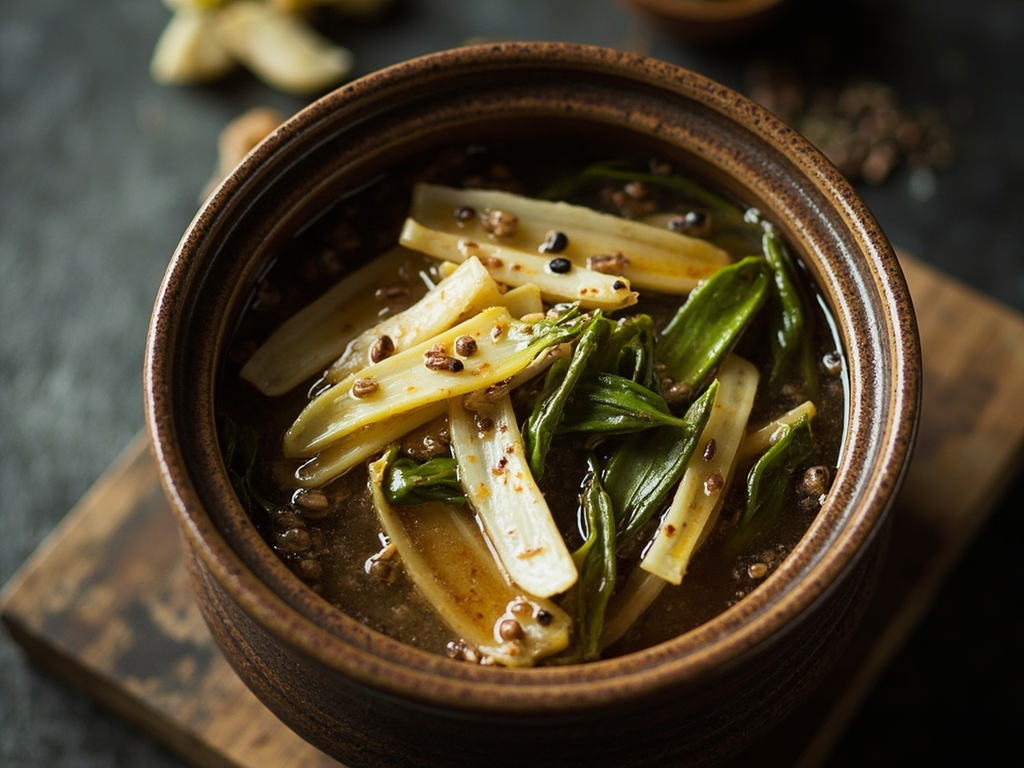
Brined vegetables from the traveler's jar (菹)
Why this dish? In his final years, Du Fu wandered the Yangtze and Lake Dongting, sometimes living on his boat. Brined vegetables in a jar—sour and salty—kept for weeks and accompanied the millet where no market awaited the traveler.
Firm vegetables—radish, mustard greens, mallow stems—brined until crunchy, tangy, and alive. A spoonful revives any bland bowl of grain.
On the boat, you see, the market does not come to you: you must carry your table in a jar. I salt the radishes and mustard greens, drown them in their own brine, and time does the rest—after a few days they become sour, crunchy, alive. One bite on the millet, and exile suddenly has taste. It is little, but this little has followed me from the Gorges to Lake Dongting.
- •White radish (萝卜) and mustard greens (芥) — whatever the garden yields (firm vegetables)
- •Salt — generously (preservation)
- •Ginger and Sichuan pepper — a few slices and grains (flavoring)
- •Boiled and cooled water — to cover (brine)
Brined vegetables from the traveler's jar (菹)
Firm vegetables—radish, mustard greens, mallow stems—brined until crunchy, tangy, and alive. A spoonful revives any bland bowl of grain.
Why this dish? In his final years, Du Fu wandered the Yangtze and Lake Dongting, sometimes living on his boat. Brined vegetables in a jar—sour and salty—kept for weeks and accompanied the millet where no market awaited the traveler.
On the boat, you see, the market does not come to you: you must carry your table in a jar. I salt the radishes and mustard greens, drown them in their own brine, and time does the rest—after a few days they become sour, crunchy, alive. One bite on the millet, and exile suddenly has taste. It is little, but this little has followed me from the Gorges to Lake Dongting.
Ingredients (period version)
- White radish (萝卜) and mustard greens (芥) — whatever the garden yields (firm vegetables)
- Salt — generously (preservation)
- Ginger and Sichuan pepper — a few slices and grains (flavoring)
- Boiled and cooled water — to cover (brine)
Ingredients
- White radish (daikon) — 300 g (firm vegetable)
- Mustard greens or napa cabbage — 200 g (leafy vegetable)
- Non-iodized salt — 40 g (preservation)
- Boiled and cooled water — 1 liter (brine)
- Ginger — 3 slices (flavoring)
- Sichuan peppercorns — 1 tsp (flavoring)
Method
- Wash and cut vegetables into thick sticks or strips; let them wilt for 1 hour.
- Dissolve salt in cold boiled water to make brine; add ginger and Sichuan pepper.
- Pack vegetables tightly into a very clean jar; cover completely with brine (nothing should float).
- Weigh down with a clean object; cover loosely (not airtight).
- Ferment for 4–7 days at room temperature: the brine will turn cloudy and sour.
- Store in a cool place; use a clean utensil to serve as an accompaniment to grain.
How it was made : The 菹 (zū), brine-fermented vegetable, is one of China's oldest condiments, codified as early as the *Qímín Yàoshù*. A common ancestor of Sichuan *pàocài* and kimchi, it ensured vegetables in winter and during travel, in an era without refrigeration. No chili here: the flavor comes from salt, lactic acid, and Sichuan pepper.
The contemporary twist : In a clean glass jar, these "Du Fu's boat" pickles perfectly accompany a contemporary bowl of rice—lacto-fermentation, scholarly style, ahead of its time.
Sources : Jia Sixie, *Qímín Yàoshù* (齐民要术), 6th century, chapters on 菹 · H. T. Huang, *Science and Civilisation in China*, vol. 6.5 (Fermentations and Food Science)
Du Fu · Charactorium