 flip
flipMaza, the King's Barley Cake
Maza, the King's Barley Cake
Why this dish? Even on the Acropolis of Athens, a king of the heroic age first eats sitos: the barley maza is the foundation of every Aegean meal, long before the meats of banquets. It is the daily bread, broken while waiting for a son's return.
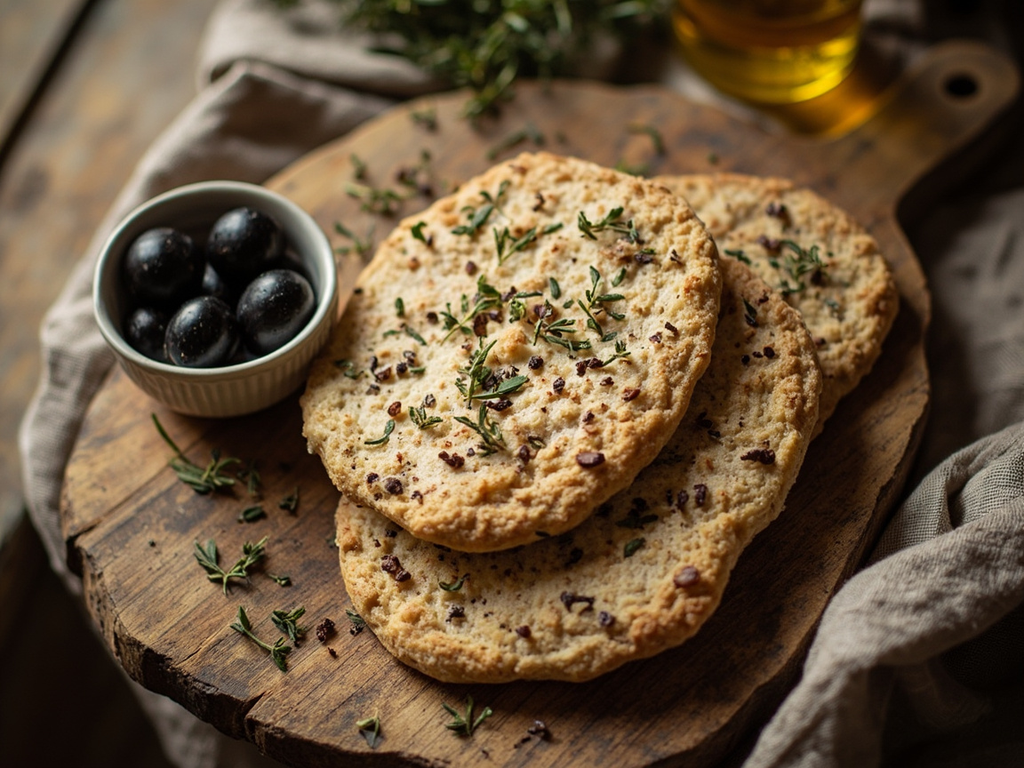
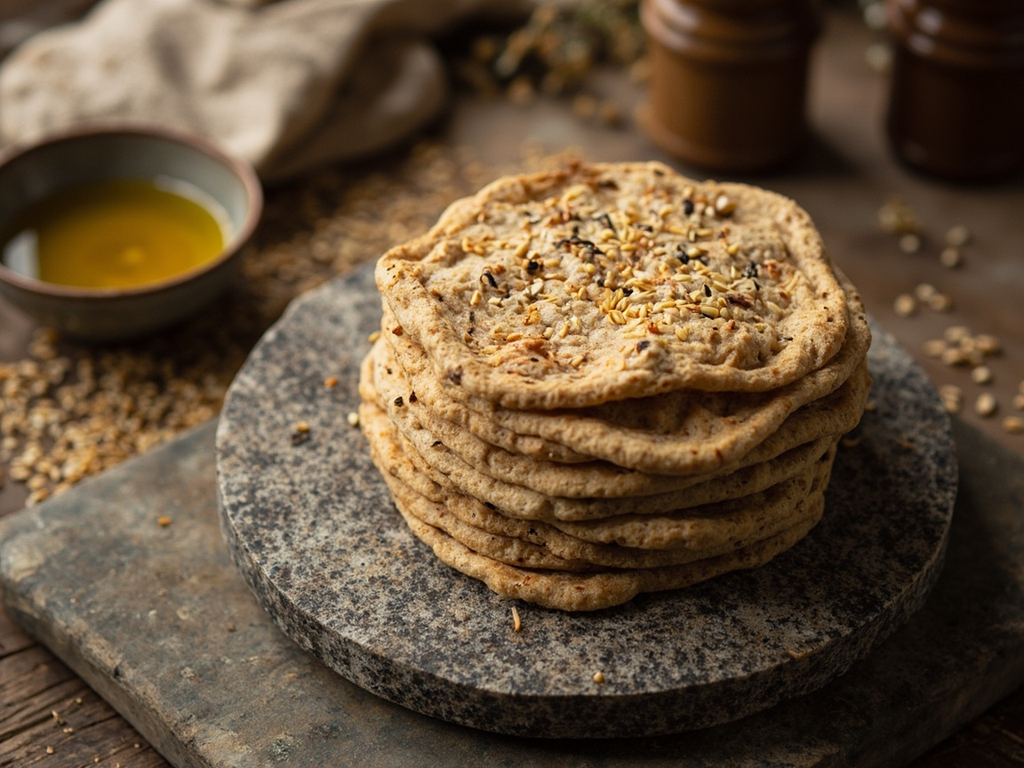
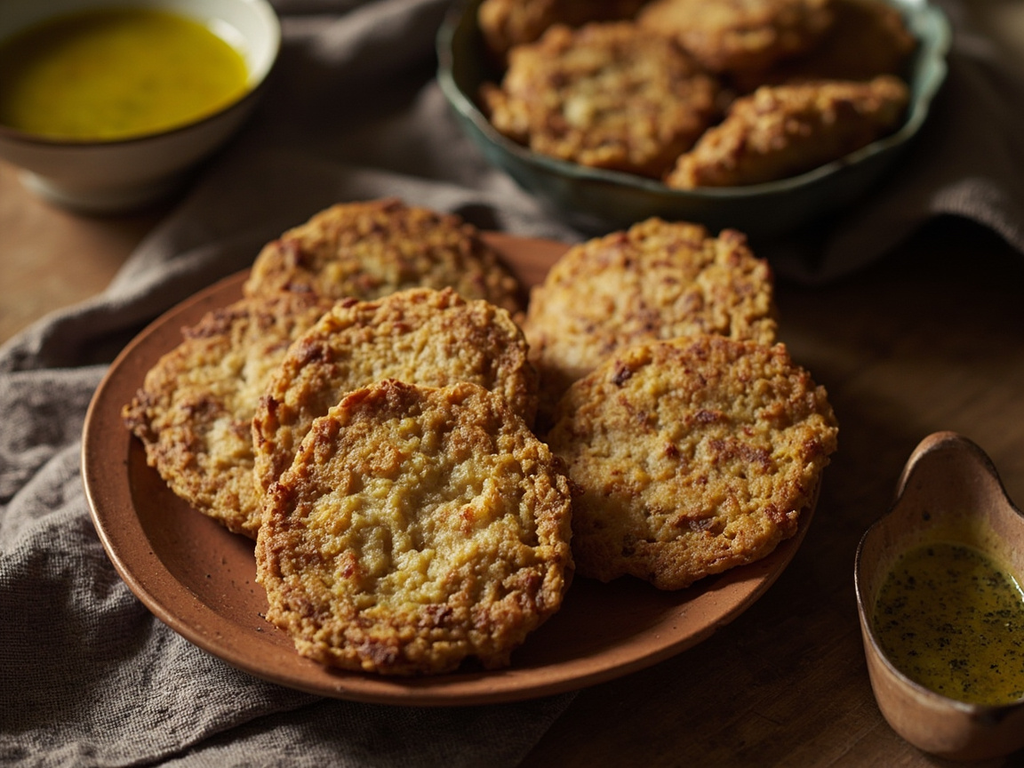
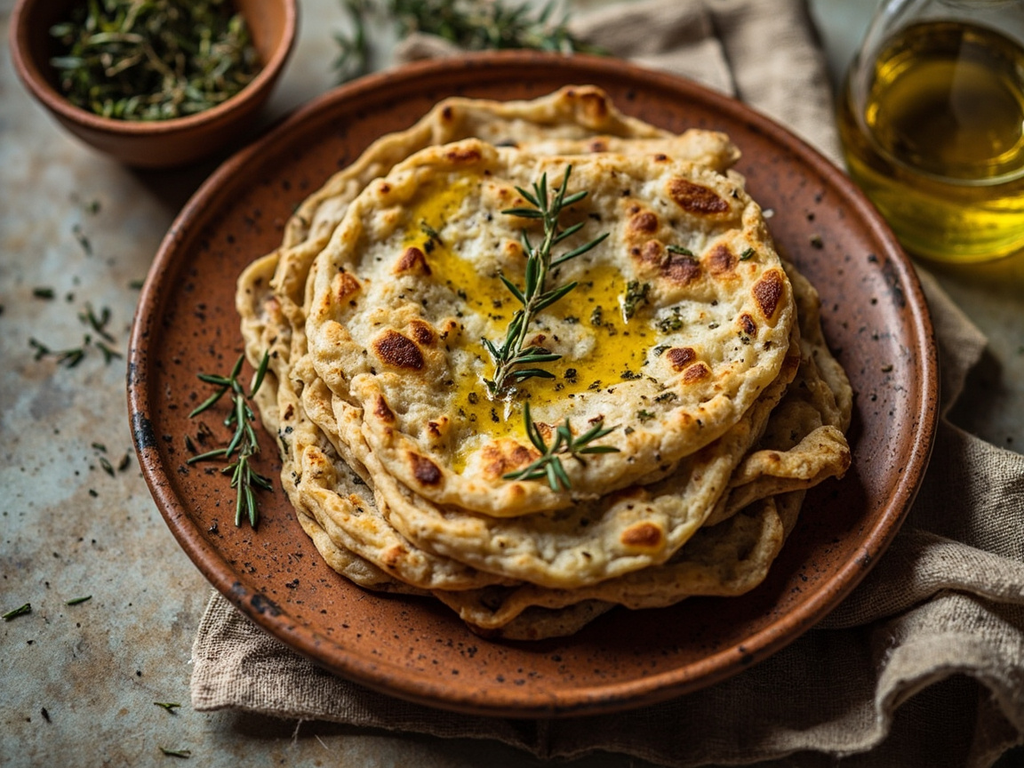
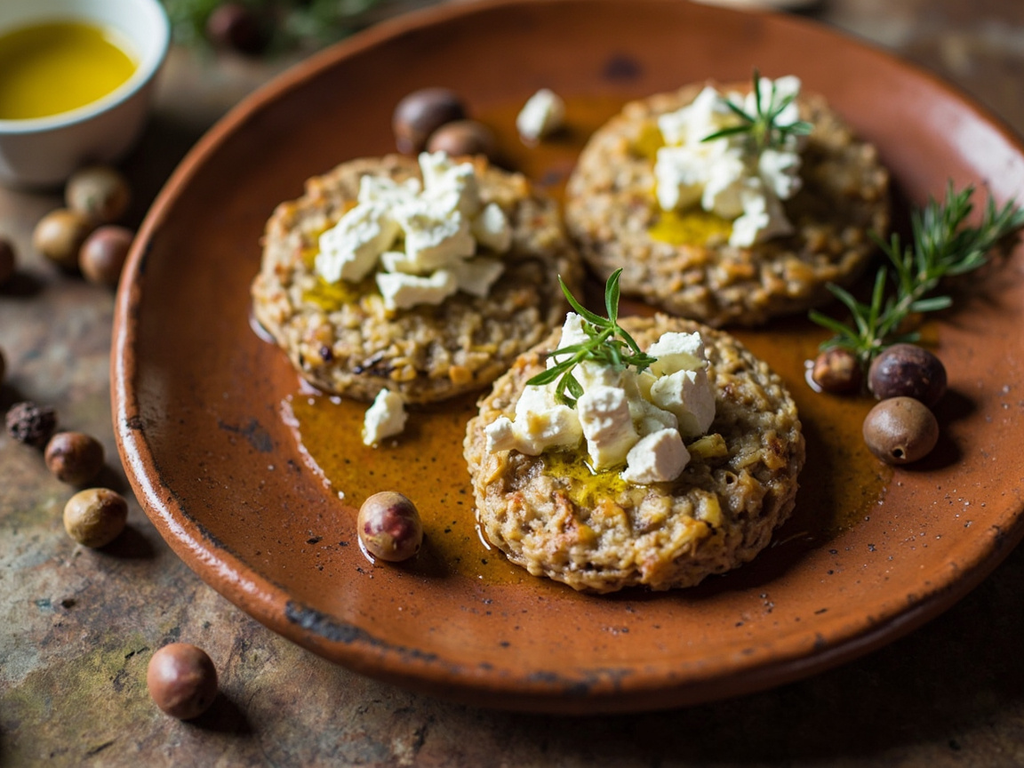
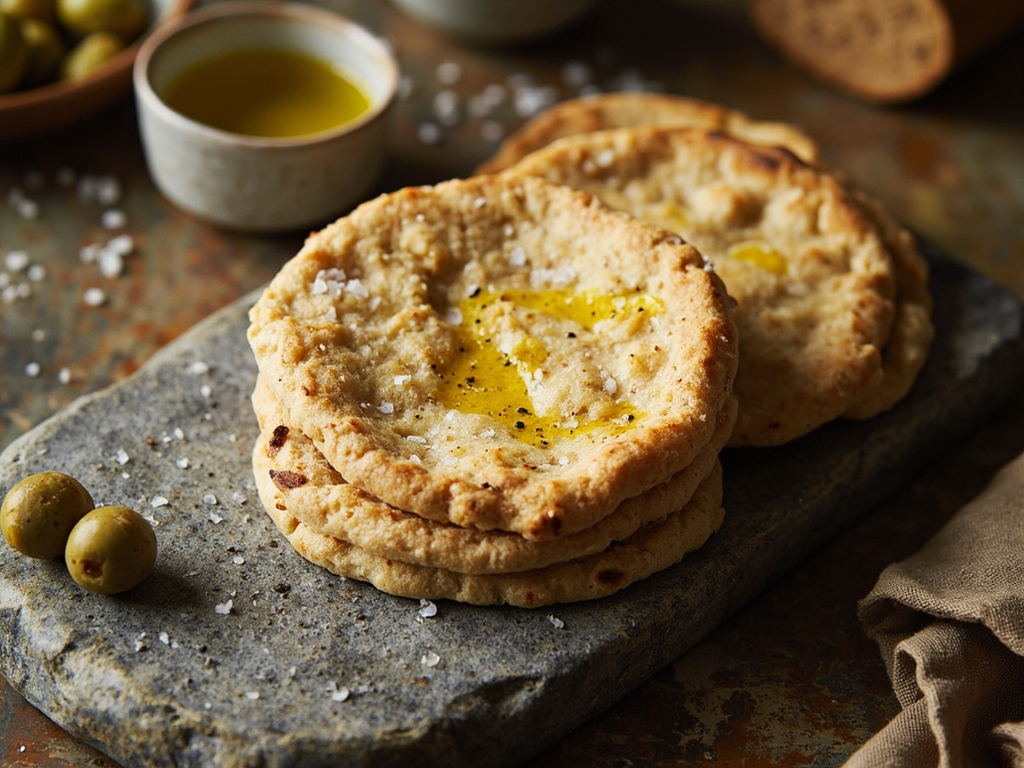
A flat, rustic cake of barely kneaded barley flour, baked on a hot stone or under the embers, rubbed with olive oil and seasoned with a pinch of sea salt. Dense, earthy, slightly bitter: the food that sustains the body.
Approach, stranger, and sit down: before we speak of blood shed on the altar, we eat barley. My maids grind the grain at dawn, moisten the flour with a stream of water and oil, and cast it onto the stone reddened by fire. We work it little — barley does not like to be forced. Break off a piece with your hands, dip it in oil, and may the gods favor you under my roof.
- •Ground barley flour (alphita) — two handfuls per guest (cereal base)
- •Spring water — as needed to bind (binder)
- •Olive oil — a drizzle (fat and crust)
- •Sea salt — a pinch (seasoning)
Maza, the King's Barley Cake
A flat, rustic cake of barely kneaded barley flour, baked on a hot stone or under the embers, rubbed with olive oil and seasoned with a pinch of sea salt. Dense, earthy, slightly bitter: the food that sustains the body.
Why this dish? Even on the Acropolis of Athens, a king of the heroic age first eats sitos: the barley maza is the foundation of every Aegean meal, long before the meats of banquets. It is the daily bread, broken while waiting for a son's return.
Approach, stranger, and sit down: before we speak of blood shed on the altar, we eat barley. My maids grind the grain at dawn, moisten the flour with a stream of water and oil, and cast it onto the stone reddened by fire. We work it little — barley does not like to be forced. Break off a piece with your hands, dip it in oil, and may the gods favor you under my roof.
Ingredients (period version)
- Ground barley flour (alphita) — two handfuls per guest (cereal base)
- Spring water — as needed to bind (binder)
- Olive oil — a drizzle (fat and crust)
- Sea salt — a pinch (seasoning)
Ingredients
- Barley flour — 200 g (cereal base)
- Whole wheat flour — 50 g (a bit of structure (barley has almost no gluten))
- Warm water — 120 to 150 ml (binder)
- Olive oil — 2 tbsp + a little for cooking (fat)
- Salt — 1 tsp (seasoning)
Method
- Mix the flours and salt in a bowl.
- Add the oil, then the warm water little by little, until a soft but non-sticky dough forms. Knead only briefly.
- Divide into 4 balls and flatten into half-centimeter-thick cakes.
- Heat a cast-iron skillet or pizza stone over high heat, without fat.
- Cook each cake for 3 to 4 minutes per side, until golden spots appear.
- Remove, rub with olive oil and a pinch of salt. Serve warm, with olives and cheese.
How it was made : Barley, more rustic than wheat, was the dominant cereal in ancient Greece. Maza could be a baked cake or a simple paste of alphita kneaded with water, honey, or wine, eaten without cooking. It was the staple food; leavened wheat bread remained a later urban luxury.
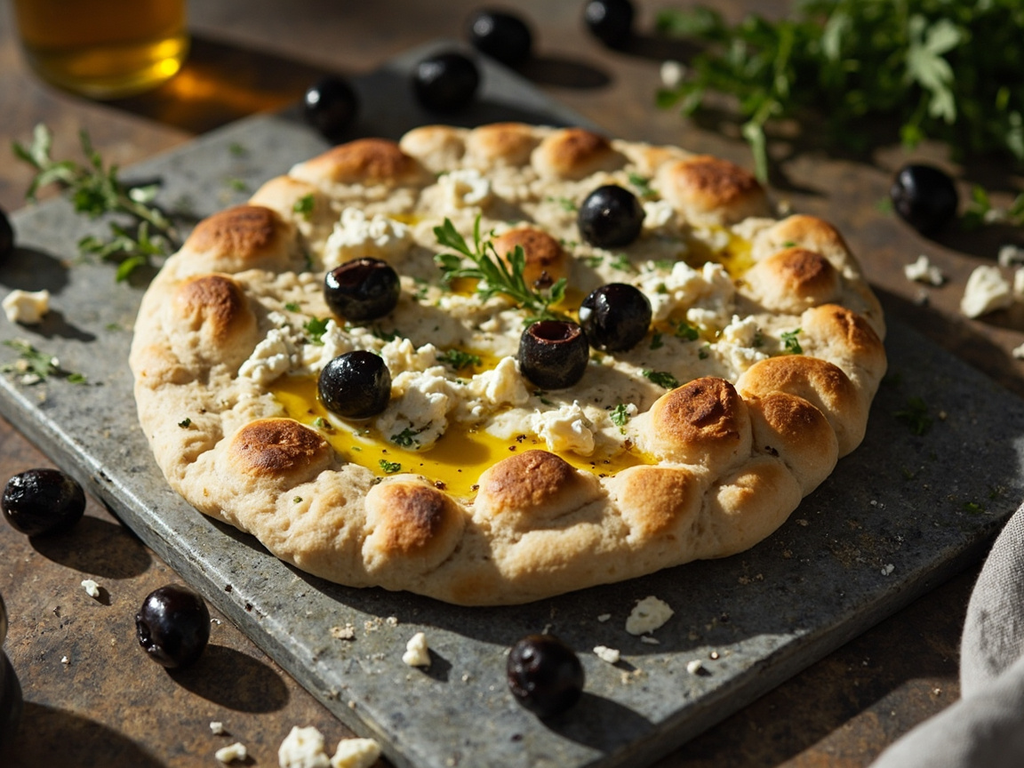
The contemporary twist : Serve it on an appetizer board called "Table of Athens": warm maza, extra virgin olive oil, Kalamata olives, crumbled feta, and honey on the side.
Sources : Andrew Dalby, Siren Feasts: A History of Food and Gastronomy in Greece · Homer, descriptions of meals in the Iliad and Odyssey
Aegeus · Charactorium