 flip
flipBuckwheat blinis with caviar and smetana
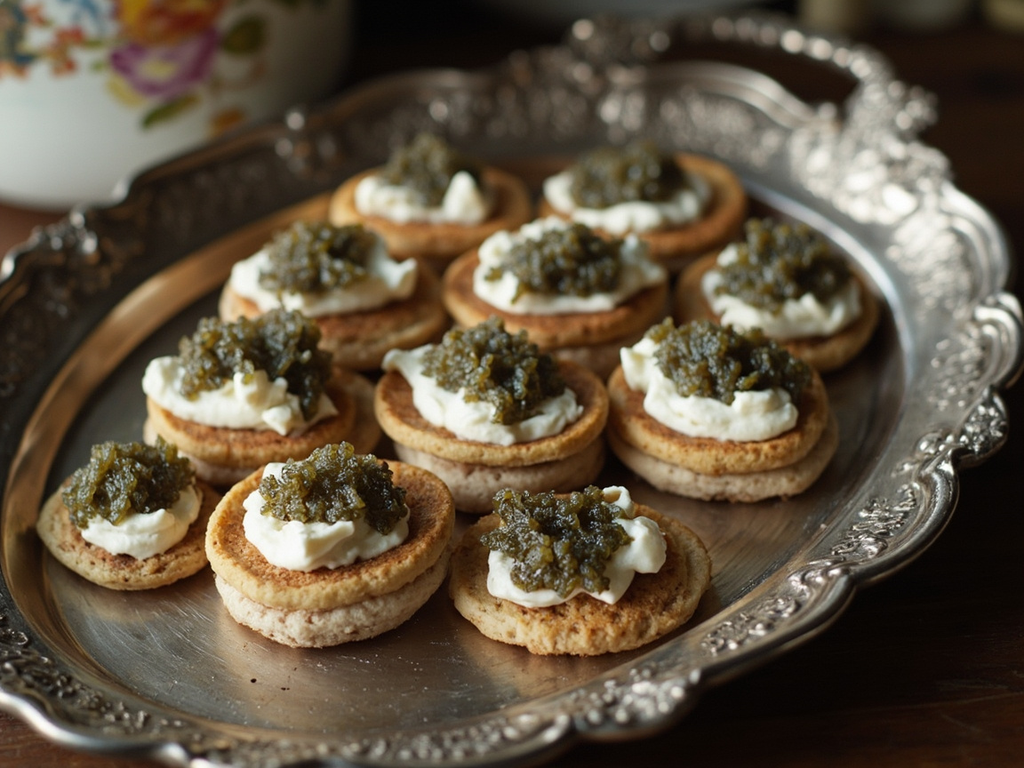
Buckwheat blinis with caviar and smetana
Why this dish? Princess of Saint Petersburg and familiar of Catherine II's court, Dashkova received scholars and men of letters at her table. The blinis with caviar opened these receptions where one discussed science and the Russian language between glasses.
Fine leavened buckwheat pancakes, warm and soft, topped with smetana (sour cream) and crowned with grey sturgeon caviar. The ultimate ceremonial dish among Russian zakouski.
Come up to the buffet, please, and do not be shy. In my house we welcome the mind as well as the palate: these blinis, I want them still warm, straight from the cast-iron pan, and one spreads the smetana with one hand, the caviar with the other. My cook makes them with yeast from dawn, for a buckwheat batter needs its time, like a good academy. Eat them folded, with your fingertips, and drink a small glass of vodka over them: that is how we do it before sitting down to table and debating belles-lettres.
- •Buckwheat and wheat flour — mixed in equal parts (body of the batter)
- •Brewer's yeast — a little (to leaven)
- •Milk and eggs — as needed (binder)
- •Grey sturgeon caviar — according to one's purse (noble garnish)
- •Smetana (sour cream) — a bowl (tangy freshness)
Buckwheat blinis with caviar and smetana
Fine leavened buckwheat pancakes, warm and soft, topped with smetana (sour cream) and crowned with grey sturgeon caviar. The ultimate ceremonial dish among Russian zakouski.
Why this dish? Princess of Saint Petersburg and familiar of Catherine II's court, Dashkova received scholars and men of letters at her table. The blinis with caviar opened these receptions where one discussed science and the Russian language between glasses.
Come up to the buffet, please, and do not be shy. In my house we welcome the mind as well as the palate: these blinis, I want them still warm, straight from the cast-iron pan, and one spreads the smetana with one hand, the caviar with the other. My cook makes them with yeast from dawn, for a buckwheat batter needs its time, like a good academy. Eat them folded, with your fingertips, and drink a small glass of vodka over them: that is how we do it before sitting down to table and debating belles-lettres.
Ingredients (period version)
- Buckwheat and wheat flour — mixed in equal parts (body of the batter)
- Brewer's yeast — a little (to leaven)
- Milk and eggs — as needed (binder)
- Grey sturgeon caviar — according to one's purse (noble garnish)
- Smetana (sour cream) — a bowl (tangy freshness)
Ingredients
- Buckwheat flour — 100 g (flavor and color)
- Wheat flour — 100 g (flexibility)
- Fresh baker's yeast — 10 g (leavening)
- Warm milk — 350 ml (liquid)
- Eggs — 2 (yolks + beaten whites) (softness)
- Thick crème fraîche or smetana — 150 g (tangy topping)
- Caviar or trout/herring roe — 1 small jar (garnish)
- Butter — for the pan (cooking)
Method
- Dissolve the yeast in warm milk, add the flours, cover, and let rise for 1 hour in a warm place.
- Stir in the egg yolks and a pinch of salt, then gently fold in the stiffly beaten egg whites; let rest 30 minutes.
- Cook small thick pancakes in butter in a very hot pan, 1 to 2 minutes per side.
- Serve warm, top with a spoonful of smetana and place the caviar on top.
- Present folded in quarters or rolled, to be eaten with the fingers.
How it was made : The leavened buckwheat blini is one of the oldest Russian dishes; it was cooked in cast-iron pans in the Russian oven. Sturgeon caviar, abundant and cheap for the aristocracy at the time, was a river product before becoming the luxury item we know today.
The contemporary twist : Arrange the blinis as individual bites, a dot of smetana and a pearl of caviar: miniature zakouski for a debate dinner in the style of Enlightenment salons.
Ekaterina Vorontsova-Dashkova · Charactorium