 flip
flipRoasted Volga sturgeon with French caper sauce
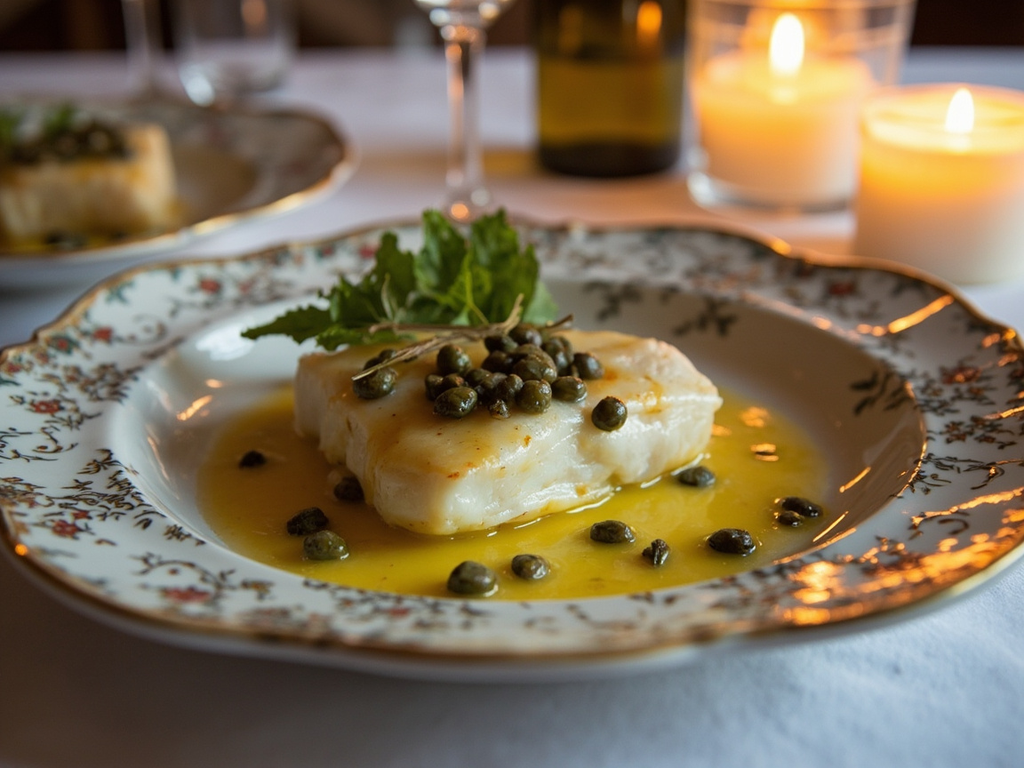
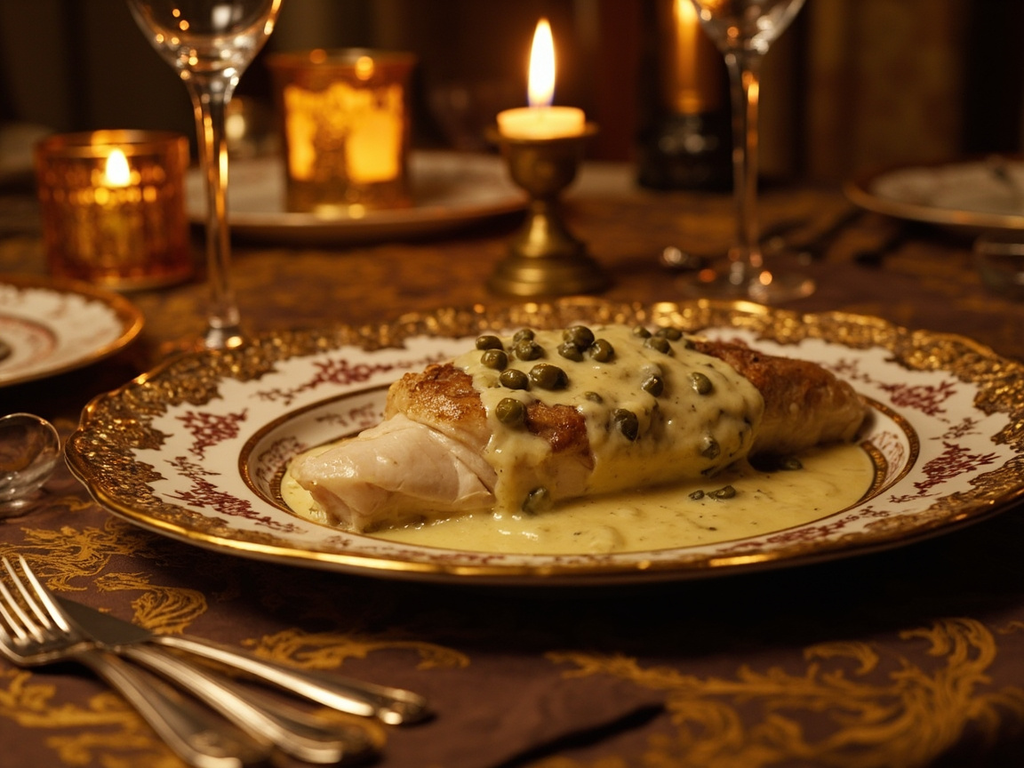
Roasted Volga sturgeon with French caper sauce
Why this dish? Elizabeth's feasts included dozens of services and the Volga sturgeon reigned there, symbol of the wealth of Russian rivers. The sovereign adored the marriage of Russian splendor and French sauces made fashionable by the chefs she attracted to Saint Petersburg.
A section of firm-fleshed sturgeon, roasted in butter and basted, served napped with a blond tangy sauce of capers and lemon — the Russian king-fish dressed in the Parisian style.
Come closer, and look at this fish: it is the sturgeon of my Volga, the master of the rivers of my Empire. At my court, I wanted it prepared as in Paris, with a blond sauce where capers and lemon juice sing — for I love that the strength of Russia should adorn itself with the grace of France. My cooks baste it ceaselessly with butter, and its flesh, you see, remains pearly and firm like no other.
- •Section of Volga sturgeon — a fine piece per guest (centerpiece)
- •Clarified butter — generously (roasting, basting)
- •Capers in vinegar — a spoonful (acidity, lift)
- •Lemon — one (acidity)
- •French white wine — a glass (deglazing the sauce)
- •Wheat flour — a pinch (sauce thickener)
Roasted Volga sturgeon with French caper sauce
A section of firm-fleshed sturgeon, roasted in butter and basted, served napped with a blond tangy sauce of capers and lemon — the Russian king-fish dressed in the Parisian style.
Why this dish? Elizabeth's feasts included dozens of services and the Volga sturgeon reigned there, symbol of the wealth of Russian rivers. The sovereign adored the marriage of Russian splendor and French sauces made fashionable by the chefs she attracted to Saint Petersburg.
Come closer, and look at this fish: it is the sturgeon of my Volga, the master of the rivers of my Empire. At my court, I wanted it prepared as in Paris, with a blond sauce where capers and lemon juice sing — for I love that the strength of Russia should adorn itself with the grace of France. My cooks baste it ceaselessly with butter, and its flesh, you see, remains pearly and firm like no other.
Ingredients (period version)
- Section of Volga sturgeon — a fine piece per guest (centerpiece)
- Clarified butter — generously (roasting, basting)
- Capers in vinegar — a spoonful (acidity, lift)
- Lemon — one (acidity)
- French white wine — a glass (deglazing the sauce)
- Wheat flour — a pinch (sauce thickener)
Ingredients
- Sturgeon steaks (or swordfish/halibut as substitute) — 4 × 180 g (centerpiece)
- Butter — 80 g (roasting and sauce)
- Dry white wine — 150 ml (sauce base)
- Drained capers — 2 tbsp (acidity)
- Lemon — 1 (juice + zest) (acidity)
- Flour — 1 tbsp (thickener)
- Salt, pepper — to taste (seasoning)
Method
- Salt the sturgeon steaks. Sear in 40 g of hot butter, 3–4 minutes per side, basting, until golden brown. Keep warm.
- In the same pan, melt remaining butter, add flour and cook 1 minute stirring to make a blond roux.
- Deglaze with white wine, whisk to smooth, let reduce 3–4 minutes until coating consistency.
- Add capers, lemon juice and zest, adjust salt and pepper.
- Nap the steaks with sauce and serve immediately, with black bread or glazed turnips... no: with *kasha* or glazed turnips (neither potato nor tomato at the time).
How it was made : At the time, sturgeon arrived live or on ice from the Volga and the Caspian; it was roasted on a spit or in the oven, and the court adopted the emulsified sauces and roux that French chefs had just introduced to Russia. French wine, imported at great expense, marked the luxury of the dish.
The contemporary twist : A fine quenelle of caviar placed on the steak at serving, a nod to imperial *ikra*.
Elizabeth I of Russia · Charactorium