 flip
flipOxford marmalade (Seville orange marmalade)
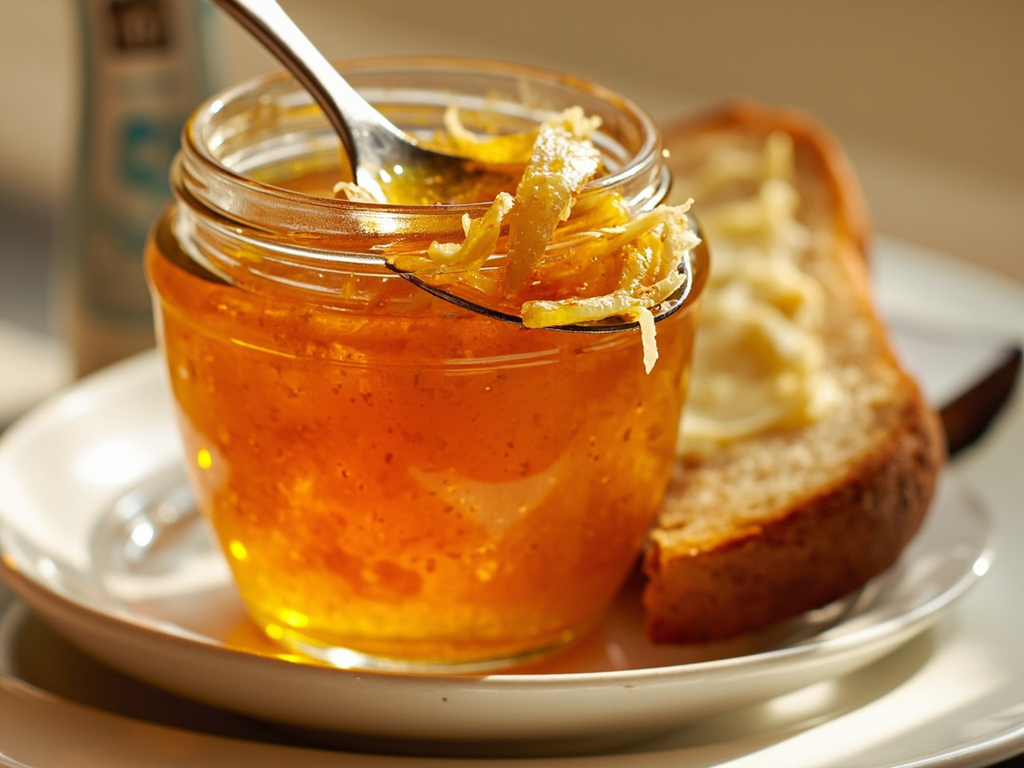
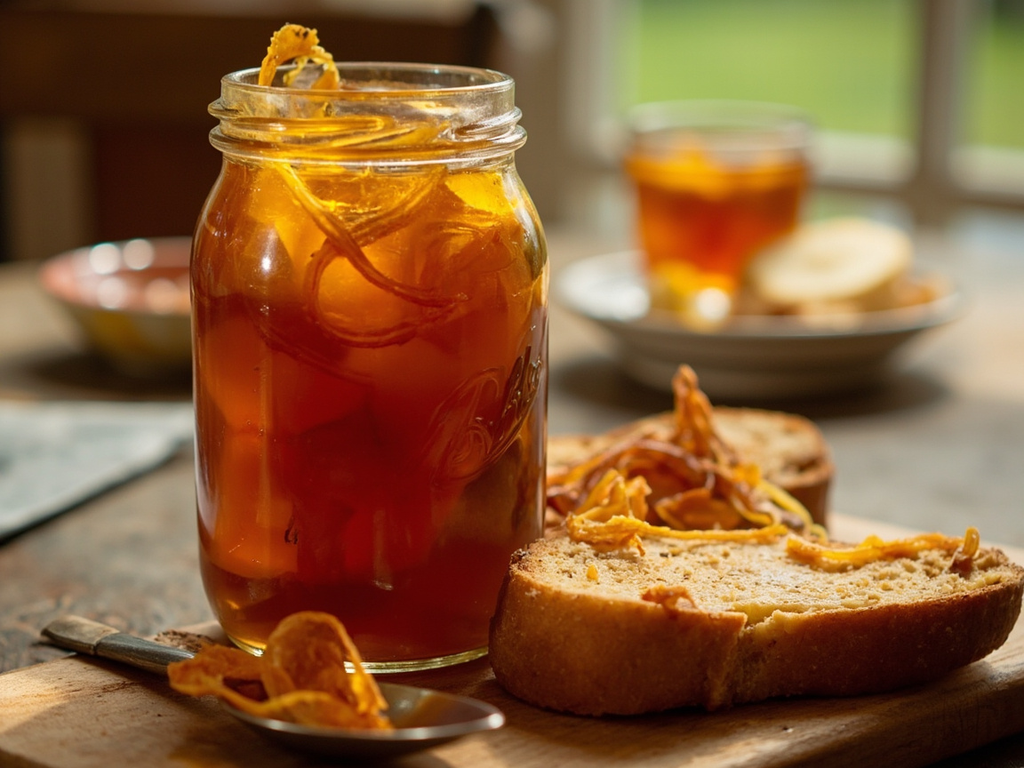
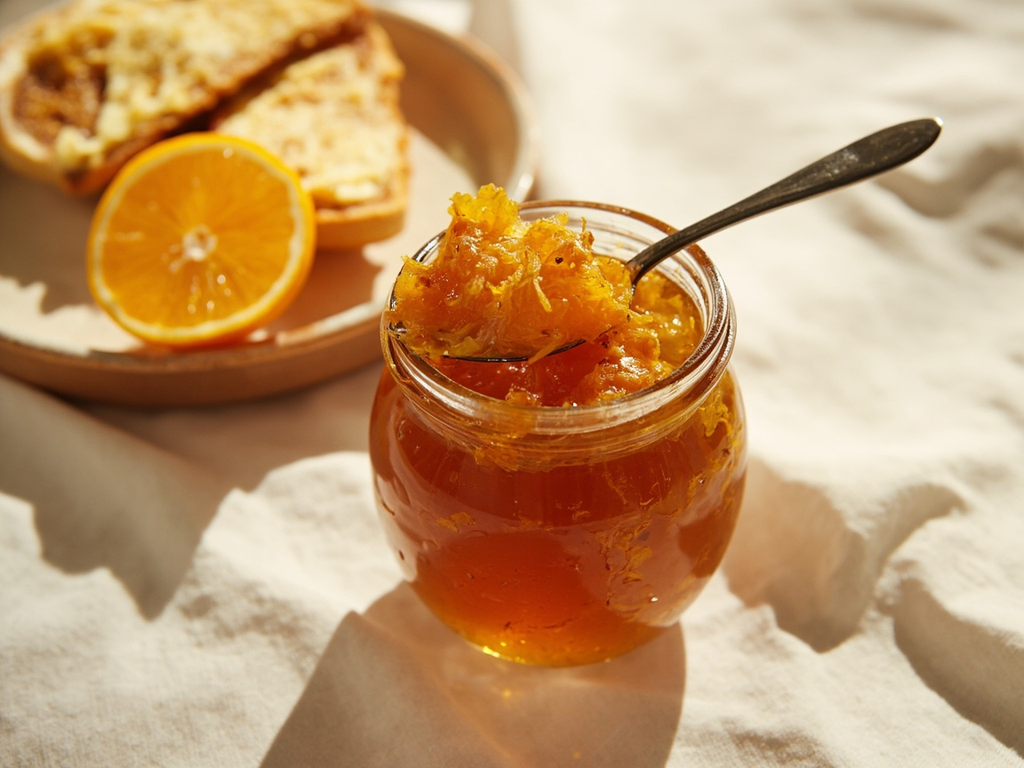
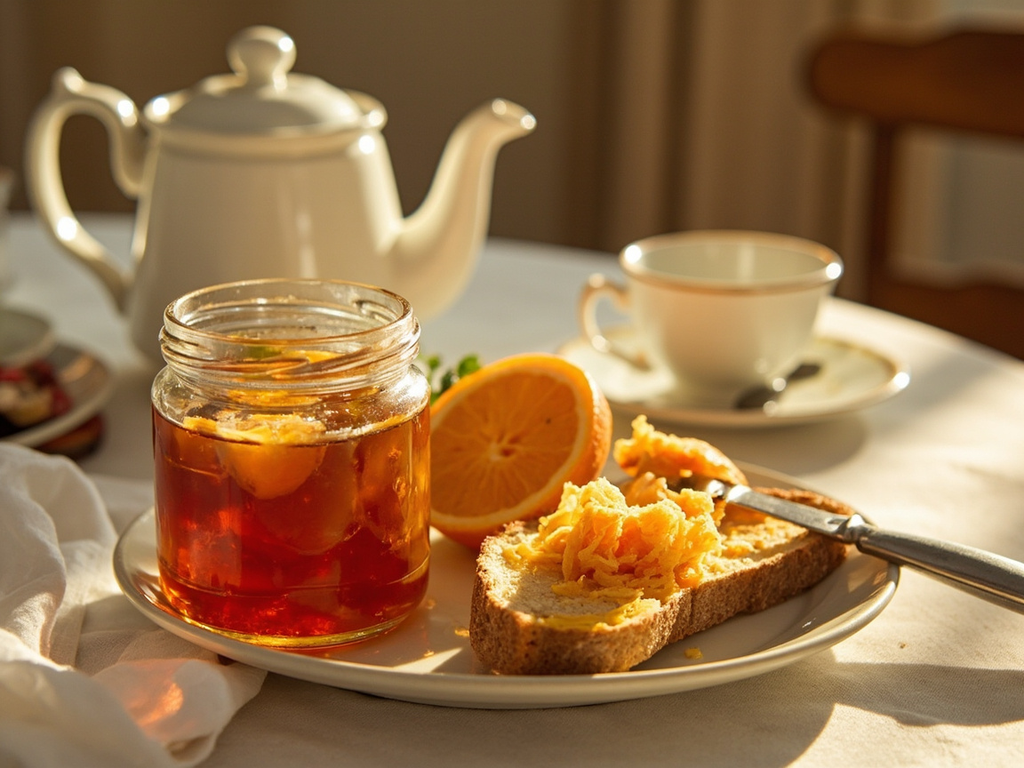
Oxford marmalade (Seville orange marmalade)
Why this dish? Anscombe spent most of her life between Oxford (Somerville College, the Radcliffe Camera of the Bodleian) and Cambridge. Oxford marmalade, born in a shop in Oxford's covered market and famous worldwide, is the edible emblem of the university city where she read, taught, and berated her opponents.
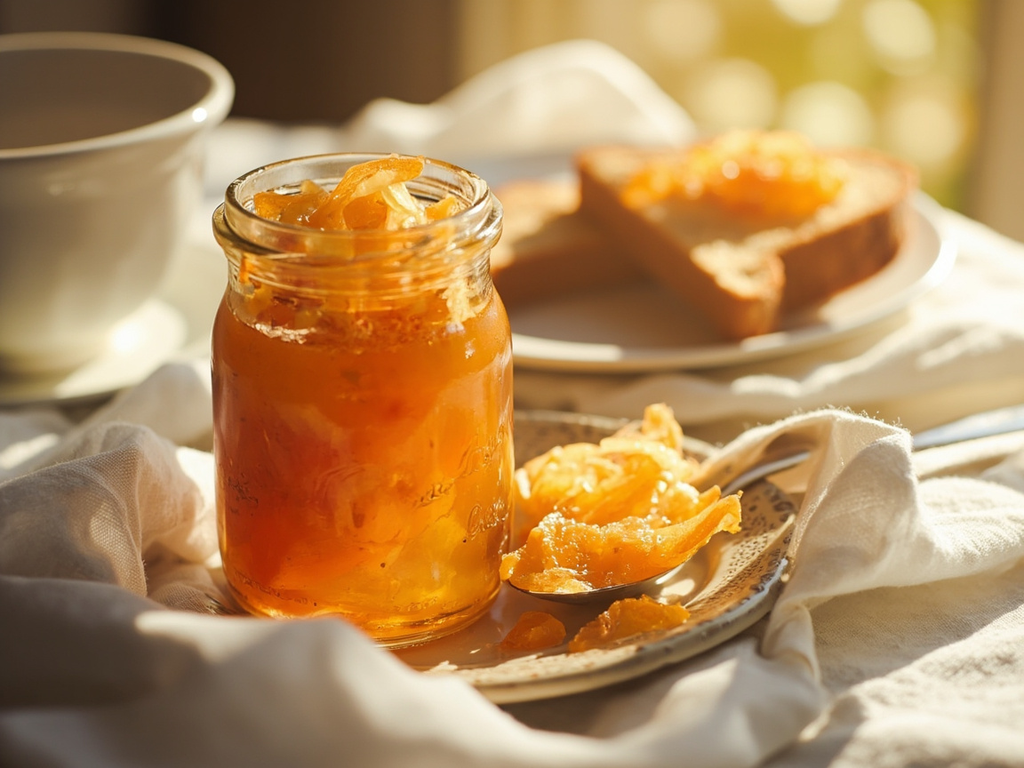
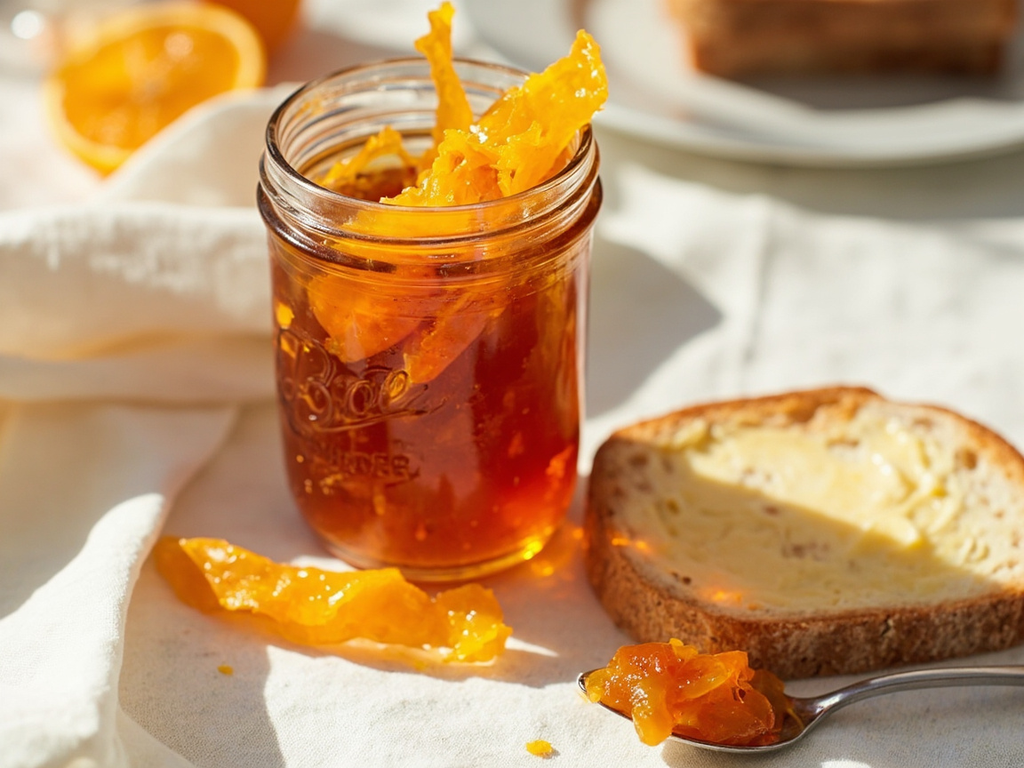
A dark amber jelly studded with fine shreds of bitter Seville orange peel, at once sweet, tangy and frankly bitter. Spread on buttered toast, it is the very awakening of scholarly England.
Do not confuse, I pray you, marmalade with those insipid jams that have no character. This one is made with Seville bitter oranges, which appear on our markets only a few weeks in winter — so you must seize the opportunity, as you seize a good argument. Bitterness is everything: it wakes the mind before tea, and one cannot teach properly in the morning without it. I want it cut in fine shreds, not a muddled jam; rigour begins with the knife.
- •Seville bitter oranges — a full shopping bag (fruit and pectin)
- •Lemons — two (acidity and pectin)
- •Sugar — equal weight to juice (preservation and sweetness)
- •Water — according to fruit weight (cooking the peel)
Oxford marmalade (Seville orange marmalade)
A dark amber jelly studded with fine shreds of bitter Seville orange peel, at once sweet, tangy and frankly bitter. Spread on buttered toast, it is the very awakening of scholarly England.
Why this dish? Anscombe spent most of her life between Oxford (Somerville College, the Radcliffe Camera of the Bodleian) and Cambridge. Oxford marmalade, born in a shop in Oxford's covered market and famous worldwide, is the edible emblem of the university city where she read, taught, and berated her opponents.
Do not confuse, I pray you, marmalade with those insipid jams that have no character. This one is made with Seville bitter oranges, which appear on our markets only a few weeks in winter — so you must seize the opportunity, as you seize a good argument. Bitterness is everything: it wakes the mind before tea, and one cannot teach properly in the morning without it. I want it cut in fine shreds, not a muddled jam; rigour begins with the knife.
Ingredients (period version)
- Seville bitter oranges — a full shopping bag (fruit and pectin)
- Lemons — two (acidity and pectin)
- Sugar — equal weight to juice (preservation and sweetness)
- Water — according to fruit weight (cooking the peel)
Ingredients
- Seville bitter oranges — 1 kg (fruit and pectin)
- Lemons — 2 (acidity and pectin)
- Granulated sugar — 2 kg (preservation and sweetness)
- Water — 2.5 L (cooking the peel)
Method
- Scrub the oranges and lemons. Squeeze them, reserve the juice; tie the pips and membranes in a muslin bag (rich in pectin).
- Slice the peel into fine shreds. Put peel, juice, pips bag and water in a large pan; leave to soak overnight.
- Bring to a simmer and cook for about 2 hours, until the peel is perfectly tender and the volume reduced by a third.
- Remove the pips bag, pressing it well. Add the sugar, stir over low heat until dissolved.
- Bring to a rolling boil and cook until setting point (105°C, or a cold plate test where a drop wrinkles).
- Leave to cool for 10 min so the peel distributes, then pot in sterilised jars and seal while hot.
How it was made : Oxford marmalade was popularised by Sarah Cooper, whose shop Frank Cooper's sold a thick-cut marmalade from 1874, soon adopted by students and even taken by Scott to Antarctica. Before commercial preserves, every household made its own during the short Seville orange season in January, filling rows of jars for the year.
The contemporary twist : A spoonful of Scotch whisky at the end of cooking, and a few jars given with a handwritten label in the manner of 'gift marmalade' — perfect on a warm scone.
Sources : C. Anne Wilson, The Book of Marmalade (1985) · Frank Cooper's / history of Oxford marmalade
Elizabeth Anscombe · Charactorium