 flip
flipOxford marmalade (Seville orange marmalade)
Oxford marmalade (Seville orange marmalade)
Why this dish? Iris Murdoch taught at Oxford, a city inseparable from its famous marmalade: Frank Cooper's 'Oxford marmalade', born in a grocery on the High Street, graced the breakfast tables of generations of students and dons. A preserve that extends the bitter oranges through winter, and which Murdoch must have encountered a thousand times on college tables.
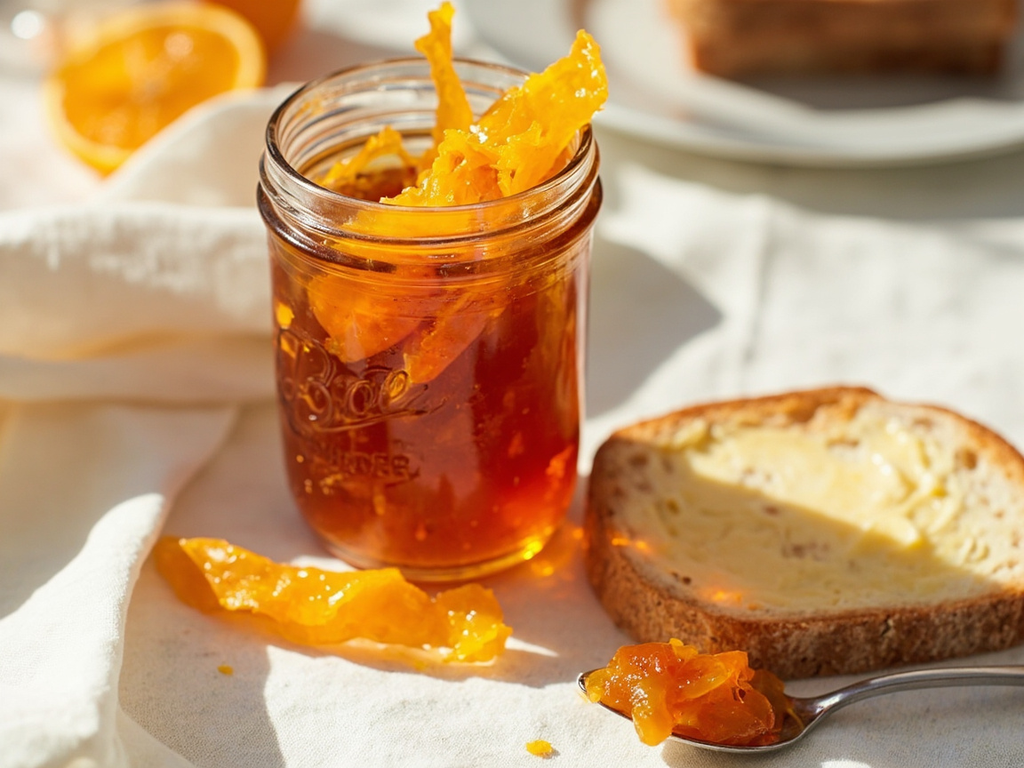
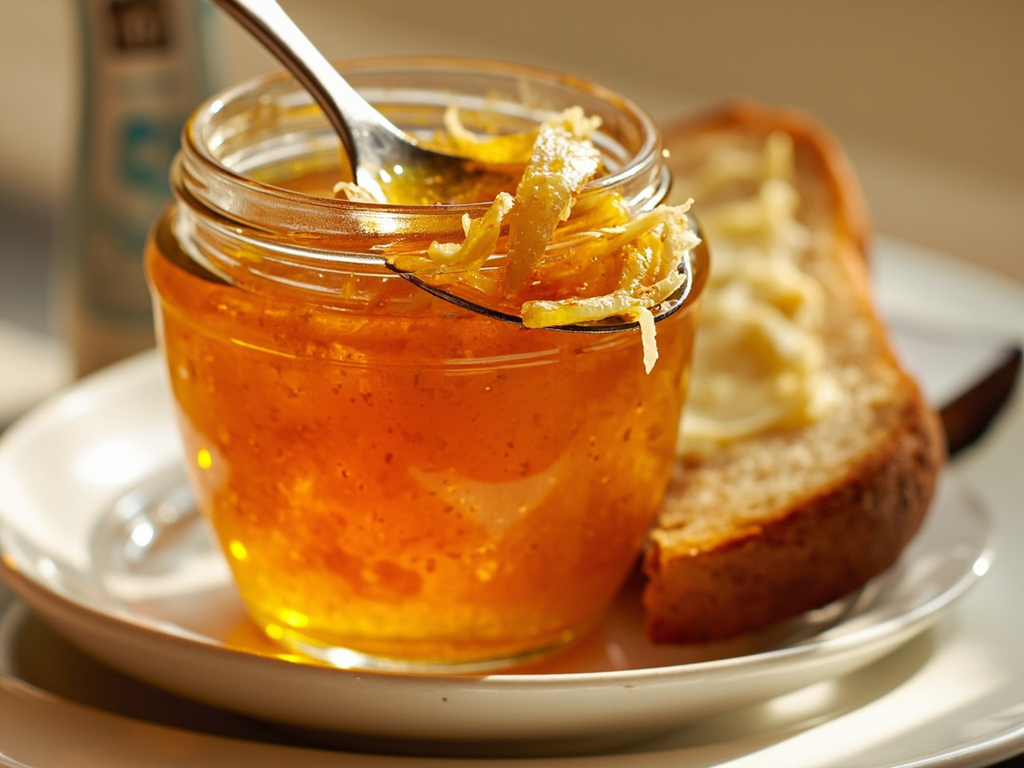
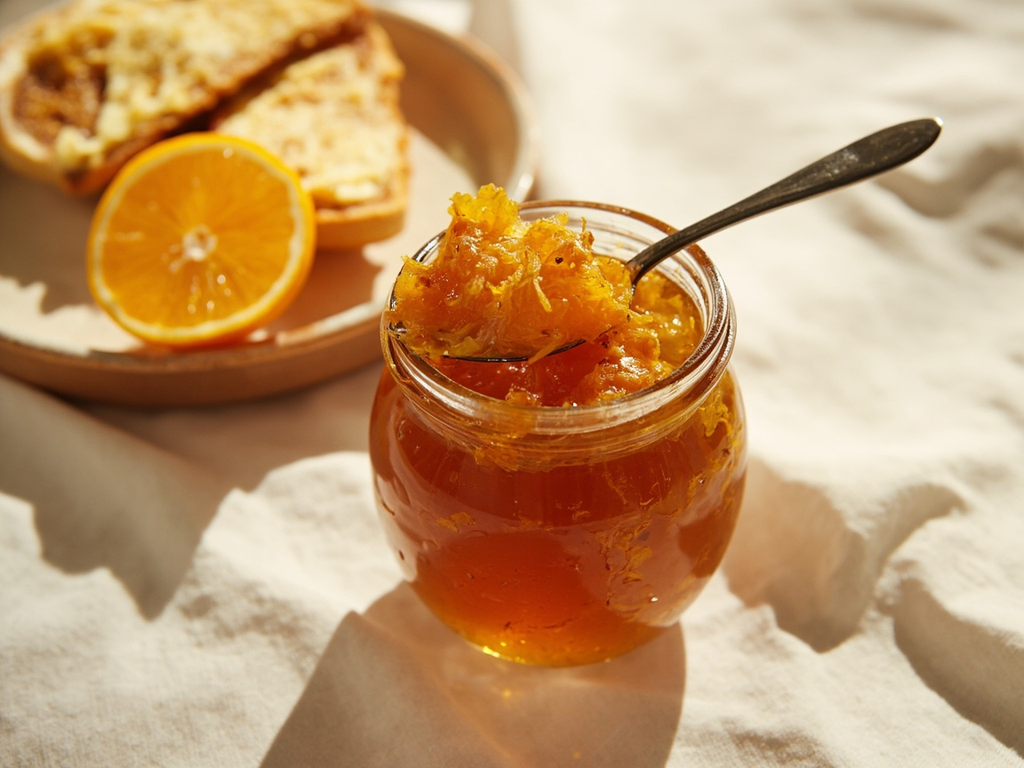
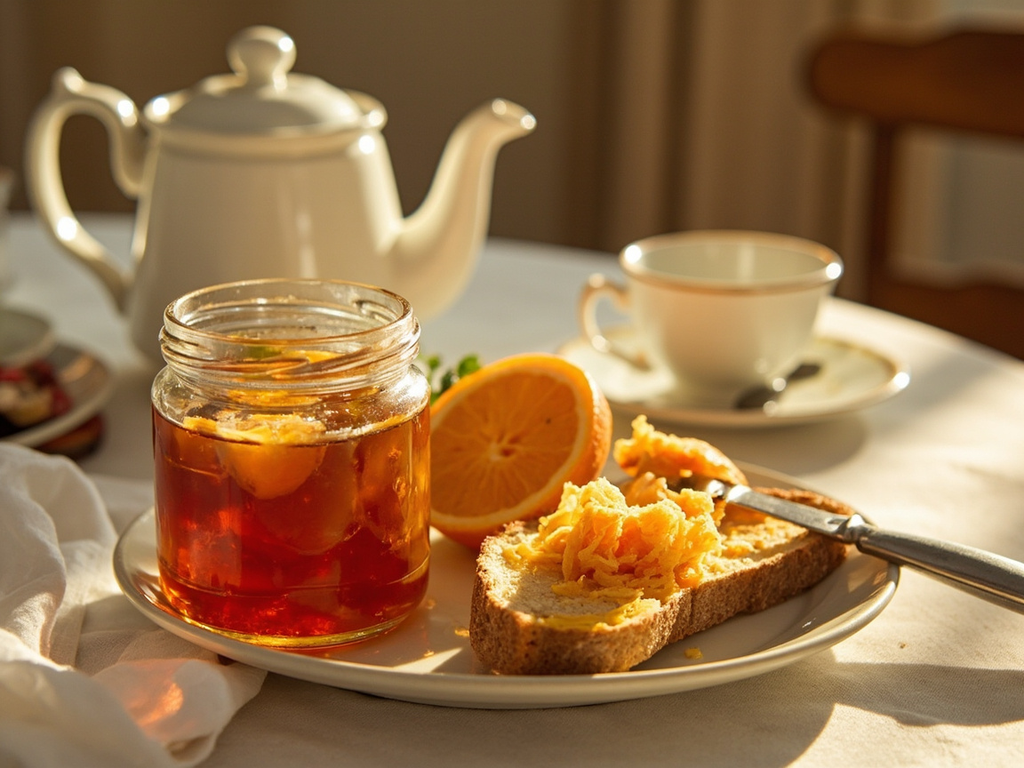
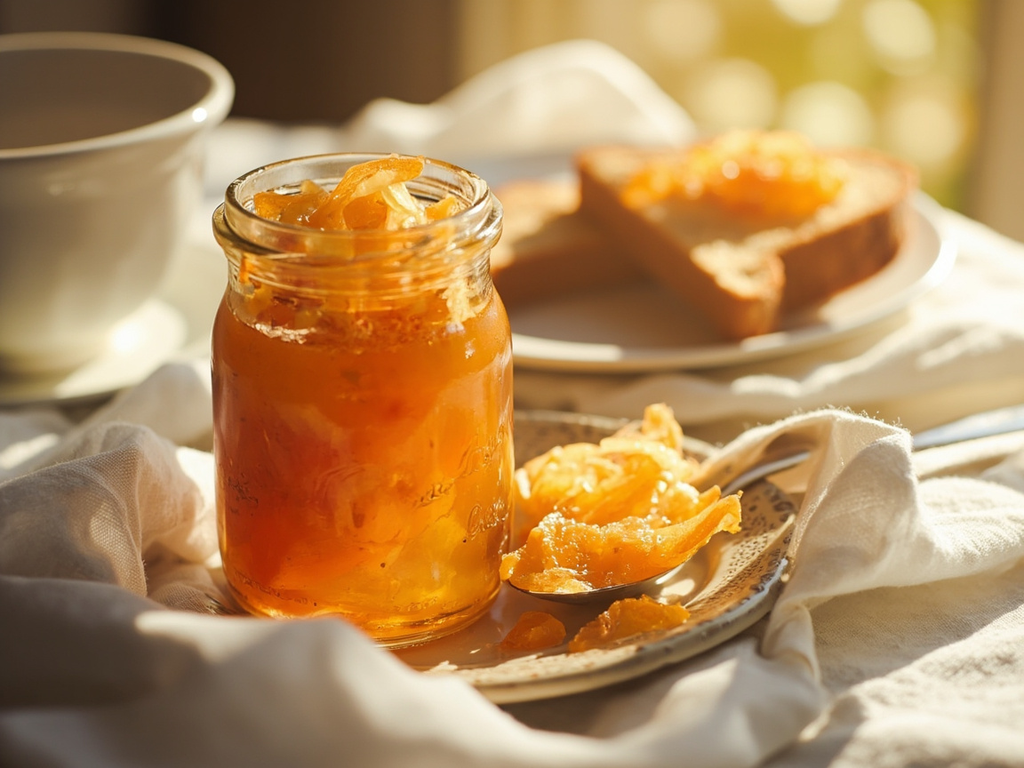
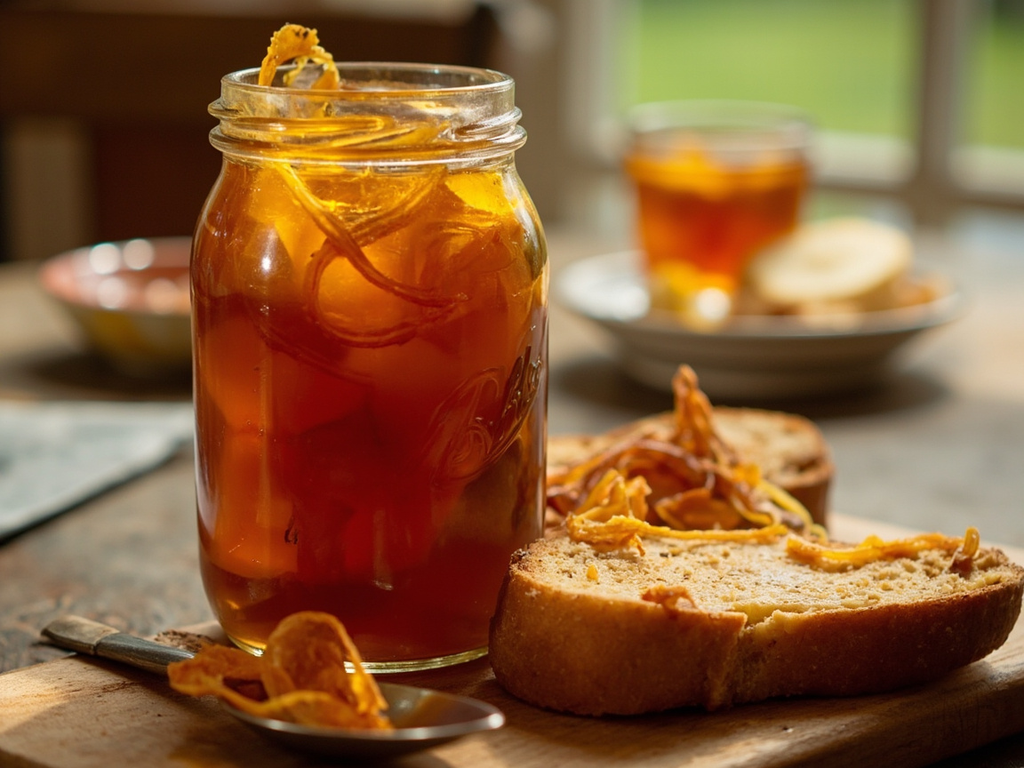
A preserve made from Seville bitter oranges and their peels, cooked with sugar until set. Dark, amber, simultaneously bitter, tangy, and sweet — the thick marmalade of English mornings, spread on toast.
Here is the most English thing there is, and yet I have never seen Oxford without it. It is made in the heart of winter, when the Seville bitter oranges arrive — the only ones that suit, for sweet ones would give only a bland jelly. You cut the peels into fine strips, boil everything long with sugar, until a drop sets on a cold plate. Spread thickly on toast in the morning, just bitter enough, it is worth all the speeches to wake your mind.
- •Seville bitter oranges — generous parts (fruit, bitterness and pectin)
- •Sugar — roughly double the weight of fruit (preservation and sweetness)
- •Lemon — one or two (acidity and set)
- •Water — for the first cooking (pectin extraction)
Oxford marmalade (Seville orange marmalade)
A preserve made from Seville bitter oranges and their peels, cooked with sugar until set. Dark, amber, simultaneously bitter, tangy, and sweet — the thick marmalade of English mornings, spread on toast.
Why this dish? Iris Murdoch taught at Oxford, a city inseparable from its famous marmalade: Frank Cooper's 'Oxford marmalade', born in a grocery on the High Street, graced the breakfast tables of generations of students and dons. A preserve that extends the bitter oranges through winter, and which Murdoch must have encountered a thousand times on college tables.
Here is the most English thing there is, and yet I have never seen Oxford without it. It is made in the heart of winter, when the Seville bitter oranges arrive — the only ones that suit, for sweet ones would give only a bland jelly. You cut the peels into fine strips, boil everything long with sugar, until a drop sets on a cold plate. Spread thickly on toast in the morning, just bitter enough, it is worth all the speeches to wake your mind.
Ingredients (period version)
- Seville bitter oranges — generous parts (fruit, bitterness and pectin)
- Sugar — roughly double the weight of fruit (preservation and sweetness)
- Lemon — one or two (acidity and set)
- Water — for the first cooking (pectin extraction)
Ingredients
- Seville bitter oranges — 1 kg (fruit, bitterness and pectin)
- Granulated sugar — 2 kg (preservation and sweetness)
- Lemons — 2 (juice) (acidity and set aid)
- Water — 2.5 litres (first cooking and extraction)
Method
- Wash the oranges, cut them in half and squeeze the juice; reserve pips and membranes in a muslin bag (rich in pectin).
- Cut the peels into fine strips.
- Put strips, juice, muslin bag, and water in a large pan; let soak a few hours, then simmer for 1.5 to 2 hours until the peels are very tender.
- Remove the bag, squeezing it. Add the sugar and lemon juice, stir to dissolve.
- Bring to a rolling boil and cook until setting point is reached (105°C, or a drop that sets on a cold plate).
- Skim, let cool for 10 minutes, then pour into sterilized jars and seal immediately.
How it was made : Bitter orange marmalade is a typically British preserve, popular since the 18th century. Frank Cooper's 'Oxford marmalade', launched in 1874, is distinguished by its dark color and thick peels, due to prolonged cooking. It was made in January–February, when Seville oranges arrived, to last the whole year. The pips and membranes, rich in pectin, were used for setting without added gelling agent.
The contemporary twist : Stir a spoonful of marmalade into cake batter or place it at the bottom of a sticky pudding for an elegant bitterness in dessert.
Sources : C. Anne Wilson, The Book of Marmalade, 1985 · Constance Spry, The Constance Spry Cookery Book, 1956
Iris Murdoch · Charactorium