 flip
flipSeville Orange Marmalade
Seville Orange Marmalade
Why this dish? Marmalade on toast is the invariant of the English breakfast, at Cambridge as at Oxford, where Hardy was Savilian Professor of Geometry from 1920 to 1931. Every fellow's morning began with this bitter-sweet ritual. Its winter preparation, in the heart of the short Seville orange season, is a classic of domestic preservation.
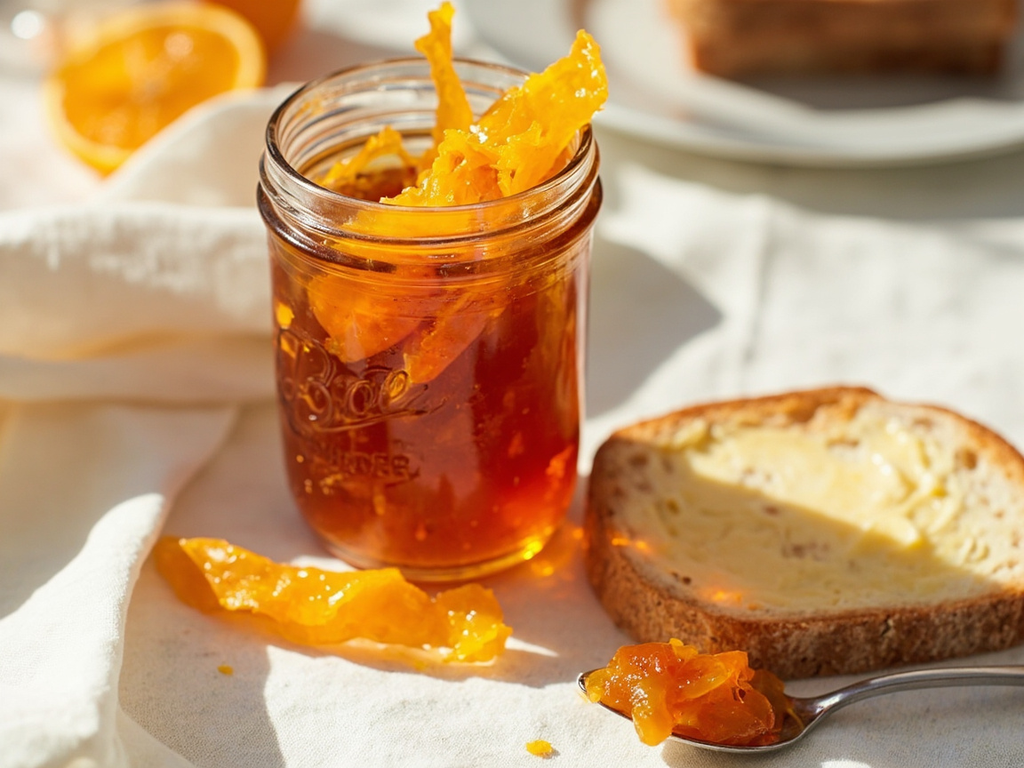
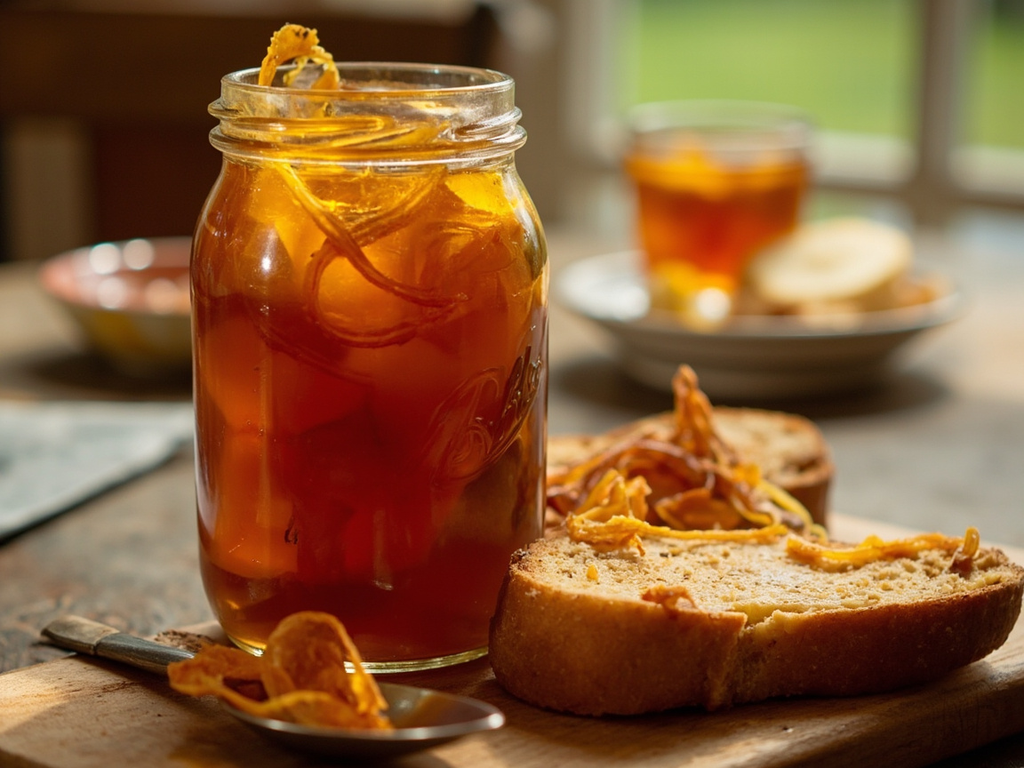
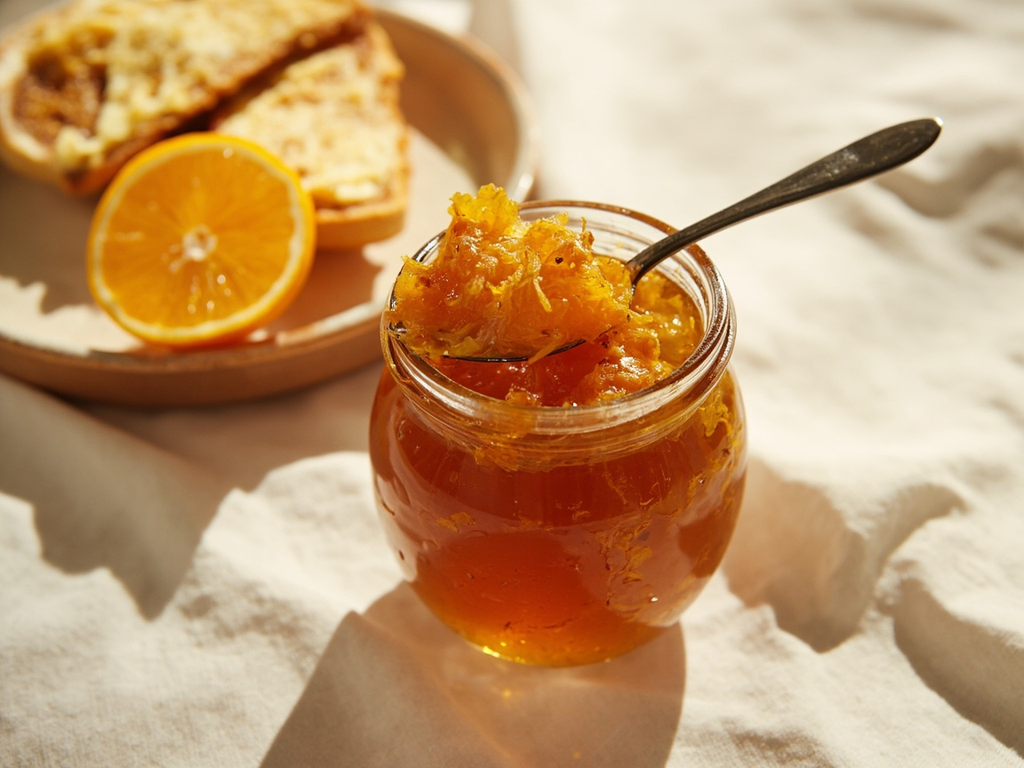
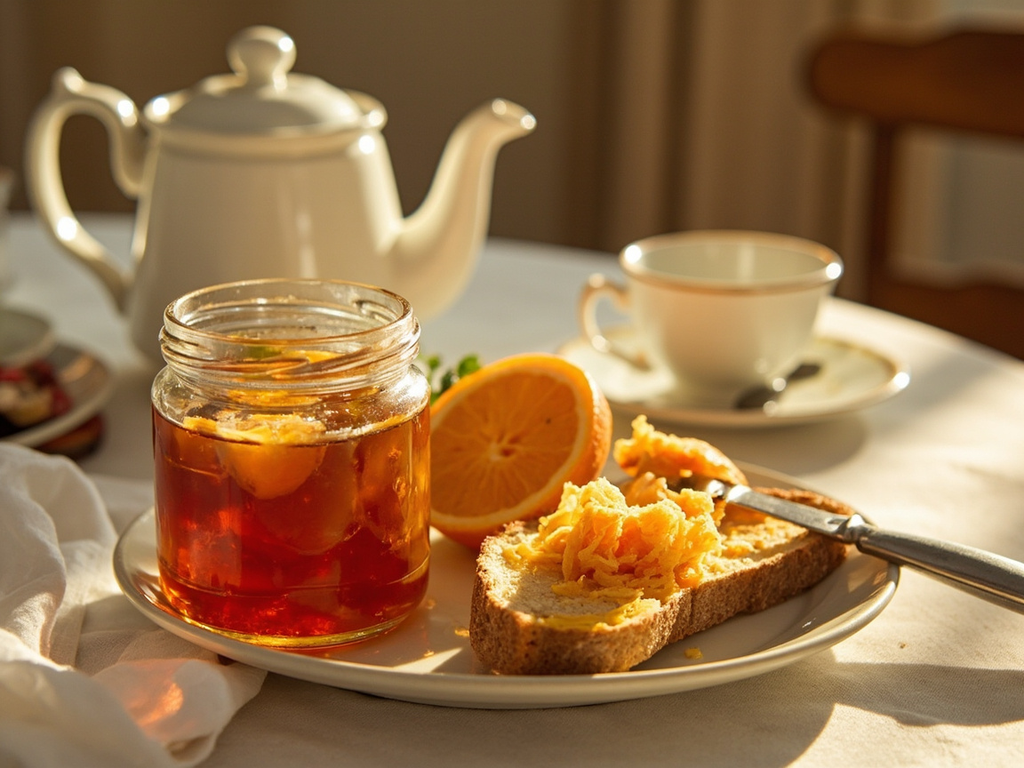
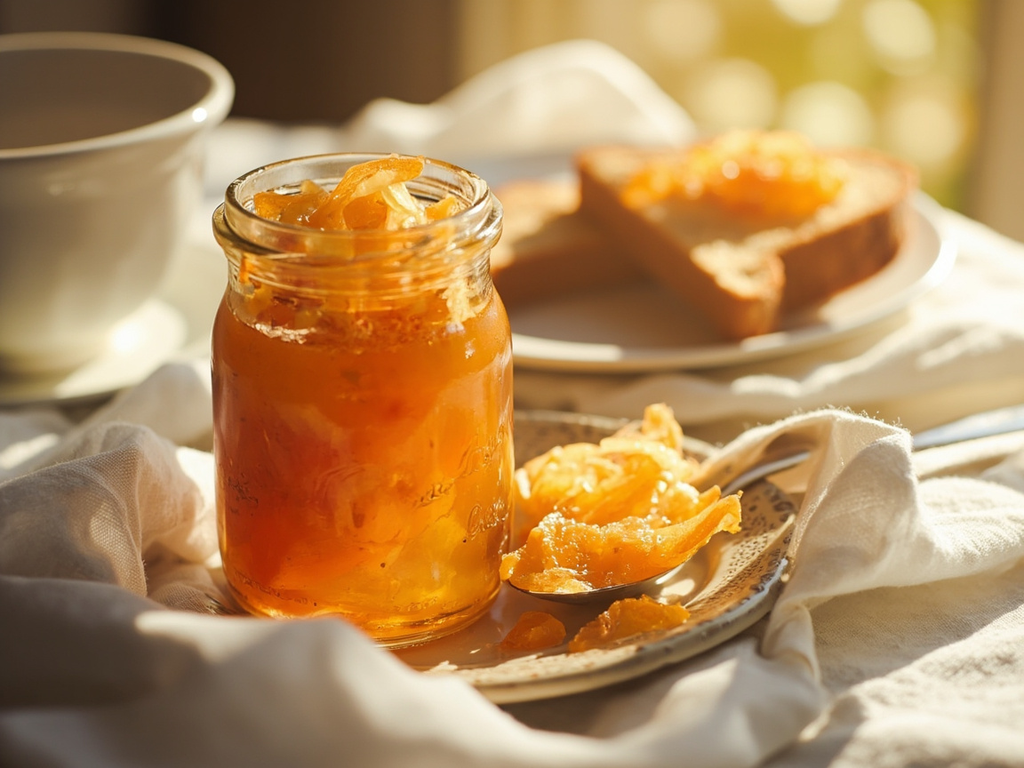
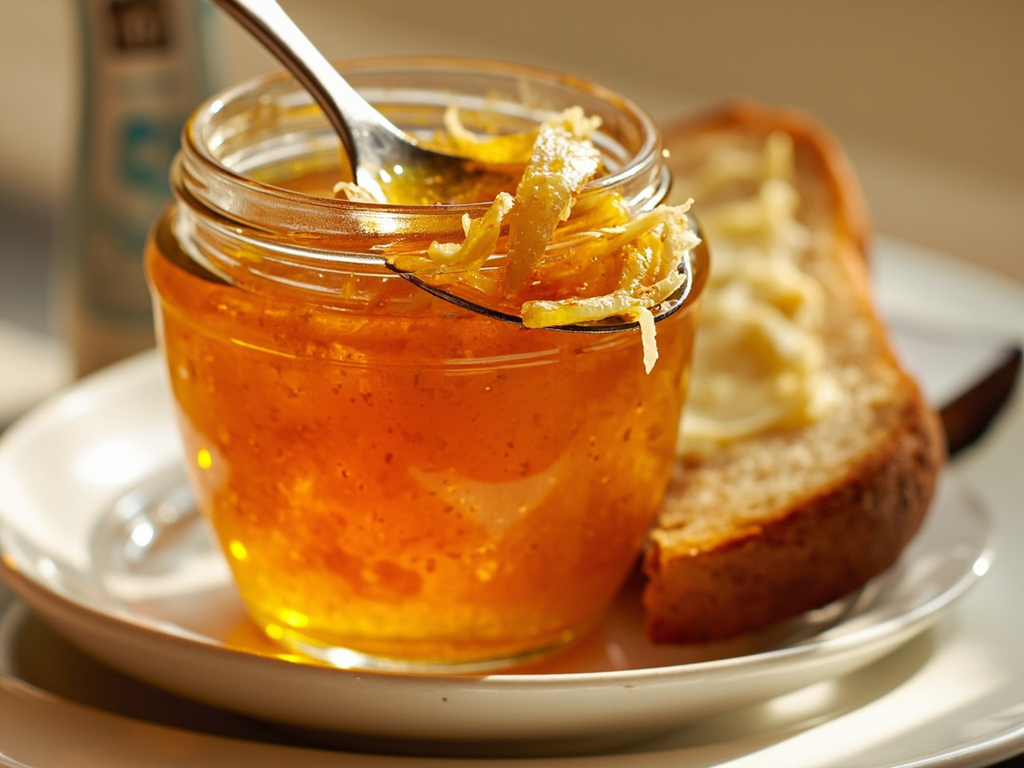
A translucent preserve of bitter oranges, bristling with fine strips of peel, whose frank bitterness contrasts with the sugar — spread on buttered toast, it is the English morning in a single taste.
An Englishman may give up many things, but never his morning marmalade; on that point, believe me, there is no exception. It is made in the depths of winter, when those oranges too bitter to eat arrive from Seville, and one arms oneself with patience to cut the peel into fine ribbons. Bitterness, you see, is precisely what saves it from insipidity — rather like a proof: without a measure of difficulty, it would be worth nothing.
- •Seville bitter oranges — a crate (signature fruit)
- •Lemons — two or three (acidity, pectin)
- •Sugar — equal weight to the juice obtained (sweetener, preservation)
- •Water — generously (extraction)
Seville Orange Marmalade
A translucent preserve of bitter oranges, bristling with fine strips of peel, whose frank bitterness contrasts with the sugar — spread on buttered toast, it is the English morning in a single taste.
Why this dish? Marmalade on toast is the invariant of the English breakfast, at Cambridge as at Oxford, where Hardy was Savilian Professor of Geometry from 1920 to 1931. Every fellow's morning began with this bitter-sweet ritual. Its winter preparation, in the heart of the short Seville orange season, is a classic of domestic preservation.
An Englishman may give up many things, but never his morning marmalade; on that point, believe me, there is no exception. It is made in the depths of winter, when those oranges too bitter to eat arrive from Seville, and one arms oneself with patience to cut the peel into fine ribbons. Bitterness, you see, is precisely what saves it from insipidity — rather like a proof: without a measure of difficulty, it would be worth nothing.
Ingredients (period version)
- Seville bitter oranges — a crate (signature fruit)
- Lemons — two or three (acidity, pectin)
- Sugar — equal weight to the juice obtained (sweetener, preservation)
- Water — generously (extraction)
Ingredients
- Seville bitter oranges — 1 kg (signature fruit)
- Lemons — 2 (acidity, pectin)
- Granulated sugar — 2 kg (sweetener, preservation)
- Water — 2 litres (extraction)
Method
- Scrub the oranges, cut them in half, squeeze the juice, and reserve the pips (rich in pectin) in a muslin bag.
- Slice the peels into thin strips.
- Put the juice, peels, pip bag, and water into a large preserving pan; leave to soak overnight.
- Simmer for 1½ to 2 hours, until the peels are very tender and the volume is reduced by half.
- Remove the pip bag, add the sugar, stir to dissolve, then bring to a rolling boil.
- Boil until setting point is reached (105°C, or the cold plate test), skim, pour into sterilized jars, and seal immediately.
How it was made : Bitter orange marmalade originated in Dundee, Scotland, in the late 18th century with the Keiller family, but became the indispensable British breakfast preserve in the 19th century. Seville oranges, inedible raw, arrive only for a few weeks in midwinter: transforming them into marmalade is a true seasonal preservation activity.
The contemporary twist : Add a splash of Scotch whisky at the end of cooking: the marmalade gains a peaty warmth, perfect on a warm scone.
Sources : C. Anne Wilson, The Book of Marmalade, 1985 · Isabella Beeton, Book of Household Management, 1861
G.H. Hardy · Charactorium