 flip
flipAmazake — fermented rice drink of the kami
Amazake — fermented rice drink of the kami
Why this dish? No shrine ceremony was conceivable without a rice drink offered to the kami. Jingū, a figure linked to the great shrines of Sumiyoshi and Kashii, presided over these rites. Amazake, sweet and non-alcoholic, evokes these sacred libations in a form that young and old can share.
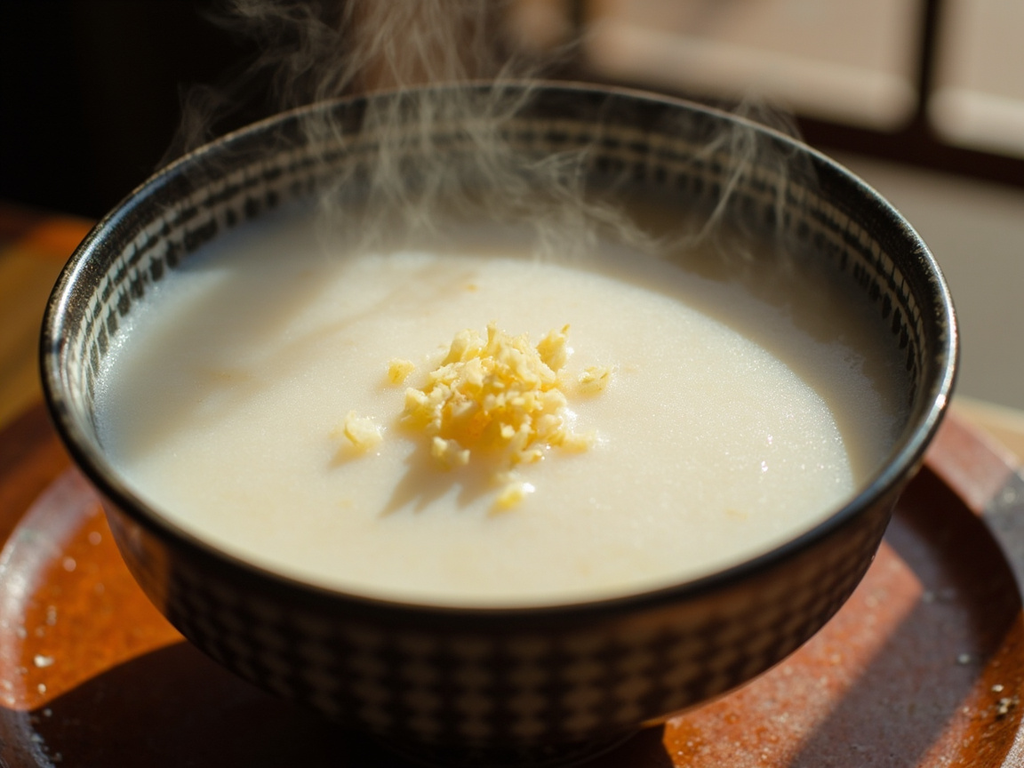
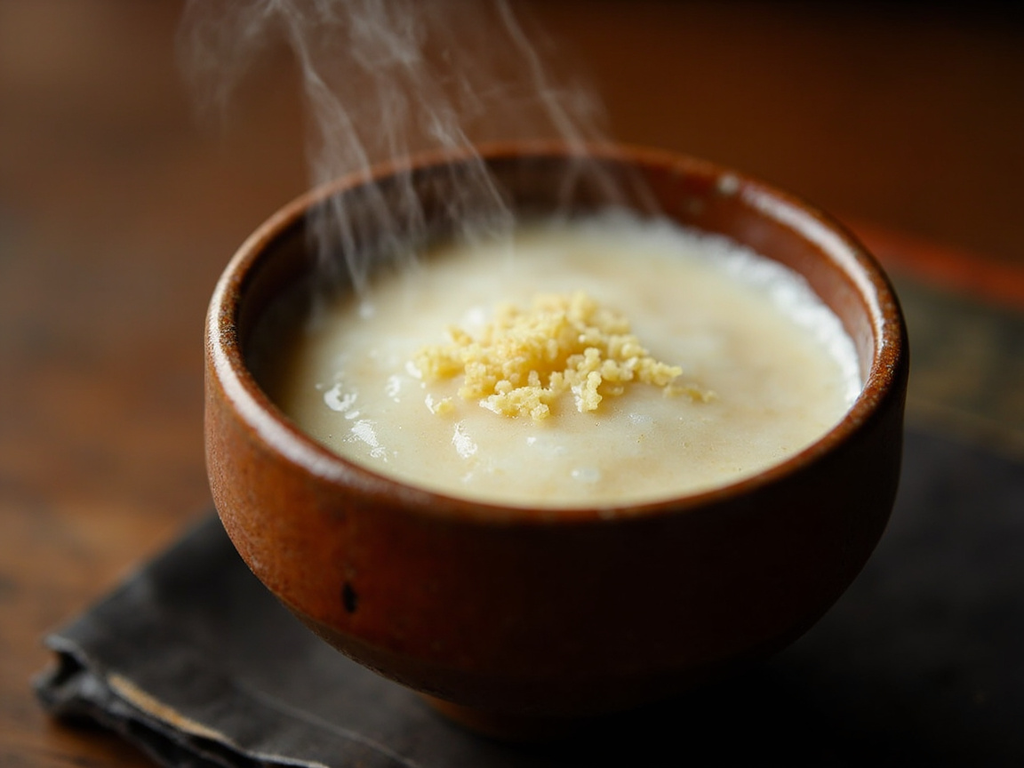
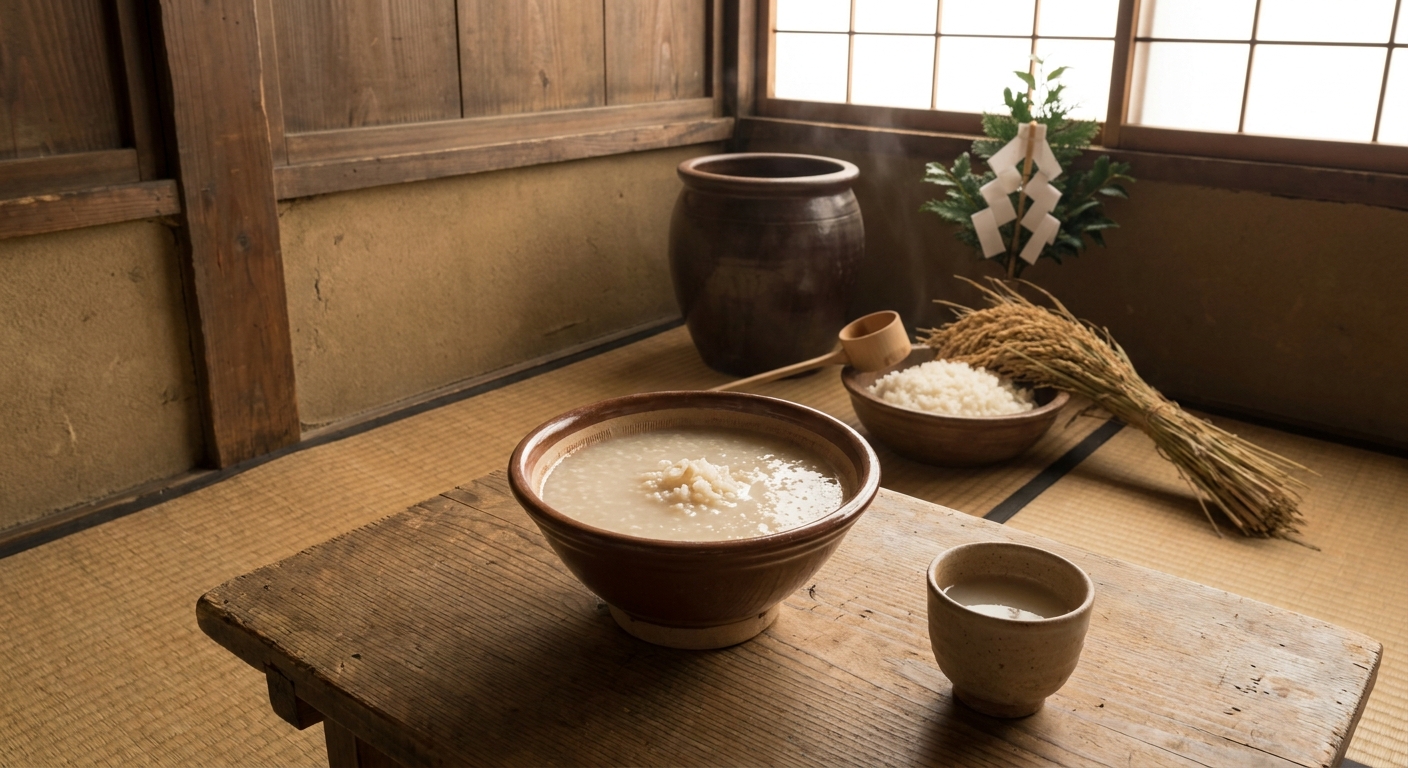
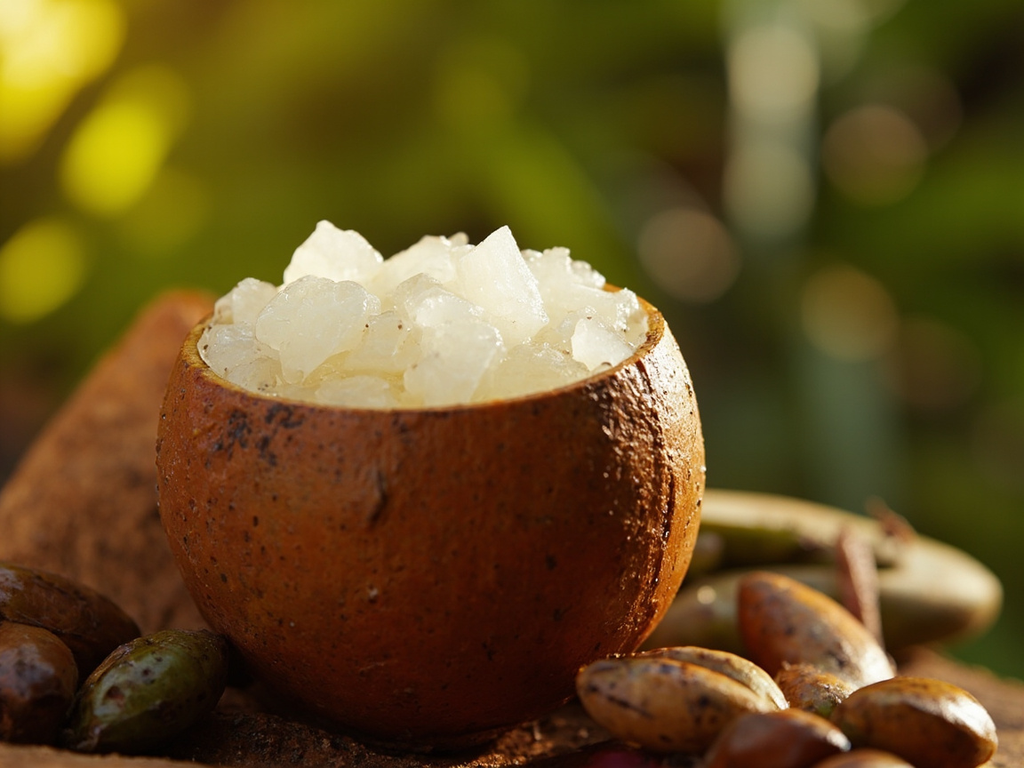
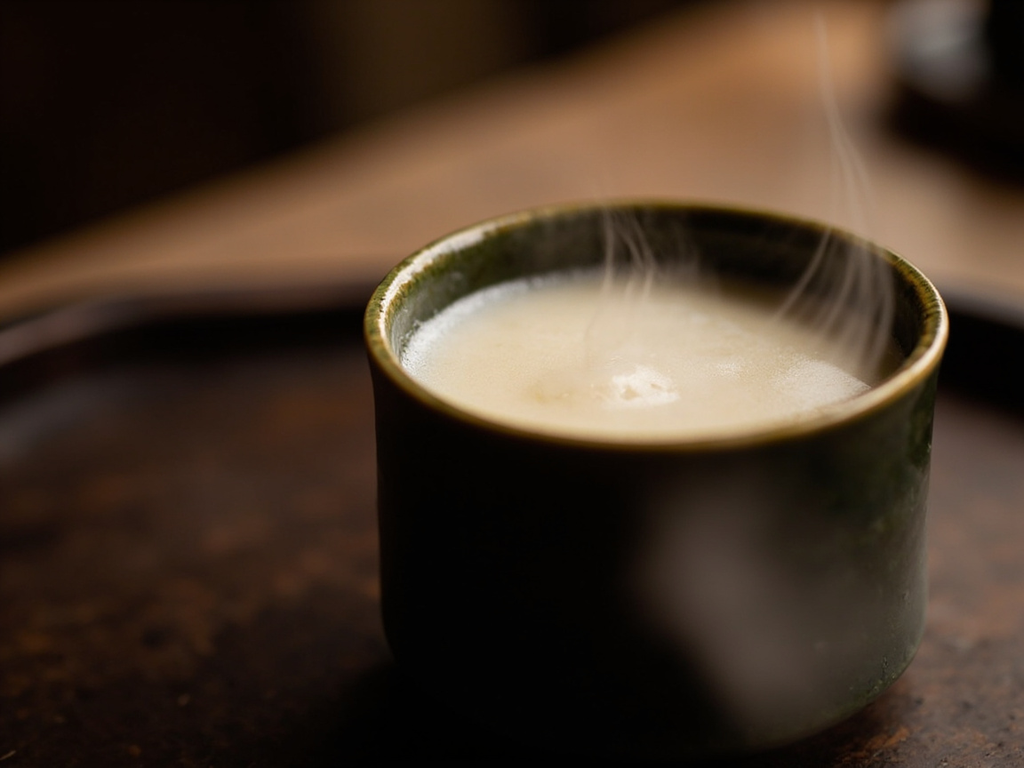
A thick, milky, naturally sweet drink made from rice transformed by koji without alcohol. Warm, it comforts; it is presented to the kami before being drunk. Its sweetness owes nothing to sugar, everything to the magic of rice fermentation.
Before a drop touches my lips, it goes back to the kami—thus goes the order of things. This drink, white as morning mist, is born from rice alone: you unite it with the noble ferment, keep it warm, and lo, it becomes sweet without adding anything. It is not the alcohol of victory banquets, no—this one even a child may drink. Warm it gently, never to a rolling boil, or you will kill the soul that sweetens it. Drink it warm, and may the sweetness of the gods accompany you.
- •Steamed rice — one measure (sweetening base)
- •Koji (rice inoculated with noble mold) — one part (ferment, source of sugar)
- •Warm spring water — to cover (fermentation medium)
Amazake — fermented rice drink of the kami
A thick, milky, naturally sweet drink made from rice transformed by koji without alcohol. Warm, it comforts; it is presented to the kami before being drunk. Its sweetness owes nothing to sugar, everything to the magic of rice fermentation.
Why this dish? No shrine ceremony was conceivable without a rice drink offered to the kami. Jingū, a figure linked to the great shrines of Sumiyoshi and Kashii, presided over these rites. Amazake, sweet and non-alcoholic, evokes these sacred libations in a form that young and old can share.
Before a drop touches my lips, it goes back to the kami—thus goes the order of things. This drink, white as morning mist, is born from rice alone: you unite it with the noble ferment, keep it warm, and lo, it becomes sweet without adding anything. It is not the alcohol of victory banquets, no—this one even a child may drink. Warm it gently, never to a rolling boil, or you will kill the soul that sweetens it. Drink it warm, and may the sweetness of the gods accompany you.
Ingredients (period version)
- Steamed rice — one measure (sweetening base)
- Koji (rice inoculated with noble mold) — one part (ferment, source of sugar)
- Warm spring water — to cover (fermentation medium)
Ingredients
- Cooked rice — 200 g (base)
- Rice koji (kome-koji) — 200 g (sweetening ferment)
- Warm water (~60 °C) — 400 ml (fermentation)
Method
- Mix the warm cooked rice, koji, and water at about 60 °C.
- Keep the mixture at 55–60 °C for 6 to 10 hours (yogurt maker, turned-off oven with light, or thermos), stirring occasionally.
- When the mixture is sweet and fragrant, blend for a smooth texture if desired.
- Gently reheat before serving warm (do not boil). Keeps for a few days in the fridge.
How it was made : Koji, a mold domesticated from Aspergillus oryzae, is the secret pillar of all Japanese cuisine. Kept warm on rice, it transforms starch into sugar: amazake is its oldest and sweetest form, distinct from alcoholic sake reserved for dignitaries.
The contemporary twist : Served chilled in summer with a hint of grated ginger: the refreshing version enjoyed today at summer festivals (matsuri).
Empress Jingu · Charactorium