 flip
flipHoney and garum roast lamb (assum mellitum)
Honey and garum roast lamb (assum mellitum)
Why this dish? In Carthage, Queen Dido offers Aeneas and his exhausted companions a sumptuous banquet where "the flesh of beasts" is served and wine flows freely (Aeneid, Book I). It is the feast of hospitality par excellence, the one where Aeneas tells the fall of Troy. A roast lamb, glazed with honey and spiked with garum, embodies this moment of splendor shared between two peoples.
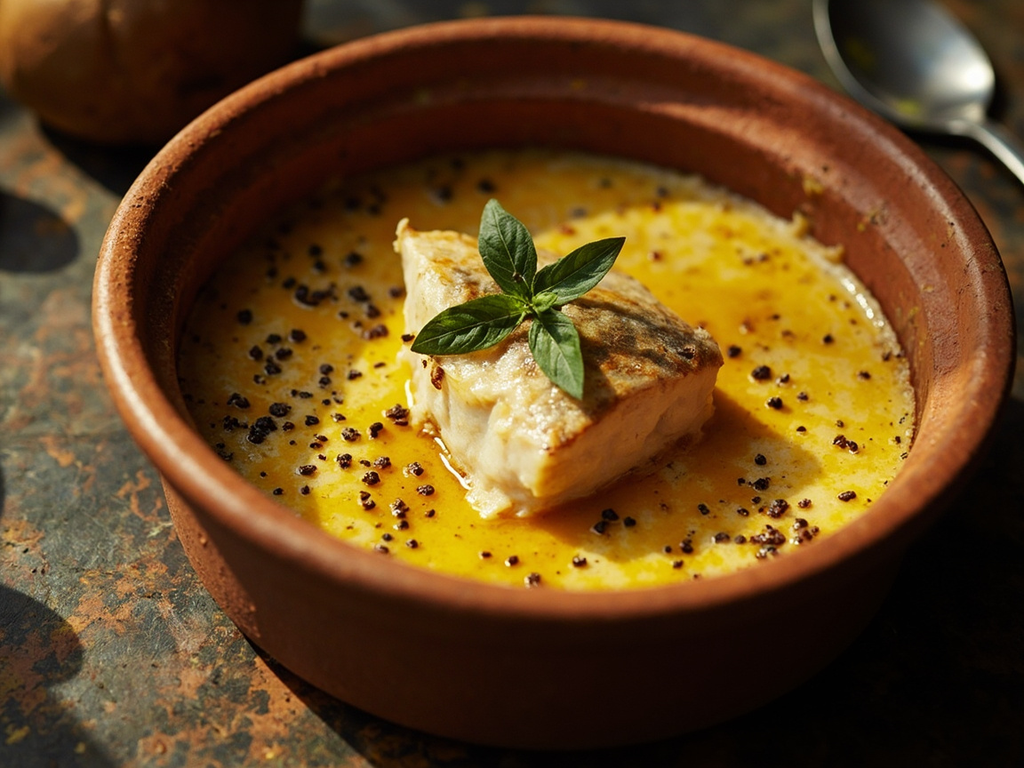
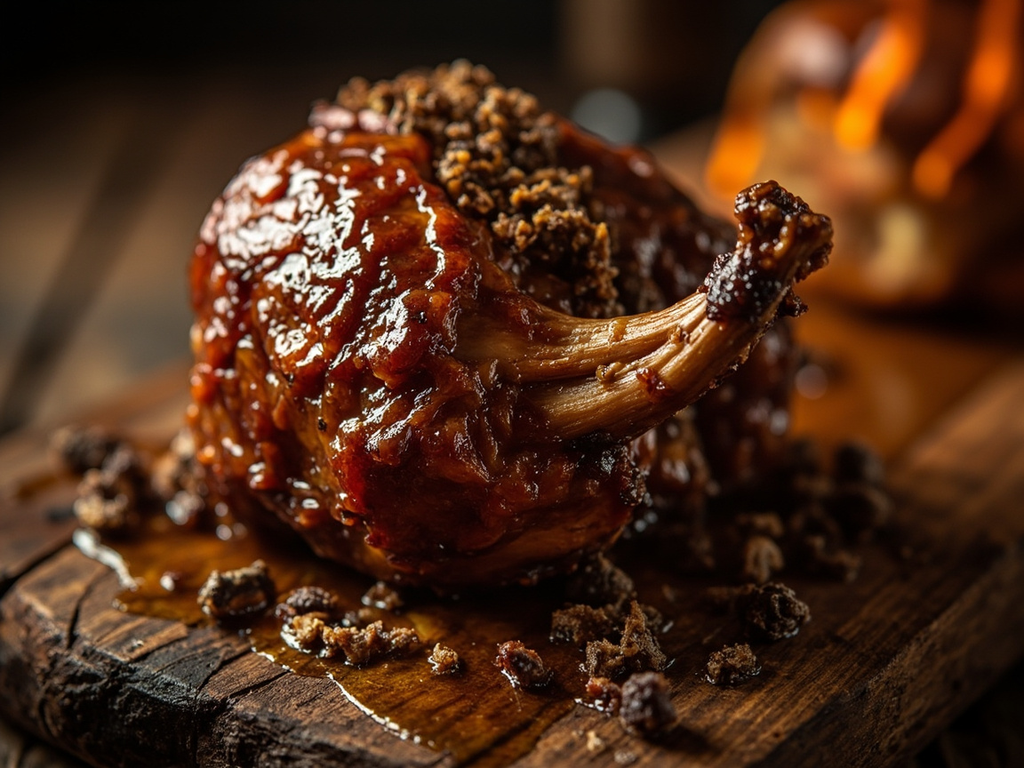
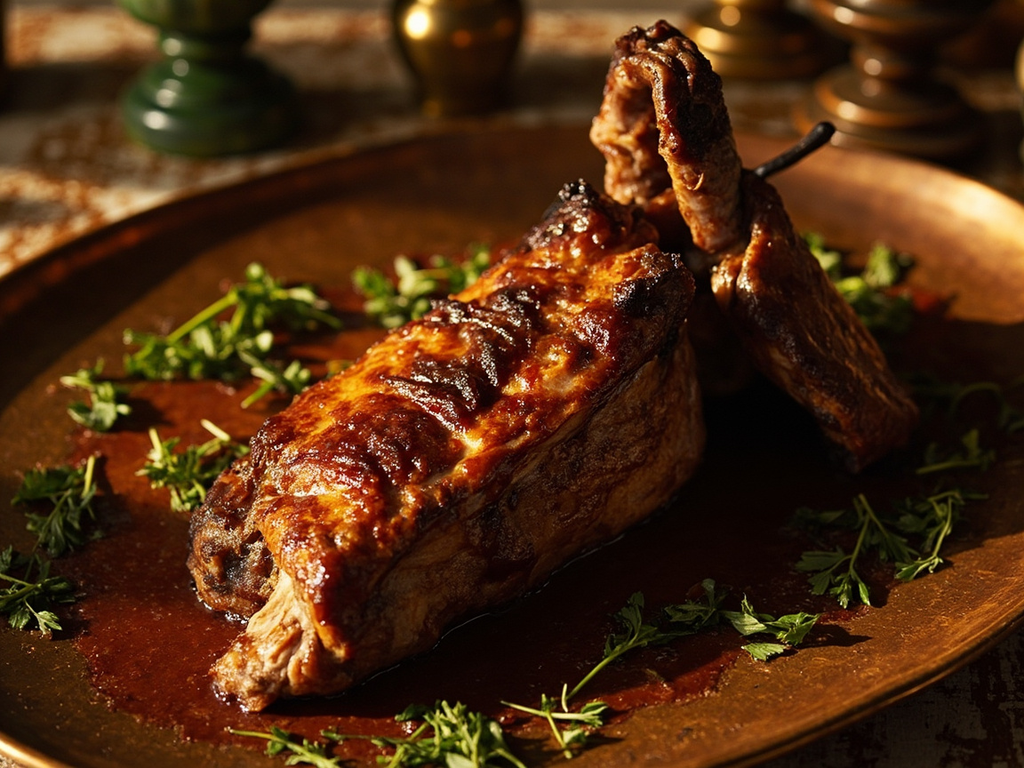
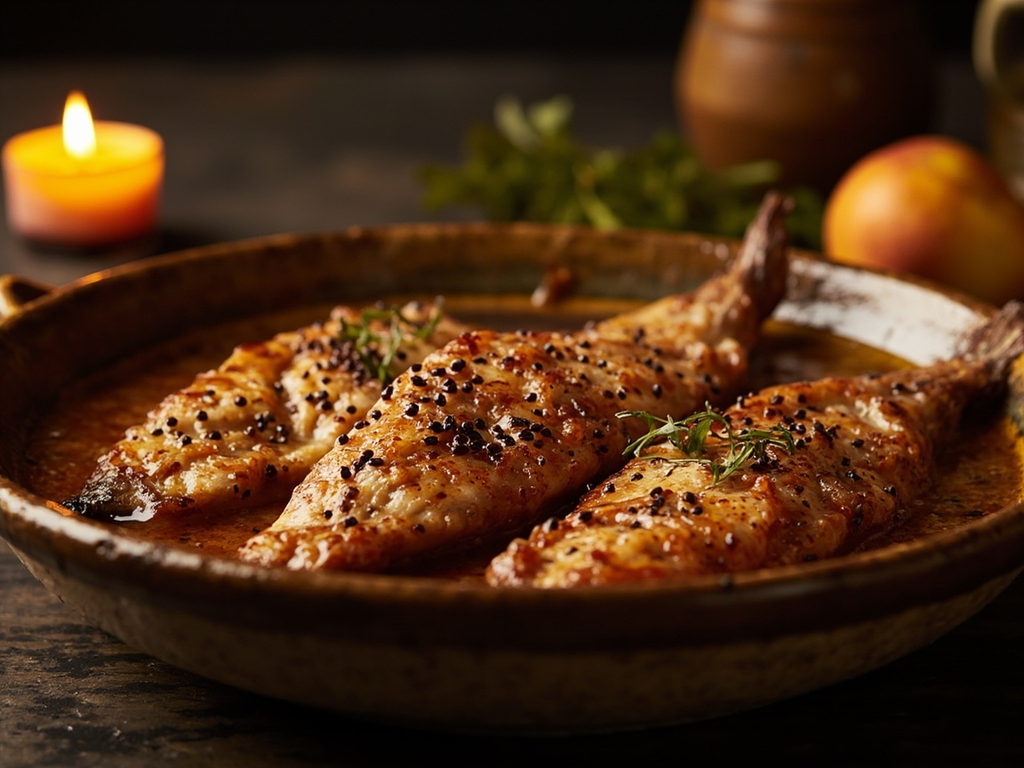
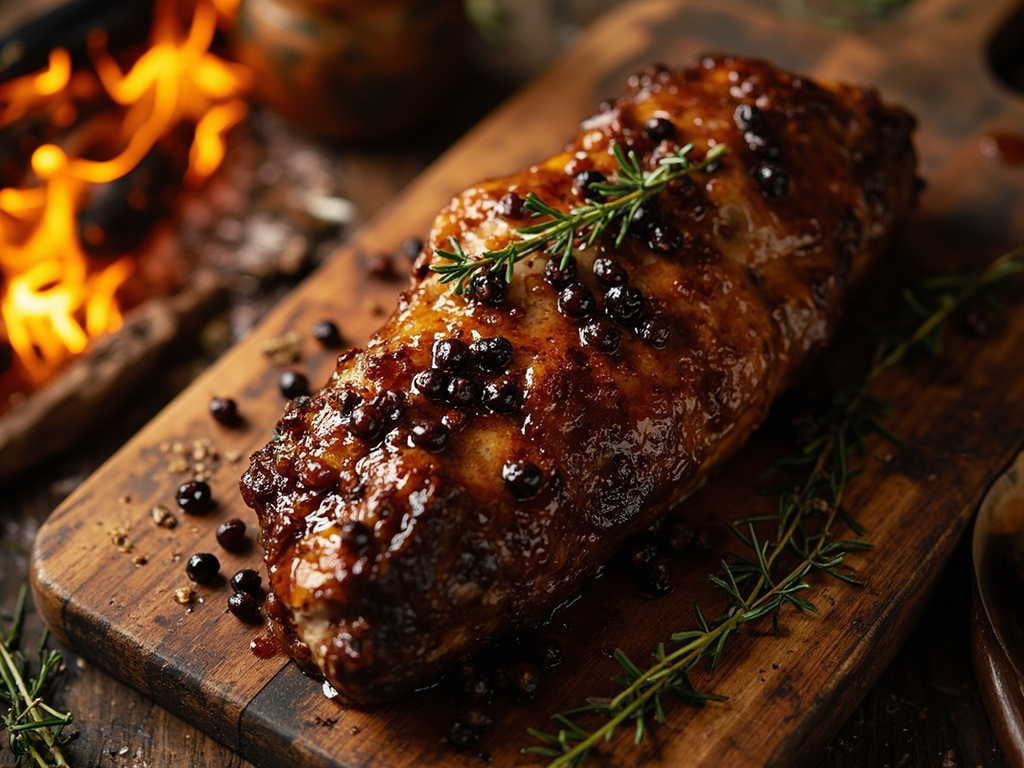
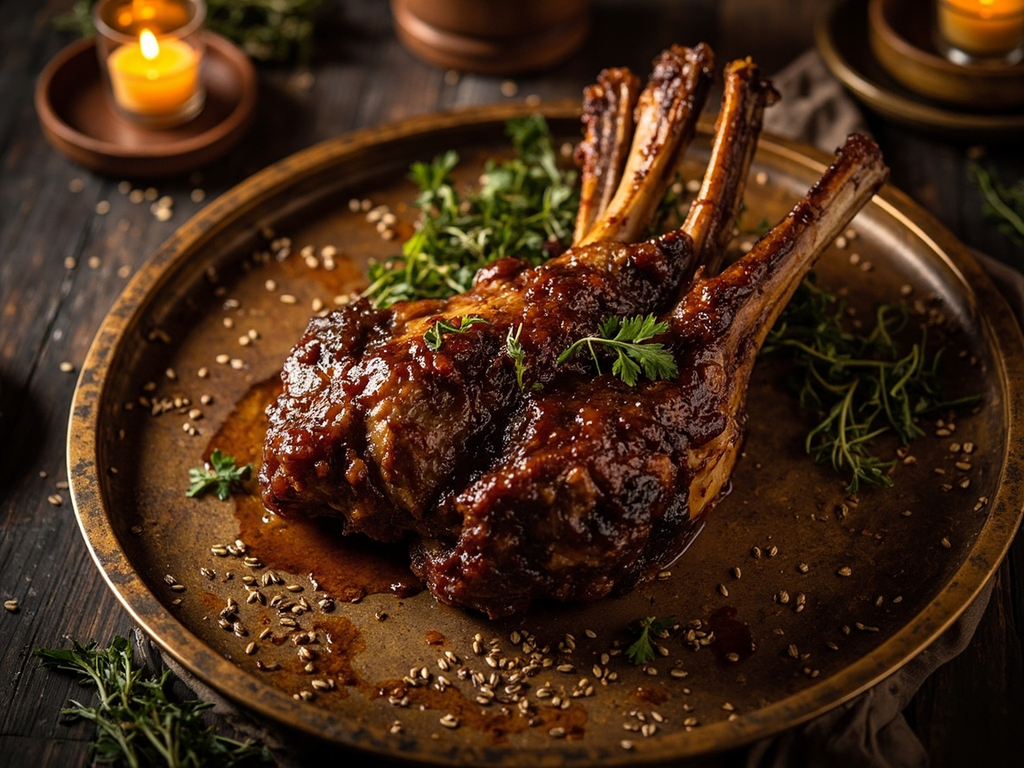
A leg or shoulder of lamb slowly roasted, basted with a sweet-and-sour glaze of honey, garum, and pepper, perfumed with coriander and lovage. The skin caramelizes, the flesh remains tender: the grand meat dish of Mediterranean banquets, at the crossroads of deep saltiness and amber sweetness.
Thus I was served at Dido's table, on the shores of Carthage, when the sea had taken everything from me but my men. Roast the whole beast over a lively fire, then coat it with honey and that fish sauce no Trojan can do without—one sweetens, the other strengthens. Pour the wine without counting, for a guest who is honored must forget his sorrows. That evening, I ate while weeping for Troy, but I blessed the table that welcomed me.
- •Lamb (shoulder or leg) — one piece (noble banquet meat)
- •Garum — to taste (salty fermented umami)
- •Honey — generous (sweet glaze)
- •Pepper, coriander, lovage — to taste (aromatics)
- •Reduced wine (defrutum) — a drizzle (binder and color)
- •Olive oil — a splash (fat)
Honey and garum roast lamb (assum mellitum)
A leg or shoulder of lamb slowly roasted, basted with a sweet-and-sour glaze of honey, garum, and pepper, perfumed with coriander and lovage. The skin caramelizes, the flesh remains tender: the grand meat dish of Mediterranean banquets, at the crossroads of deep saltiness and amber sweetness.
Why this dish? In Carthage, Queen Dido offers Aeneas and his exhausted companions a sumptuous banquet where "the flesh of beasts" is served and wine flows freely (Aeneid, Book I). It is the feast of hospitality par excellence, the one where Aeneas tells the fall of Troy. A roast lamb, glazed with honey and spiked with garum, embodies this moment of splendor shared between two peoples.
Thus I was served at Dido's table, on the shores of Carthage, when the sea had taken everything from me but my men. Roast the whole beast over a lively fire, then coat it with honey and that fish sauce no Trojan can do without—one sweetens, the other strengthens. Pour the wine without counting, for a guest who is honored must forget his sorrows. That evening, I ate while weeping for Troy, but I blessed the table that welcomed me.
Ingredients (period version)
- Lamb (shoulder or leg) — one piece (noble banquet meat)
- Garum — to taste (salty fermented umami)
- Honey — generous (sweet glaze)
- Pepper, coriander, lovage — to taste (aromatics)
- Reduced wine (defrutum) — a drizzle (binder and color)
- Olive oil — a splash (fat)
Ingredients
- Lamb shoulder — 1.2 kg (roast cut)
- Fish sauce (nuoc-mâm, garum substitute) — 3 tbsp (fermented umami)
- Liquid honey — 3 tbsp (glaze)
- Ground black pepper — 1 tsp (spice)
- Ground coriander seeds — 1 tsp (fragrance)
- Lovage (or celery stalk) — 1 tsp chopped (ancient herbaceous note)
- Reduced red wine + olive oil — 50 ml + 2 tbsp (sauce and basting)
Method
- Preheat oven to 160°C.
- Mix fish sauce, honey, pepper, coriander, lovage, reduced wine, and olive oil to make a glaze.
- Score the lamb, brush with half the glaze, and place in a roasting dish.
- Roast at 160°C for 2h30, basting regularly with the juices.
- Increase to 210°C for the last 15 minutes after spreading the remaining glaze to caramelize the surface.
- Rest 10 minutes, then serve with its juices in a large sharing platter.
How it was made : The Romans loved meats in sweet-and-sour sauces. The cookbook attributed to Apicius is full of recipes combining garum, honey, and defrutum (reduced grape must). Pork was more common than lamb, but lamb and goat held a major place in aristocratic banquets and sacrifices, where the meat consumed often came from the animal offered to the gods.
The contemporary twist : Served shredded on a warm spelt flatbread, "street food of Latium" style, with a drizzle of garum-honey finish for a glossy, lacquered effect.
Sources : Apicius, De re coquinaria, Books VII and VIII · Virgil, Aeneid, Book I (Dido's banquet)
Aeneas · Charactorium