 flip
flipMola salsa and libation to the Penates
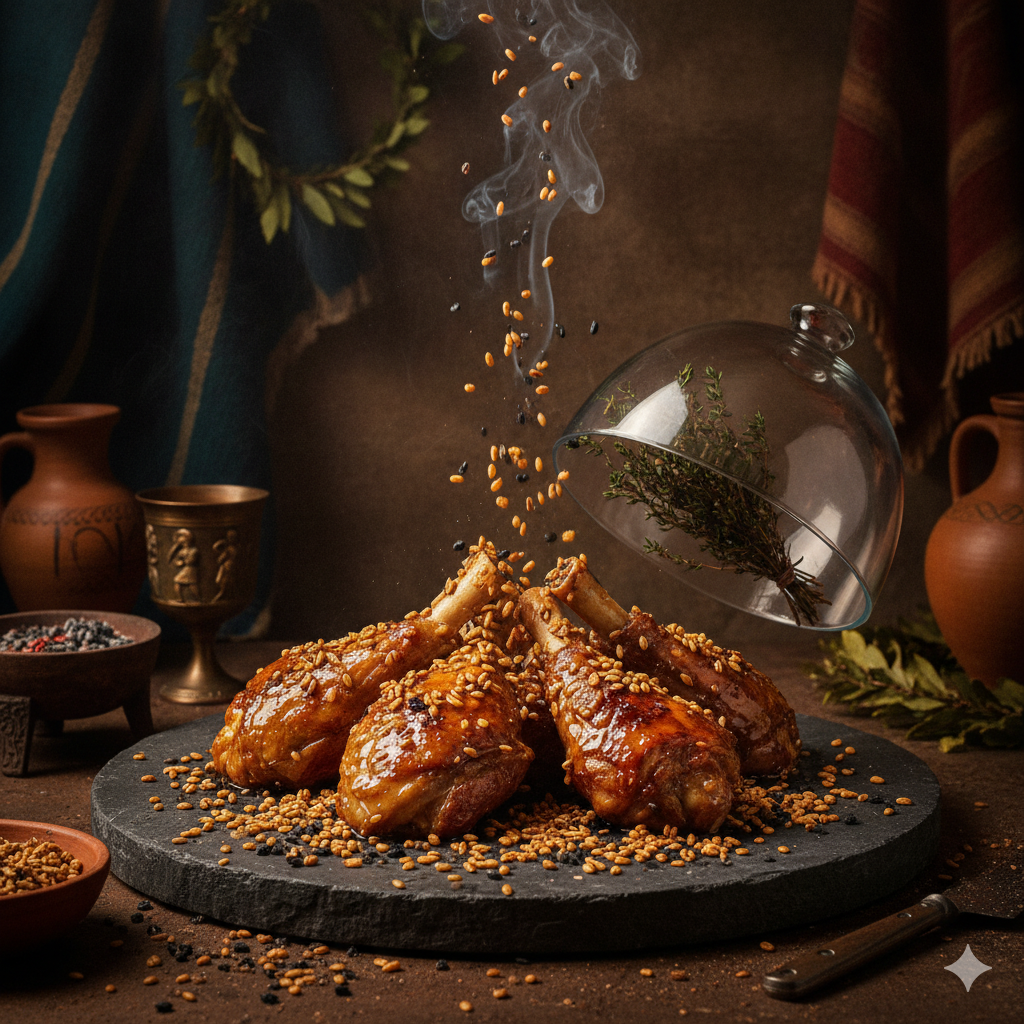
Mola salsa and libation to the Penates
Why this dish? Aeneas flees Troy carrying his father Anchises on his shoulders and the Penates—the household gods—in his arms. Throughout the Aeneid, he is "pius Aeneas," the one who never forgets to honor the gods before acting. Mola salsa, roasted and salted spelt flour that is sprinkled on the offering (hence the word "immolate"), is the sacred gesture that precedes every meal in his lineage.
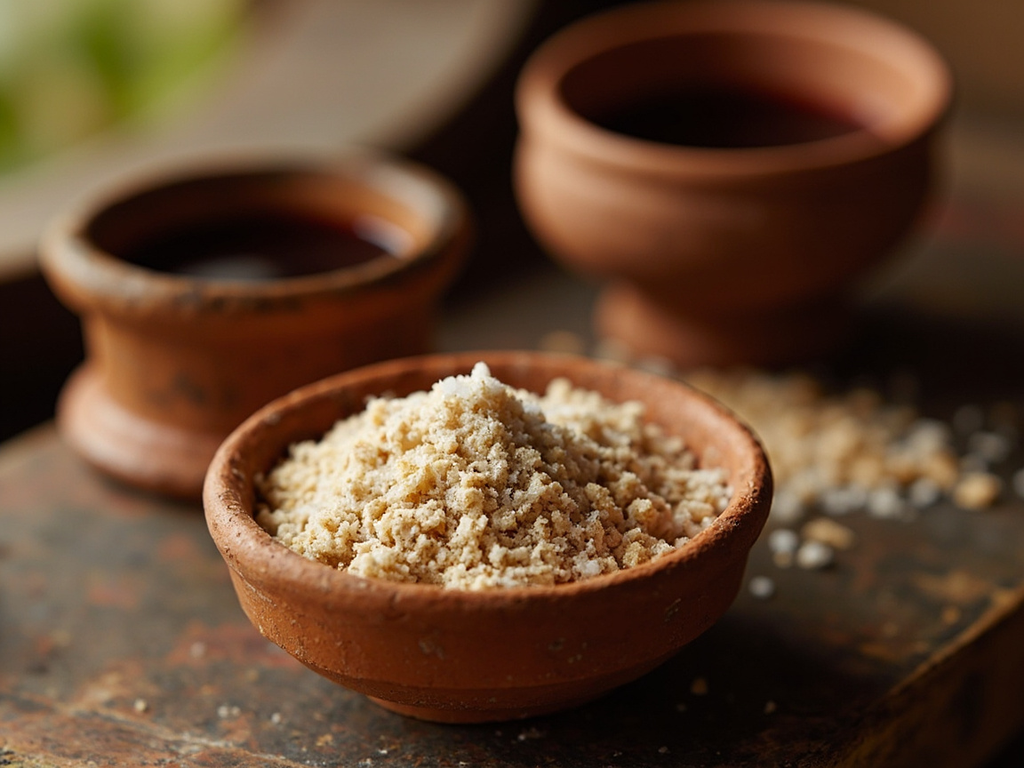
A handful of roasted spelt flour mixed with roasted salt, scattered as a sign of respect on the hearth or food, accompanied by a cup of pure wine poured for the gods. This is not a dish to devour but the ritual threshold of the meal: austere, fragrant with toast, deeply symbolic.
Before you taste anything at my table, listen to me. I carried these gods across the sea in flames, and I never break bread without giving them the first portion. Take the roasted grain, mix it with salt, and scatter it with your right hand in silence: thus our fathers did beneath the walls of Troy. Fate leads us, but the household gods guard us—do not forget it, you too.
- •Spelt (far) — a handful (sacred roasted grain)
- •Roasted sea salt — a pinch (purification, preservation)
- •Pure wine — a cup (libation poured to the gods)
Mola salsa and libation to the Penates
A handful of roasted spelt flour mixed with roasted salt, scattered as a sign of respect on the hearth or food, accompanied by a cup of pure wine poured for the gods. This is not a dish to devour but the ritual threshold of the meal: austere, fragrant with toast, deeply symbolic.
Why this dish? Aeneas flees Troy carrying his father Anchises on his shoulders and the Penates—the household gods—in his arms. Throughout the Aeneid, he is "pius Aeneas," the one who never forgets to honor the gods before acting. Mola salsa, roasted and salted spelt flour that is sprinkled on the offering (hence the word "immolate"), is the sacred gesture that precedes every meal in his lineage.
Before you taste anything at my table, listen to me. I carried these gods across the sea in flames, and I never break bread without giving them the first portion. Take the roasted grain, mix it with salt, and scatter it with your right hand in silence: thus our fathers did beneath the walls of Troy. Fate leads us, but the household gods guard us—do not forget it, you too.
Ingredients (period version)
- Spelt (far) — a handful (sacred roasted grain)
- Roasted sea salt — a pinch (purification, preservation)
- Pure wine — a cup (libation poured to the gods)
Ingredients
- Whole spelt flour — 4 tbsp (base to roast)
- Fleur de sel — 1 tsp (ritual seasoning)
- Dry red wine — 1 small glass (symbolic libation)
Method
- Heat a dry pan over medium heat.
- Pour in the spelt flour and stir constantly for 3-4 minutes until it turns golden and smells of toasted nuts.
- Remove from heat and mix with the fleur de sel.
- Present the mola salsa in a small clay cup; pour a little wine beside it as a libation gesture before starting the meal.
How it was made : Mola salsa was prepared in Rome by the Vestal Virgins, who roasted spelt and mixed it with dried brine. It was sprinkled on the heads of sacrificial animals and offerings: the Latin verb "immolare" (to sacrifice) literally comes from this salted flour (mola). It is one of the oldest religious gestures of the Roman world.
The contemporary twist : Served as an "ancient gomasio": a powder of roasted spelt and salt to sprinkle on roasted vegetables, opening a themed dinner with a note of respect and toasted umami.
Sources : Servius, Commentary on the Aeneid · Ovid, Fasti · Pliny the Elder, Natural History, Book XVIII
Aeneas · Charactorium