 flip
flipRoasted Lamb with Bitter Herbs
Roasted Lamb with Bitter Herbs
Why this dish? On the night of the Exodus from Egypt, each household eats a roasted lamb with bitter herbs and unleavened bread (Exodus 12). This is the foundational meal that Moses institutes before departure. Here, a dish freely INSPIRED by this living tradition—not a reproduction of the sacred rite.
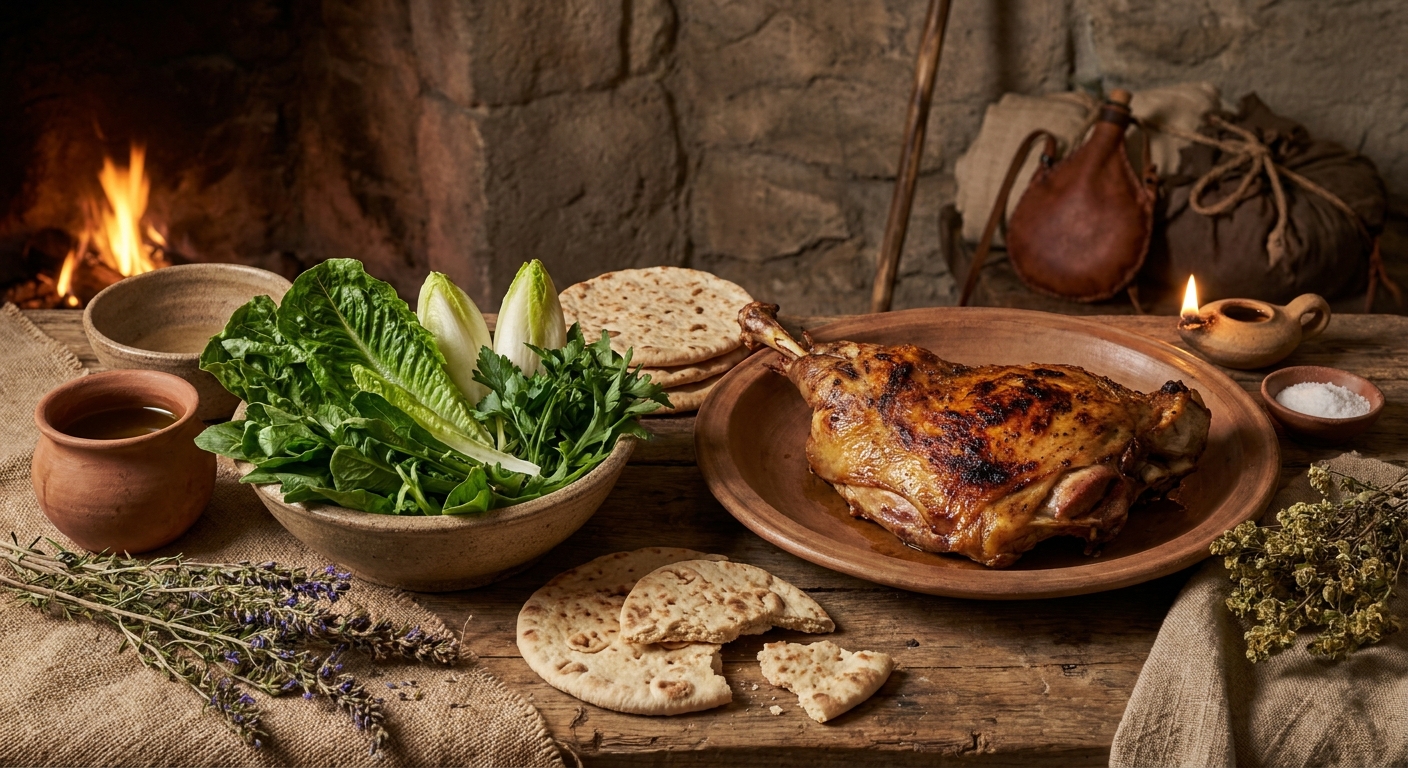
A simple roasted lamb, served with bitter herbs (romaine lettuce, endive, chicory) and unleavened bread. The contrast between the tender meat and the bitterness of the herbs alone tells the memory of servitude and deliverance.
That night was a night of vigil. Each household took a lamb without blemish, roasted it whole over the fire, and ate it with bitter herbs and unleavened bread. The bitterness recalls the bondage, and the roasted flesh, the deliverance. I entrust this meal to you not to repeat the mystery, but so that your table may keep the taste of what our night was.
- •Lamb (shoulder or leg) — a fine piece (roasted meat)
- •Bitter herbs (lettuce, chicory, endive) — a bunch (symbolic accompaniment)
- •Salt — by hand (seasoning)
- •Hyssop or wild oregano — a few sprigs (flavor)
- •Olive oil — a drizzle (cooking)
Roasted Lamb with Bitter Herbs
A simple roasted lamb, served with bitter herbs (romaine lettuce, endive, chicory) and unleavened bread. The contrast between the tender meat and the bitterness of the herbs alone tells the memory of servitude and deliverance.
Why this dish? On the night of the Exodus from Egypt, each household eats a roasted lamb with bitter herbs and unleavened bread (Exodus 12). This is the foundational meal that Moses institutes before departure. Here, a dish freely INSPIRED by this living tradition—not a reproduction of the sacred rite.
That night was a night of vigil. Each household took a lamb without blemish, roasted it whole over the fire, and ate it with bitter herbs and unleavened bread. The bitterness recalls the bondage, and the roasted flesh, the deliverance. I entrust this meal to you not to repeat the mystery, but so that your table may keep the taste of what our night was.
Ingredients (period version)
- Lamb (shoulder or leg) — a fine piece (roasted meat)
- Bitter herbs (lettuce, chicory, endive) — a bunch (symbolic accompaniment)
- Salt — by hand (seasoning)
- Hyssop or wild oregano — a few sprigs (flavor)
- Olive oil — a drizzle (cooking)
Ingredients
- Lamb shoulder — 1.2 kg (roasted meat)
- Romaine lettuce and endives — 1 heart + 2 endives (bitter herbs)
- Dried oregano (or hyssop if available) — 1 tbsp (flavor)
- Garlic — 3 cloves (flavor)
- Olive oil — 3 tbsp (cooking)
- Salt — to taste (seasoning)
Method
- Rub the lamb with olive oil, salt, crushed garlic, and oregano.
- Sear the piece on all sides in a very hot Dutch oven or roasting pan.
- Roast in the oven at 180°C for about 1 hour 15 to 1 hour 30, basting regularly, until the meat is tender.
- Meanwhile, rinse and dry the bitter herbs; serve raw, simply dressed with a little oil and salt.
- Let the meat rest for 10 minutes, then shred or slice.
- Serve with bitter herbs and unleavened bread, to be broken by hand.
How it was made : The lamb was roasted whole on a spit over the fire, without boiling. The bitter herbs, eaten raw, were wild plants of the Near East (lettuces, chicories). Everything was eaten with unleavened bread, in haste, standing.
The contemporary twist : Shredded lamb served as a wrap in unleavened bread with a dash of chopped bitter herbs—an "Exodus roll" to eat with your fingers.
Sources : Book of Exodus, chapter 12, verses 8-11
Moses · Charactorium