 flip
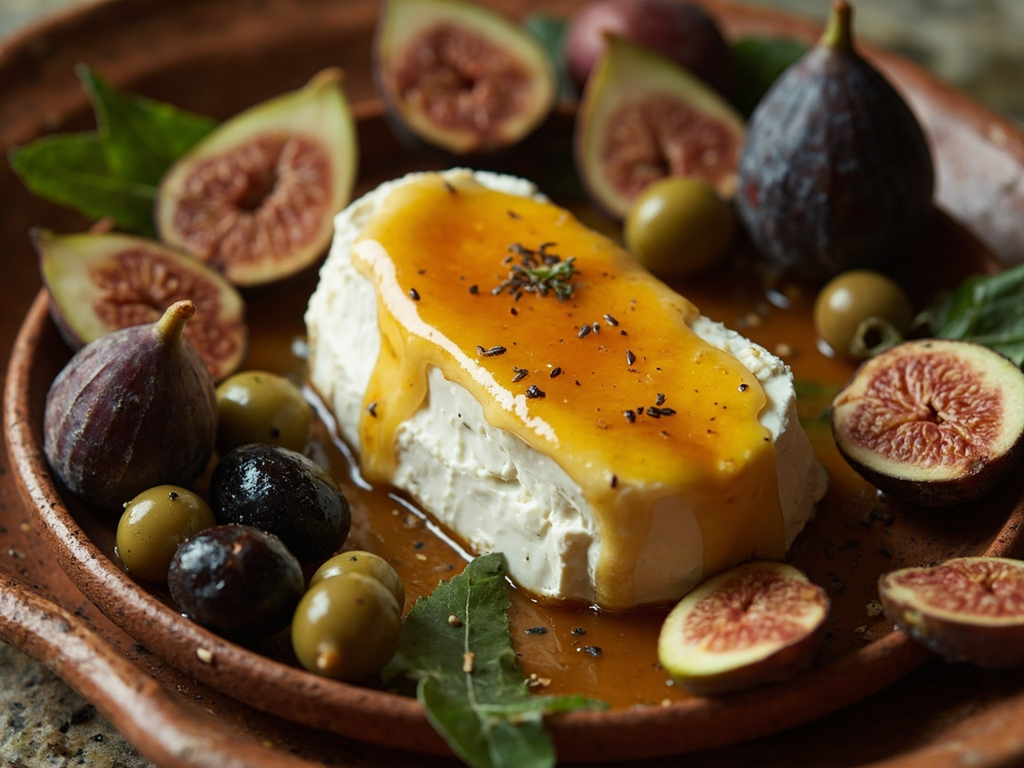
flipTyros kai Elaiai, Fresh Cheese with Olives and Honey
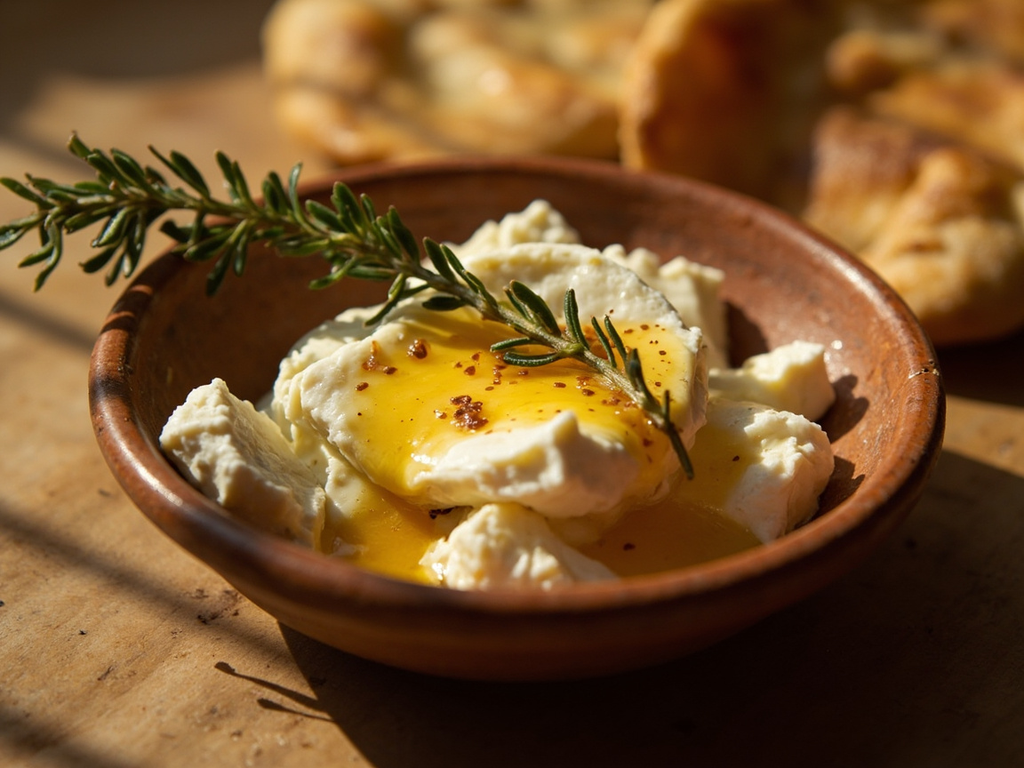
Tyros kai Elaiai, Fresh Cheese with Olives and Honey
Why this dish? At the symposion — that banquet where Socrates shone by his speech far more than by his appetite — one nibbled tragêmata: cheese, olives, figs, honey, while drinking diluted wine. Plato's Symposium places Socrates at the heart of these Athenian evenings. Here is the light and convivial table of those nights of philosophy.
Fresh goat cheese drizzled with honey from Mount Hymettus, accompanied by olives and figs. The iconic sweet-salty contrast of Greek desserts — what was shared among friends, cup in hand, while discussing the world.
Sit among us, friend, and do not fear to reach for this cheese. A little Hymettus honey on top, an olive on the side, and Agathon's cup passing around: that is enough to loosen tongues! Eat little, drink even less, but speak much — for it is not the flesh of dishes that nourishes the banquet, it is the exchange of minds. Sweet and salty, you see, are like question and answer: they are only good when married.
- •Fresh goat or sheep cheese — a portion (base)
- •Hymettus honey — to drizzle (signature sweetness)
- •Green and black olives — a handful (salty contrast)
- •Fresh or dried figs — a few (accompanying fruit)
- •Thyme — a pinch (aroma)
Tyros kai Elaiai, Fresh Cheese with Olives and Honey
Fresh goat cheese drizzled with honey from Mount Hymettus, accompanied by olives and figs. The iconic sweet-salty contrast of Greek desserts — what was shared among friends, cup in hand, while discussing the world.
Why this dish? At the symposion — that banquet where Socrates shone by his speech far more than by his appetite — one nibbled tragêmata: cheese, olives, figs, honey, while drinking diluted wine. Plato's Symposium places Socrates at the heart of these Athenian evenings. Here is the light and convivial table of those nights of philosophy.
Sit among us, friend, and do not fear to reach for this cheese. A little Hymettus honey on top, an olive on the side, and Agathon's cup passing around: that is enough to loosen tongues! Eat little, drink even less, but speak much — for it is not the flesh of dishes that nourishes the banquet, it is the exchange of minds. Sweet and salty, you see, are like question and answer: they are only good when married.
Ingredients (period version)
- Fresh goat or sheep cheese — a portion (base)
- Hymettus honey — to drizzle (signature sweetness)
- Green and black olives — a handful (salty contrast)
- Fresh or dried figs — a few (accompanying fruit)
- Thyme — a pinch (aroma)
Ingredients
- Fresh goat cheese (or mild feta) — 200 g (base)
- Greek thyme honey — 3 tbsp (signature drizzle)
- Kalamata and green olives — 1 handful (salty contrast)
- Fresh figs (or rehydrated dried) — 4 (fruit)
- Fresh thyme and toasted sesame — 1 tsp (finish)
Method
- Place the fresh cheese in the center of a dish, in a mound or thick slices.
- Drizzle generously with honey (warm slightly if needed to make it runny).
- Arrange the olives and quartered figs around.
- Sprinkle with fresh thyme and toasted sesame.
- Serve immediately, to share by hand, with a few pieces of maza.
How it was made : Cheese (tyros) from goat or sheep was ubiquitous in Greece, often paired with honey — Attic honey from Hymettus was renowned throughout the ancient world. During the tragêmata, the second part of the symposion devoted to drinking, these sweet-salty treats (cheese, dried fruits, honey cakes) were served to accompany the wine and stimulate conversation.
The contemporary twist : Serve on a "symposion" sharing board with the cheese warmed for a few seconds in the oven, honey flowing, and walnut pieces — an apéro style among friends.
Sources : Plato, The Symposium · Andrew Dalby, Food in the Ancient World from A to Z (2003)
Socrates · Charactorium