 flip
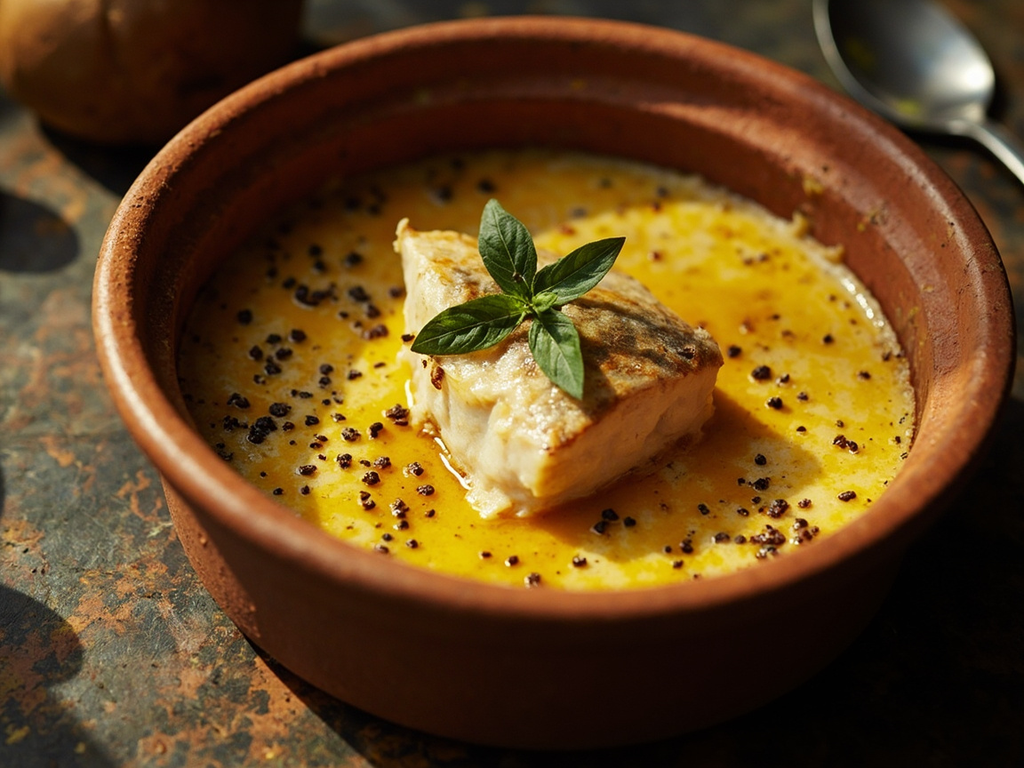
flipSea Bream with Garos, Honey, and Herbs
Sea Bream with Garos, Honey, and Herbs
Why this dish? Fresh fish was the prestige opson of Athens, a maritime city; it was enjoyed on festive evenings after a victory at the tragic competition of the Theater of Dionysus. For a crowned playwright like Sophocles, a fine sea bream drizzled with garos crowned the meal offered to friends who came to applaud him.
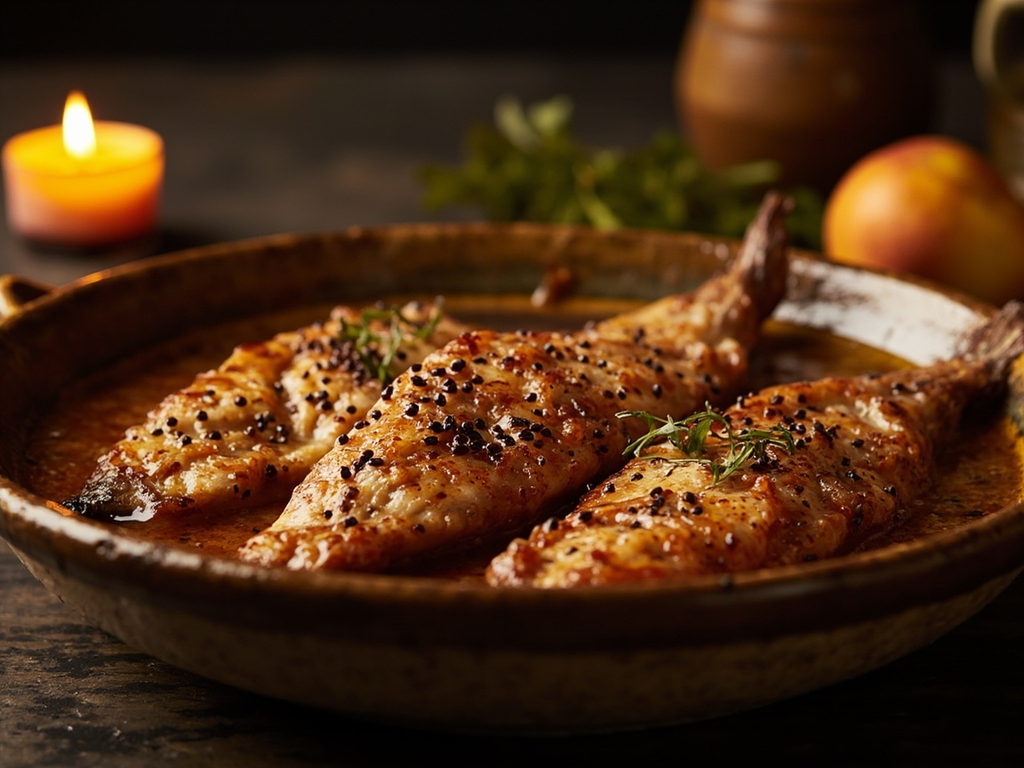
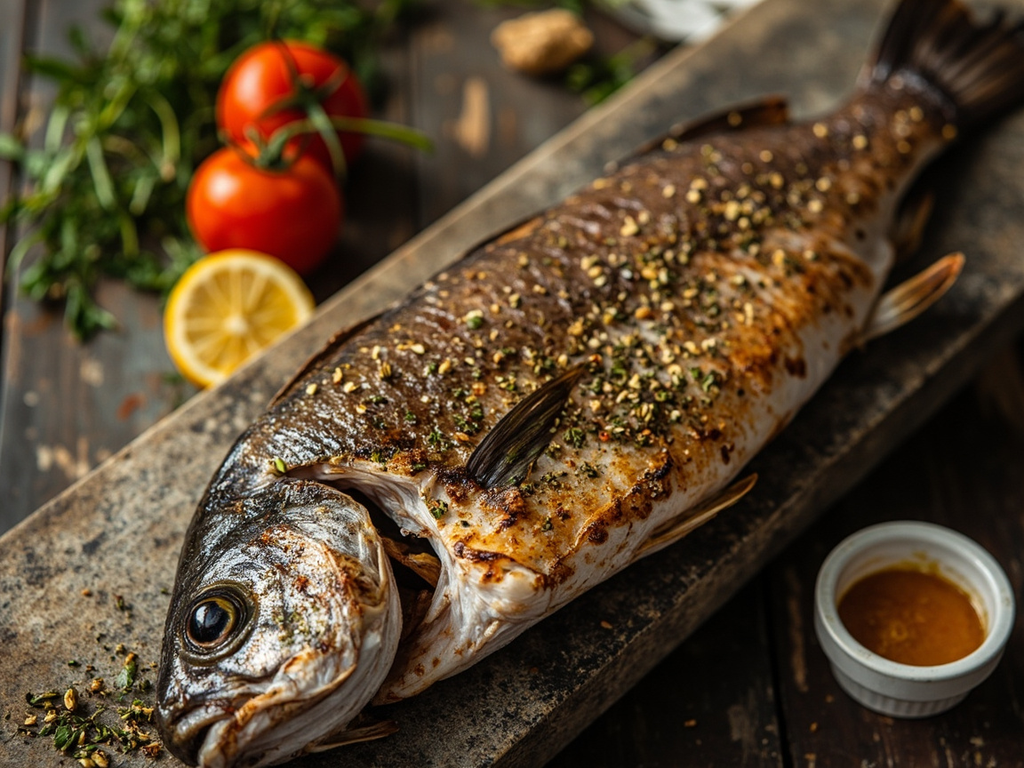
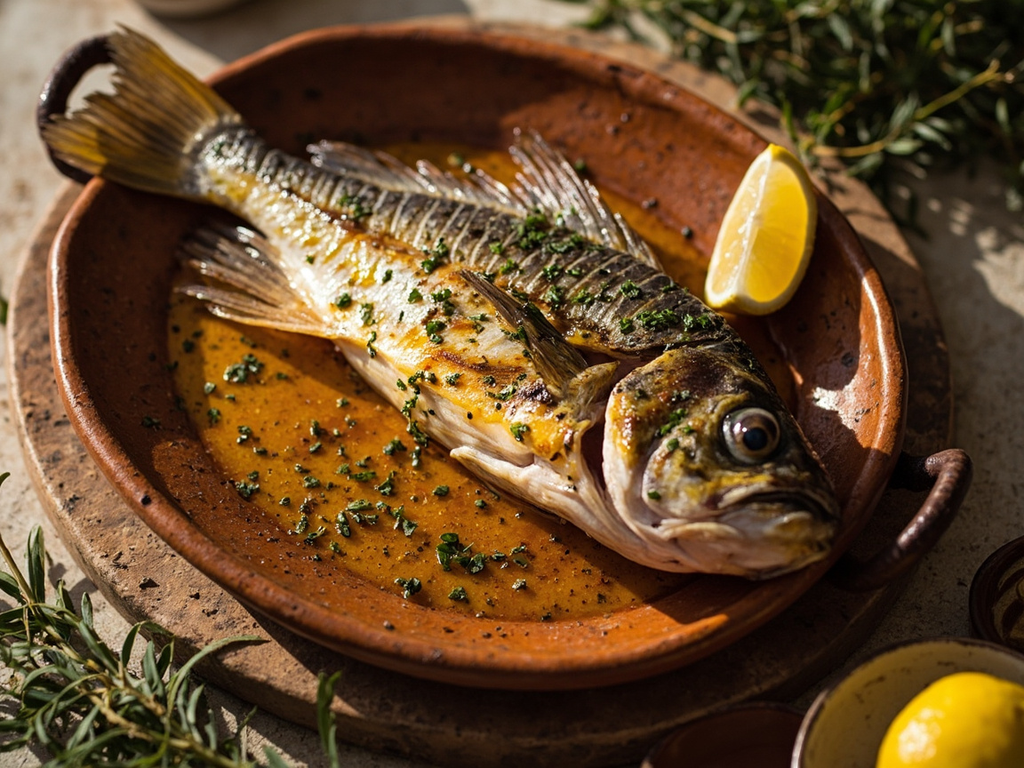
A fish from the Aegean Sea simply cooked, coated with a dash of garos and a hint of honey that balances the salty fermented brine. The noble opson par excellence, which turned an ordinary deipnon into a feast.
When the contest ends and the herald has proclaimed my name, it is this dish I have brought to my friends. One chooses a sea bream hauled that very morning from the nets of Piraeus — firm flesh, clear eye —, places it on the embers, and pours over it the garos, that fish brine whose mere aroma makes the mouth water. A drop of Hymettus honey, a few leaves of rue and oregano, and behold: the salt of the sea and the sweetness of the gods reconciled in one bite. Drink your wine mixed with water, and may fate spare us long enough for another feast.
- •Aegean sea bream — one fine piece (main opson)
- •Garos (fermented fish brine) — a drizzle (salty umami signature)
- •Hymettus honey — a drop (sweet balance)
- •Olive oil — a splash (cooking)
- •Oregano and rue — a few sprigs (aromatics)
Sea Bream with Garos, Honey, and Herbs
A fish from the Aegean Sea simply cooked, coated with a dash of garos and a hint of honey that balances the salty fermented brine. The noble opson par excellence, which turned an ordinary deipnon into a feast.
Why this dish? Fresh fish was the prestige opson of Athens, a maritime city; it was enjoyed on festive evenings after a victory at the tragic competition of the Theater of Dionysus. For a crowned playwright like Sophocles, a fine sea bream drizzled with garos crowned the meal offered to friends who came to applaud him.
When the contest ends and the herald has proclaimed my name, it is this dish I have brought to my friends. One chooses a sea bream hauled that very morning from the nets of Piraeus — firm flesh, clear eye —, places it on the embers, and pours over it the garos, that fish brine whose mere aroma makes the mouth water. A drop of Hymettus honey, a few leaves of rue and oregano, and behold: the salt of the sea and the sweetness of the gods reconciled in one bite. Drink your wine mixed with water, and may fate spare us long enough for another feast.
Ingredients (period version)
- Aegean sea bream — one fine piece (main opson)
- Garos (fermented fish brine) — a drizzle (salty umami signature)
- Hymettus honey — a drop (sweet balance)
- Olive oil — a splash (cooking)
- Oregano and rue — a few sprigs (aromatics)
Ingredients
- Whole sea bream (or sea bass) — 1 piece of 500 g (main opson)
- Asian fish sauce (nuoc mam, substitute for garos) — 1 tbsp (salty umami signature)
- Honey — 1 tsp (sweet balance)
- Olive oil — 2 tbsp (cooking)
- Dried oregano — 1 tsp (aromatic)
Method
- Gut and scale the sea bream, pat dry, and score the skin on both sides.
- Mix the fish sauce, honey, and oregano into a light marinade, and brush it inside and outside the fish.
- Let rest 15 minutes, then drizzle with olive oil.
- Cook on a grill or in the oven at 200°C for 12 to 15 minutes, basting halfway through with the marinade juices.
- Serve immediately, drizzled with the juices, with an optional lemon wedge and maza for dipping.
How it was made : Greek garos (garon), ancestor of Roman garum, was made by fermenting small fish and their guts with salt in the sun. Expensive and refined, it seasoned the opson of wealthy tables. The marriage of salty fermented and honey is typically Greek.
The contemporary twist : If garos is unavailable, a good Asian fish sauce makes a surprisingly convincing substitute — the culinary bridge between Sophocles' Athens and Southeast Asia is just a spoonful away.
Sources : Sally Grainger, The Story of Garum, Routledge, 2021 · Archestratus of Gela, Hedypatheia (gastronomic poem, 4th century BC, fragments)
Sophocles · Charactorium