 flip
flipSeal Stew with Broth, Roots, and Imported Barley
Seal Stew with Broth, Roots, and Imported Barley
Why this dish? In Greenland, grain barely grew: Erik and his settlers hunted seal, abundant in the fjords, for meat and fat. In the evening, at *náttmál*, the pot hung over the central hearth of the longhouse at Brattahlíð gathered the household around a hearty stew where barley — precious, imported from Iceland or Norway — was counted grain by grain.
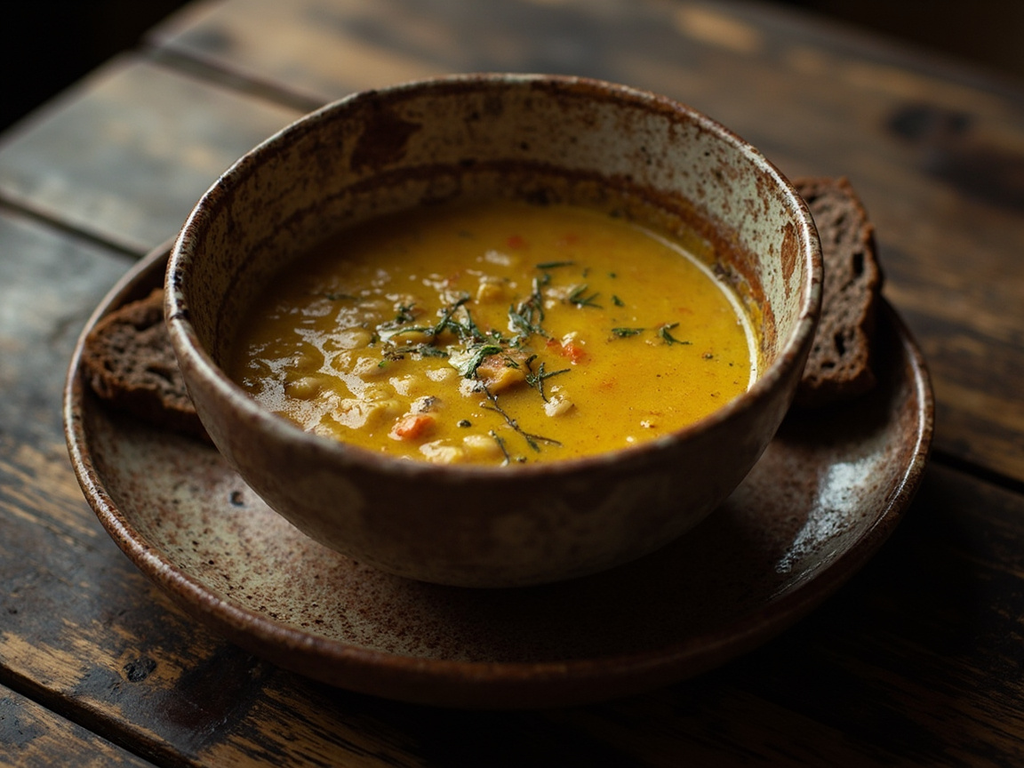
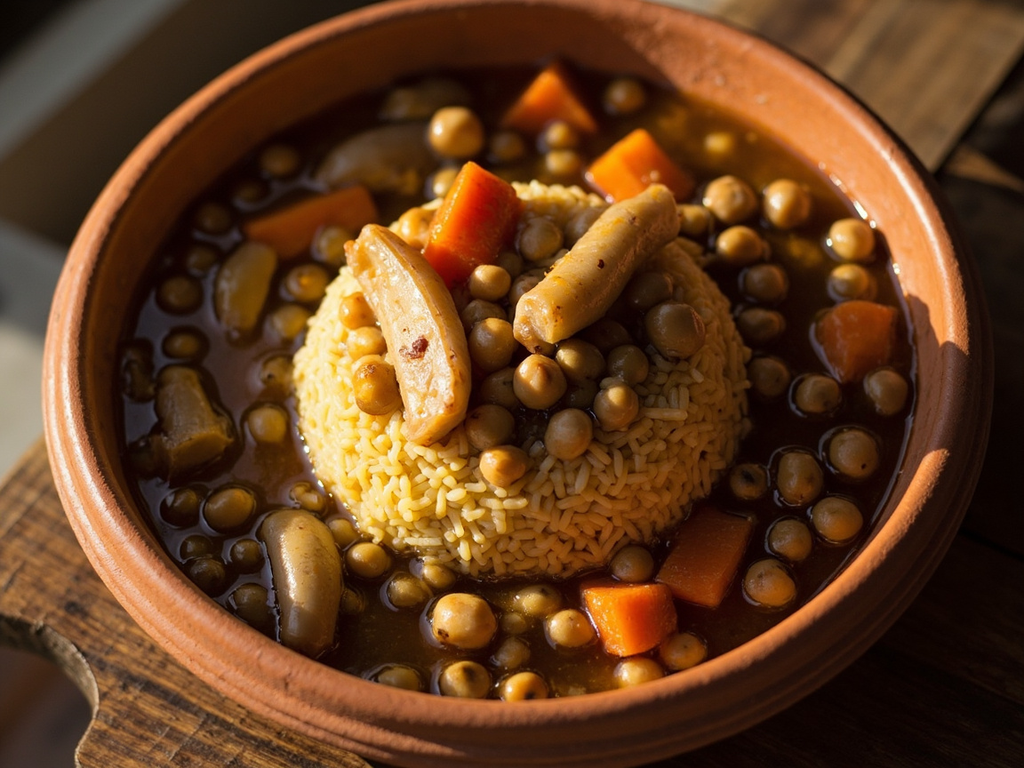
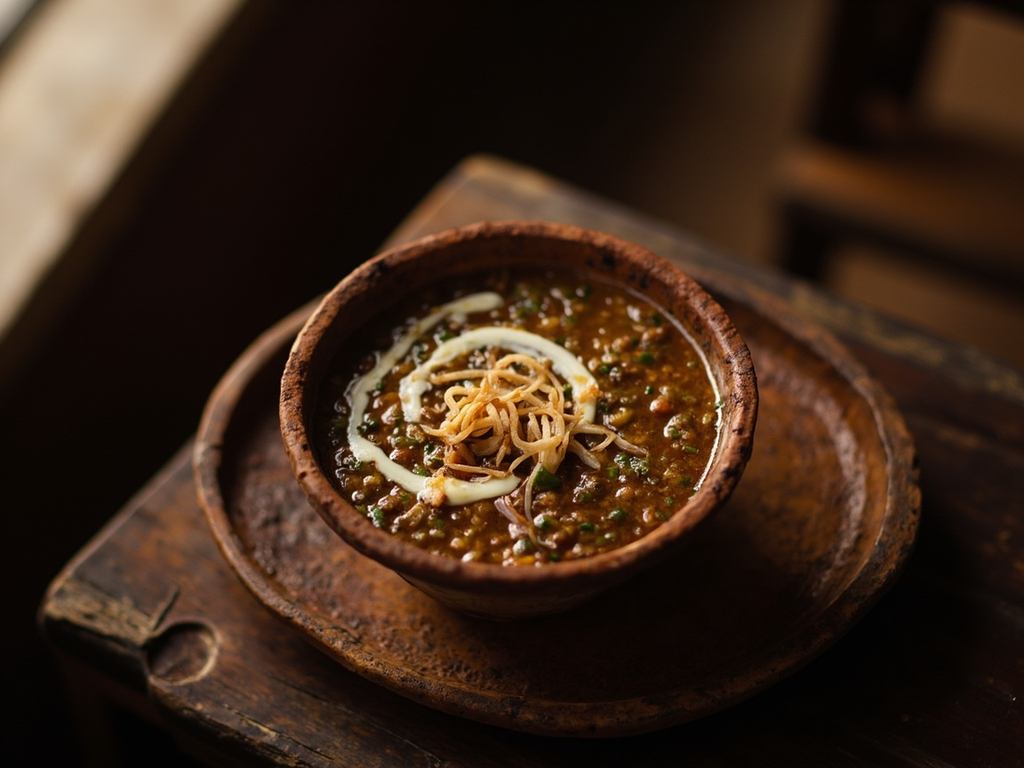
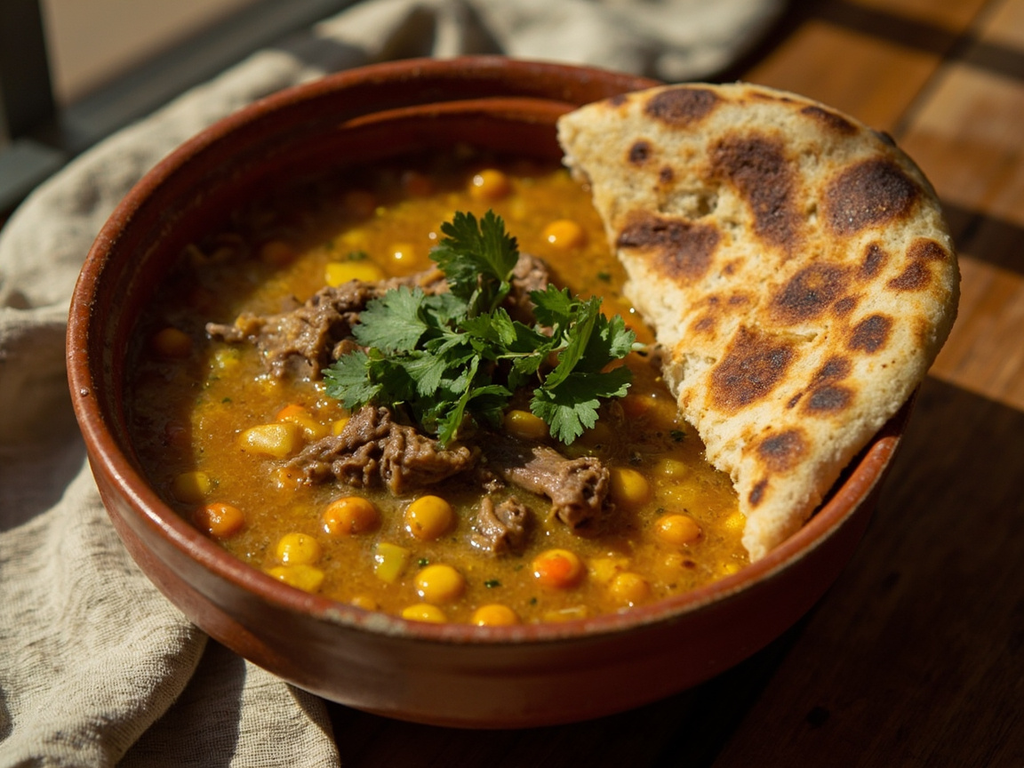
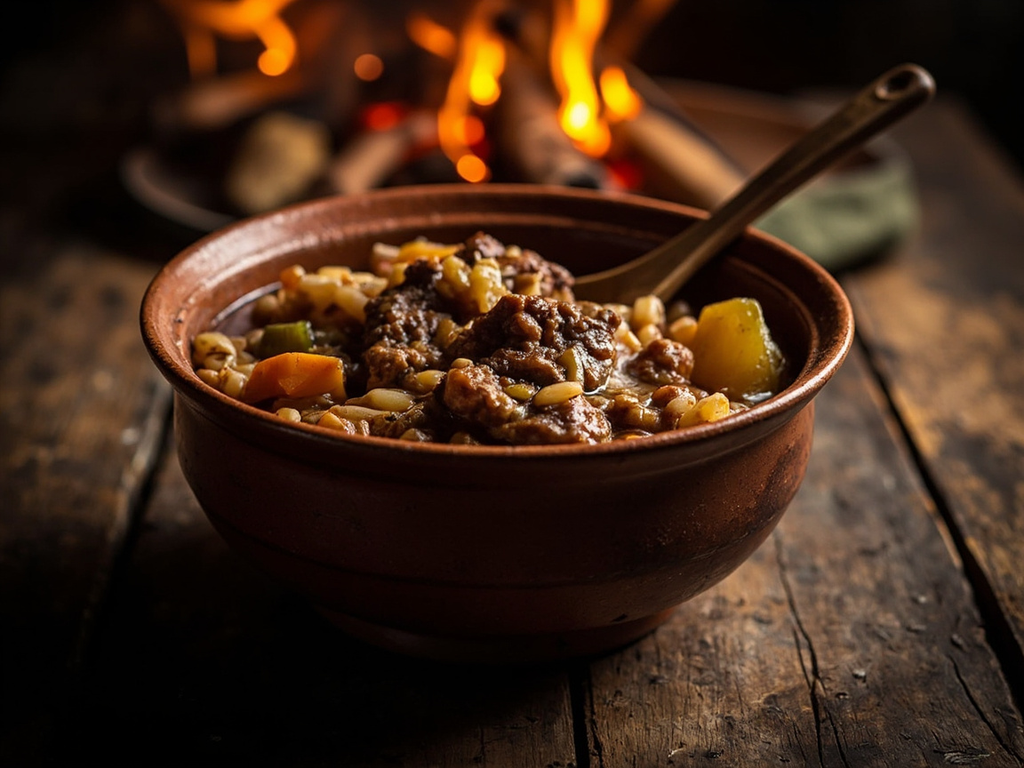
A dark, nourishing seal meat, long-simmered in its broth with local roots and a little barley brought by ship. A deep, salty, umami dish designed to warm after a cold day. (Achievable today with red game meat, as seal is neither accessible nor recommended.)
When night falls early and the wind bites, it's the pot that holds the household together. The seal gives us its meat and its fat where no wheat grows; you cut it, throw it into the cauldron on the central fire, with roots from the earth and a handful of barley come by sea — and that one, you count it grain by grain, for it costs a crossing. You let it cook until the flesh gives way under the tooth. Eat hot, winter is long.
- •Seal meat — a good piece (main protein)
- •Seal fat — as much as needed (fat, energy)
- •Barley — a handful, imported (starch (rare and precious))
- •Local roots and plants (angelica, mountain sorrel) — as gathered (vegetables and herbs)
Seal Stew with Broth, Roots, and Imported Barley
A dark, nourishing seal meat, long-simmered in its broth with local roots and a little barley brought by ship. A deep, salty, umami dish designed to warm after a cold day. (Achievable today with red game meat, as seal is neither accessible nor recommended.)
Why this dish? In Greenland, grain barely grew: Erik and his settlers hunted seal, abundant in the fjords, for meat and fat. In the evening, at *náttmál*, the pot hung over the central hearth of the longhouse at Brattahlíð gathered the household around a hearty stew where barley — precious, imported from Iceland or Norway — was counted grain by grain.
When night falls early and the wind bites, it's the pot that holds the household together. The seal gives us its meat and its fat where no wheat grows; you cut it, throw it into the cauldron on the central fire, with roots from the earth and a handful of barley come by sea — and that one, you count it grain by grain, for it costs a crossing. You let it cook until the flesh gives way under the tooth. Eat hot, winter is long.
Ingredients (period version)
- Seal meat — a good piece (main protein)
- Seal fat — as much as needed (fat, energy)
- Barley — a handful, imported (starch (rare and precious))
- Local roots and plants (angelica, mountain sorrel) — as gathered (vegetables and herbs)
Ingredients
- Red game meat (venison, reindeer, or lean beef) — 600 g cubed (main protein (substitute for seal))
- Pearl barley — 120 g (starch)
- Turnips and carrots (old root vegetables) — 400 g (vegetables)
- Onion — 1 (aromatic)
- Lard or butter — 2 tbsp (fat)
- Salt, juniper berries, sprigs of angelica or thyme — to taste (seasoning)
Method
- Brown the meat cubes in lard at the bottom of a pot.
- Add the chopped onion, then cover with cold water. Bring to a simmer and skim off any foam.
- Add the barley and juniper berries, let simmer gently for 1 hour.
- Add the root vegetables cut into large chunks, continue for 45 minutes until meat and barley are tender.
- Season with salt, add the herbs at the end of cooking. Serve very hot in wooden or earthenware bowls.
How it was made : Isotopic analyses of the bones of Scandinavian settlers in Greenland show an increasing marine component (especially seal) as farming became difficult. Cooking in a pot hung over the central hearth of the longhouse is typical. Barley, almost impossible to cultivate under this climate, had to be imported — hence its value. Seal is replaced here by game for practical and ethical reasons.
The contemporary twist : Serve in a steaming bowl with a drizzle of oil and chopped angelica: a 'fjord pot-au-feu' that embraces its Nordic roots without a single New World ingredient.
Erik the Red · Charactorium