 flip
flipÄrtsoppa for Lean Days — Yellow Peas with Rye Bread
Ärtsoppa for Lean Days — Yellow Peas with Rye Bread
Why this dish? For nearly half the year, the Church imposed lean days when meat was banned from both the royal table and that of the common folk. As queen, Blanche shared this discipline: yellow pea soup, nourishing and long-keeping, was the staple of these fasting mornings in Sweden.
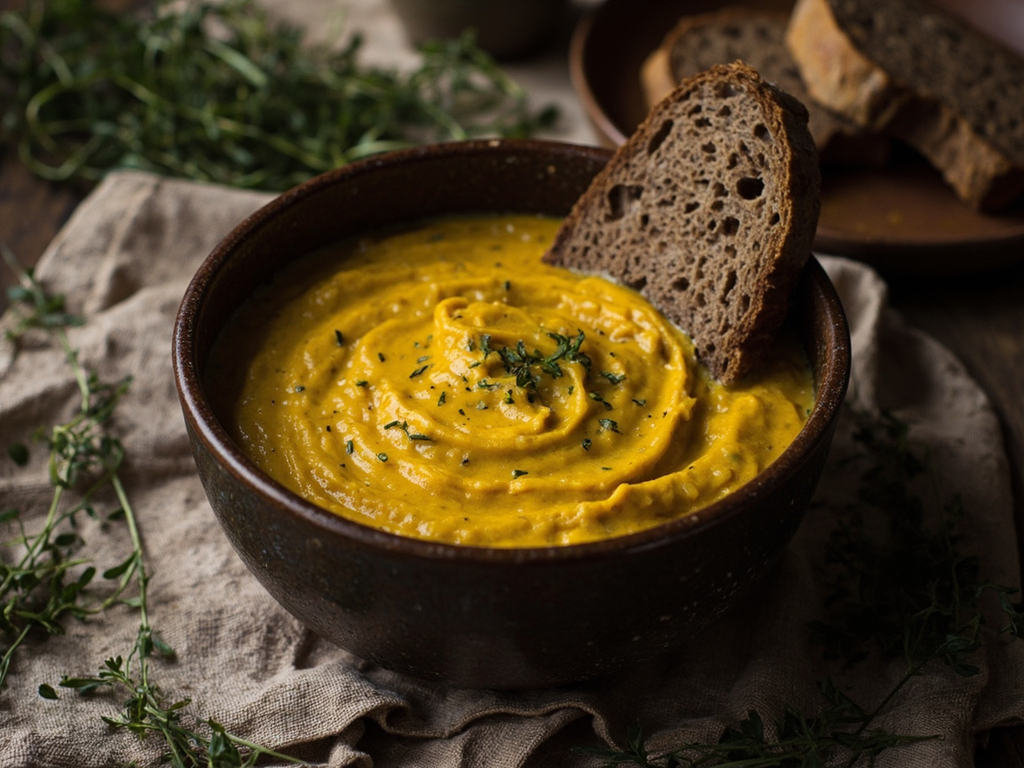
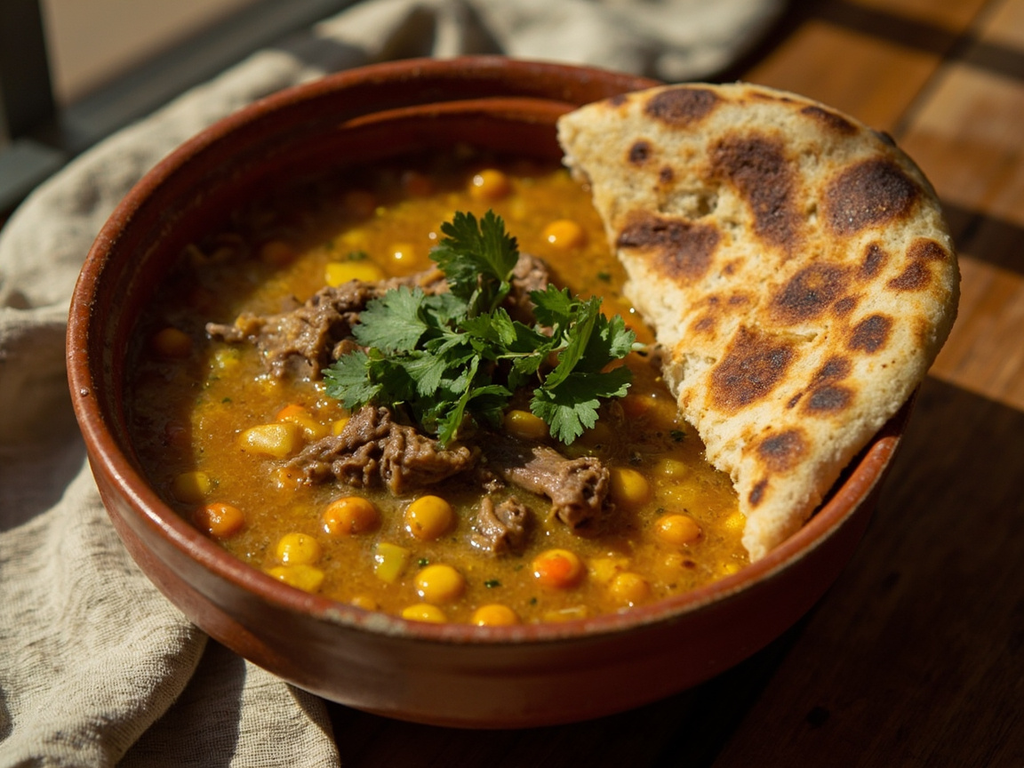
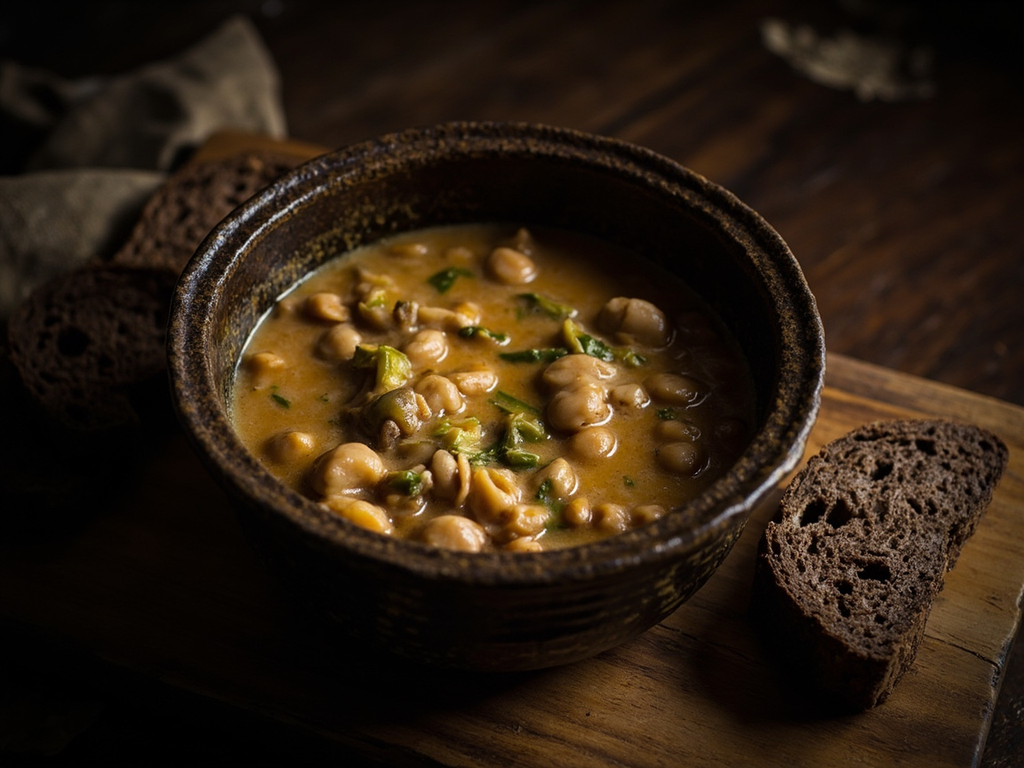
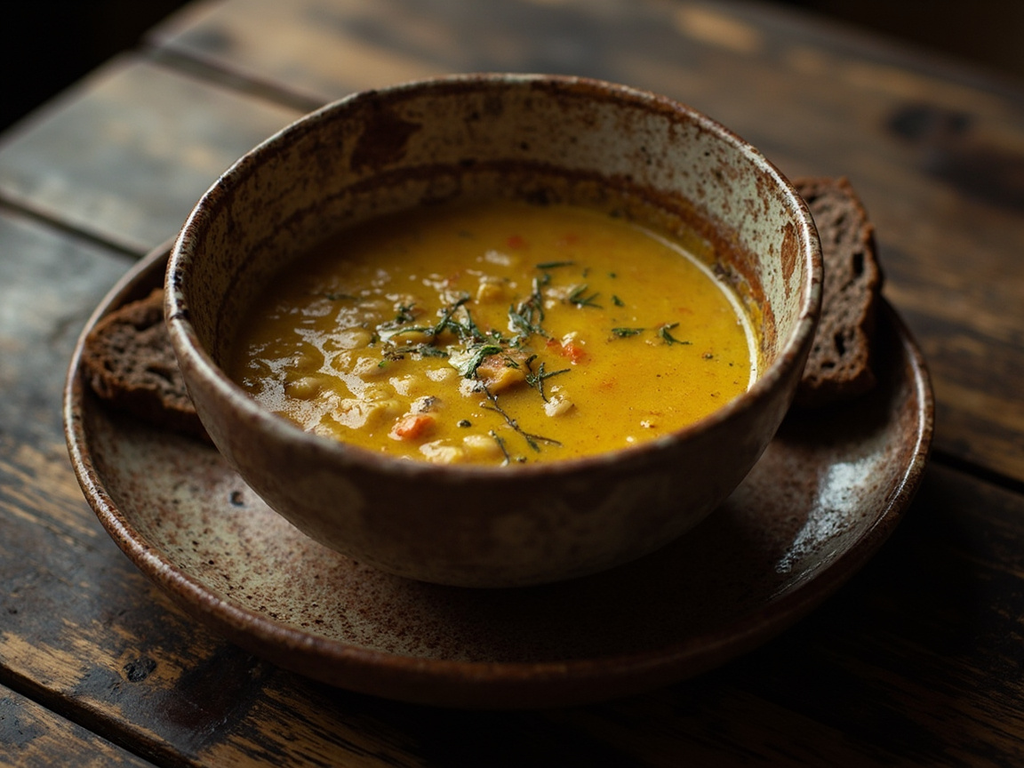
A thick yellow pea soup slowly simmered, flavored with onion and herbs, served with dense rye bread slices. A humble but comforting dish that endured for centuries in the North.
Know, you who read me, that half my days passed without meat, for thus wills Our Mother the Church. On those fasting mornings, they brought me a thick pea soup, steaming, with the black rye bread of this cold land. I had them add a pinch of herbs from the garden, and believe me, after morning prayers, no lady ever turned up her nose at such comfort. The North is harsh, but a good bowl of peas warms body and soul alike.
- •Dried yellow peas — a good measure (nourishing base)
- •Onion — a few (aromatic)
- •Spring water — enough to cover generously (cooking liquid)
- •Salt — to taste (seasoning)
- •Dried marjoram and thyme — a pinch (flavoring)
- •Rye bread — as desired (accompaniment)
Ärtsoppa for Lean Days — Yellow Peas with Rye Bread
A thick yellow pea soup slowly simmered, flavored with onion and herbs, served with dense rye bread slices. A humble but comforting dish that endured for centuries in the North.
Why this dish? For nearly half the year, the Church imposed lean days when meat was banned from both the royal table and that of the common folk. As queen, Blanche shared this discipline: yellow pea soup, nourishing and long-keeping, was the staple of these fasting mornings in Sweden.
Know, you who read me, that half my days passed without meat, for thus wills Our Mother the Church. On those fasting mornings, they brought me a thick pea soup, steaming, with the black rye bread of this cold land. I had them add a pinch of herbs from the garden, and believe me, after morning prayers, no lady ever turned up her nose at such comfort. The North is harsh, but a good bowl of peas warms body and soul alike.
Ingredients (period version)
- Dried yellow peas — a good measure (nourishing base)
- Onion — a few (aromatic)
- Spring water — enough to cover generously (cooking liquid)
- Salt — to taste (seasoning)
- Dried marjoram and thyme — a pinch (flavoring)
- Rye bread — as desired (accompaniment)
Ingredients
- Split yellow peas — 400 g (base)
- Onions — 2 medium (aromatic)
- Water — 1.5 L (cooking liquid)
- Salt — 1 tsp (seasoning)
- Dried marjoram and thyme — 1 tsp each (flavoring)
- Whole-grain rye bread — a few slices (accompaniment)
Method
- Soak the yellow peas for several hours, ideally overnight, then drain.
- Place them in a large pot with water and bring to a simmer, skimming the surface.
- Add the chopped onions and let simmer on low heat for 1.5 to 2 hours, until the peas fall apart.
- Season with salt and add herbs at the end of cooking; roughly mash for a thick texture.
- Serve hot with rye bread slices for dipping.
How it was made : Dried peas were the quintessential legume for winter storage in the medieval North: harvested, dried, and made into soups all winter. Rye bread, more rustic than wheat, dominated where wheat grew poorly. This pea + rye combination was the daily staple on lean days, from cottage to palace.
The contemporary twist : A drizzle of roasted rapeseed oil and a few fresh dill fronds enliven this Nordic classic without betraying it.
Blanche de Namur · Charactorium