 flip
flipRoasted partridge with saffron agresto
Roasted partridge with saffron agresto
Why this dish? Grandson of Pope Paul III and prince of Parma, Farnese received the grandees of Spain and Flanders at his governor's table. Roasted game bird napped with a sweet-and-sour saffron sauce is exactly the showpiece dish Scappi served to Roman princes in those same years.
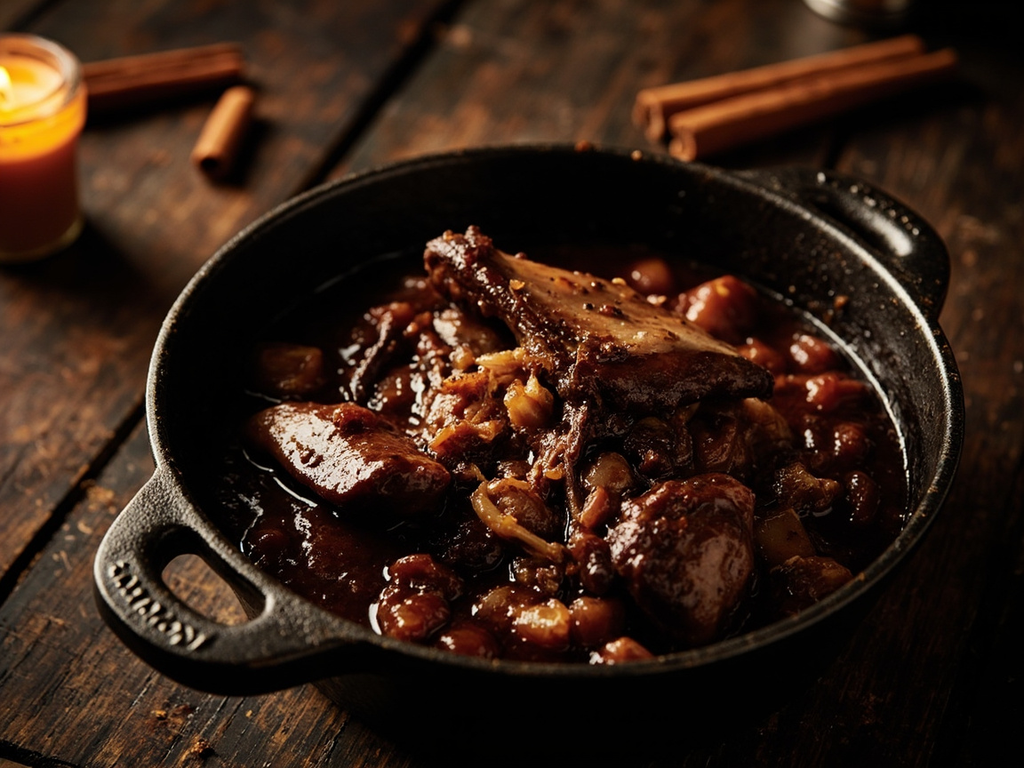
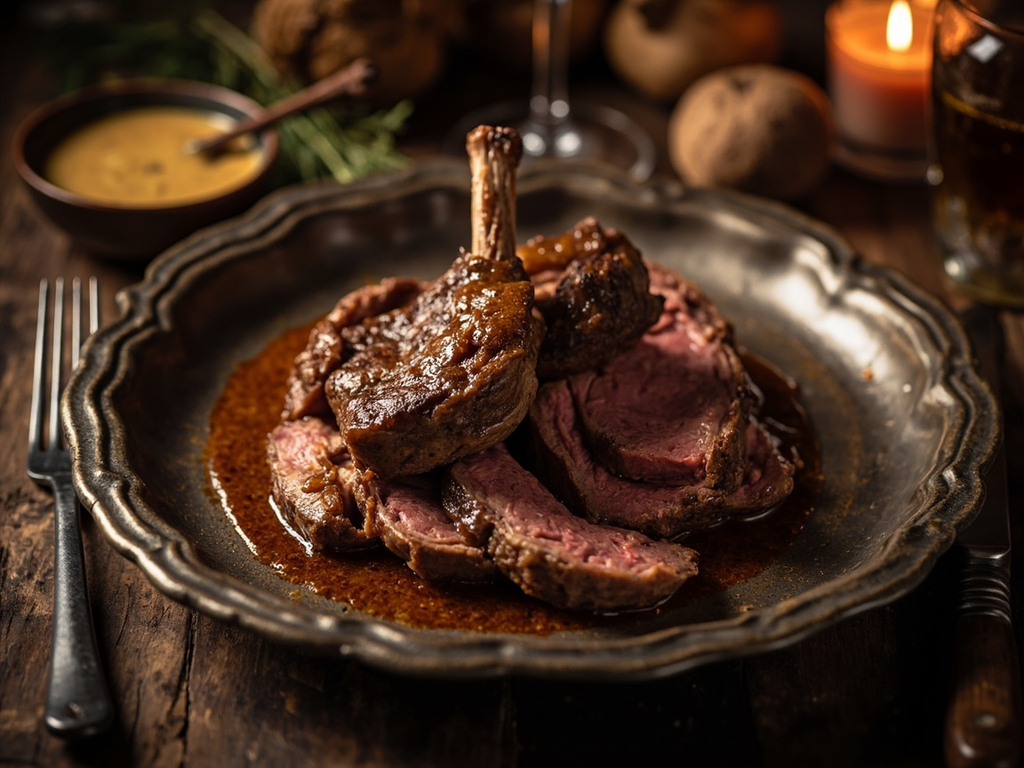
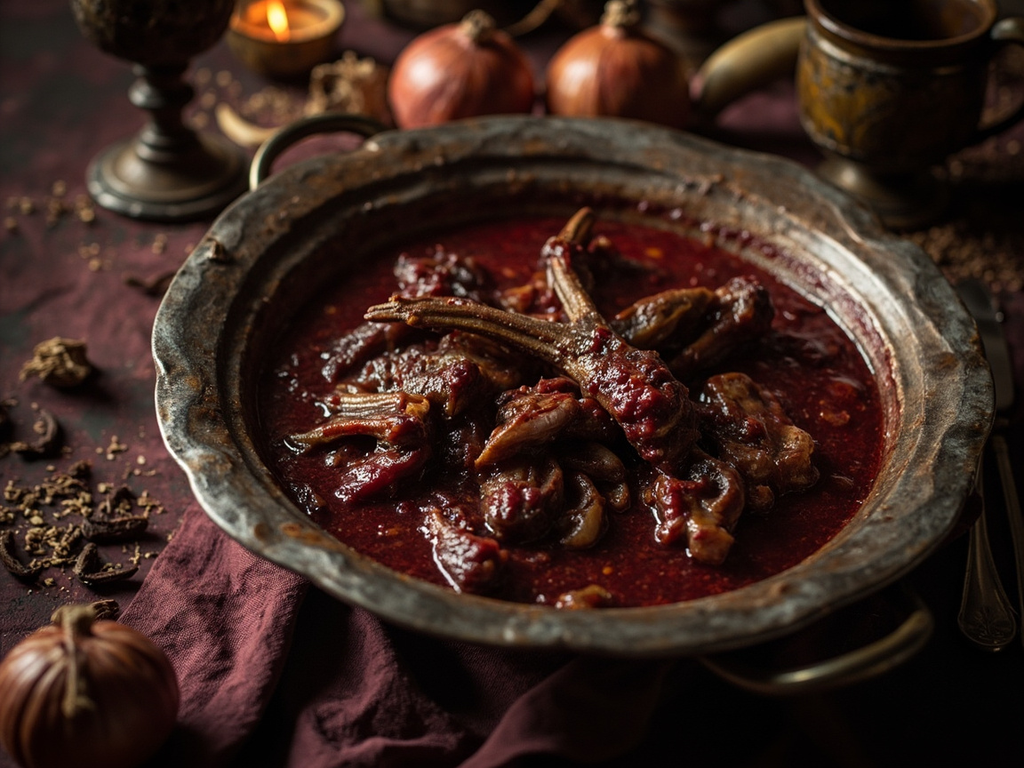
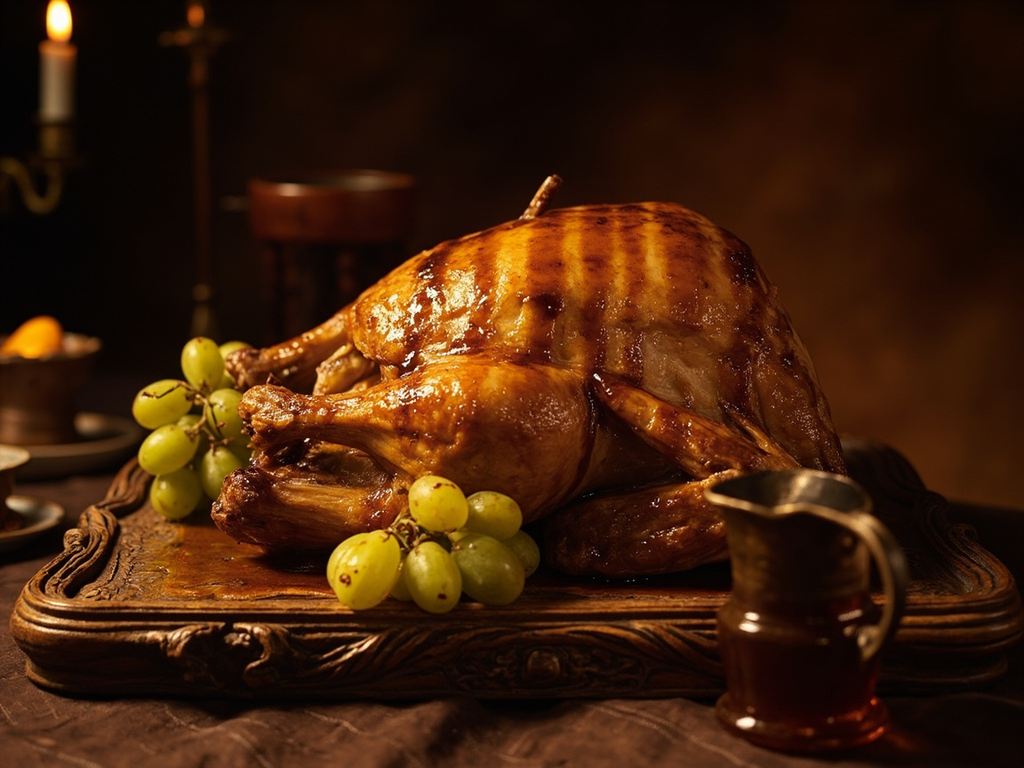
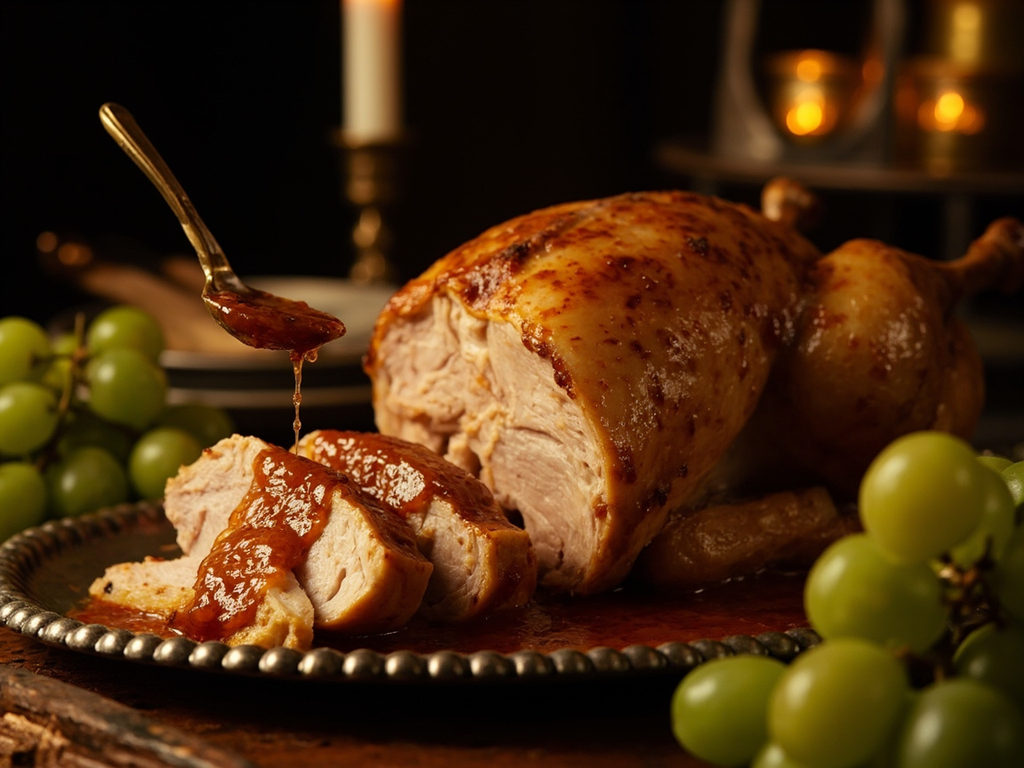
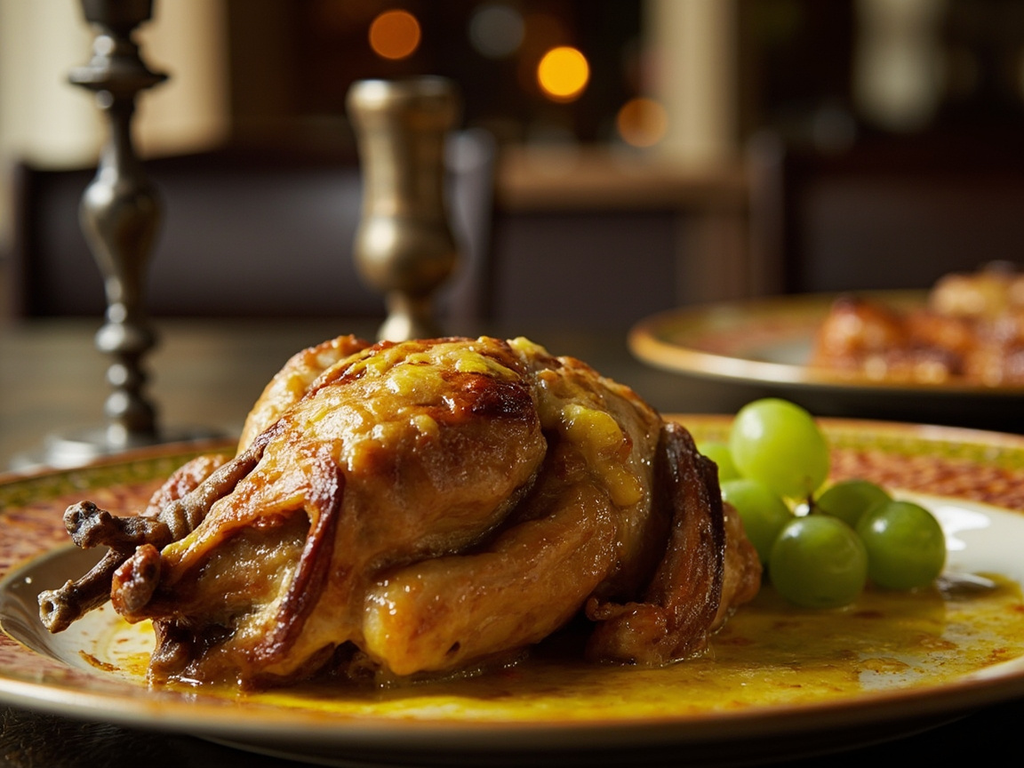
A partridge roasted on a spit, basted with a golden saffron sauce, bound with verjuice (*agresto*) and sweetened with sugar and cinnamon: a sweet-and-sour that rings out like a court fanfare.
Approach, and see what is served at my table when the lords of His Catholic Majesty come. This partridge, I want it golden on the spit, not overcooked, and bathed in a sauce where saffron gives its gold, *agresto* its sour edge, and sugar its sweetness — for a prince must show that neither spice nor refinement is lacking. Turn it with a patient hand, baste it often with its fat: a burnt roast is an insult to the guest. In Parma as in Brussels, I keep table for nothing less than the honor of my house.
- •Partridge (or other feathered game) — one per guest (roast)
- •Saffron — a few threads (color and fragrance, mark of rank)
- •Agresto (verjuice, green grape juice) — half a goblet (acidity)
- •Sugar — to taste (sweetness)
- •Cinnamon and ginger — a pinch of each (warm spices)
- •Lard — thin slices (roasting fat)
Roasted partridge with saffron agresto
A partridge roasted on a spit, basted with a golden saffron sauce, bound with verjuice (*agresto*) and sweetened with sugar and cinnamon: a sweet-and-sour that rings out like a court fanfare.
Why this dish? Grandson of Pope Paul III and prince of Parma, Farnese received the grandees of Spain and Flanders at his governor's table. Roasted game bird napped with a sweet-and-sour saffron sauce is exactly the showpiece dish Scappi served to Roman princes in those same years.
Approach, and see what is served at my table when the lords of His Catholic Majesty come. This partridge, I want it golden on the spit, not overcooked, and bathed in a sauce where saffron gives its gold, *agresto* its sour edge, and sugar its sweetness — for a prince must show that neither spice nor refinement is lacking. Turn it with a patient hand, baste it often with its fat: a burnt roast is an insult to the guest. In Parma as in Brussels, I keep table for nothing less than the honor of my house.
Ingredients (period version)
- Partridge (or other feathered game) — one per guest (roast)
- Saffron — a few threads (color and fragrance, mark of rank)
- Agresto (verjuice, green grape juice) — half a goblet (acidity)
- Sugar — to taste (sweetness)
- Cinnamon and ginger — a pinch of each (warm spices)
- Lard — thin slices (roasting fat)
Ingredients
- Quail or guinea fowl — 2 (or 1 small free-range chicken) (roast)
- Saffron — 1 dose (0.1 g) (color and fragrance)
- Verjuice — 100 ml (or substitute: 70 ml grape juice + 30 ml cider vinegar) (acidity)
- Sugar — 1 tbsp (sweetness)
- Ground cinnamon — 1/2 tsp (spice)
- Ground ginger — 1/4 tsp (spice)
- Thin slices of lard or bacon — 4 (barding)
- Butter — 20 g (to bind the sauce)
Method
- Bard the birds with lard, season with salt, and roast at 200 °C (or on a spit) until nicely browned, basting with their juices.
- Infuse the saffron in warmed verjuice for 10 minutes.
- In a saucepan, combine the saffron-infused verjuice, sugar, cinnamon, and ginger; bring to a simmer and reduce by one-third.
- Off the heat, whisk in the butter to bind the sauce and give it shine.
- Carve the birds, nap with the golden sauce, and serve immediately, piping hot.
How it was made : Scappi roasted game on a spit before a large fire, larding it to prevent drying, and accompanied it with *sapori* — sauces spiked with verjuice, vinegar, fine spices, and sugar. Saffron, costly, signaled the household's wealth; sweet-and-sour was the dominant taste of noble tables in the peninsula.
The contemporary twist : Serve the partridge on a slate with a few fresh grapes just warmed in the sauce: a nod to *agresto*, autumn style.
Sources : Bartolomeo Scappi, Opera dell'arte del cucinare, Venice, 1570 · Platina (Bartolomeo Sacchi), De honesta voluptate et valetudine, 1474
Alessandro Farnese · Charactorium