 flip
flipMaza, the barley flatbread of the Athenians
Maza, the barley flatbread of the Athenians
Why this dish? In his poems, Solon praises the simple life and condemns the excesses of the rich. *Maza*, eaten daily by the average citizen and the frugal lawgiver alike, is the emblematic food of this *eunomia*—the "good order" he wanted for Athens, down to the plate.
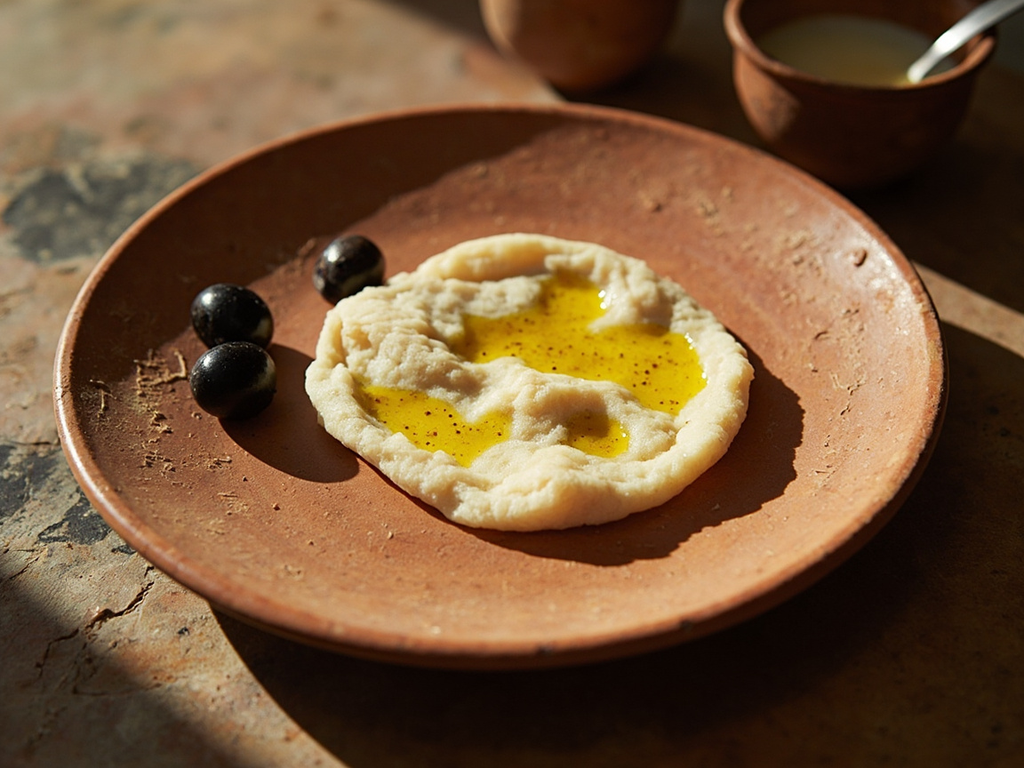
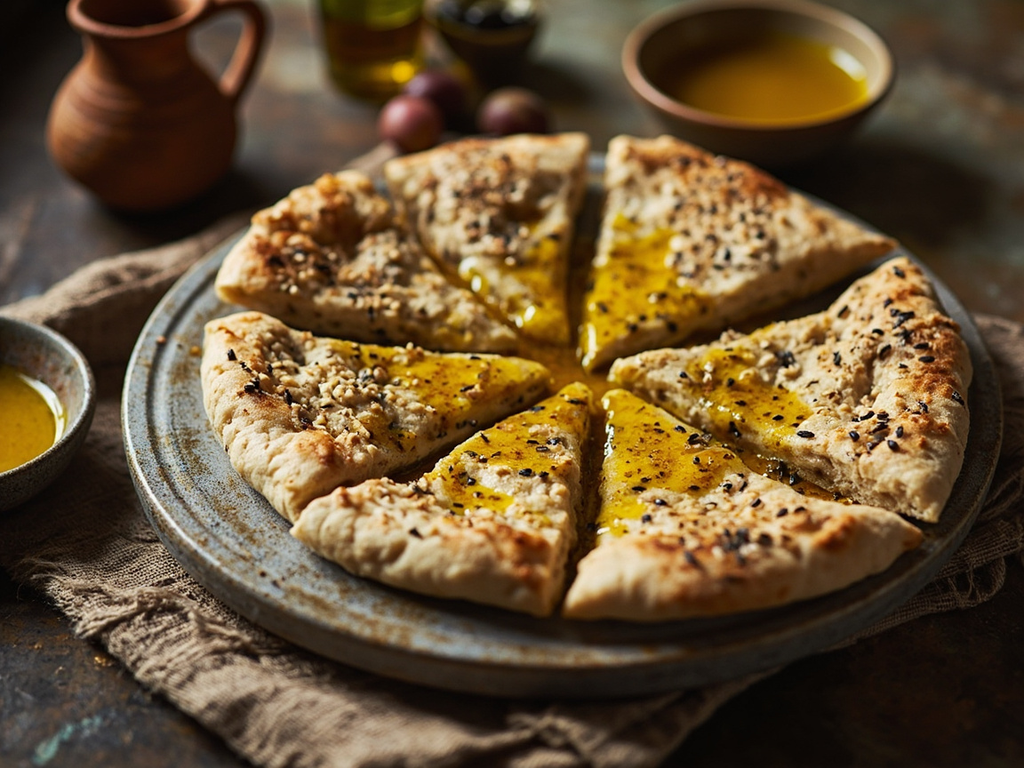
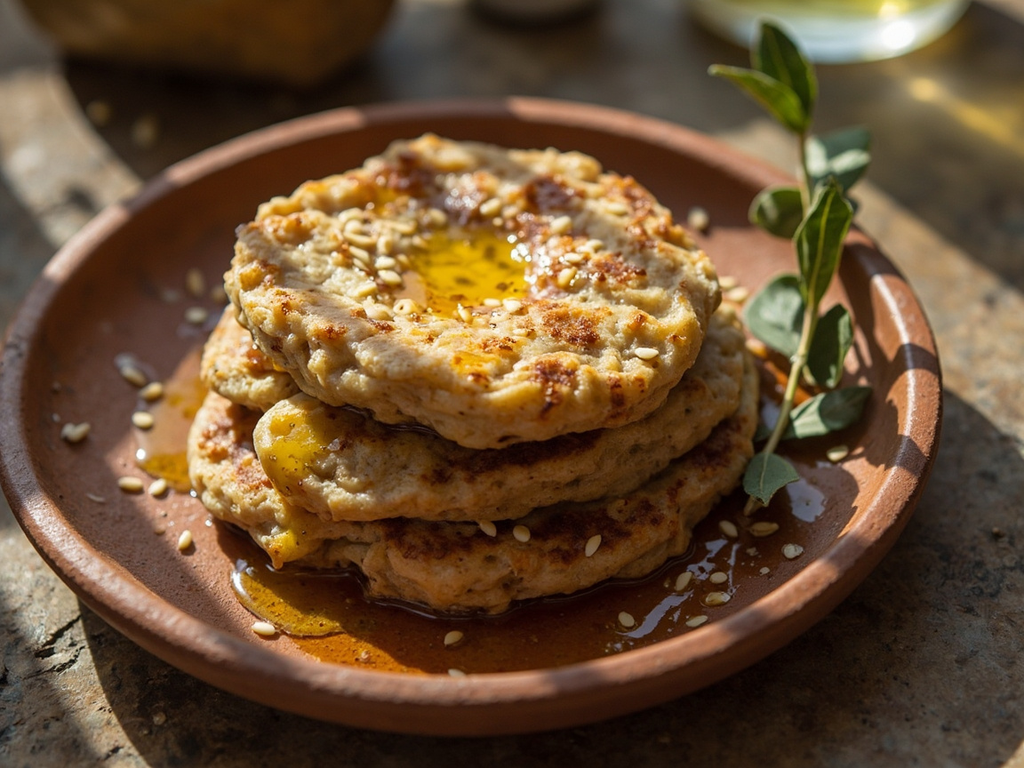
A flatbread or thick paste made from roasted barley flour, barely seasoned with olive oil and salt, sometimes kneaded with a splash of water or wine. It is the daily bread of the Athenian, more rustic and healthier than wheat bread.
Listen to me, young citizen: do not despise this humble barley cake. I have seen men gorged with gold die with empty souls, and peasants break *maza* with a peaceful heart. Roast your barley before grinding it, as our fathers did, then knead it with a little water and a few drops of oil. Neither too much nor too little—in all things, keep measure, for it holds cities and men upright.
- •Roasted barley flour (alphita) — two handfuls per person (cereal base)
- •Spring water — enough to bind (binder)
- •Olive oil — a drizzle (binder and flavor)
- •Sea salt — a pinch (seasoning)
Maza, the barley flatbread of the Athenians
A flatbread or thick paste made from roasted barley flour, barely seasoned with olive oil and salt, sometimes kneaded with a splash of water or wine. It is the daily bread of the Athenian, more rustic and healthier than wheat bread.
Why this dish? In his poems, Solon praises the simple life and condemns the excesses of the rich. *Maza*, eaten daily by the average citizen and the frugal lawgiver alike, is the emblematic food of this *eunomia*—the "good order" he wanted for Athens, down to the plate.
Listen to me, young citizen: do not despise this humble barley cake. I have seen men gorged with gold die with empty souls, and peasants break *maza* with a peaceful heart. Roast your barley before grinding it, as our fathers did, then knead it with a little water and a few drops of oil. Neither too much nor too little—in all things, keep measure, for it holds cities and men upright.
Ingredients (period version)
- Roasted barley flour (alphita) — two handfuls per person (cereal base)
- Spring water — enough to bind (binder)
- Olive oil — a drizzle (binder and flavor)
- Sea salt — a pinch (seasoning)
Ingredients
- Barley flour — 200 g (cereal base)
- Warm water — 100 to 130 ml (binder)
- Extra virgin olive oil — 2 tbsp (binder and flavor)
- Salt — 1/2 tsp (seasoning)
Method
- Toast the barley flour dry in a pan over low heat for a few minutes, until it smells nutty (this toasting is the true signature of *maza*).
- Pour the flour into a bowl, add the salt.
- Incorporate the oil, then gradually add the warm water while kneading, until you obtain a firm, malleable dough.
- Shape into flat cakes about half a centimeter thick.
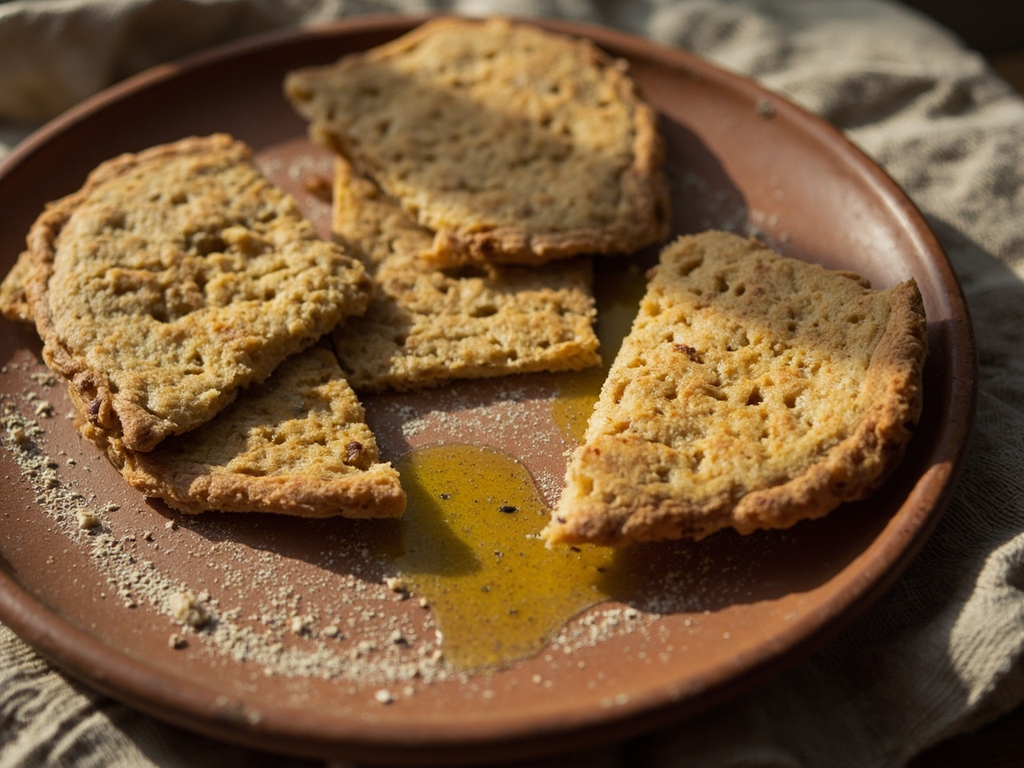
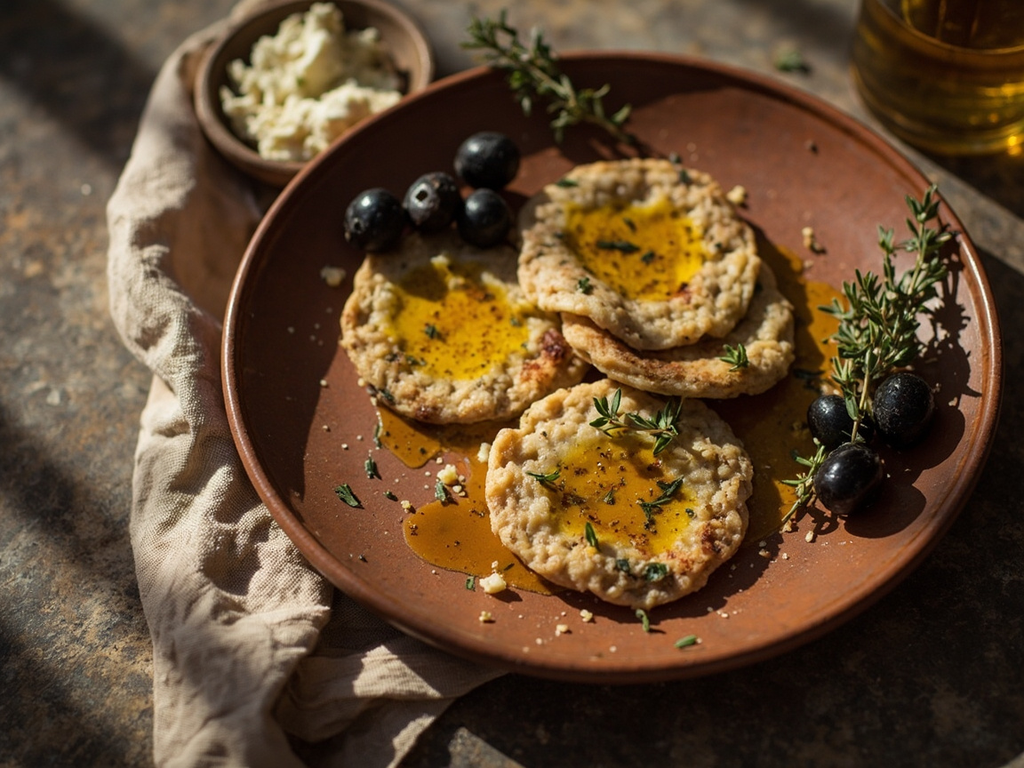
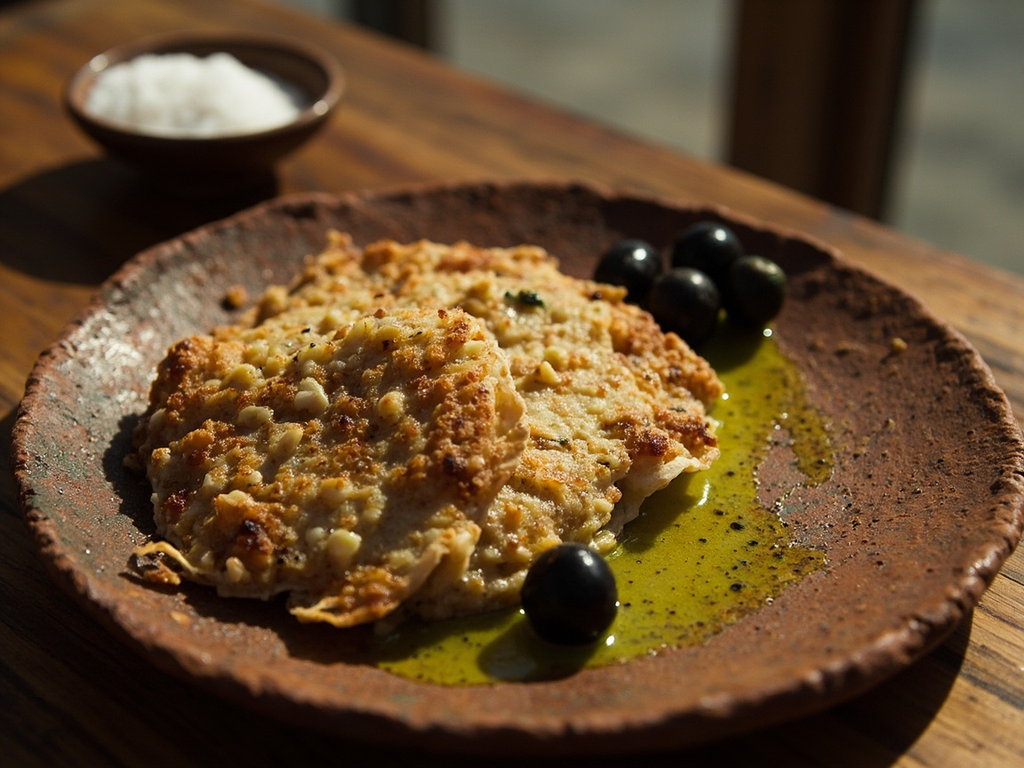
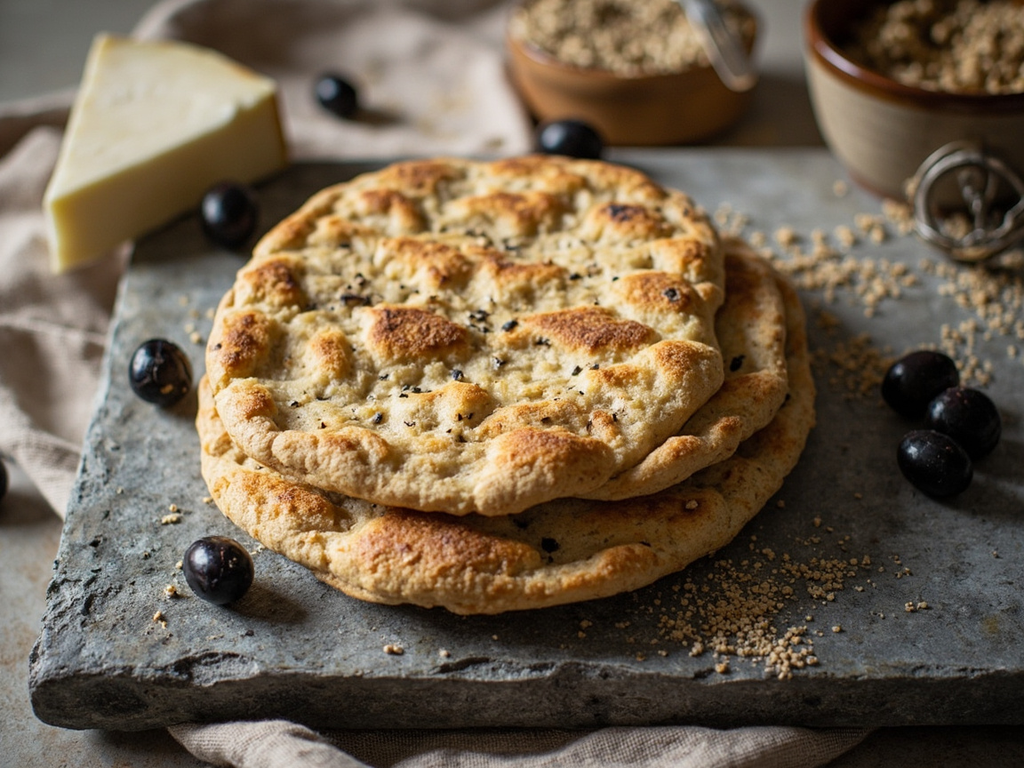
- Cook on a hot stone or dry pan, 3 to 4 minutes per side. Serve warm with olives and cheese.
How it was made : In the archaic period, barley was roasted before grinding because it kept better and was difficult to bread without prior cooking. *Maza* could be eaten raw (simply moistened paste) or cooked, and accompanied all modest meals. Wheat, more expensive, remained an imported luxury.
The contemporary twist : Serve as mini flatbreads with black olive tapenade and a shaving of sheep cheese: a "*maza*-appetizer" that tells 2,600 years of history.
Sources : Andrew Dalby, Siren Feasts: A History of Food and Gastronomy in Greece, Routledge, 1996 · Solon, Fragments (ed. M. L. West, Iambi et Elegi Graeci)
Solon · Charactorium