 flip
flipRiver Tench in Verjuice and Herbs, on an Abstinence Day
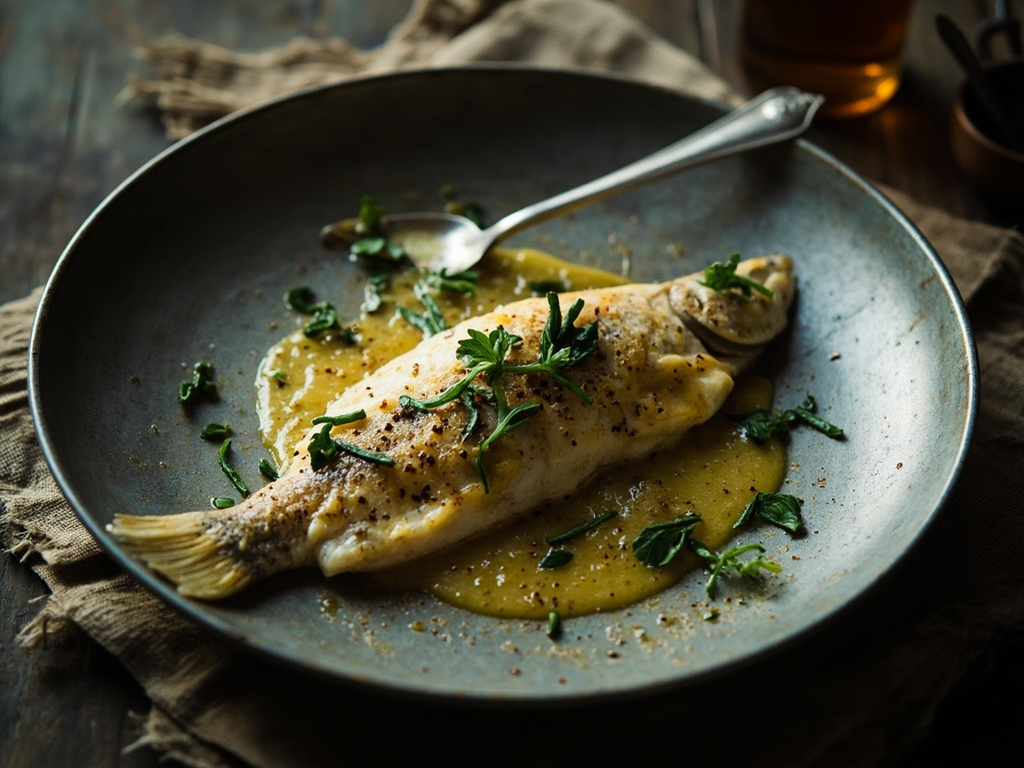
River Tench in Verjuice and Herbs, on an Abstinence Day
Why this dish? Fish was the allowed flesh for monks and popes on days of abstinence and liturgical feasts. For a Cistercian like Eugene III, a poached river fish brightened with the tart verjuice of the cloister constituted the sober 'festive' dish — one for a great solemnity or the reception of a guest, without falling into the luxury of wines and meats he shunned.
A freshwater fish gently poached in a court-bouillon of water, verjuice, and herbs, served with its tangy jus. Celebration without debauchery: clean, bright, perfumed with garden aromatics.
When a feast day came, or a guest knocked at the Lateran gate, I did not have the fatted calf killed: I had fish from the river, which the Rule permits. It was poached gently in water and the verjuice of our green vines, with sage and parsley — the acidity of the verjuice lifts the flesh without needing the Eastern spices that bishops flaunt. Taste this fish, stranger: it is festive, yet it weighs neither on the body nor on the conscience.
- •River fish (tench, pike, or perch) — one, gutted (centerpiece)
- •Verjuice (juice of unripe grapes) — one bowl (cooking acidity)
- •Leek and onion — one of each (bouillon aromatics)
- •Sage, parsley, lovage — one bunch (herbs)
- •Olive oil — a drizzle (jus binder)
- •Salt — to taste (seasoning)
River Tench in Verjuice and Herbs, on an Abstinence Day
A freshwater fish gently poached in a court-bouillon of water, verjuice, and herbs, served with its tangy jus. Celebration without debauchery: clean, bright, perfumed with garden aromatics.
Why this dish? Fish was the allowed flesh for monks and popes on days of abstinence and liturgical feasts. For a Cistercian like Eugene III, a poached river fish brightened with the tart verjuice of the cloister constituted the sober 'festive' dish — one for a great solemnity or the reception of a guest, without falling into the luxury of wines and meats he shunned.
When a feast day came, or a guest knocked at the Lateran gate, I did not have the fatted calf killed: I had fish from the river, which the Rule permits. It was poached gently in water and the verjuice of our green vines, with sage and parsley — the acidity of the verjuice lifts the flesh without needing the Eastern spices that bishops flaunt. Taste this fish, stranger: it is festive, yet it weighs neither on the body nor on the conscience.
Ingredients (period version)
- River fish (tench, pike, or perch) — one, gutted (centerpiece)
- Verjuice (juice of unripe grapes) — one bowl (cooking acidity)
- Leek and onion — one of each (bouillon aromatics)
- Sage, parsley, lovage — one bunch (herbs)
- Olive oil — a drizzle (jus binder)
- Salt — to taste (seasoning)
Ingredients
- Freshwater fish fillets or steaks (perch, pike, or trout as substitute) — 4 portions (600 g) (centerpiece)
- Verjuice (or green grape juice; substitute half lemon juice + water) — 150 ml (cooking acidity)
- Leek — 1 (bouillon aromatic)
- Onion — 1 (bouillon aromatic)
- Fresh sage — 3 leaves (herb)
- Flat-leaf parsley — a few sprigs (herb)
- Lovage (or celery stalk) — 1 sprig (herb)
- Olive oil — 2 tbsp (jus binder)
- Salt — to taste (seasoning)
- Water — 600 ml (court-bouillon)
Method
- Prepare a court-bouillon: water, verjuice, sliced leek and onion, lovage; bring to a simmer and infuse for 15 minutes.
- Salt the bouillon, then slide in the fish off the boil — the water should only simmer.
- Poach for 8 to 10 minutes depending on thickness, until the flesh is opaque and flakes.
- Carefully remove the fish and keep warm.
- Reduce the bouillon slightly, mount with a drizzle of olive oil, and adjust acidity with verjuice.
- Nap the fish with this jus, sprinkle with chopped sage and parsley. Serve with bread and a little pulmentum.
How it was made : On lean days — Fridays, vigils, Lent — and during liturgical feasts, freshwater fish was the honorable dish at monastic and episcopal tables; abbeys maintained fishponds and stews. Verjuice, the juice of unripe grapes, was the medieval acidulant par excellence, used where we would use lemon (rare and costly in the north). Fish was poached or cooked briefly, seasoned with garden herbs rather than spices, a sign of Cistercian moderation.
The contemporary twist : Plate the fish steak on a mirror of emulsified verjuice jus and a dried leek chip, turning an abstinence dish into a plate of sober gastronomy.
Sources : Le Ménagier de Paris (fish recipes and uses of verjuice) · B. Laurioux, Eating in the Middle Ages · Rule of Saint Benedict, ch. 39 (abstinence from meat)
Eugene III · Charactorium