 flip
flipMakroud of Kairouan (Semolina, Dates and Honey)
Makroud of Kairouan (Semolina, Dates and Honey)
Why this dish? Makroud is the emblematic pastry of Kairouan, the hometown of Fatima's family. By offering it in Fes to visitors of the mosque and during almsgiving, she kept the taste of her Kairouan origins and honored the tradition of generosity toward guests and the poor.
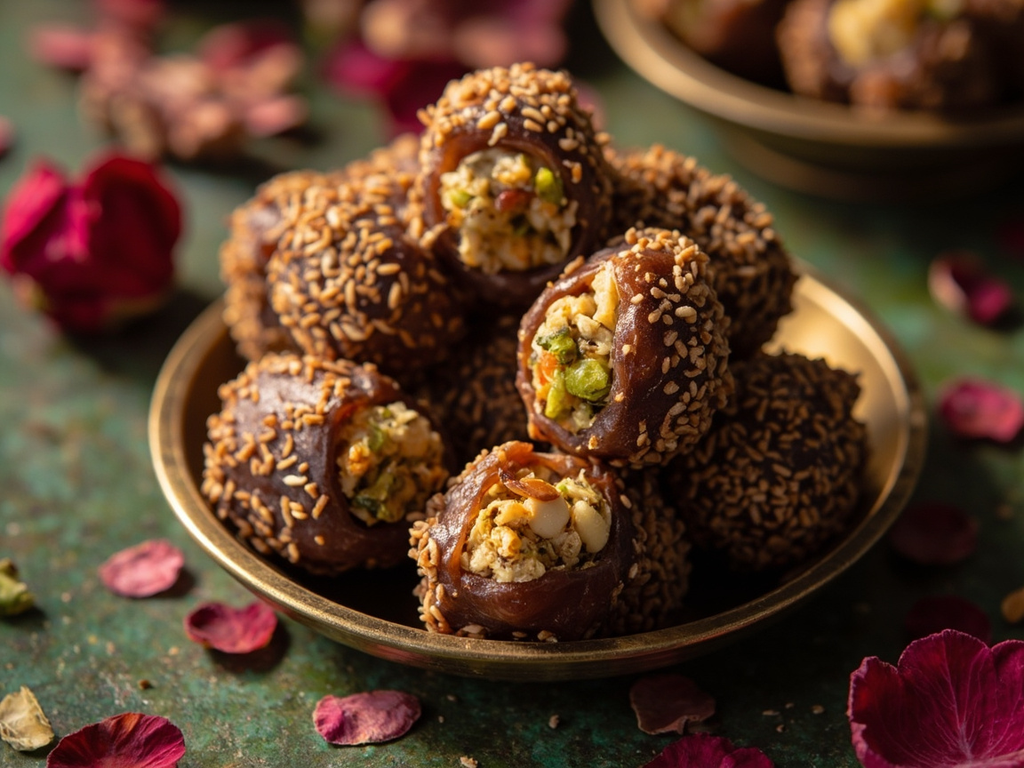
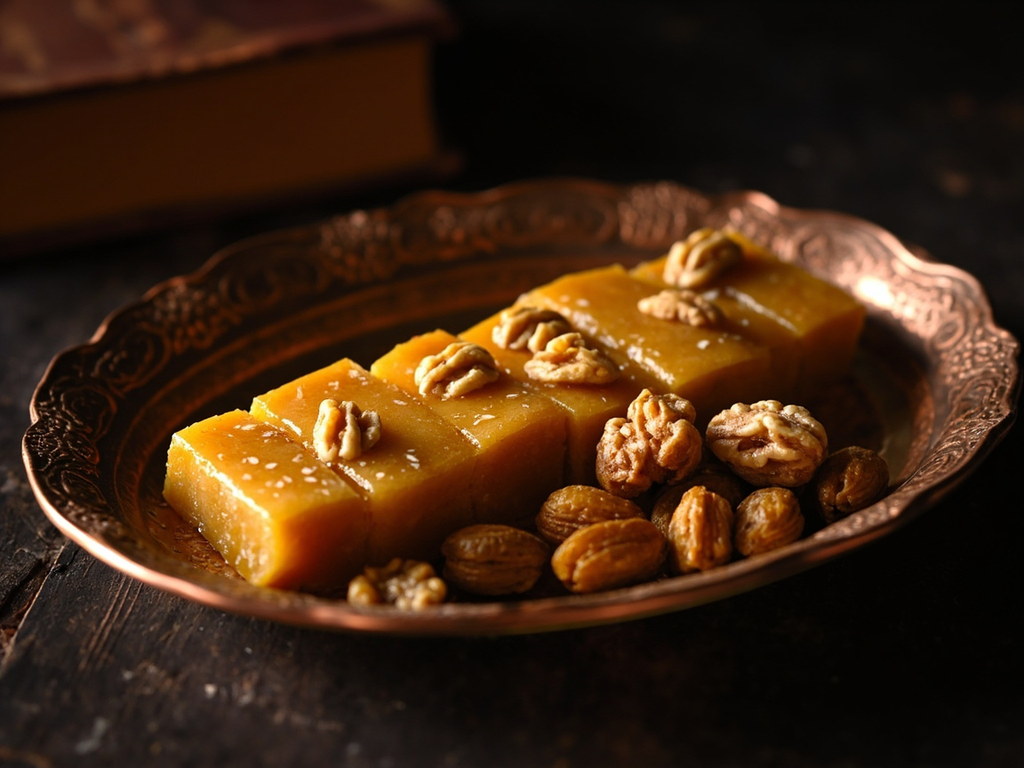
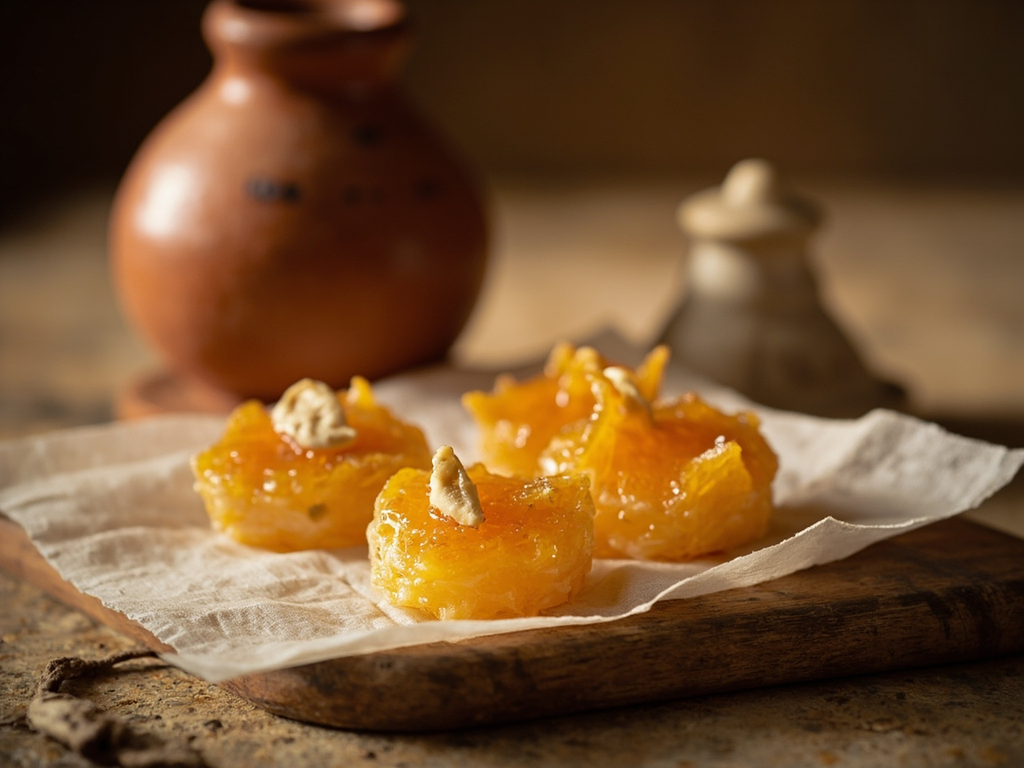
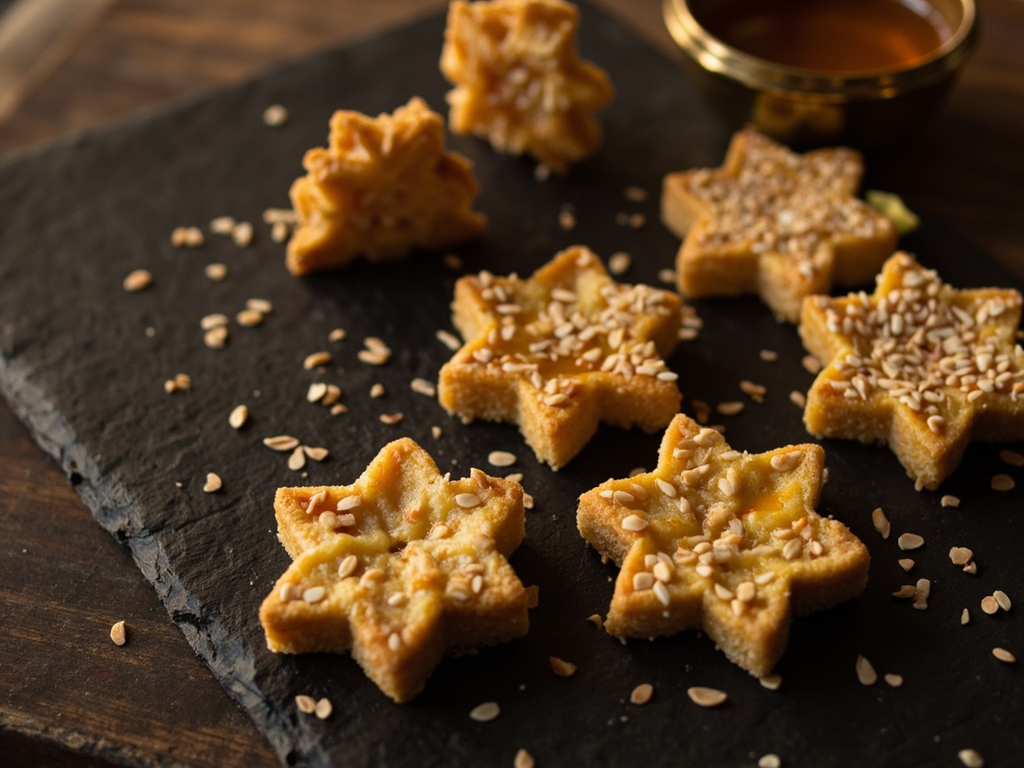
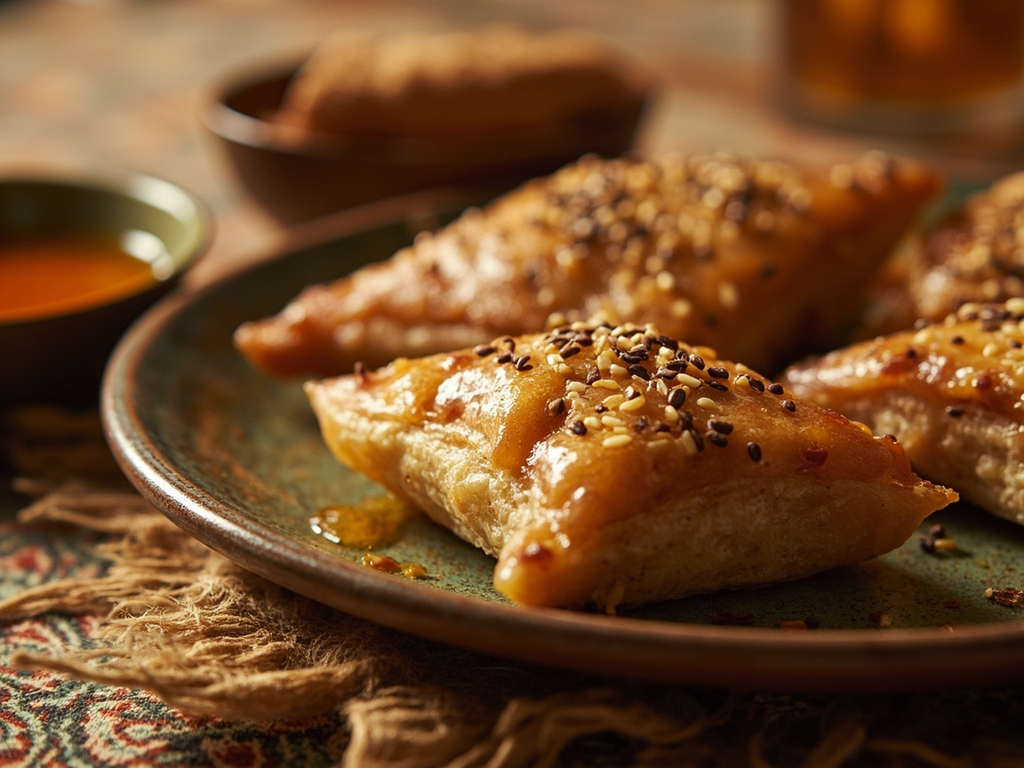
Small semolina diamonds worked with oil, filled with a date paste perfumed with cinnamon, fried then dipped in hot honey—a melting, sticky sweetness scented with orange blossom water.
From Kairouan, my family carried more than chests: the memory of its sweets. I knead semolina with oil until it crumbles under the hand, wrap it around a cinnamon-scented date paste, cut into diamonds, and fry them golden before drowning them in hot honey. This is what I offered to strangers who came to learn, and to the poor on almsgiving days—for offering sweetness is offering a little taste of Paradise. Take two, a guest never stops at one.
- •Wheat semolina — one measure (dough)
- •Olive oil — to bind (fat)
- •Date paste — as needed for filling (filling)
- •Cinnamon — a pinch (date flavor)
- •Orange blossom water — a few drops (fragrance)
- •Honey — in abundance for dipping (coating)
- •Sesame seeds — a handful (finish)
Makroud of Kairouan (Semolina, Dates and Honey)
Small semolina diamonds worked with oil, filled with a date paste perfumed with cinnamon, fried then dipped in hot honey—a melting, sticky sweetness scented with orange blossom water.
Why this dish? Makroud is the emblematic pastry of Kairouan, the hometown of Fatima's family. By offering it in Fes to visitors of the mosque and during almsgiving, she kept the taste of her Kairouan origins and honored the tradition of generosity toward guests and the poor.
From Kairouan, my family carried more than chests: the memory of its sweets. I knead semolina with oil until it crumbles under the hand, wrap it around a cinnamon-scented date paste, cut into diamonds, and fry them golden before drowning them in hot honey. This is what I offered to strangers who came to learn, and to the poor on almsgiving days—for offering sweetness is offering a little taste of Paradise. Take two, a guest never stops at one.
Ingredients (period version)
- Wheat semolina — one measure (dough)
- Olive oil — to bind (fat)
- Date paste — as needed for filling (filling)
- Cinnamon — a pinch (date flavor)
- Orange blossom water — a few drops (fragrance)
- Honey — in abundance for dipping (coating)
- Sesame seeds — a handful (finish)
Ingredients
- Medium wheat semolina — 400 g (dough)
- Mild olive oil — 120 ml (fat)
- Warm water — ~120 ml (binder)
- Date paste — 300 g (filling)
- Ground cinnamon — 1 tsp (flavor)
- Orange blossom water — 2 tbsp (fragrance)
- Honey — 300 g (dipping)
- Sesame seeds — 2 tbsp (finish)
- Oil for frying — as needed (cooking)
Method
- Mix semolina and olive oil, let rest 20 minutes, then bind with warm water (and a little orange blossom water) into a pliable dough without over-kneading.
- Work the date paste with cinnamon and a little orange blossom water until malleable.
- Roll the semolina dough into strips, place a log of date paste in the center, close, flatten, and cut into diamonds.
- Fry the diamonds until golden, drain, immediately dip in hot honey, then sprinkle with sesame seeds and let soak.
How it was made : Makroud (makroudh) is an ancestral pastry associated with Kairouan, founded as early as the 7th century; semolina, dates, and honey—pillar products of the Maghreb and medieval Arab world—make it a festive, hospitable, and charitable sweet, perfumed with orange blossom or rose water.
The contemporary twist : For a lighter, contemporary version, bake the diamonds in the oven instead of frying before the honey bath—same indulgence, less oil.
Fatima al-Fihri · Charactorium