 flip
flipSaffron and Prune Lamb Marqa
Saffron and Prune Lamb Marqa
Why this dish? For the inauguration of al-Qarawiyyin in 859 and the welcome of scholars from across the Maghreb, a fragrant lamb marqa was served on the maïda—the dish of great gatherings and hospitality that Fatima, a wealthy patron, honored her guests with.
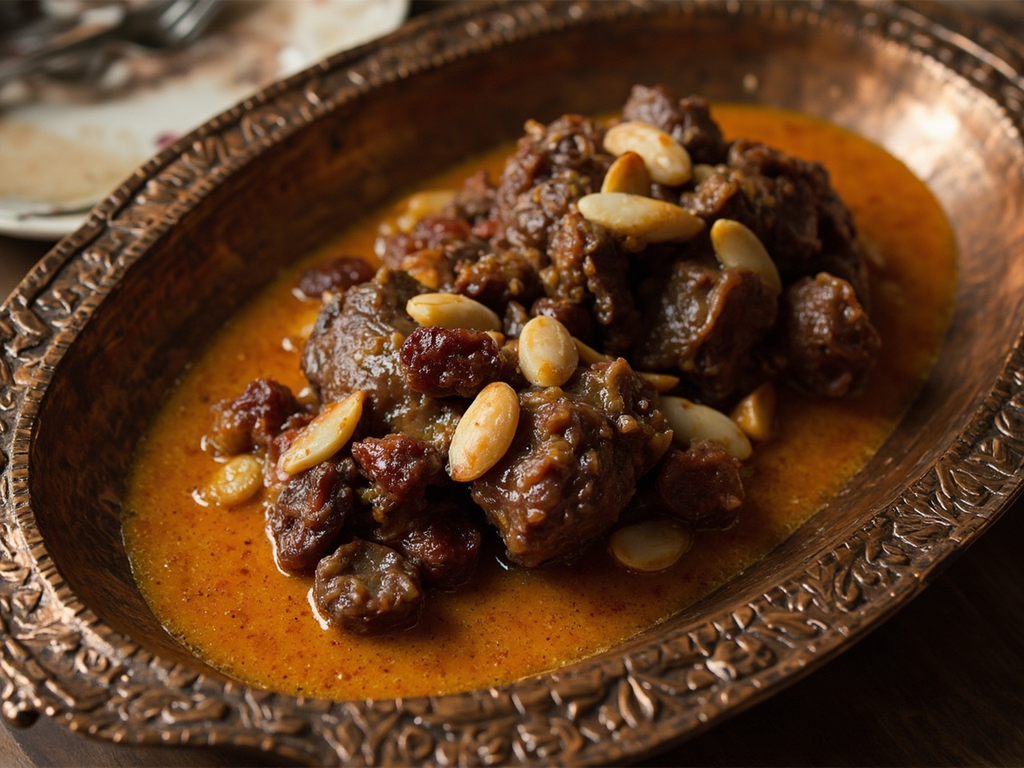
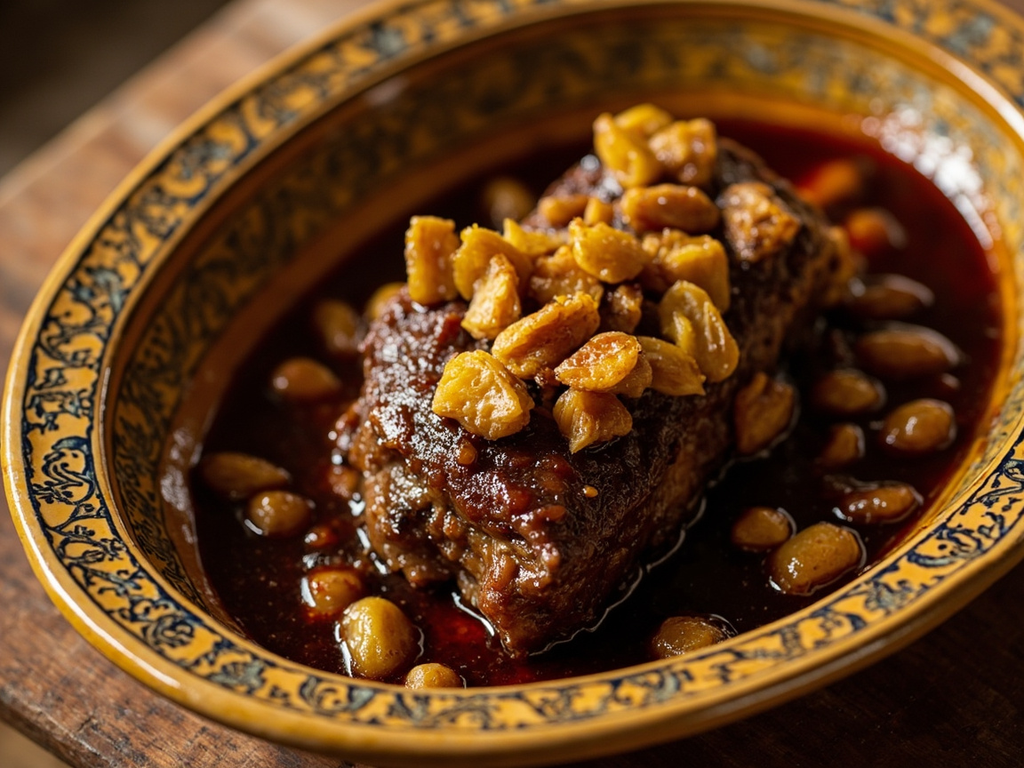
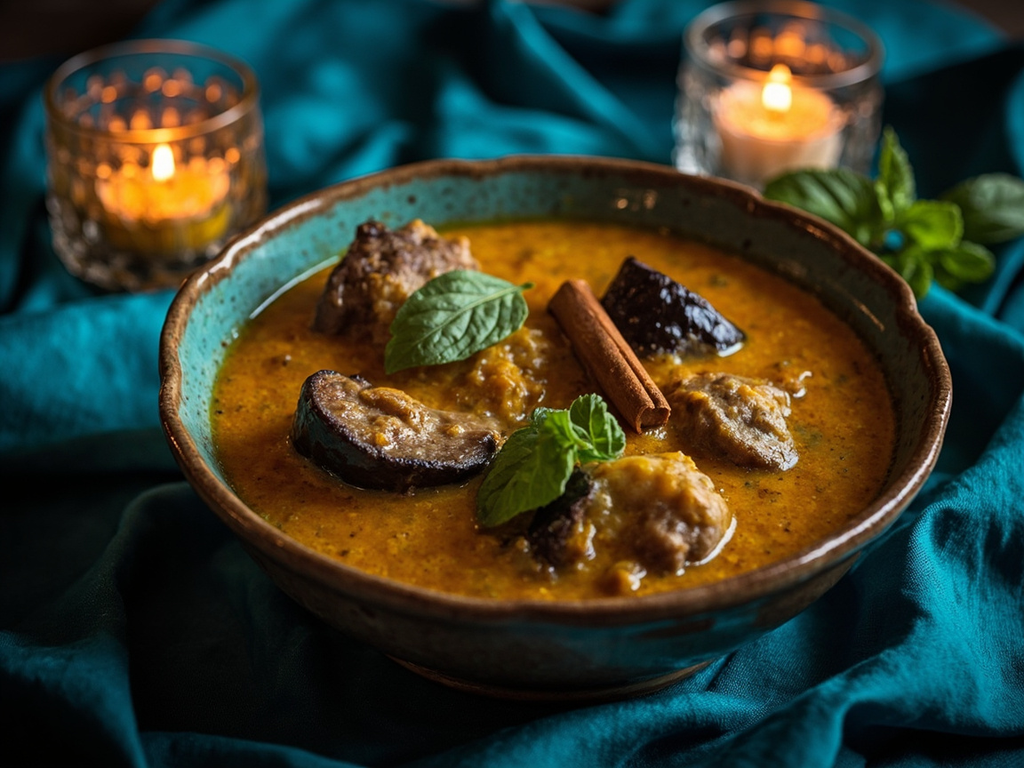
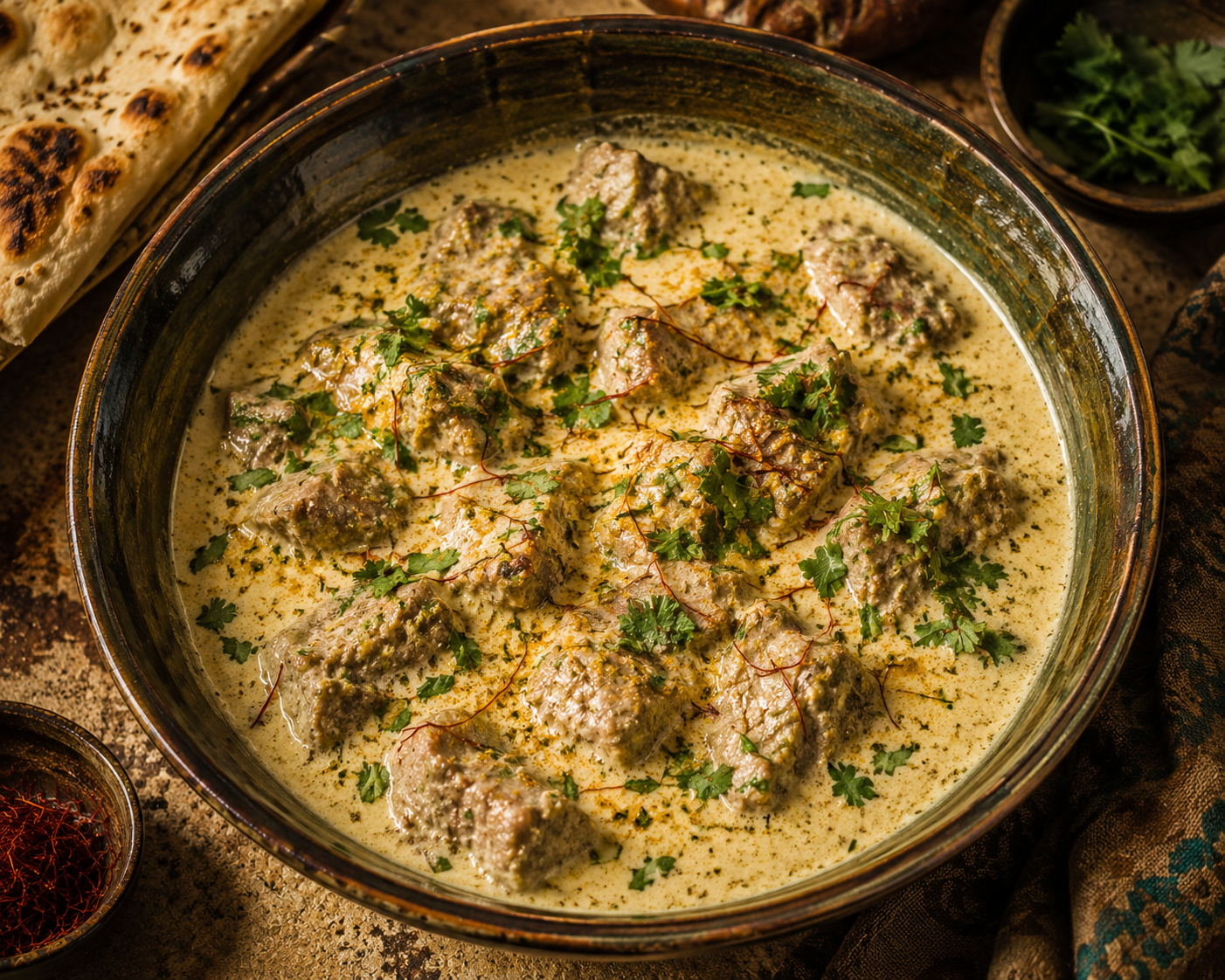
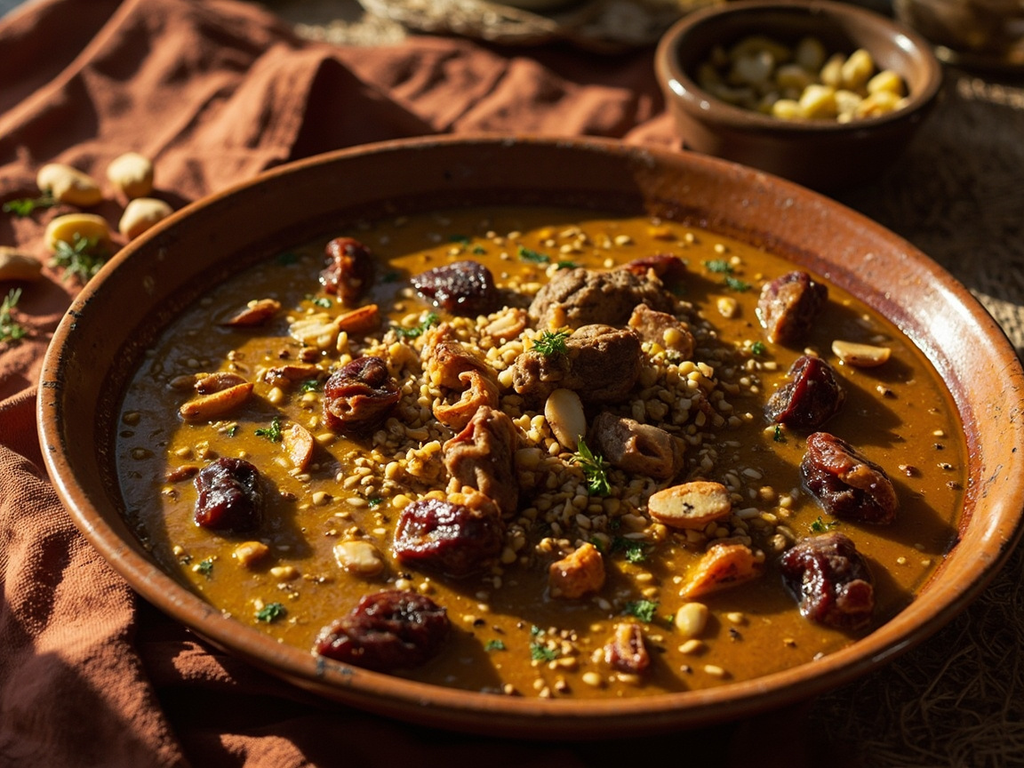
A melting lamb stew, browned in smen, long-simmered with saffron, cinnamon, ginger, and onions, sweetened with prunes and brightened with almonds and toasted sesame seeds.
The day the House of Knowledge opened its doors, my table had to be worthy of the men of science I invited. The best lamb was chosen, seared in smen, then left to soften for hours in saffron, cinnamon, and ginger until the flesh fell apart under the fingers. I liked to add prunes for sweetness and almonds for crunch—for feeding the spirit and feeding the body are the same duty of hospitality. Eat with your right hand, and praise God for abundance.
- •Lamb shoulder — a fine piece for the company (festive meat)
- •Onions — several, sliced (melting base)
- •Saffron, cinnamon, ginger — to taste (spice bouquet)
- •Smen — a spoonful (fat, signature)
- •Prunes — a handful (sweetness)
- •Almonds and sesame — a handful (crunchy garnish)
- •Honey — a drizzle (sweet binder)
Saffron and Prune Lamb Marqa
A melting lamb stew, browned in smen, long-simmered with saffron, cinnamon, ginger, and onions, sweetened with prunes and brightened with almonds and toasted sesame seeds.
Why this dish? For the inauguration of al-Qarawiyyin in 859 and the welcome of scholars from across the Maghreb, a fragrant lamb marqa was served on the maïda—the dish of great gatherings and hospitality that Fatima, a wealthy patron, honored her guests with.
The day the House of Knowledge opened its doors, my table had to be worthy of the men of science I invited. The best lamb was chosen, seared in smen, then left to soften for hours in saffron, cinnamon, and ginger until the flesh fell apart under the fingers. I liked to add prunes for sweetness and almonds for crunch—for feeding the spirit and feeding the body are the same duty of hospitality. Eat with your right hand, and praise God for abundance.
Ingredients (period version)
- Lamb shoulder — a fine piece for the company (festive meat)
- Onions — several, sliced (melting base)
- Saffron, cinnamon, ginger — to taste (spice bouquet)
- Smen — a spoonful (fat, signature)
- Prunes — a handful (sweetness)
- Almonds and sesame — a handful (crunchy garnish)
- Honey — a drizzle (sweet binder)
Ingredients
- Lamb shoulder — 1 kg, in large chunks (meat)
- Onions — 3, sliced (base)
- Saffron — 1 generous pinch (color/flavor)
- Cinnamon — 1 stick + 1/2 tsp ground (spice)
- Ground ginger — 1 tsp (spice)
- Smen or butter — 30 g (signature)
- Pitted prunes — 150 g (sweetness)
- Blanched almonds — 50 g (garnish)
- Sesame seeds — 2 tbsp (garnish)
- Honey — 1 tbsp (binder)
- Salt — to taste (seasoning)
Method
- Brown the lamb in smen, remove it, then gently melt the onions in the same pot.
- Return the meat, add saffron, cinnamon, and ginger, season with salt, cover with water, and simmer covered for 1.5 hours.
- Add the prunes and honey, continue uncovered for 20–30 minutes to reduce the sauce to a coating syrup.
- Dry-toast almonds and sesame seeds, sprinkle over the dish before serving.
How it was made : Arab-Andalusian and Maghrebi medieval cuisine often paired meat with dried fruits and noble spices imported by caravan routes; saffron and cinnamon marked status, and the sweet-savory meat-prune combination is long attested in this cultural area.
The contemporary twist : Serve on a dome of semolina, sauce spooned over, and stick the cinnamon sticks upright like columns—a nod to the columns of the mosque.
Fatima al-Fihri · Charactorium