 flip
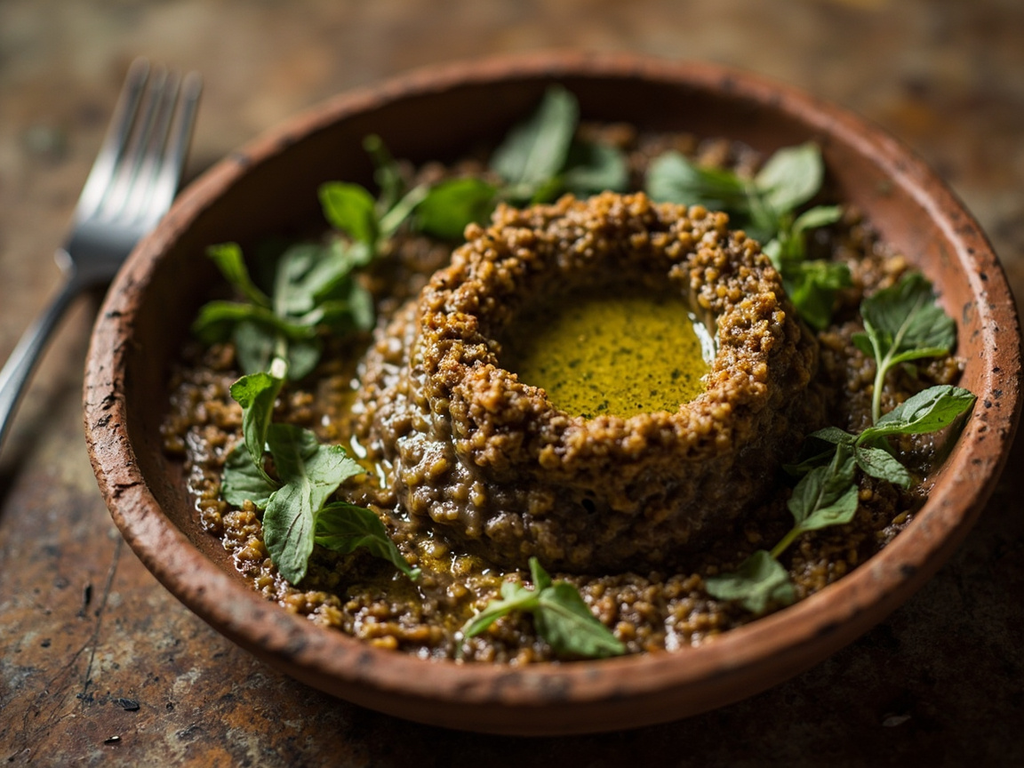
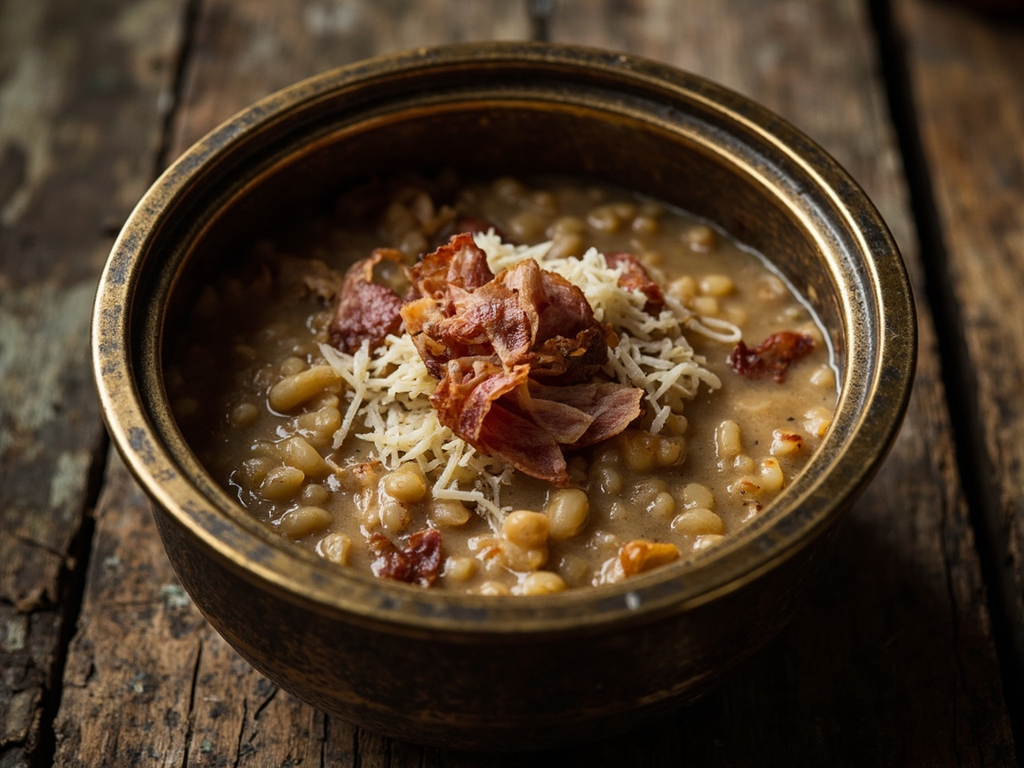
flipMillet and Rice Congee with Fermented Beans
Millet and Rice Congee with Fermented Beans
Why this dish? Before setting out on the road or copying sutras, Faxian began his day with a clear congee, the humblest and most universal meal of Chinese monks. Long-simmered, it warmed the body without breaking the vegetarian rule.
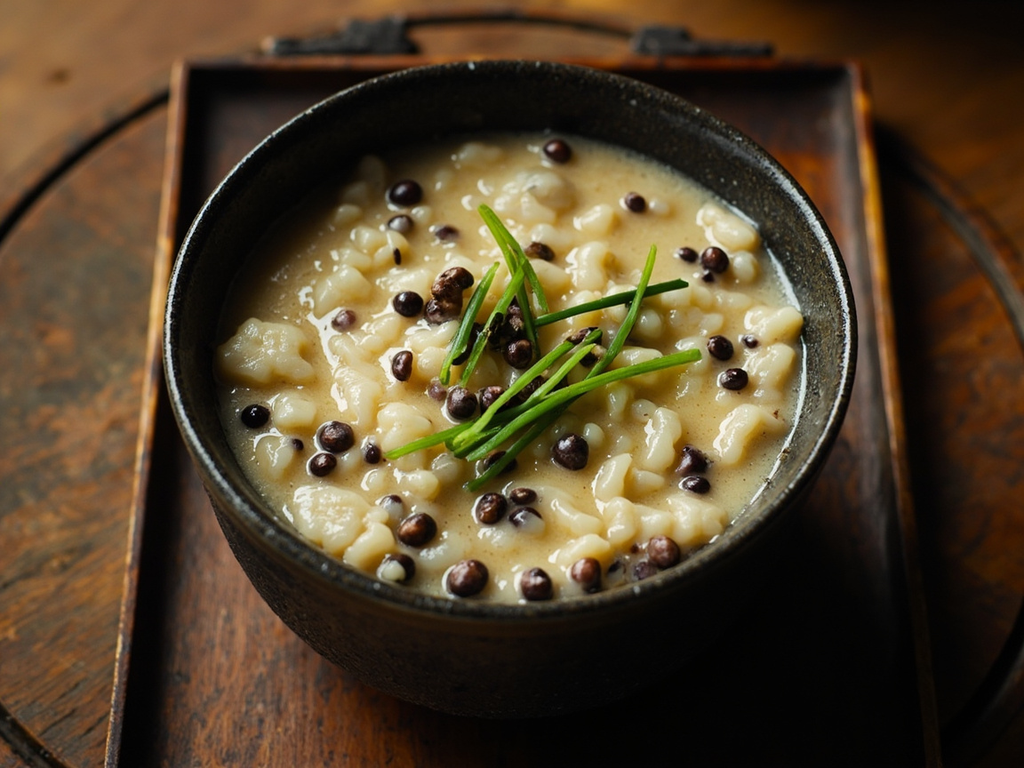
A comforting congee of millet and rice cooked in plenty of water until creamy, enhanced with a pinch of fermented black soybeans and a few herbs. The monastery's staple: few ingredients, much patience.
Listen, traveler: before the sun rises over Chang'an, I already set the pot on the embers. Millet and rice—let them melt in water until they lose all shape, like the mind that calms. A pinch of black fermented beans, and there is all the flavor needed; we sons of the Buddha touch neither flesh nor fish. Eat slowly, in your bowl, and do not forget to thank the hand that gave you this grain.
- •Hulled millet — one handful (staple grain of northern China)
- •Rice — one handful (creamy binder)
- •Spring water — in abundance (long cooking)
- •Douchi (fermented black soybeans) — a small pinch (umami seasoning)
- •Young scallion — a few sprigs (freshness)
Millet and Rice Congee with Fermented Beans
A comforting congee of millet and rice cooked in plenty of water until creamy, enhanced with a pinch of fermented black soybeans and a few herbs. The monastery's staple: few ingredients, much patience.
Why this dish? Before setting out on the road or copying sutras, Faxian began his day with a clear congee, the humblest and most universal meal of Chinese monks. Long-simmered, it warmed the body without breaking the vegetarian rule.
Listen, traveler: before the sun rises over Chang'an, I already set the pot on the embers. Millet and rice—let them melt in water until they lose all shape, like the mind that calms. A pinch of black fermented beans, and there is all the flavor needed; we sons of the Buddha touch neither flesh nor fish. Eat slowly, in your bowl, and do not forget to thank the hand that gave you this grain.
Ingredients (period version)
- Hulled millet — one handful (staple grain of northern China)
- Rice — one handful (creamy binder)
- Spring water — in abundance (long cooking)
- Douchi (fermented black soybeans) — a small pinch (umami seasoning)
- Young scallion — a few sprigs (freshness)
Ingredients
- Millet — 50 g (grain)
- Short-grain rice — 50 g (binder)
- Water — 1.2 L (cooking)
- Fermented black soybeans (douchi) — 1 tsp, rinsed and chopped (salty umami)
- Scallion (green part) — 2 sprigs, sliced (garnish)
- A few drops of sesame oil — optional (roundness)
Method
- Rinse the millet and rice in clear water.
- Place them in a large pot with cold water and bring to a simmer.
- Cook over low heat for 40–50 minutes, stirring occasionally, until a smooth, creamy congee forms.
- Finely chop the fermented beans and add at the end of cooking to flavor.
- Serve in a bowl, sprinkle with sliced scallion, and if desired, a few drops of sesame oil.
How it was made : Zhōu (grain congee) has been, since Chinese antiquity, the quintessential morning meal, especially in monasteries where frugality is a virtue. It was thinned according to the community's wealth—very liquid in times of scarcity, heartier with vegetables on festive days. Douchi, a soybean ferment attested since the Han, provided salt and depth without recourse to meat.
The contemporary twist : Serve as 'comfort food' in a rustic stoneware bowl, with a soft-boiled egg for non-vegetarians—but the monk's spirit prefers the bare version.
Faxian · Charactorium