 flip
flipQuince Paste (Cotignac)
Quince Paste (Cotignac)
Why this dish? Cotignac, the firm quince paste from Orléans, was a luxury confection that cities offered to the kings of France as a sign of allegiance. Under Francis I, these dry preserves, inherited from the Italian sugar craft he admired, adorned tables and kept for months.
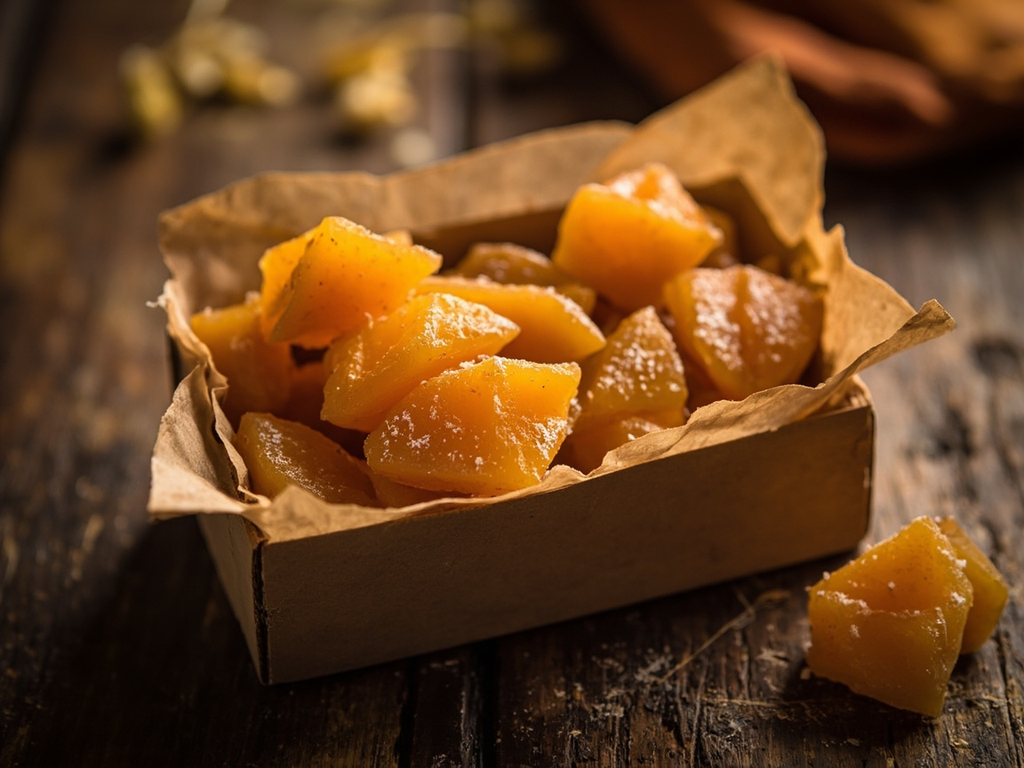
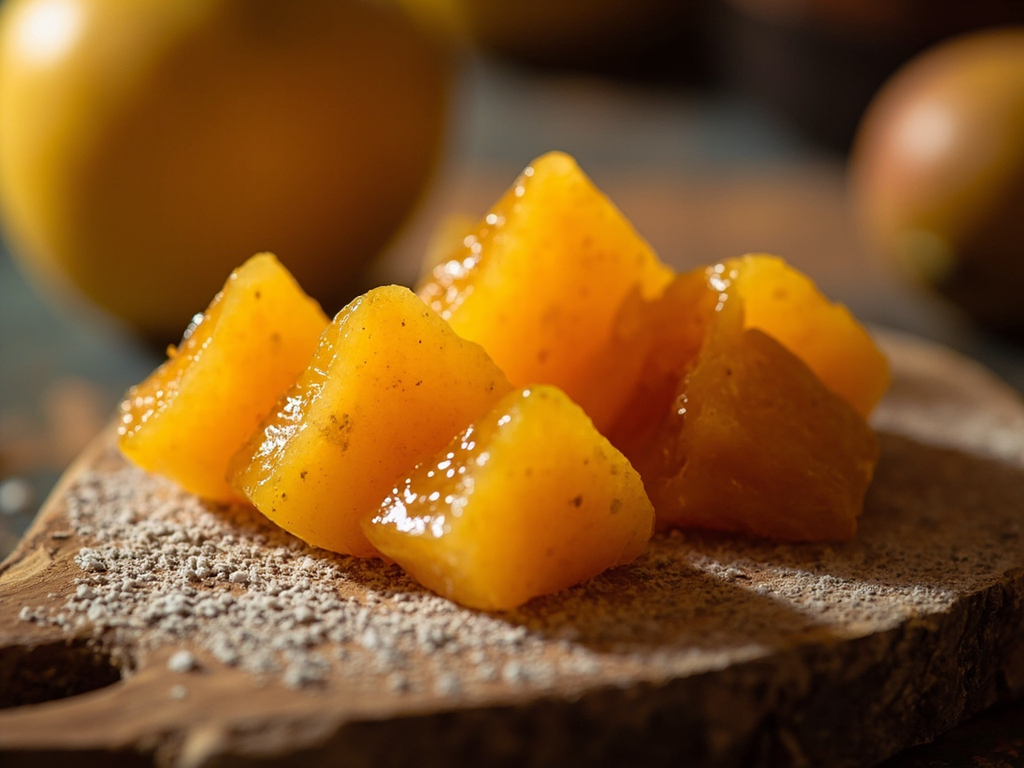
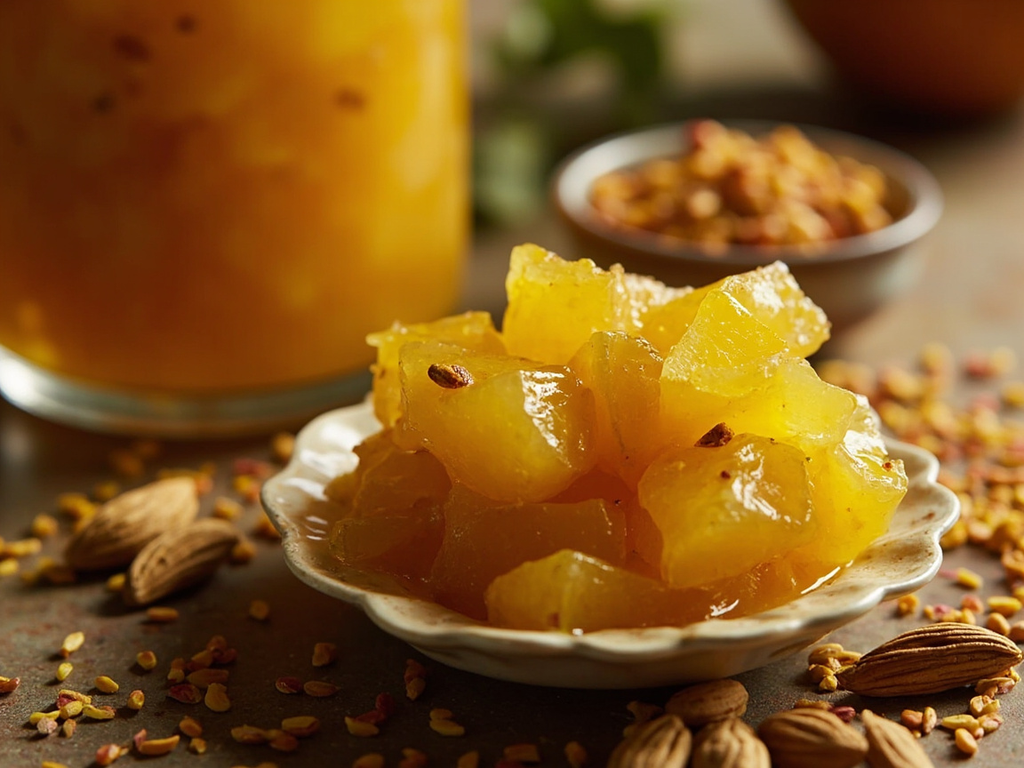
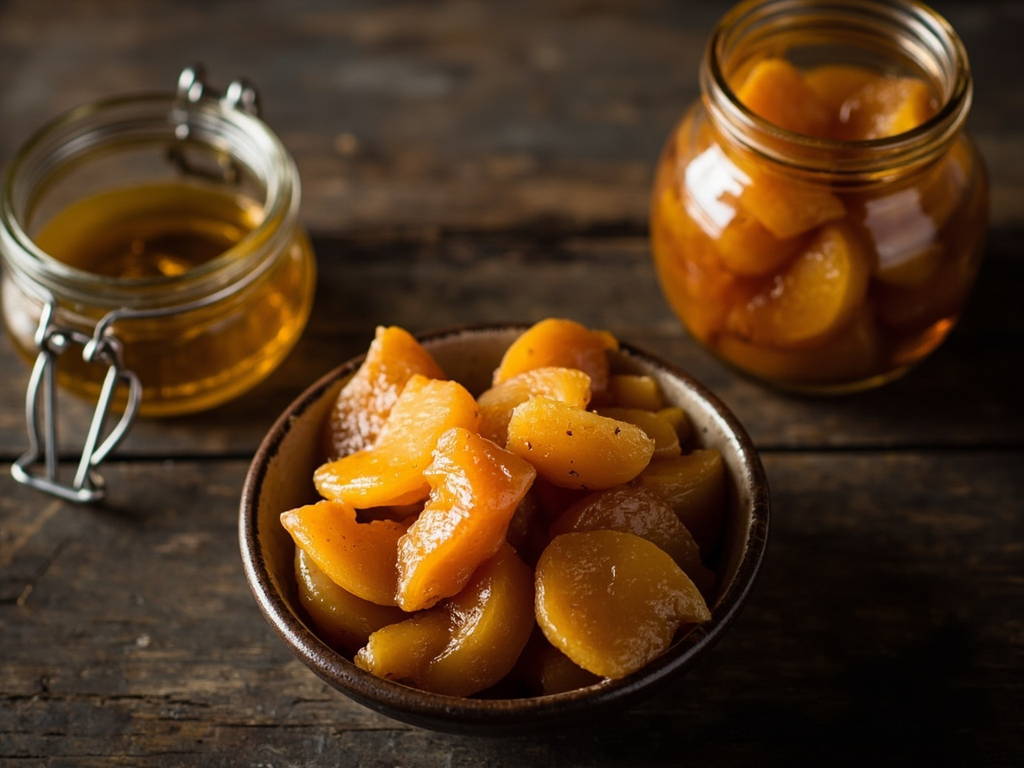
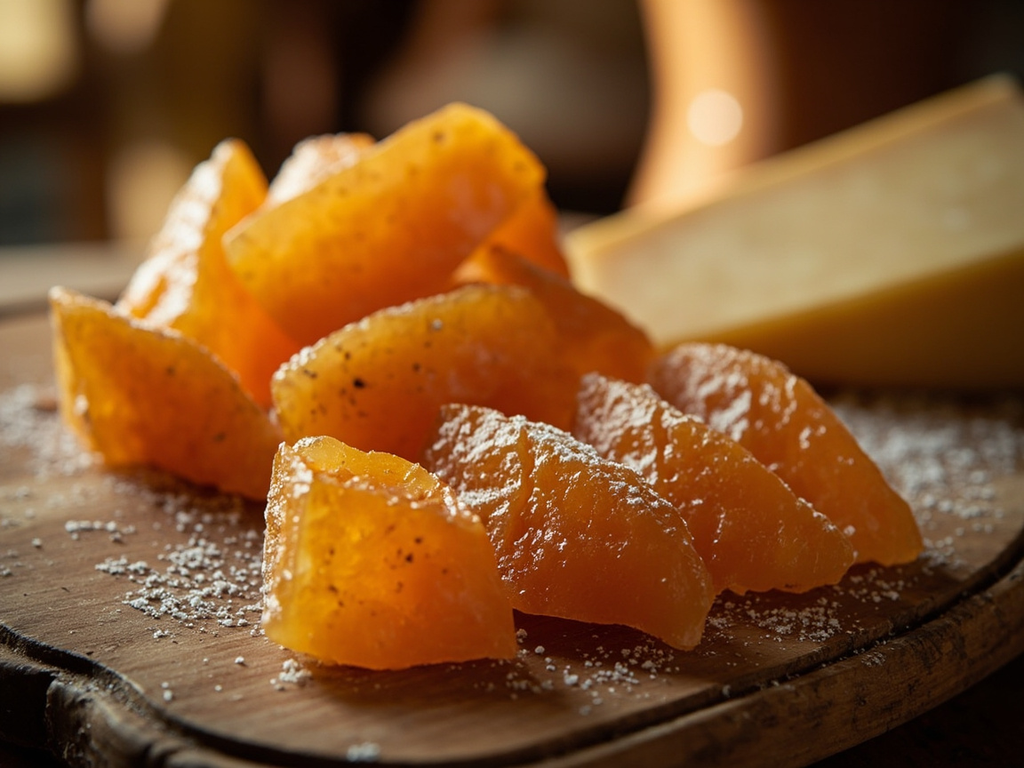
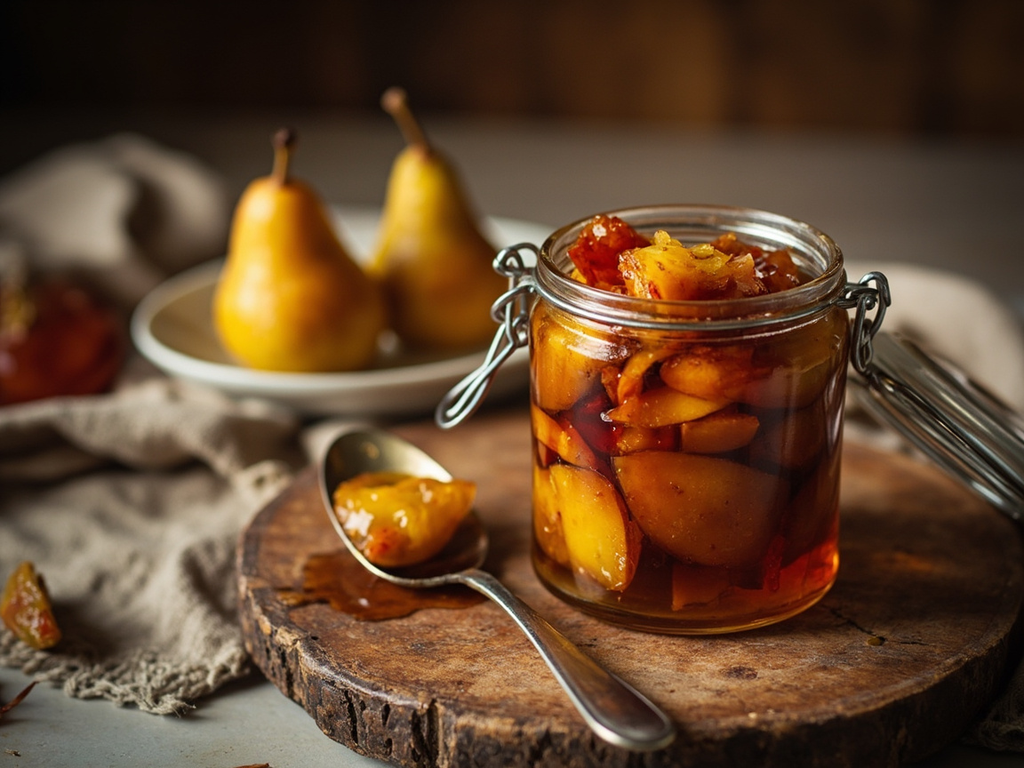
A dense, translucent quince paste, cooked long with sugar until it can be cut and stored. Sweet, tart, perfumed with quince.
Do you know cotignac, that quince paste with which the good towns present me when I make my entry? It is cooked and recooked with sugar — that sugar my Italian friends work so skillfully — until it sets and can be cut like a jewel. I keep it in my coffers for the long journeys of my court, and I willingly offer a piece to those who know how to please me. Taste: it is sweet and tart at once, just like the love of subjects for their prince.
- •Ripe quinces — a good quantity (fruit, base)
- •Sugar (or honey) — as much as pulp (preservation and sweetness)
- •Quince cooking water — a little (cooking liquid)
Quince Paste (Cotignac)
A dense, translucent quince paste, cooked long with sugar until it can be cut and stored. Sweet, tart, perfumed with quince.
Why this dish? Cotignac, the firm quince paste from Orléans, was a luxury confection that cities offered to the kings of France as a sign of allegiance. Under Francis I, these dry preserves, inherited from the Italian sugar craft he admired, adorned tables and kept for months.
Do you know cotignac, that quince paste with which the good towns present me when I make my entry? It is cooked and recooked with sugar — that sugar my Italian friends work so skillfully — until it sets and can be cut like a jewel. I keep it in my coffers for the long journeys of my court, and I willingly offer a piece to those who know how to please me. Taste: it is sweet and tart at once, just like the love of subjects for their prince.
Ingredients (period version)
- Ripe quinces — a good quantity (fruit, base)
- Sugar (or honey) — as much as pulp (preservation and sweetness)
- Quince cooking water — a little (cooking liquid)
Ingredients
- Quinces — 1 kg (yields ~600 g pulp) (fruit)
- Sugar — same weight as pulp (~600 g) (preservation and sweetness)
- Lemon juice (or verjuice) — 1 tbsp (fix setting and acidity)
Method
- Wash, peel and core the quinces. Cook in water until tender (30-40 min).
- Blend the flesh into a fine purée. Weigh the pulp and add the same weight of sugar, plus lemon juice.
- Cook over low heat, stirring constantly, for 30 to 45 minutes: the paste thickens, darkens and pulls away from the bottom.
- Spread 1.5 cm thick in a paper-lined dish. Let dry in the air for 24-48 hours.
- Cut into cubes or diamonds; store in an airtight box.
How it was made : Before cheap sugar, fruits were preserved by long cooking with sugar or honey: these "dry preserves" kept for months and traveled well. The cotignac of Orléans, famous since the Middle Ages, was traditionally offered to kings during royal entries.
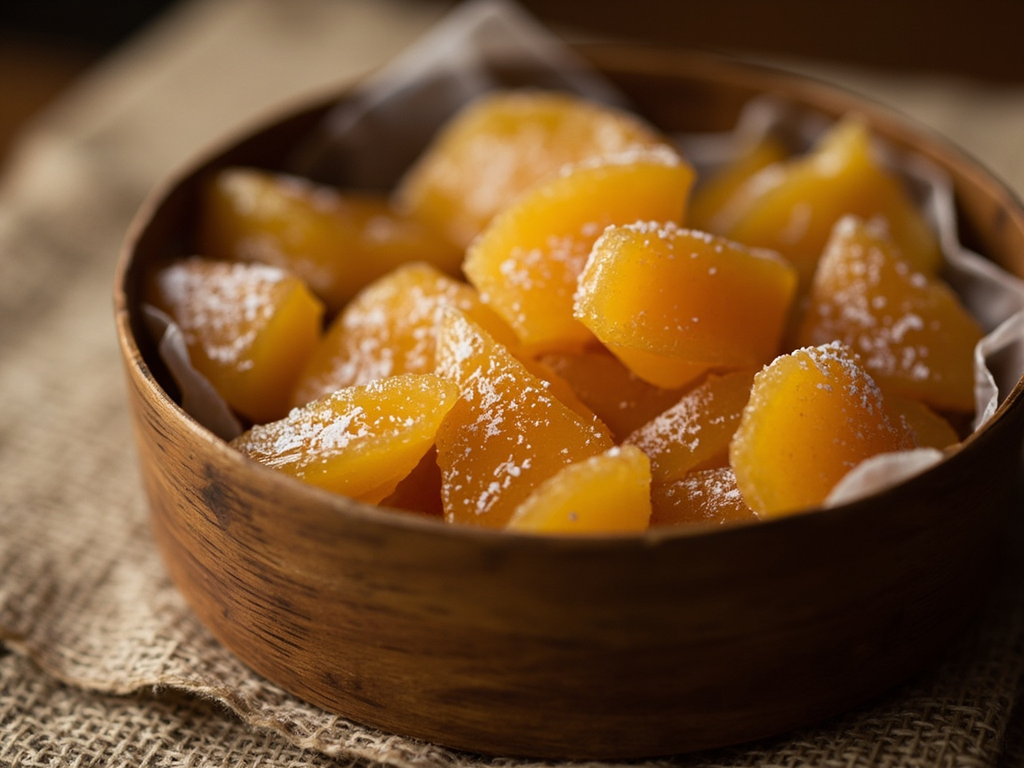
The contemporary twist : Roll the diamonds in a little crystal sugar and present them in a small round box made of wood shavings, like the historical cotignac.
Sources : Nostradamus, Traité des fardements et confitures (1555) · Platine en françois (1505)
Francis I · Charactorium