 flip
flipQuince Paste
Quince Paste
Why this dish? Quince was reputed in the Middle Ages to bind the belly and soothe fluxes: a precious remedy against the dysentery that struck Louis IX's army in Egypt and finally carried off the king before Tunis in 1270. This quince paste with honey, sweet and astringent, was as much confectionery as medicine of the time.
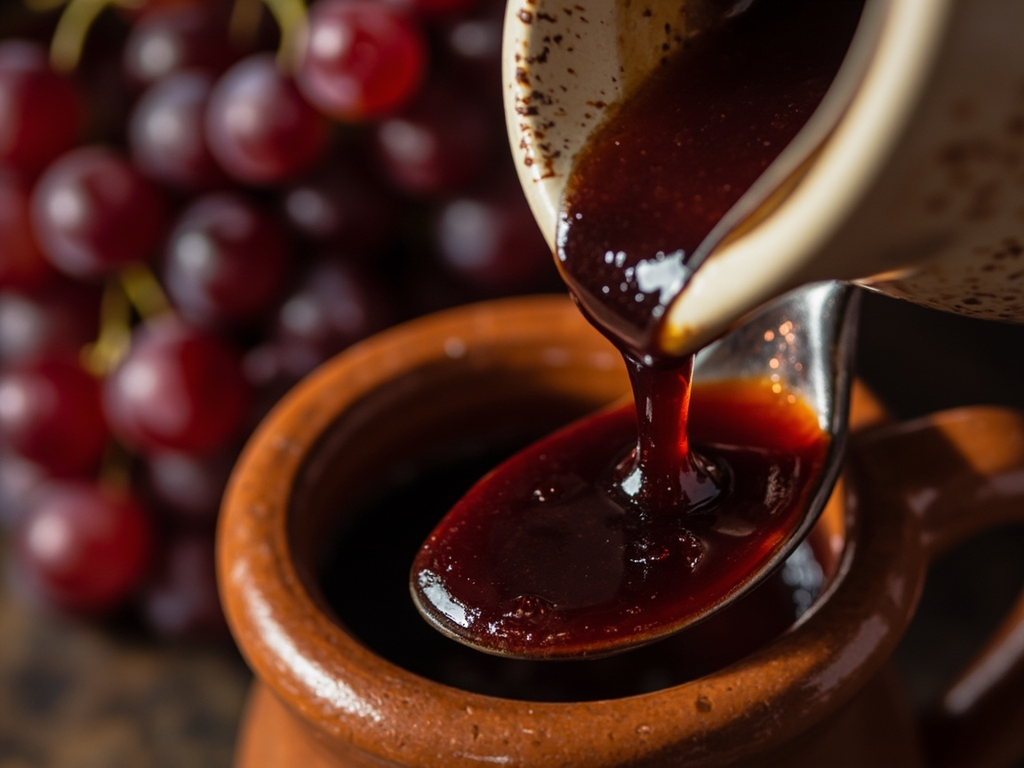
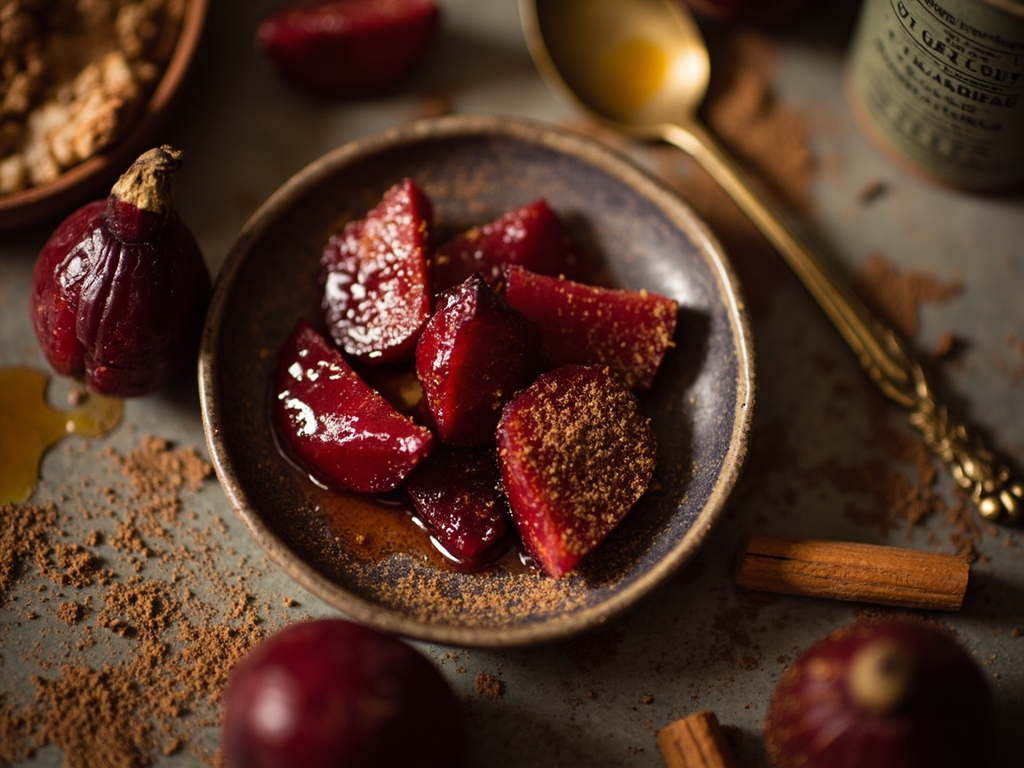
Quinces cooked with honey and spices until firm and translucent, then dried: an amber, tart, and fragrant sweet, kept all winter and given as a stomach remedy.
My physicians hold the quince in high esteem, and not without reason: its paste binds the sick belly, which my poor soldiers had great need of during the fevers and fluxes of Egypt. The fruit's flesh is long cooked with honey and a little ginger, until it sets and keeps for months. Thus have I tasted something both sweet to the palate and salutary to the body—for God has placed healing virtue even in the flavor of fruits.
- •Quinces — a basketful (astringent base)
- •Honey — equal parts (sweetness and preservation)
- •Ginger — a pinch (digestive spice)
- •Cinnamon — a little (perfume)
Quince Paste
Quinces cooked with honey and spices until firm and translucent, then dried: an amber, tart, and fragrant sweet, kept all winter and given as a stomach remedy.
Why this dish? Quince was reputed in the Middle Ages to bind the belly and soothe fluxes: a precious remedy against the dysentery that struck Louis IX's army in Egypt and finally carried off the king before Tunis in 1270. This quince paste with honey, sweet and astringent, was as much confectionery as medicine of the time.
My physicians hold the quince in high esteem, and not without reason: its paste binds the sick belly, which my poor soldiers had great need of during the fevers and fluxes of Egypt. The fruit's flesh is long cooked with honey and a little ginger, until it sets and keeps for months. Thus have I tasted something both sweet to the palate and salutary to the body—for God has placed healing virtue even in the flavor of fruits.
Ingredients (period version)
- Quinces — a basketful (astringent base)
- Honey — equal parts (sweetness and preservation)
- Ginger — a pinch (digestive spice)
- Cinnamon — a little (perfume)
Ingredients
- Quinces — 1 kg (base)
- Honey (or sugar) — 500 g (sweetness, preservation)
- Ground ginger — 1/2 tsp (spice)
- Cinnamon — 1/2 tsp (perfume)
- Water — as needed for initial cooking (soften fruit)
Method
- Wash, peel, and core the quinces; cut into pieces and cook in a little water until very tender.
- Purée the flesh finely, weigh it, then add roughly the same weight of honey or sugar.
- Cook over low heat, stirring constantly, for 30–40 minutes: the paste thickens, turns amber, and pulls away from the pan.
- Add ginger and cinnamon at the end of cooking.
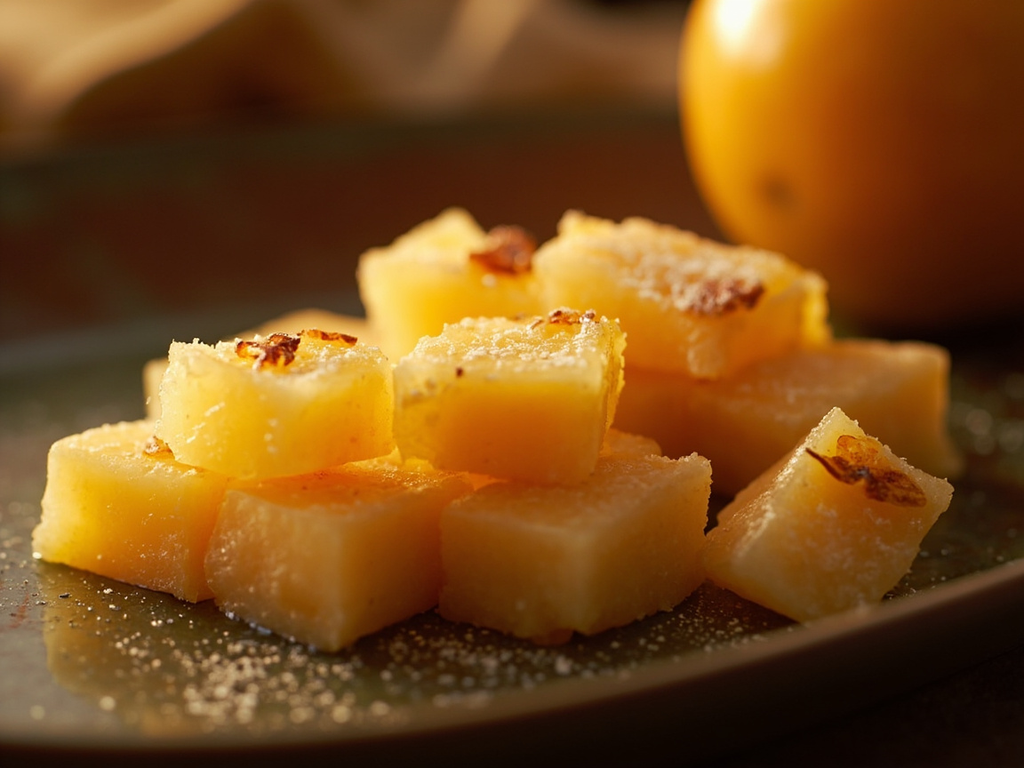
- Spread the paste 1.5 cm thick in a frame lined with paper; let dry 24–48 hours, then cut into small squares.
How it was made : Quince paste (cotignac) was both a luxury sweet—later offered to kings as diplomatic gifts, like the famous cotignac d'Orléans—and a medicinal "electuary" classified among chamber spices. The boundary between confectionery and pharmacy did not exist: sweetness healed.
The contemporary twist : Roll the squares in a little sugar and serve with aged cheese: quince paste (the Iberian "membrillo") has never left our cheese boards.
Sources : Medieval medical treatises on the virtues of quince · Le Ménagier de Paris (quince preparations)
Louis IX (Saint Louis) · Charactorium