 flip
flipFouaces of Lerné
Fouaces of Lerné
Why this dish? The famous "Picrocholine War" in *Gargantua* breaks out over fouaces: the bakers of Lerné refuse to sell them to Grandgousier's shepherds (ch. XXV). Rabelais describes these galettes as "belles fouaces" kneaded with fine flour, beautiful egg yolks, butter, saffron, and fine spices — a village luxury bread from his native Touraine.
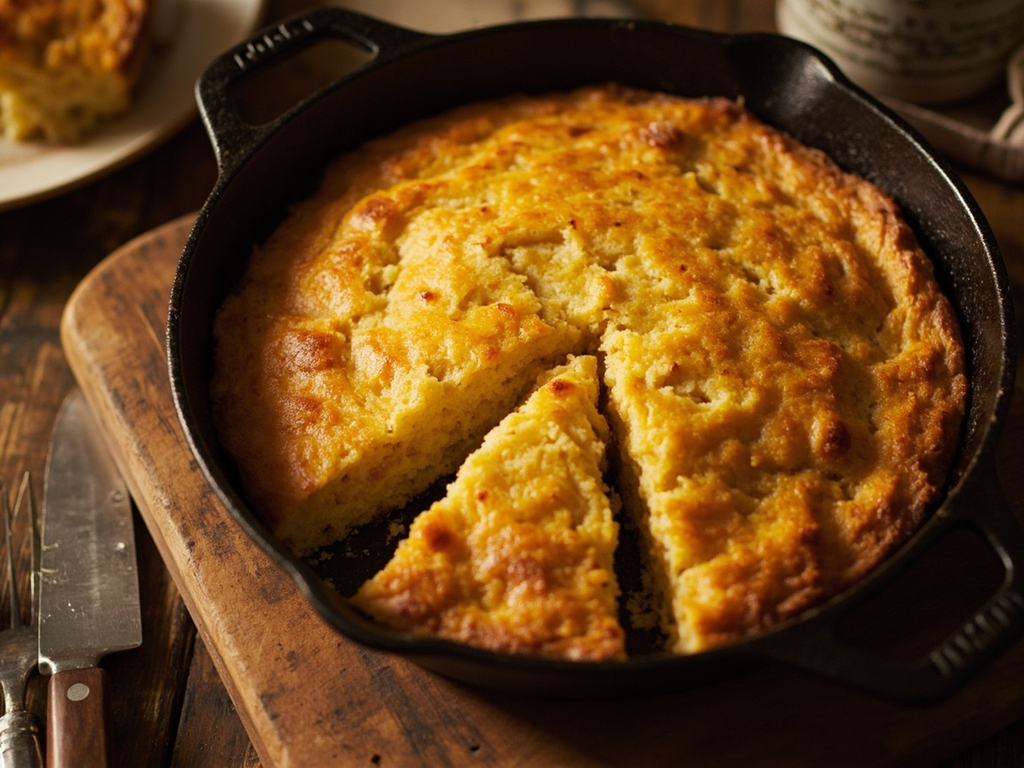
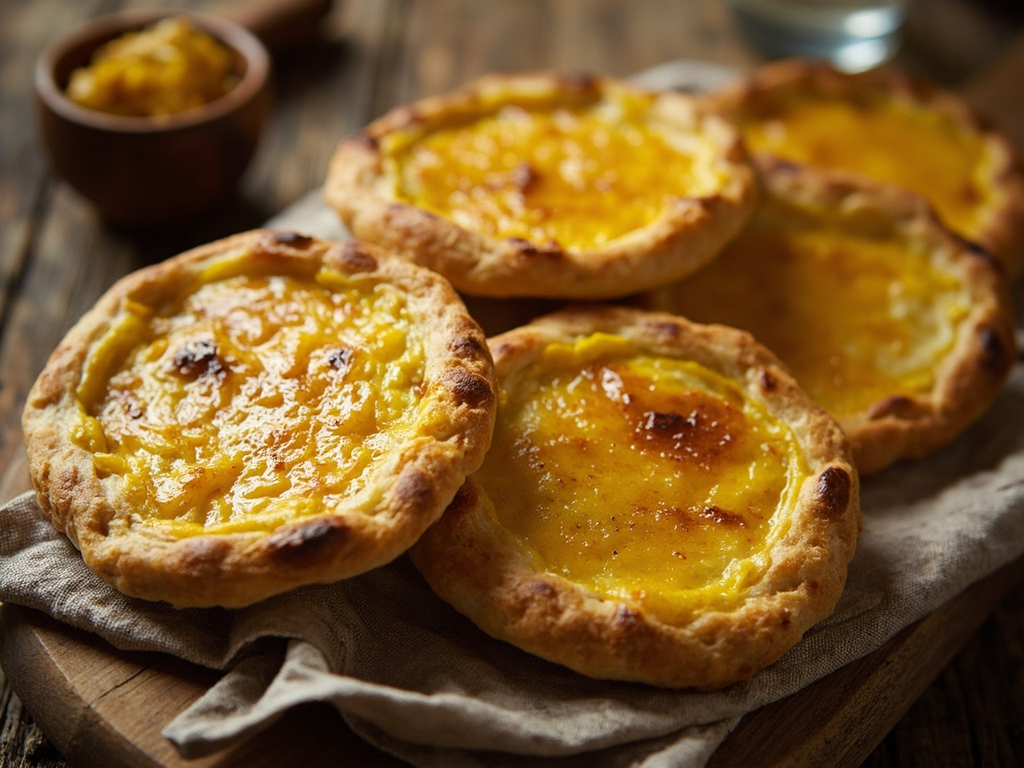
Golden, brioche-like galette, rich in butter and egg yolks, perfumed with saffron. Tender inside, glazed outside, eaten warm by hand, on the go, like at the market in Lerné.
Or çà, l'ami, ne fais point la guerre pour si peu : je t'en baille volontiers une fouace ! Pétris-moi la fleur de la plus fine farine avec beaux moyeux d'œufs, bon beurre frais, safran et un grain de sel, jusqu'à pâte douce comme joue de pucelle. Laisse-la lever au coin de l'âtre, puis enfourne-la jusqu'à belle couleur d'or. Mange-la chaude, et tu verras qu'il vaut mieux rompre la fouace que rompre les têtes.
- •Fine flour (wheat flour) — full bowl (base)
- •Egg yolks — several beautiful ones (richness and color)
- •Fresh butter — good lump (softness)
- •Saffron — pinch (golden color)
- •Leaven — a little (leavening)
- •Salt — grain (seasoning)
Fouaces of Lerné
Golden, brioche-like galette, rich in butter and egg yolks, perfumed with saffron. Tender inside, glazed outside, eaten warm by hand, on the go, like at the market in Lerné.
Why this dish? The famous "Picrocholine War" in *Gargantua* breaks out over fouaces: the bakers of Lerné refuse to sell them to Grandgousier's shepherds (ch. XXV). Rabelais describes these galettes as "belles fouaces" kneaded with fine flour, beautiful egg yolks, butter, saffron, and fine spices — a village luxury bread from his native Touraine.
Or çà, l'ami, ne fais point la guerre pour si peu : je t'en baille volontiers une fouace ! Pétris-moi la fleur de la plus fine farine avec beaux moyeux d'œufs, bon beurre frais, safran et un grain de sel, jusqu'à pâte douce comme joue de pucelle. Laisse-la lever au coin de l'âtre, puis enfourne-la jusqu'à belle couleur d'or. Mange-la chaude, et tu verras qu'il vaut mieux rompre la fouace que rompre les têtes.
Ingredients (period version)
- Fine flour (wheat flour) — full bowl (base)
- Egg yolks — several beautiful ones (richness and color)
- Fresh butter — good lump (softness)
- Saffron — pinch (golden color)
- Leaven — a little (leavening)
- Salt — grain (seasoning)
Ingredients
- All-purpose flour (T45) — 500 g (base)
- Egg yolks — 4 (richness and color)
- Softened butter — 120 g (softness)
- Saffron — 1 pinch infused in 2 tbsp warm milk (golden color)
- Fresh baker's yeast — 20 g (leavening)
- Warm milk — 15 cl (hydration)
- Sugar — 30 g (light sweetness)
- Salt — 1 tsp (seasoning)
- 1 egg yolk for glazing — 1 (finish)
Method
- Dissolve the yeast in warm milk with the sugar, let foam for 10 min.
- Mix flour and salt, incorporate the yolks, infused saffron, and the liquid leaven.
- Knead for 10 min, then incorporate the softened butter until smooth and supple.
- Let rise for 1 h 30 under a cloth near a heat source, until doubled.
- Shape into flat galettes about 15 cm in diameter, brush with egg yolk, let rest 30 min.
- Bake in a hot oven (200 °C) for 15 to 18 min until golden brown; enjoy warm.
How it was made : The fouace (or fougasse) was an enriched bread baked in embers or in the communal oven, reserved for market days and festivals. Saffron and butter made it a relatively luxurious product, which explains why the bakers of Lerné were reluctant to sell them to simple shepherds.
The contemporary twist : Serve as mini fouaces in a linen basket, with a small pot of cotignac for dipping.
Sources : François Rabelais, *Gargantua*, ch. XXV (the war of the fouaces of Lerné)
François Rabelais · Charactorium