 flip
flipBunyols de mel — Valencian Honey Fritters
Bunyols de mel — Valencian Honey Fritters
Why this dish? Before the purple and the tiara, there was a child of Xàtiva. Fried bunyols drizzled with honey are a popular treat of medieval Valencia, sold in the streets during festivals: a humble Iberian childhood memory for a man who became the most powerful in Christendom, and a counterpoint to the pomp of the papal table.
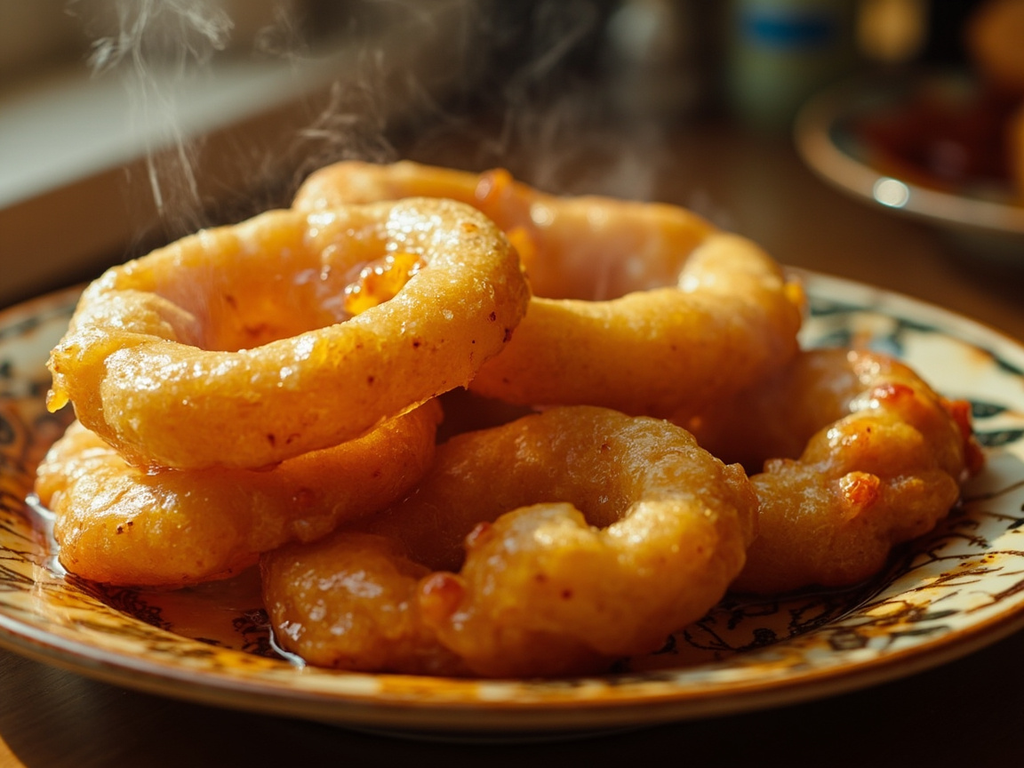
Small fritters of light batter, fried in olive oil until golden and puffed, then drenched in warm honey. Crispy outside, soft inside — the festival treat shared in the street.
You see me in majesty beneath Pinturicchio's frescoes — but know that a little boy of Xàtiva still runs inside me. There, on feast days, they fry the batter in hot oil until it swells like a child's cheek, then drown it in honey. Eat them burning hot, sticky-fingered, without ceremony: there are pleasures that no tiara can replace. And do not be ashamed to take another — I myself never knew when to stop at one.
- •Wheat flour — as needed (batter base)
- •Sourdough or brewer's yeast — a little (leavening)
- •Warm water — to moisten (liquid)
- •Olive oil — a full pan (frying)
- •Honey — generously (sweet glaze)
- •Bitter orange zest or anise — to taste (perfume)
Bunyols de mel — Valencian Honey Fritters
Small fritters of light batter, fried in olive oil until golden and puffed, then drenched in warm honey. Crispy outside, soft inside — the festival treat shared in the street.
Why this dish? Before the purple and the tiara, there was a child of Xàtiva. Fried bunyols drizzled with honey are a popular treat of medieval Valencia, sold in the streets during festivals: a humble Iberian childhood memory for a man who became the most powerful in Christendom, and a counterpoint to the pomp of the papal table.
You see me in majesty beneath Pinturicchio's frescoes — but know that a little boy of Xàtiva still runs inside me. There, on feast days, they fry the batter in hot oil until it swells like a child's cheek, then drown it in honey. Eat them burning hot, sticky-fingered, without ceremony: there are pleasures that no tiara can replace. And do not be ashamed to take another — I myself never knew when to stop at one.
Ingredients (period version)
- Wheat flour — as needed (batter base)
- Sourdough or brewer's yeast — a little (leavening)
- Warm water — to moisten (liquid)
- Olive oil — a full pan (frying)
- Honey — generously (sweet glaze)
- Bitter orange zest or anise — to taste (perfume)
Ingredients
- Flour — 250 g (base)
- Baker's yeast — 1 packet (7 g dry) (leavening)
- Warm water — ≈ 250 ml (batter (semi-liquid))
- Salt — 1 pinch (seasoning)
- Orange zest or 1 tsp anise — to taste (perfume)
- Olive oil (or frying oil) — for frying (cooking)
- Honey — 5 to 6 tbsp (glaze)
Method
- Mix flour, yeast, salt, and perfume, then add warm water to obtain a thick, sticky batter.
- Cover and let rise 1 h at room temperature, until doubled and bubbly.
- Heat oil (170-180°C). Using two spoons (or wet fingers), drop balls of batter into the oil.
- Fry, turning, until golden and puffed; drain on paper.
- Warm the honey (thinned with a little water) and drizzle over the fritters while still hot. Serve immediately.
How it was made : Honey-fried fritters (bunyols, the Andalusí legacy of “buñuelos”) were a common street treat in the medieval Iberian Peninsula, associated with religious and popular festivals. They were fried outdoors in large pans of olive oil; honey, the basic sweetener before sugar became widespread, coated them. A treat for both humble and rich.
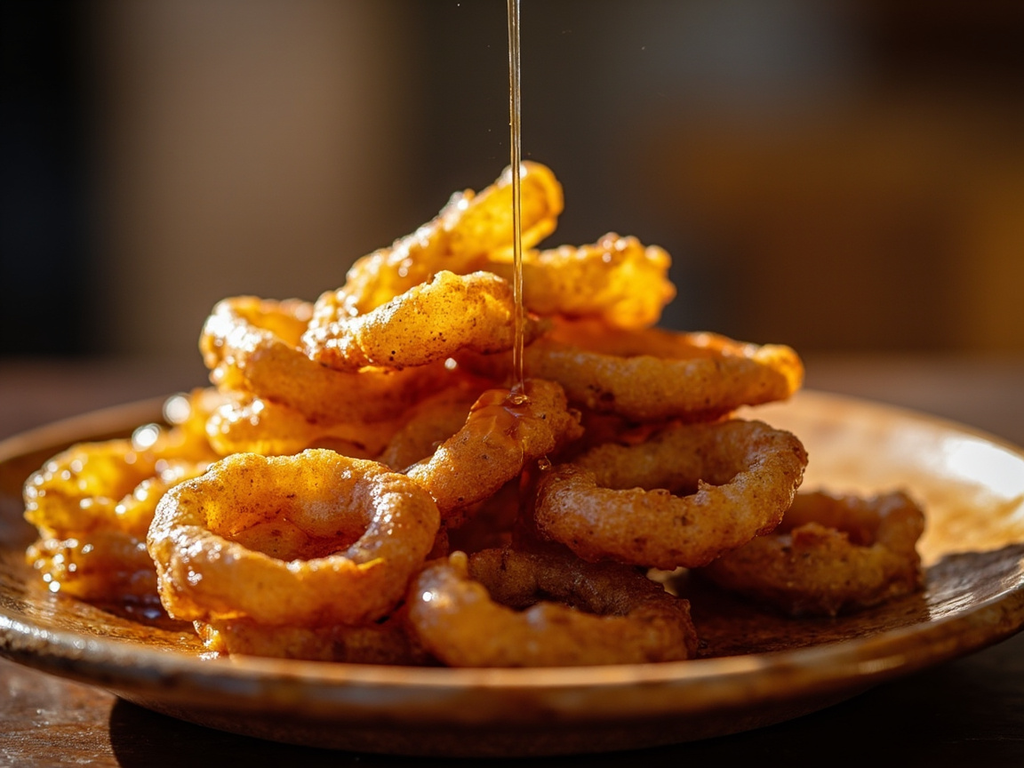
The contemporary twist : Stack them in a small pyramid drizzled with honey and a dusting of cinnamon, like festive street food — the medieval ancestor of churros to share.
Sources : Llibre del Coch (éd. 1520) · Tradition culinaire andalusi-valencienne médiévale
Alexander VI · Charactorium