 flip
flipHumitas of Harvest Time
Humitas of Harvest Time
Why this dish? Humitas are made when the corn is tender, in summer: the whole neighborhood gathers to grate the ears and fold the parcels, a collective task that becomes a celebration. For a child of the Elqui countryside like Lucila, these harvest days were a joyful landmark of the rural calendar.
A paste of fresh grated corn, flavored with basil and golden onion, wrapped in corn husks and poached. Eaten savory or sprinkled with sugar — the sweet debate of Chilean families.
Ah, *las humitas*! You must know that this is not a dish you make alone: the whole family sits down, we grate the still-milky corn, and the old women fold the leaves with knowing fingers. I, as a little girl, held the string to tie the packets. We eat them burning hot, and at home we argued fiercely over salt or sugar — I confess, my child, I liked both, salt first and a pinch of sugar on top, like a little sin.
- •Tender corn on the cob — a dozen (base of the paste)
- •Corn husks (chala) — the leaves from the ears (wrapper)
- •Fresh basil (albahaca) — a few leaves (signature flavor)
- •Onion — one (aromatic base)
- •Lard or butter — a spoonful (fat)
- •Salt, sugar — to taste (seasoning)
Humitas of Harvest Time
A paste of fresh grated corn, flavored with basil and golden onion, wrapped in corn husks and poached. Eaten savory or sprinkled with sugar — the sweet debate of Chilean families.
Why this dish? Humitas are made when the corn is tender, in summer: the whole neighborhood gathers to grate the ears and fold the parcels, a collective task that becomes a celebration. For a child of the Elqui countryside like Lucila, these harvest days were a joyful landmark of the rural calendar.
Ah, *las humitas*! You must know that this is not a dish you make alone: the whole family sits down, we grate the still-milky corn, and the old women fold the leaves with knowing fingers. I, as a little girl, held the string to tie the packets. We eat them burning hot, and at home we argued fiercely over salt or sugar — I confess, my child, I liked both, salt first and a pinch of sugar on top, like a little sin.
Ingredients (period version)
- Tender corn on the cob — a dozen (base of the paste)
- Corn husks (chala) — the leaves from the ears (wrapper)
- Fresh basil (albahaca) — a few leaves (signature flavor)
- Onion — one (aromatic base)
- Lard or butter — a spoonful (fat)
- Salt, sugar — to taste (seasoning)
Ingredients
- Fresh corn (or frozen/thawed kernels) — 6 ears or 600 g kernels (base of the paste)
- Dried corn husks (rehydrated) or parchment paper — 12 leaves (wrapper)
- Fresh basil — 6 leaves, chopped (signature flavor)
- Onion — 1, sliced (aromatic base)
- Butter — 30 g (fat)
- Salt — 1 tsp (seasoning)
- Sugar (optional, for serving) — to sprinkle (sweet touch)
Method
- Grate or blend the corn kernels into a thick paste.
- Melt the butter, sauté the onion until golden, add the basil, then stir in the corn paste. Salt and cook over low heat, stirring, until thickened.
- Place a spoonful of paste on two crossed corn husks, fold into a packet, and tie with a strip of husk.
- Poach the packets in simmering salted water for 30–40 minutes.
- Serve hot, open at the table; offer sugar for those who want the sweet version.
How it was made : Humitas were cooked at the exact moment when the corn transitioned from milky to pasty. They were cooked in a large pot over the fire, and the husks served as wrapping, flavoring, and plate — nothing was wasted.
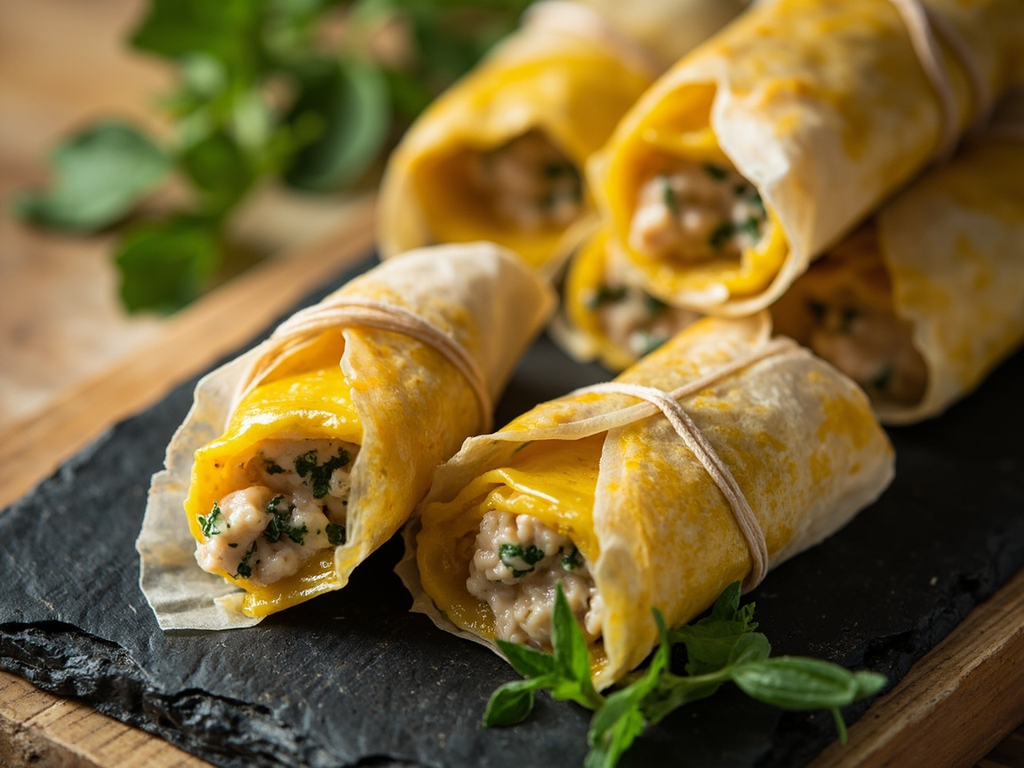
The contemporary twist : Tie each packet with a strand of raffia and present it slightly open on a slate board, a basil leaf placed like a green seal.
Sources : Oreste Plath, Folklore culinario de Chile
Gabriela Mistral · Charactorium