 flip
flipPalm Sugar Wajik
Palm Sugar Wajik
Why this dish? Wajik is a sticky rice confection traditionally prepared for ceremonies and offerings in Hindu-Buddhist Javanese culture. At the Majapahit court, these sweets accompanied temple rituals and royal feasts. The word "palapa" in Gajah Mada's oath refers to pleasures and delights — including precisely these spiced sweets he renounced.
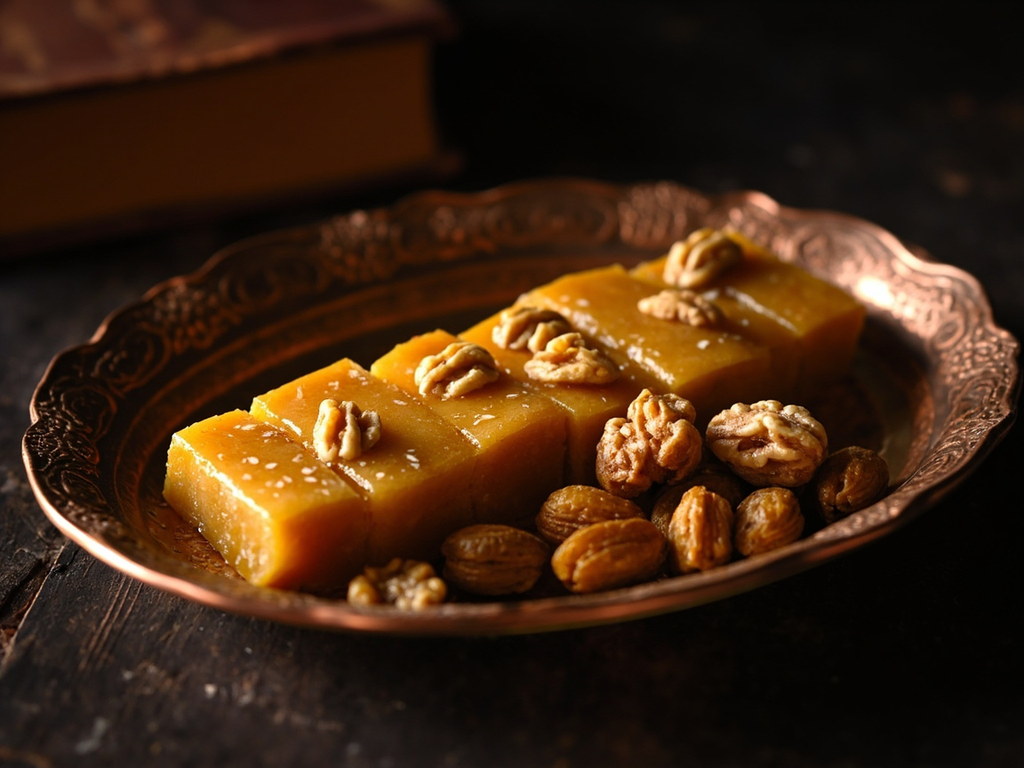
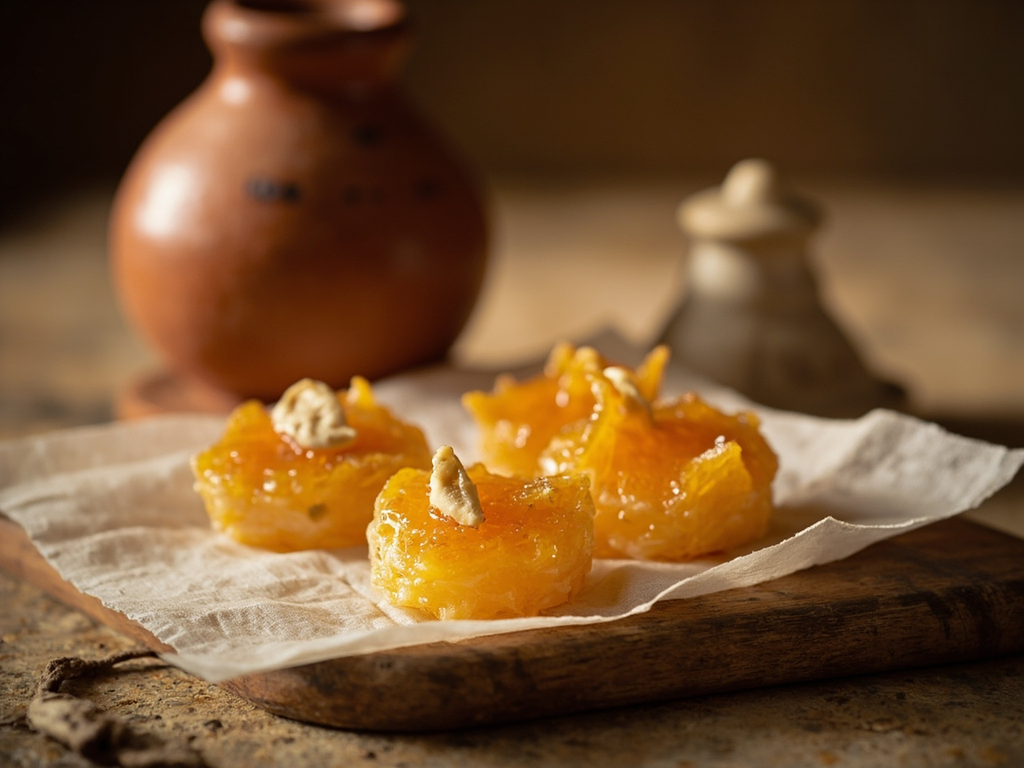
Dense cake of sticky rice cooked in coconut milk and palm sugar (gula jawa), perfumed with pandanus. The paste is pressed, cooled, and cut into glossy caramelized diamonds.
When I swore the Palapa Oath before the assembled court, I renounced all pleasure — and wajik is one, believe me. This sticky rice steeped in the black sugar of the palm, this sweetness that clings to the fingers and scents the breath with pandanus — that is what I set aside from my mouth until all Nusantara was one. The priests place it on the altars of Shiva, the women prepare it for harvest festivals. I touched it no more as long as an island remained to subdue.
- •Glutinous rice (ketan) — a good measure (sticky base)
- •Fresh coconut milk — the milk of one coconut (creaminess)
- •Palm sugar (gula aren / gula jawa) — a generous block (sweetness and caramel)
- •Pandanus leaf — two leaves, tied (floral fragrance)
- •Salt — a pinch (flavor enhancer)
Palm Sugar Wajik
Dense cake of sticky rice cooked in coconut milk and palm sugar (gula jawa), perfumed with pandanus. The paste is pressed, cooled, and cut into glossy caramelized diamonds.
Why this dish? Wajik is a sticky rice confection traditionally prepared for ceremonies and offerings in Hindu-Buddhist Javanese culture. At the Majapahit court, these sweets accompanied temple rituals and royal feasts. The word "palapa" in Gajah Mada's oath refers to pleasures and delights — including precisely these spiced sweets he renounced.
When I swore the Palapa Oath before the assembled court, I renounced all pleasure — and wajik is one, believe me. This sticky rice steeped in the black sugar of the palm, this sweetness that clings to the fingers and scents the breath with pandanus — that is what I set aside from my mouth until all Nusantara was one. The priests place it on the altars of Shiva, the women prepare it for harvest festivals. I touched it no more as long as an island remained to subdue.
Ingredients (period version)
- Glutinous rice (ketan) — a good measure (sticky base)
- Fresh coconut milk — the milk of one coconut (creaminess)
- Palm sugar (gula aren / gula jawa) — a generous block (sweetness and caramel)
- Pandanus leaf — two leaves, tied (floral fragrance)
- Salt — a pinch (flavor enhancer)
Ingredients
- Glutinous rice — 250 g (base)
- Coconut milk — 300 ml (creaminess)
- Palm sugar (or muscovado sugar) — 150 g (caramel and sweetness)
- Pandanus leaf (or extract) — 2 leaves (or ½ tsp extract) (fragrance)
- Salt — 1 pinch (balance)
Method
- Soak the glutinous rice in cold water for at least 4 hours (preferably overnight).
- Drain the rice and steam for 25 minutes until translucent and tender.
- Meanwhile, melt the grated palm sugar in the coconut milk over low heat with the pandanus leaves and salt, stirring until fully dissolved.
- Pour the steamed rice into the pot with the sweetened coconut milk. Cook over low heat, stirring constantly, for 20–25 minutes until the mixture thickens and pulls away from the sides.
- Pour the paste into a square or rectangular mold lined with parchment paper or oiled banana leaf. Press firmly with the back of an oiled spoon.
- Let cool completely (at least 2 hours), then cut into diamonds or squares.
- Serve at room temperature.
How it was made : Glutinous rice (ketan) has been cultivated in Java for millennia, and palm sugar (gula aren, from the Arenga pinnata palm) was the main sweetener in the archipelago long before refined cane sugar arrived. Wajik and its variants are mentioned in ancient Javanese ritual traditions. The term "palapa" in Gajah Mada's oath is interpreted by several historians as referring to culinary pleasures — including spices and sweets.
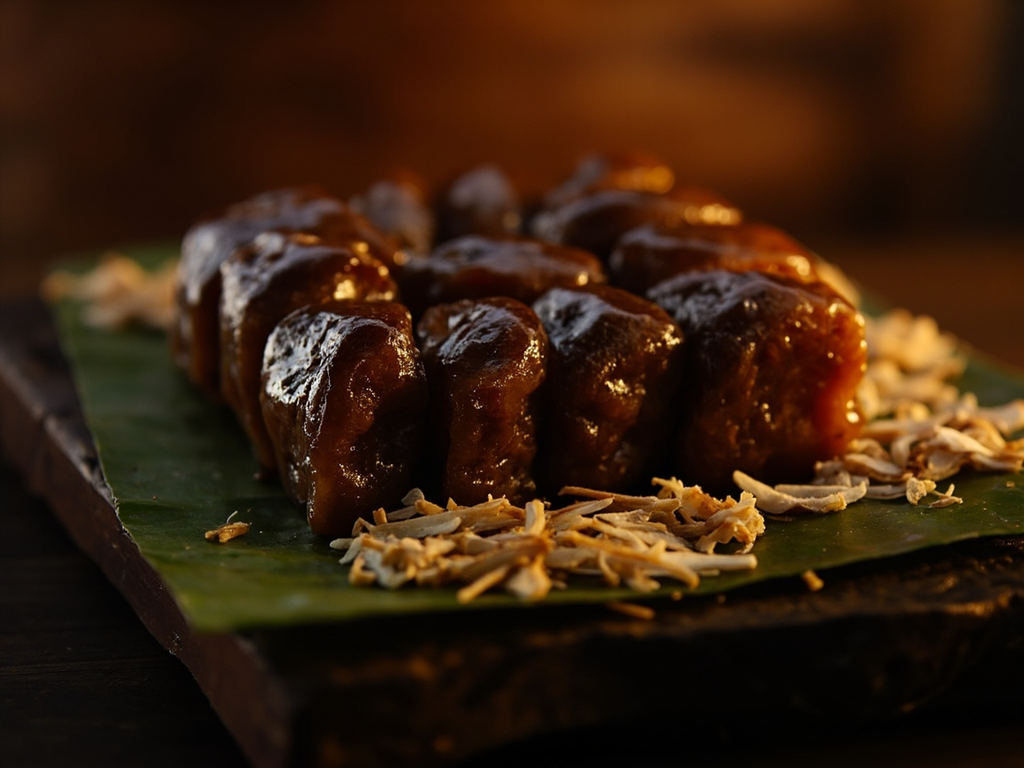
The contemporary twist : Cut into small, even diamonds and present on a dark wooden platter, sprinkled with toasted shredded coconut, like precious confections.
Sources : Sri Owen, Indonesian Regional Food and Cookery, Doubleday, 1994 · Interpretations of the Palapa Oath in C.C. Berg, Het Rijk van de Vijfvoudige Buddha, 1962
Gajah Mada · Charactorium