 flip
flipFresh Cheese with Hybla Honey, Offering to the Nereids
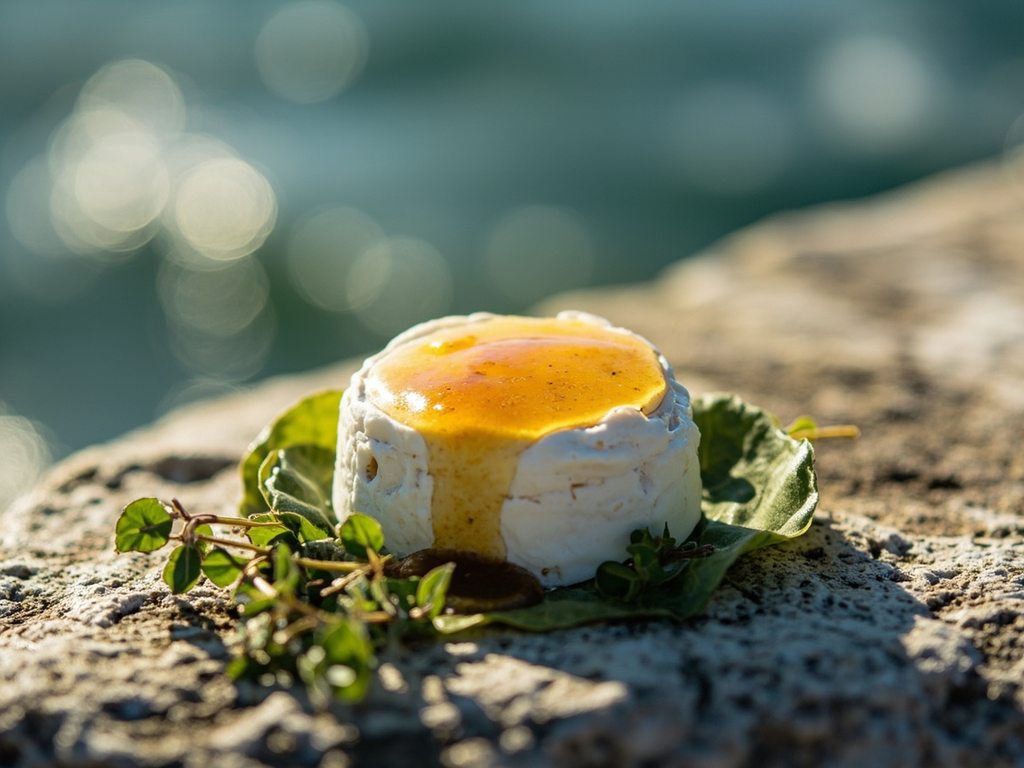
Fresh Cheese with Hybla Honey, Offering to the Nereids
Why this dish? Galatea's name comes from Greek *gala*, milk: fresh cheese, child of milk, is naturally consecrated to her. The Greeks placed milk, honey, and cheese at the seashore for sea deities; this little cheese drizzled with Hybla honey is the tribute one would offer to a Sicilian Nereid, on a rock beaten by foam.
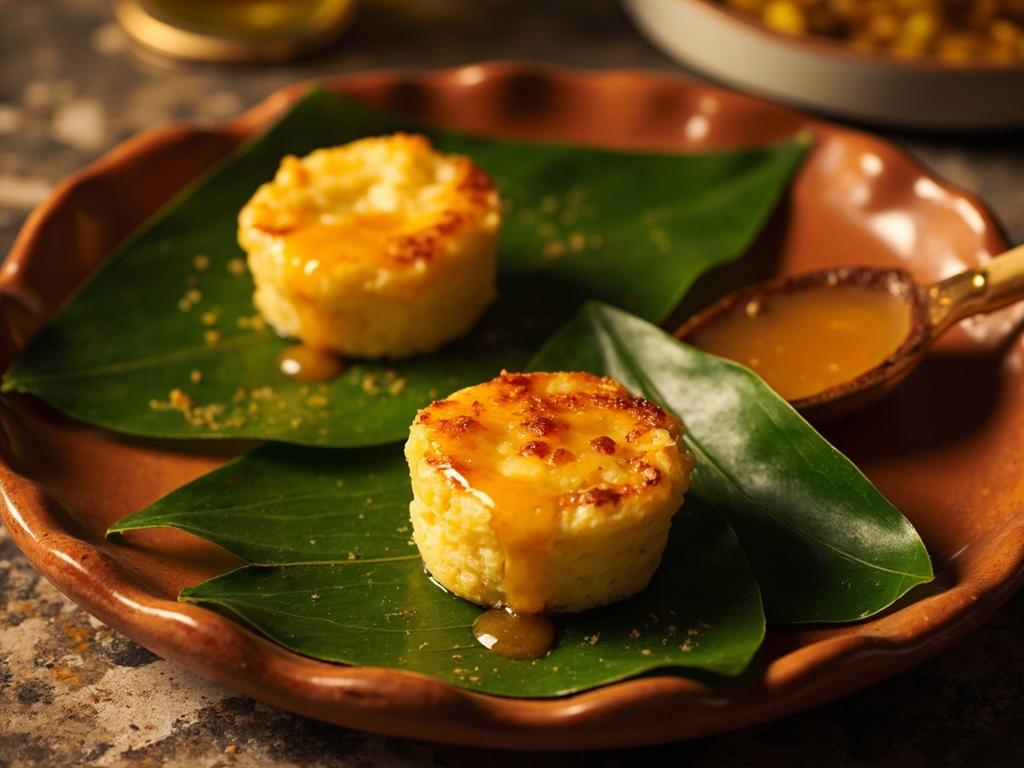
A fresh sheep's or goat's milk cheese, drained in a rush basket, set on a leaf and drizzled with fragrant honey. Sweet, milky, barely salted: the food of nymphs rather than men.
Approach, mortal, and fear nothing from the wave. My name speaks of milk, and with milk I am honored: take this cheese tender as foam, press it in an osier basket as the shepherds of Etna did, and pour over it the golden honey that the bees of Hybla stole from the thyme flowers. Set it on the stone, at the water's edge, and the fifty daughters of Nereus will thank you. Eat some too, go on — for what nourishes goddesses sweetens well the hearts of men.
- •Fresh sheep's or goat's milk — a good bowlful (cheese base)
- •Rennet or fig sap — a few drops (coagulant)
- •Thyme honey (Hybla type) — a generous drizzle (sweet signature)
- •Sea salt — a pinch (seasoning)
- •Fresh thyme — a few sprigs (flavor)
Fresh Cheese with Hybla Honey, Offering to the Nereids
A fresh sheep's or goat's milk cheese, drained in a rush basket, set on a leaf and drizzled with fragrant honey. Sweet, milky, barely salted: the food of nymphs rather than men.
Why this dish? Galatea's name comes from Greek *gala*, milk: fresh cheese, child of milk, is naturally consecrated to her. The Greeks placed milk, honey, and cheese at the seashore for sea deities; this little cheese drizzled with Hybla honey is the tribute one would offer to a Sicilian Nereid, on a rock beaten by foam.
Approach, mortal, and fear nothing from the wave. My name speaks of milk, and with milk I am honored: take this cheese tender as foam, press it in an osier basket as the shepherds of Etna did, and pour over it the golden honey that the bees of Hybla stole from the thyme flowers. Set it on the stone, at the water's edge, and the fifty daughters of Nereus will thank you. Eat some too, go on — for what nourishes goddesses sweetens well the hearts of men.
Ingredients (period version)
- Fresh sheep's or goat's milk — a good bowlful (cheese base)
- Rennet or fig sap — a few drops (coagulant)
- Thyme honey (Hybla type) — a generous drizzle (sweet signature)
- Sea salt — a pinch (seasoning)
- Fresh thyme — a few sprigs (flavor)
Ingredients
- Well-drained sheep's or goat's curd cheese — 250 g (dairy base)
- Thyme honey — 3 tbsp (signature)
- Fine salt — 1 pinch (seasoning)
- Fresh thyme — 2 sprigs (flavor)
Method
- Drain the curd cheese carefully for a few hours in a fine sieve to obtain a firm, creamy mass.
- Salt very lightly and shape into small domes with a spoon.
- Place each dome on a leaf (vine, fig) or a small plate.
- Drizzle with thyme honey and sprinkle with stripped thyme leaves.
- Serve immediately, chilled, with a spoon or with a piece of barley bread.
How it was made : Fresh cheese (*tyros*) was a daily food in the Greek world, made from sheep's or goat's milk and coagulated with rennet or fig sap. Milk, honey, and cheese were among the 'non-bloody' offerings destined for deities, especially marine and chthonic ones; they were poured or placed without being burned. Hybla honey, from Sicily, was a quality reference celebrated by poets.
The contemporary twist : Served in a cleaned half-scallop shell, as a nod to the Nereid's conch shell, with a pinch of lemon zest.
Sources : Theocritus, Idylls (XI, the Cyclops; evocations of Hybla honey) · Athenaeus of Naucratis, Deipnosophists (cheeses and dairy offerings)
Galatea · Charactorium