 flip
flipFine Wheat Flatbreads with Honey and Oil
Fine Wheat Flatbreads with Honey and Oil
Why this dish? Offerings of fine flour kneaded with oil, sometimes drizzled with honey, accompanied sacrifices and vows in the Temple that Solomon built. For Bathsheba, whose son raised the House of God in Jerusalem, these flatbreads inspired by the grain offering connect the royal table to the altar—without reproducing the sacred rite, which they respectfully evoke.
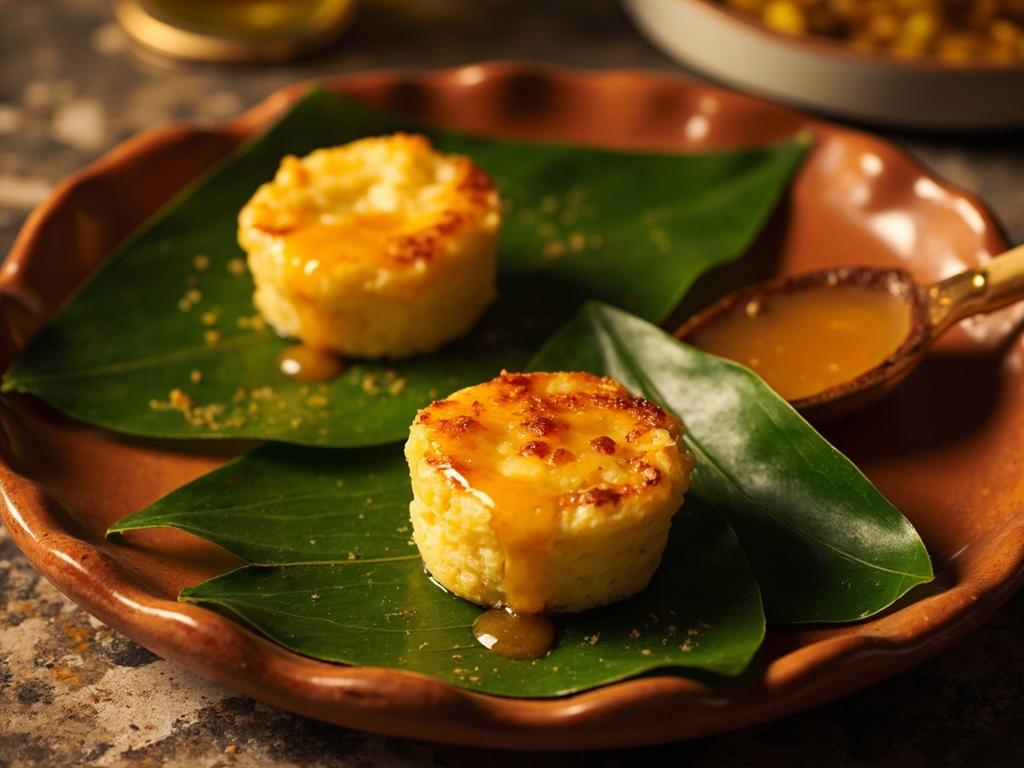
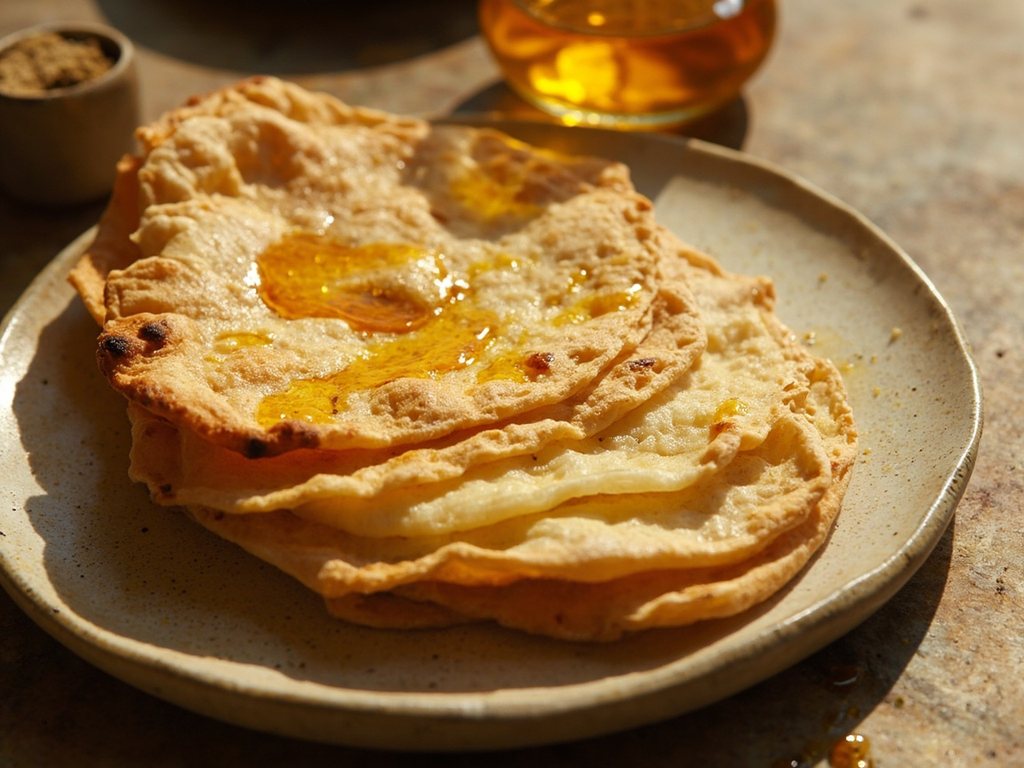
Thin flatbreads of wheat flour kneaded with olive oil, cooked on a hot griddle then drizzled with a little honey. Tender, golden, at the border between bread and sweetness.
These flatbreads I have prepared not for the belly but for the heart, in memory of the offerings brought up to the House my son built. You take the finest wheat flour, knead it with oil without letting it rise, and cook it on the griddle until it turns golden. A veil of honey on top, and no incense: for the grain offering is presented pure. Taste, and remember that sweetness is also a way of giving thanks.
- •Fine wheat flour — one measure (base)
- •Olive oil — generous (kneading and tenderness)
- •Water — as needed (bind the dough)
- •Salt — a pinch (seasoning of the offering)
- •Honey — for drizzling (final sweetness)
Fine Wheat Flatbreads with Honey and Oil
Thin flatbreads of wheat flour kneaded with olive oil, cooked on a hot griddle then drizzled with a little honey. Tender, golden, at the border between bread and sweetness.
Why this dish? Offerings of fine flour kneaded with oil, sometimes drizzled with honey, accompanied sacrifices and vows in the Temple that Solomon built. For Bathsheba, whose son raised the House of God in Jerusalem, these flatbreads inspired by the grain offering connect the royal table to the altar—without reproducing the sacred rite, which they respectfully evoke.
These flatbreads I have prepared not for the belly but for the heart, in memory of the offerings brought up to the House my son built. You take the finest wheat flour, knead it with oil without letting it rise, and cook it on the griddle until it turns golden. A veil of honey on top, and no incense: for the grain offering is presented pure. Taste, and remember that sweetness is also a way of giving thanks.
Ingredients (period version)
- Fine wheat flour — one measure (base)
- Olive oil — generous (kneading and tenderness)
- Water — as needed (bind the dough)
- Salt — a pinch (seasoning of the offering)
- Honey — for drizzling (final sweetness)
Ingredients
- All-purpose white flour (type 45) — 250 g (base)
- Olive oil — 4 tbsp (kneading and tenderness)
- Warm water — 100 to 120 ml (bind the dough)
- Salt — 1/2 tsp (seasoning)
- Liquid honey — 3 tbsp (drizzle)
Method
- Mix flour and salt, add olive oil and rub in with fingertips.
- Add warm water gradually until a soft, non-sticky dough forms; knead for 5 minutes.
- Rest 30 minutes under a cloth, then divide into balls and roll out into thin flatbreads.
- Cook on a hot dry griddle or pan, 1 to 2 minutes per side, until golden spots appear.
- Brush with warm honey as soon as they come off the heat and serve immediately.
How it was made : The minhah offering consisted of fine flour kneaded with oil, cooked on a griddle or in an oven, salted but unleavened. Honey and leaven were banned from the burnt offering on the altar, but honey could accompany the firstfruit breads: these flatbreads are a domestic, free evocation, not a reproduction of the rite.
The contemporary twist : Folded like a fan and striped with honey brushed on, like an ancient 'msemen', on a light plate to highlight the golden color.
Sources : Leviticus 2:1–7 (the grain offering of flour kneaded with oil) · Exodus 16:31 (manna, like honey wafers)
Bathsheba · Charactorium