 flip
flipPanspermia, the Porridge of Funeral Seeds
Panspermia, the Porridge of Funeral Seeds
Why this dish? Cerberus rules the world where the dead end up. The panspermia—a pot of all boiled seeds—was offered to the deceased and to Hermes Chthonios during the Anthesteria, the day when souls returned. It is the food of the threshold that Cerberus guards, placed for those he watches over.
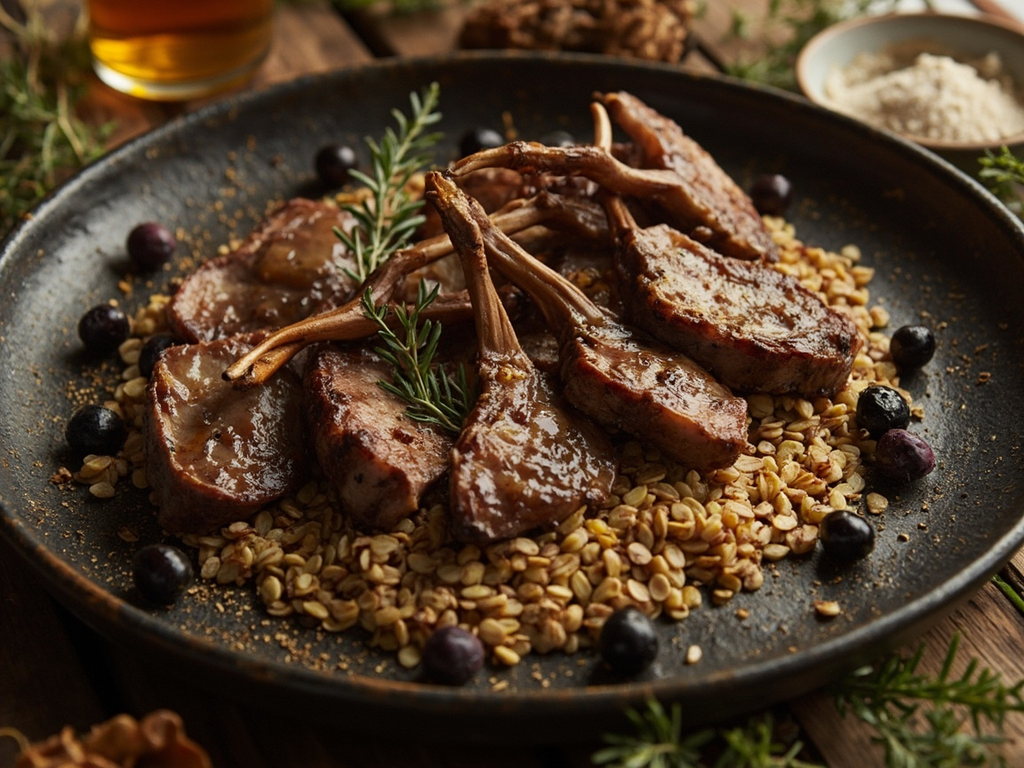
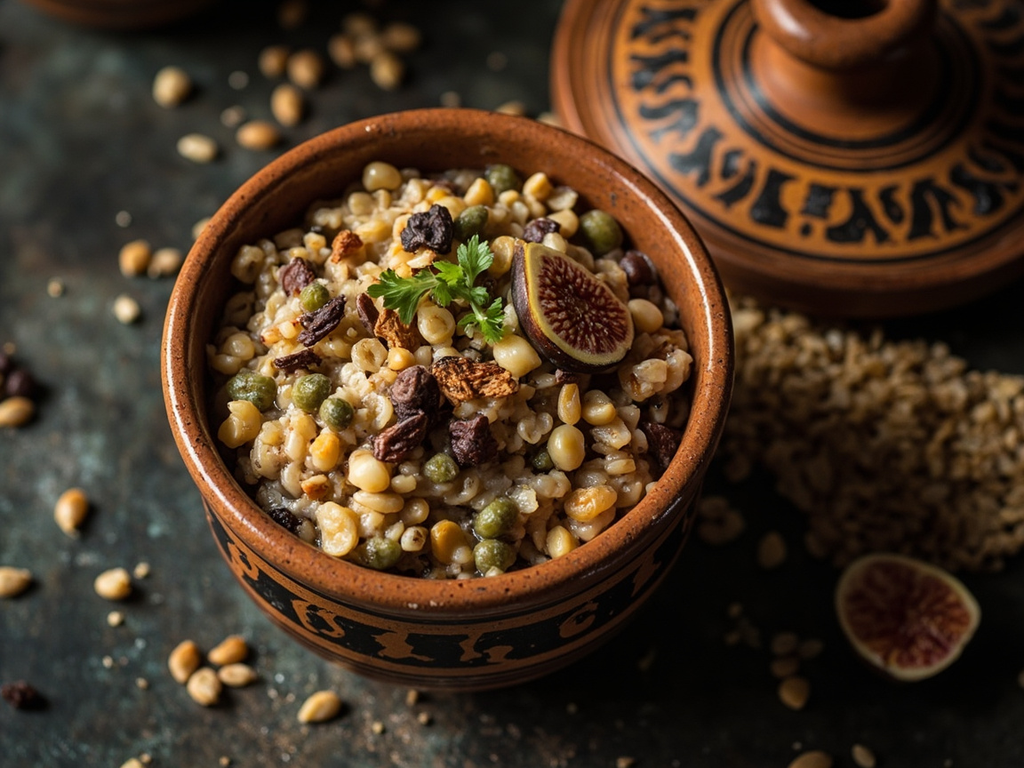
A thick, rustic porridge mixing wheat, barley, lentils, chickpeas, and broad beans, flavored with figs and honey. A dish of 'all seeds' symbolizing the cycle of life and death.
I know the smell of that pot better than any other. On the Day of the Pots, when the shades press at my door to smell the world of the living, mortals boil together all their seeds—wheat, barley, bean, lentil—and set it out for the dead and for the winged-footed messenger. No one tastes it in life: it is the meal of those I guard. I watch while the steam rises toward Hades.
- •Wheat and barley grains — two handfuls (base of the mix)
- •Lentils, chickpeas, dried broad beans — a handful of each (the mixed 'seeds')
- •Dried figs — a few, chopped (sweetness)
- •Honey — a drizzle (sweet binder)
- •Salt — a pinch (seasoning)
- •Olive oil — a drizzle (richness)
Panspermia, the Porridge of Funeral Seeds
A thick, rustic porridge mixing wheat, barley, lentils, chickpeas, and broad beans, flavored with figs and honey. A dish of 'all seeds' symbolizing the cycle of life and death.
Why this dish? Cerberus rules the world where the dead end up. The panspermia—a pot of all boiled seeds—was offered to the deceased and to Hermes Chthonios during the Anthesteria, the day when souls returned. It is the food of the threshold that Cerberus guards, placed for those he watches over.
I know the smell of that pot better than any other. On the Day of the Pots, when the shades press at my door to smell the world of the living, mortals boil together all their seeds—wheat, barley, bean, lentil—and set it out for the dead and for the winged-footed messenger. No one tastes it in life: it is the meal of those I guard. I watch while the steam rises toward Hades.
Ingredients (period version)
- Wheat and barley grains — two handfuls (base of the mix)
- Lentils, chickpeas, dried broad beans — a handful of each (the mixed 'seeds')
- Dried figs — a few, chopped (sweetness)
- Honey — a drizzle (sweet binder)
- Salt — a pinch (seasoning)
- Olive oil — a drizzle (richness)
Ingredients
- Wheat berries (or spelt) — 100 g (base cereal)
- Pearl barley — 50 g (texture)
- Green lentils — 60 g (legume)
- Chickpeas (soaked) — 60 g (legume)
- Dried broad beans (soaked) — 60 g (legume)
- Dried figs — 4, chopped (sweetness)
- Honey — 2 tbsp (sweet binder)
- Olive oil, salt — to taste (seasoning)
Method
- Soak chickpeas and broad beans overnight; rinse.
- In a large pot, cover wheat, barley, chickpeas, and broad beans generously with water; bring to a boil, then simmer for 45 min.
- Add lentils and continue for 20-25 min until everything is tender.
- Drain excess water, stir in chopped figs, honey, a drizzle of oil, and a pinch of salt.
- Serve warm as a thick porridge, or let cool: the mixture keeps for several days.
How it was made : During the Anthesteria, the Athenian festival of the dead and new wine, panspermia (all seeds) was cooked in pots (chytrai) offered to Hermes Chthonios, conductor of souls. It is the ancestor of the funeral grain porridges of the Mediterranean. Legumes and cereals formed the protein base of the ordinary Greek diet.
The contemporary twist : Serve cold as an ancient grain salad, sprinkled with fresh figs in season—a 'panspermia bowl' that connects the Underworld to our health plates.
Sources : Athenian Anthesteria (day of the Chytrai)—offerings to the dead and Hermes Chthonios · Athenaeus of Naucratis, The Deipnosophists (Greek cakes and porridges) · Jean-Louis Durand & studies on Greek sacrifices (chthonic offerings)
Cerberus · Charactorium