 flip
flipLibum, the hearth cake offered to the gods
Libum, the hearth cake offered to the gods
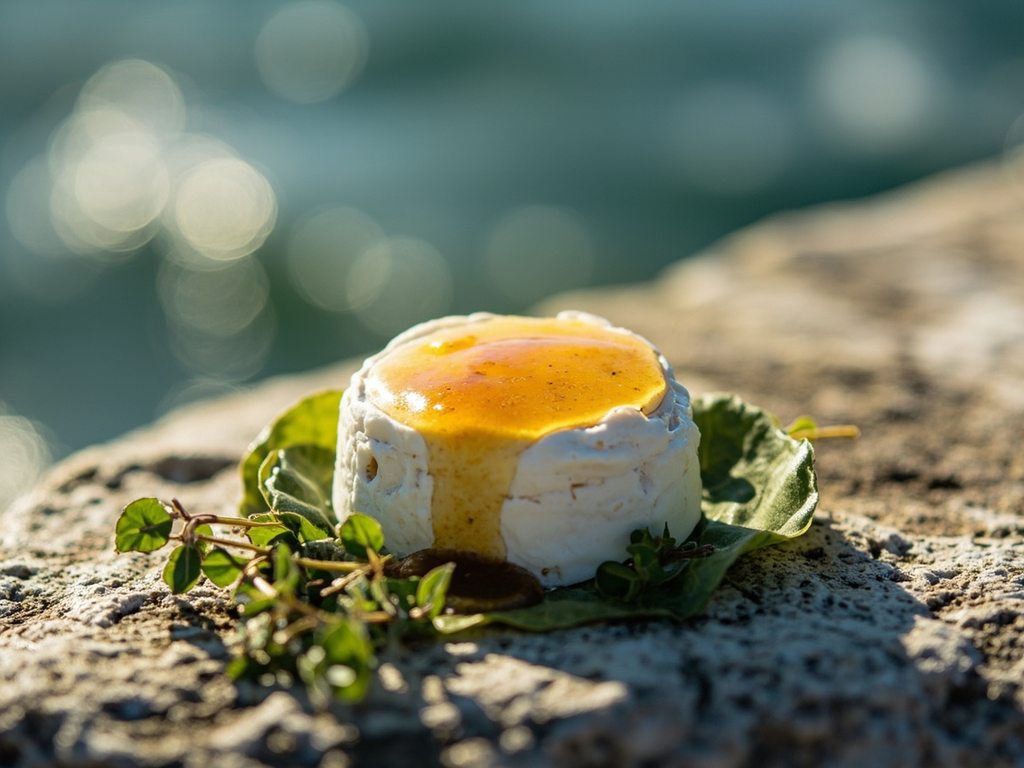
Why this dish? Like every Roman head of household, Brutus honored the Lares and Penates of his hearth. The *libum*, a fresh cheese cake drizzled with honey, was placed on the domestic altar on auspicious days — an ordinary gesture of piety from an aristocrat attached to the traditions of the city.
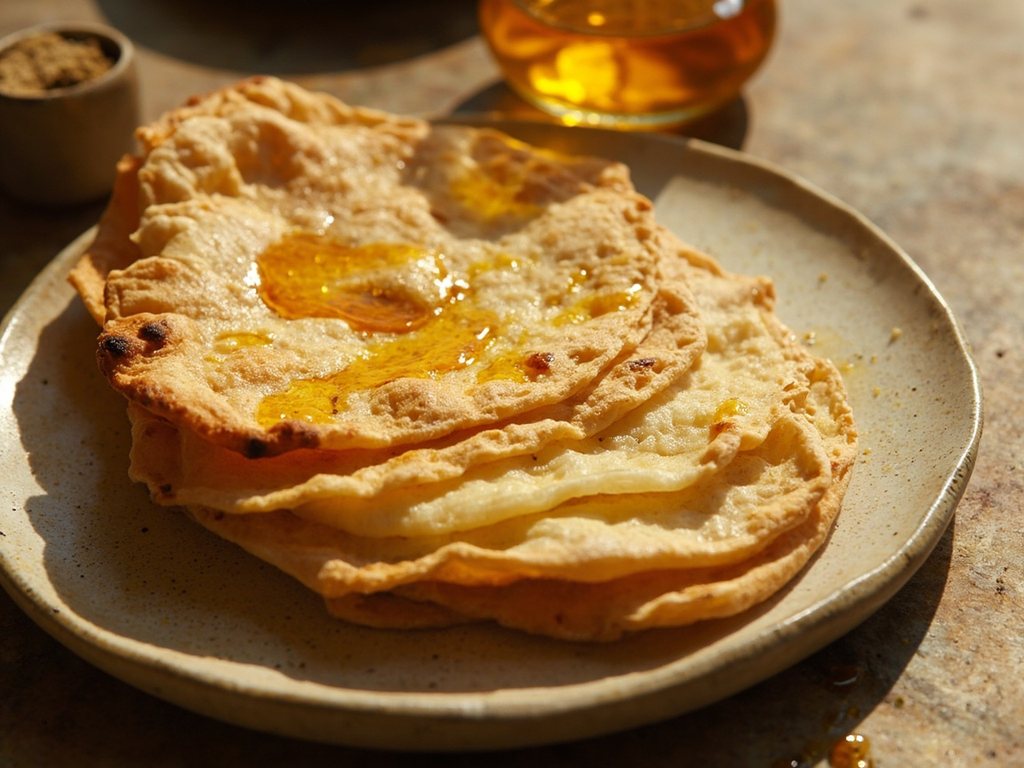
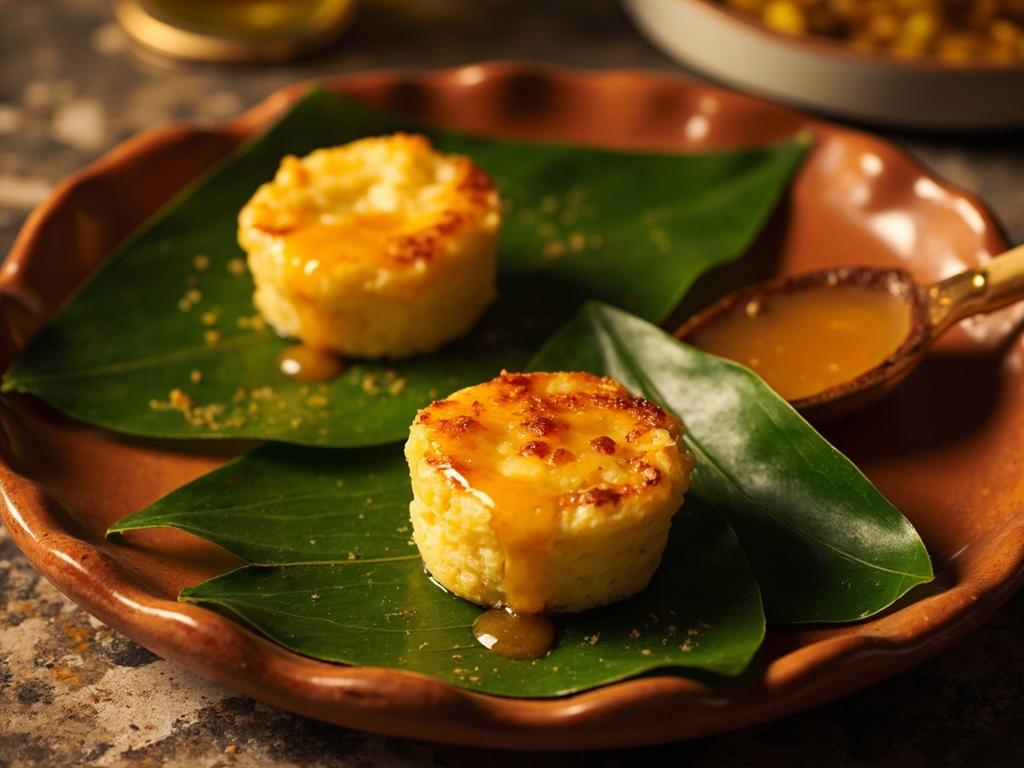
A small, soft cake of fresh cheese bound with flour and egg, baked on bay leaves, then drenched in warm honey. Inspired by the offering that Romans presented to their household gods.
Before breaking bread, one does not forget those who guard the house: the Lares want their share. You crush the fresh cheese until it has no lumps, mix in fine flour and an egg, shape a flat cake and place it on bay leaves before covering it with a hot lid. When it has browned, you drench it with honey. A portion for the gods of the threshold, the rest for your table — for piety and pleasure, among us, go well together.
- •Fresh cheese (caseus) — two measures (cake base)
- •Fine flour (siligo) — one measure (binder)
- •Egg — one (binder)
- •Bay leaves — a few (fragrant baking support)
- •Honey — for drizzling (final sweetness)
Libum, the hearth cake offered to the gods
A small, soft cake of fresh cheese bound with flour and egg, baked on bay leaves, then drenched in warm honey. Inspired by the offering that Romans presented to their household gods.
Why this dish? Like every Roman head of household, Brutus honored the Lares and Penates of his hearth. The *libum*, a fresh cheese cake drizzled with honey, was placed on the domestic altar on auspicious days — an ordinary gesture of piety from an aristocrat attached to the traditions of the city.
Before breaking bread, one does not forget those who guard the house: the Lares want their share. You crush the fresh cheese until it has no lumps, mix in fine flour and an egg, shape a flat cake and place it on bay leaves before covering it with a hot lid. When it has browned, you drench it with honey. A portion for the gods of the threshold, the rest for your table — for piety and pleasure, among us, go well together.
Ingredients (period version)
- Fresh cheese (caseus) — two measures (cake base)
- Fine flour (siligo) — one measure (binder)
- Egg — one (binder)
- Bay leaves — a few (fragrant baking support)
- Honey — for drizzling (final sweetness)
Ingredients
- Ricotta or well-drained fresh cheese — 250 g (cake base)
- Flour — 125 g (binder)
- Egg — 1 (binder)
- Fresh bay leaves — 6 to 8 (fragrant support)
- Honey — 4 tablespoons (glaze)
Method
- Mash the fresh cheese with a fork until smooth.
- Mix in the flour, then the egg, and work into a soft dough; shape into small domes.
- Place each cake on a bay leaf on a baking sheet, and bake at 180 °C for 30 to 35 minutes, until golden brown.
- Warm the honey and generously drizzle it over the cakes while still hot.
- Serve warm (remove the bay leaves — they are not edible — before eating).
How it was made : Cato the Elder gives the exact recipe for *libum*: crush the cheese, add flour and an egg, shape, place on bay leaves, and cook slowly under a hot earthenware lid (*testum*). It was offered to the household gods and during certain festivals; the surplus was eaten. Out of respect, we present a culinary evocation here, not the reproduction of a sacred rite.
The contemporary twist : Mini cheesecakes scented with bay, with runny honey and lemon zest: the snack version of a two-thousand-year-old cake.
Sources : Cato the Elder, De Agri Cultura, 75
Brutus · Charactorium