 flip
flipOúnjẹ funfun — the White Offering of Coconut Rice
Oúnjẹ funfun — the White Offering of Coconut Rice
Why this dish? Olokun loves white, the color of the purity of the depths and of foam. Altars dedicated to him receive light-colored foods — rice, coconut, water — placed in the ritual clay pot (agba Olokun). This coconut rice, scented with a pinch of sea salt, is a modern, family evocation of these white offerings, inspired by living traditions without reproducing the sacred rite.
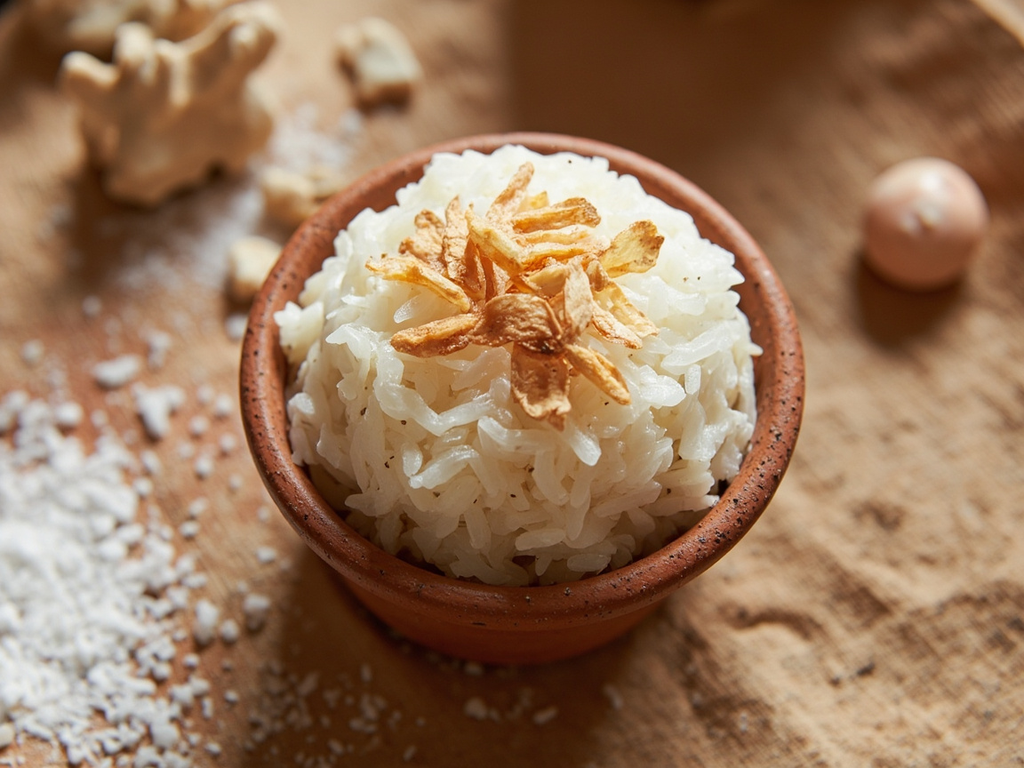
A pearly rice cooked in coconut milk, lightly sweetened by the fruit's flesh and accented with a touch of sea salt. Soft, comforting, an almost luminous white: a dish of peace shared in silence.
Approach, child of the shores, and fear not the shadow of my waters. I am Olokun, and beneath the surface where the waves die, I guard what no eye can see. Set before me rice as white as foam, the milk of the coconut that the sea has rolled to your beach, and a grain of salt taken from my domain — nothing red, nothing bloody, for what calms me is clear as the depths where light sleeps. Eat a portion, pour another to me on the earth: thus we are bound, you above, me below.
- •Rice — one calabash (white base, symbol of purity)
- •Ripe coconut, grated — one nut (milk and sweetness)
- •Rainwater or clear water — as needed (cooking)
- •Sea salt — a pinch (link to Olokun's sea)
Oúnjẹ funfun — the White Offering of Coconut Rice
A pearly rice cooked in coconut milk, lightly sweetened by the fruit's flesh and accented with a touch of sea salt. Soft, comforting, an almost luminous white: a dish of peace shared in silence.
Why this dish? Olokun loves white, the color of the purity of the depths and of foam. Altars dedicated to him receive light-colored foods — rice, coconut, water — placed in the ritual clay pot (agba Olokun). This coconut rice, scented with a pinch of sea salt, is a modern, family evocation of these white offerings, inspired by living traditions without reproducing the sacred rite.
Approach, child of the shores, and fear not the shadow of my waters. I am Olokun, and beneath the surface where the waves die, I guard what no eye can see. Set before me rice as white as foam, the milk of the coconut that the sea has rolled to your beach, and a grain of salt taken from my domain — nothing red, nothing bloody, for what calms me is clear as the depths where light sleeps. Eat a portion, pour another to me on the earth: thus we are bound, you above, me below.
Ingredients (period version)
- Rice — one calabash (white base, symbol of purity)
- Ripe coconut, grated — one nut (milk and sweetness)
- Rainwater or clear water — as needed (cooking)
- Sea salt — a pinch (link to Olokun's sea)
Ingredients
- White round rice or basmati — 250 g (base)
- Coconut milk — 400 ml (richness and aroma)
- Water — 200 ml (cooking)
- Fresh grated coconut — 3 tbsp (garnish, texture)
- Sea salt — 1/2 tsp (seasoning)
Method
- Rinse the rice in clear water until it runs clear.
- Pour the coconut milk and water into a saucepan, add the salt, and bring to a simmer.
- Add the rice, cover, and cook over very low heat for 15 to 18 minutes without stirring, until the liquid is absorbed.
- Remove from heat, let rest covered for 5 minutes, then fluff the grains with a fork.
- Dry-toast the grated coconut in a pan and sprinkle over the rice when serving.
How it was made : On the Yoruba coast, coconut milk was extracted by grating the flesh and then pressing it through a cloth in warm water. African rice (Oryza glaberrima) was cooked in covered clay pots set on three stones. White dishes reserved for water orishas carried neither red palm oil nor chili, to remain immaculate.
The contemporary twist : Serve as a small dome unmolded from a bowl, crowned with toasted coconut flakes and a comma of blue salt — a 'pearl of the deep' on the plate.
Olokun · Charactorium