 flip
flipMulligatawny — the Officers' Pepper Soup
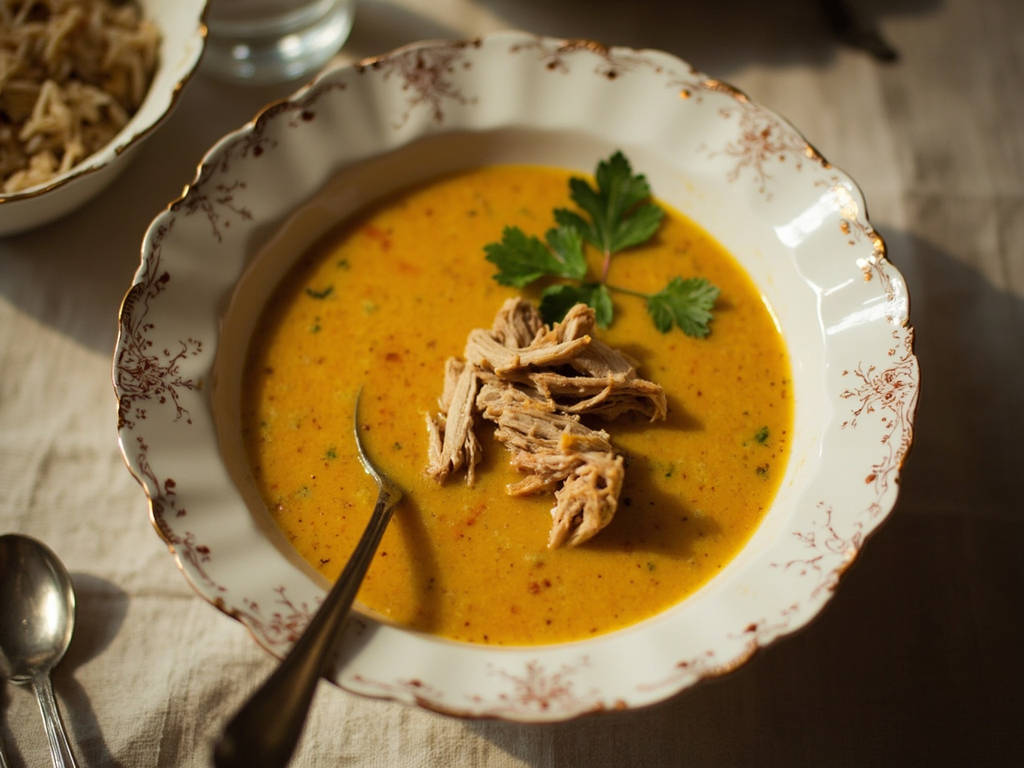
Mulligatawny — the Officers' Pepper Soup
Why this dish? At headquarters in Dehra Dun and at the mess in Calcutta, officers like Everest dined at the affluent colonial table, served by Indian domestics. Mulligatawny — literally 'pepper water' in Tamil — was THE emblematic dish of this Anglo-Indian cuisine, served as the opening of grand meals.
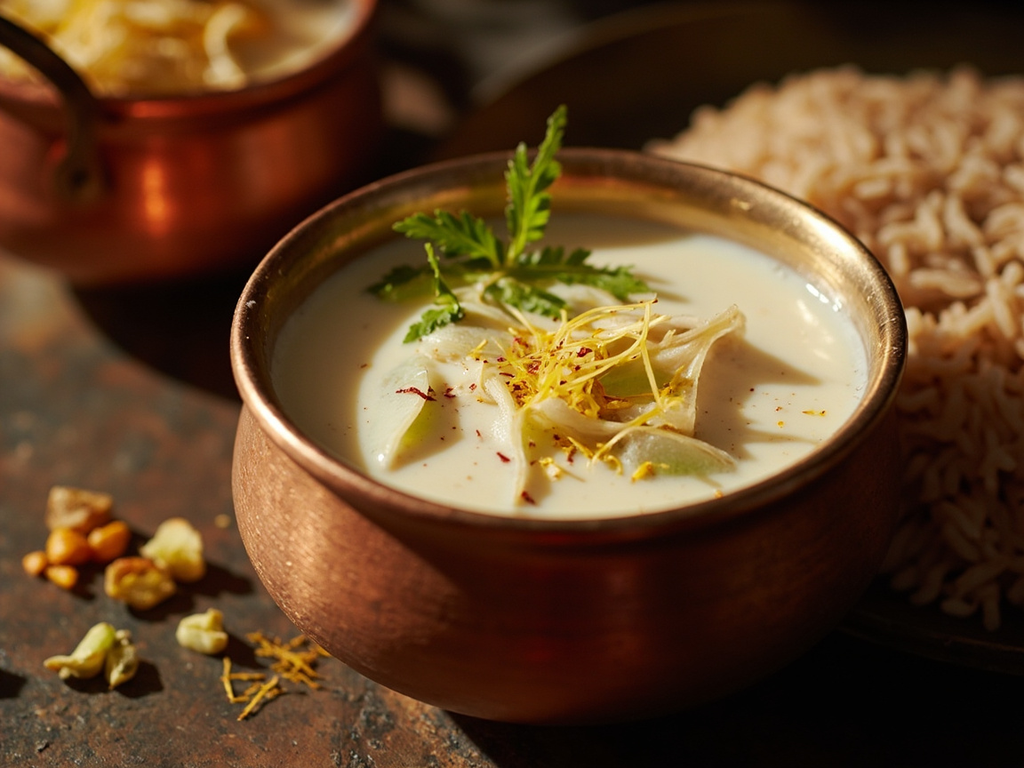
A creamy curry soup born from the encounter between British cuisine and the spices of South India: simmered poultry, lentils, curry powder, and a touch of tamarind, all smoothed and served over a little rice.
Here, I believe, is the only benefit I owe to this execrable climate: mulligatawny. My cooks in Dehra Dun prepared it to my taste — spirited, but not so much as to mask the poultry — with that dash of tamarind that awakens the palate as surely as a good morning sighting. It was brought to me steaming upon my return from the surveys; I assure you such a soup makes trigonometry almost tolerable. Take a full spoonful over the rice, Sir, and you will understand why no officer of the Indies forgoes it.
- •Chicken or fowl — 1 piece (protein base)
- •Red lentils — a good handful (binder, creaminess)
- •Curry powder (turmeric, coriander, cumin, fenugreek, pepper) — 2 tbsp (signature spice)
- •Tamarind — one ball (acidity)
- •Onion — 2 (aromatic base)
- •Rice — one bowl (accompaniment)
Mulligatawny — the Officers' Pepper Soup
A creamy curry soup born from the encounter between British cuisine and the spices of South India: simmered poultry, lentils, curry powder, and a touch of tamarind, all smoothed and served over a little rice.
Why this dish? At headquarters in Dehra Dun and at the mess in Calcutta, officers like Everest dined at the affluent colonial table, served by Indian domestics. Mulligatawny — literally 'pepper water' in Tamil — was THE emblematic dish of this Anglo-Indian cuisine, served as the opening of grand meals.
Here, I believe, is the only benefit I owe to this execrable climate: mulligatawny. My cooks in Dehra Dun prepared it to my taste — spirited, but not so much as to mask the poultry — with that dash of tamarind that awakens the palate as surely as a good morning sighting. It was brought to me steaming upon my return from the surveys; I assure you such a soup makes trigonometry almost tolerable. Take a full spoonful over the rice, Sir, and you will understand why no officer of the Indies forgoes it.
Ingredients (period version)
- Chicken or fowl — 1 piece (protein base)
- Red lentils — a good handful (binder, creaminess)
- Curry powder (turmeric, coriander, cumin, fenugreek, pepper) — 2 tbsp (signature spice)
- Tamarind — one ball (acidity)
- Onion — 2 (aromatic base)
- Rice — one bowl (accompaniment)
Ingredients
- Chicken thighs — 4 (protein and stock)
- Red lentils — 100 g (thickener)
- Mild curry powder — 2 tbsp (main spice)
- Tamarind paste — 1 tsp (acidity)
- Onions — 2, sliced (aromatic base)
- Carrot and celery stalk — 1 each (broth vegetables)
- Coconut cream or cream — 100 ml (creaminess (optional))
- Cooked basmati rice — 2 bowls (serving)
Method
- Sauté the sliced onions in a little clarified butter until golden.
- Add the curry powder, stir for 1 minute to release aromas.
- Add the chicken, lentils, carrot, and celery; cover with water or stock.
- Simmer for 40 minutes, remove the chicken, shred it.
- Blend the soup to bind, add tamarind and, if desired, coconut cream.
- Return the shredded chicken, adjust seasoning.
- Serve hot over a spoonful of rice.
How it was made : Mulligatawny is one of the first codified 'Anglo-Indian' dishes: an adaptation by Indian cooks of Tamil rasam to British expectations (who wanted a 'soup' as a starter, a structure absent from Indian cuisine). It appears in colonial cookbooks as early as the beginning of the 19th century.
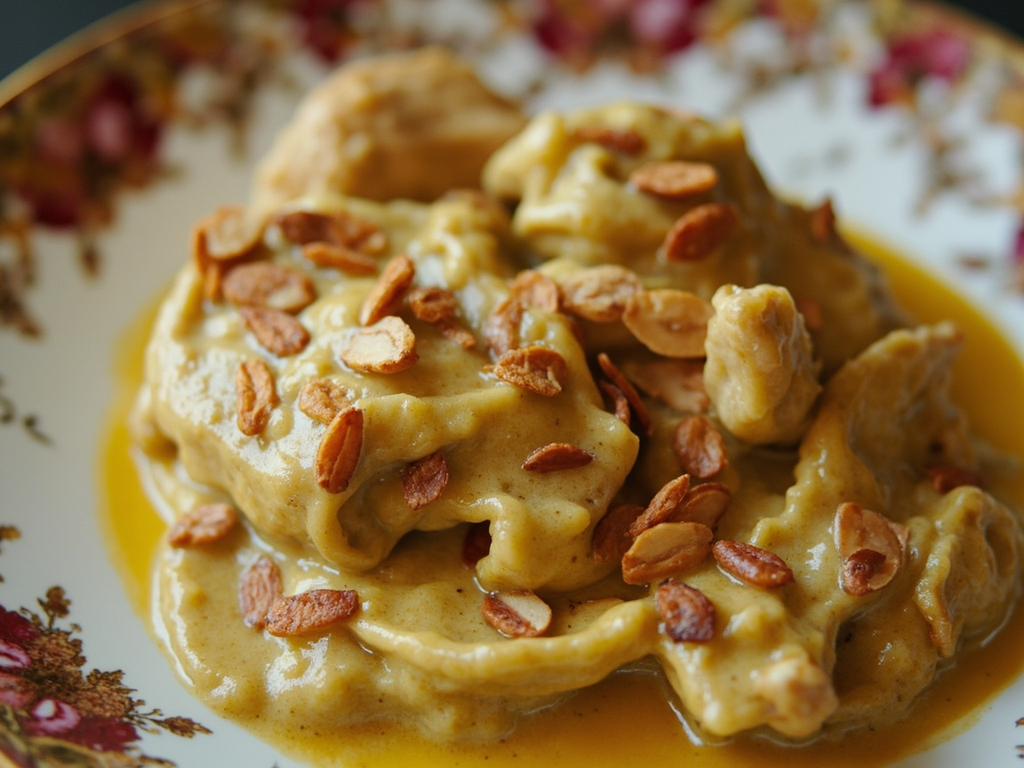
The contemporary twist : Add a touch of grated apple and a few toasted flaked almonds — a 'club' variant inherited from Victorian messes — for a sweet and crunchy note.
George Everest · Charactorium