 flip
flipOysters with champagne, post-theatre supper
Oysters with champagne, post-theatre supper
Why this dish? After his theatrical triumphs, Wilde supped at grand London establishments like the Café Royal or Willis's Rooms. He loved seafood and considered champagne the most civilized drink: oysters and champagne were the supper of the dandy in his glory.
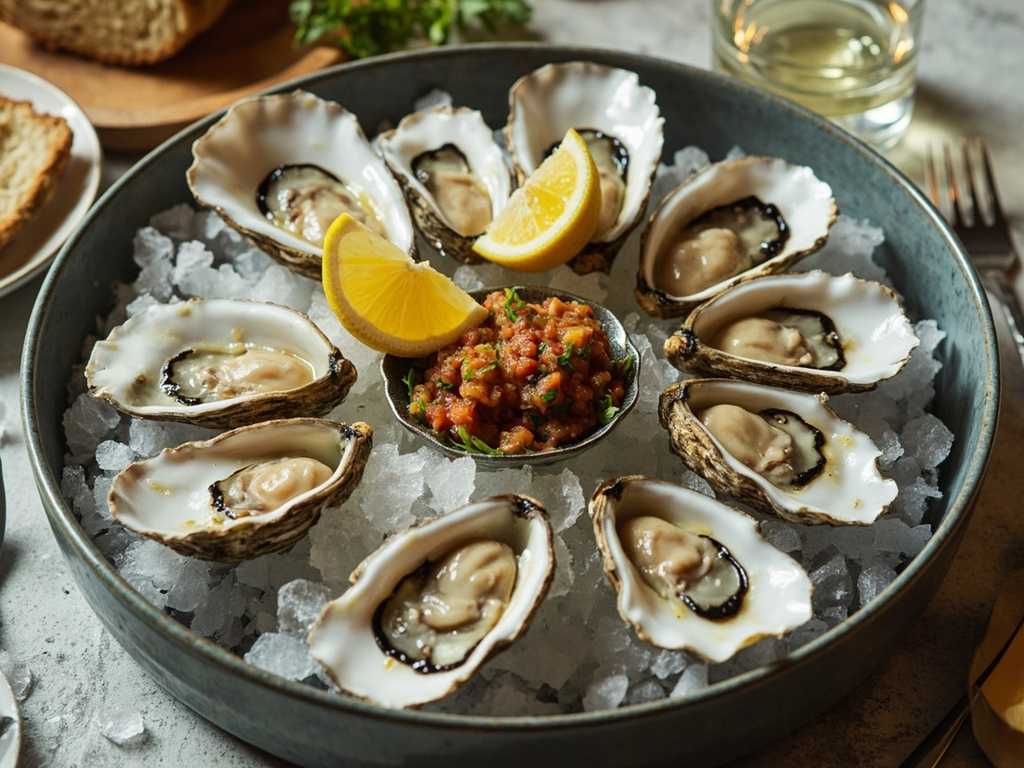
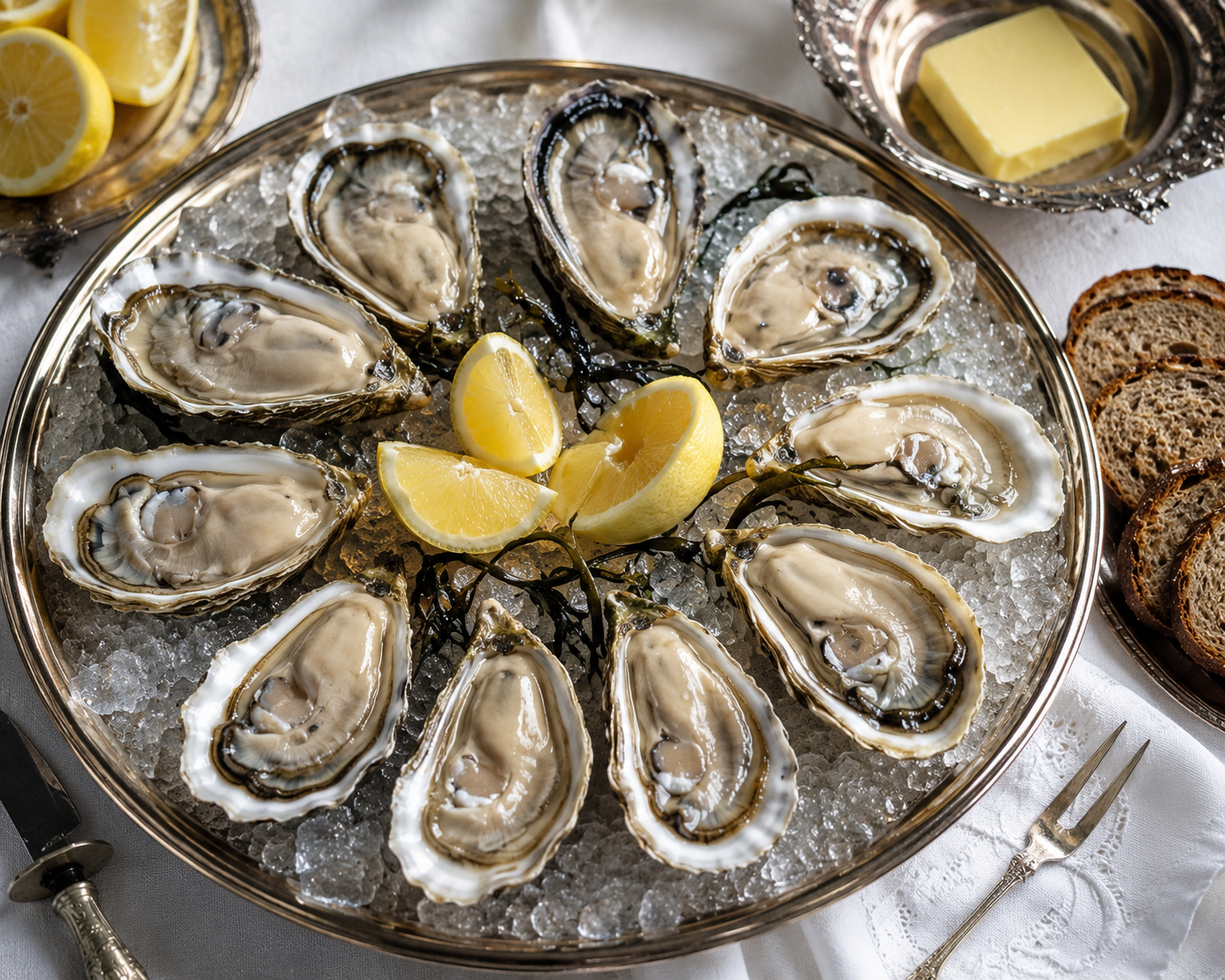
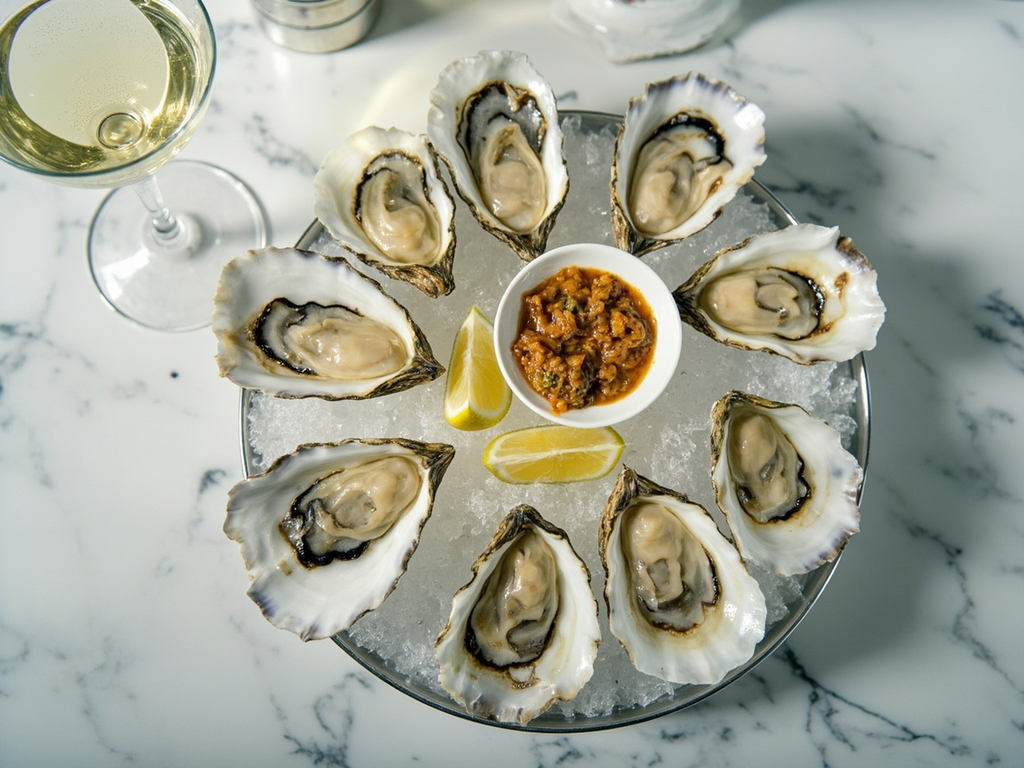
Raw oysters opened and served on a bed of crushed ice, accompanied by lemon wedges, brown bread and butter, and a well-chilled brut champagne. A touch of mignonette (shallot in vinegar) for those who wish. Luxury in its simplest form: iodine, sea salt, bubbles.
The curtain down, when the whole city believes you a genius, there is only one thing left: to order oysters and champagne, for success, like the oyster, is best enjoyed cold. I resist nothing, you know, least of all a dozen Whitstraights lying on their ice. Squeeze a little lemon, drink dry, and remember that moderation is a fatal thing — nothing succeeds like excess. Champagne, my dear, is the only wine that leaves you still witty after the third glass.
- •Whitstable or Colchester oysters — a dozen per person (star)
- •Brut champagne — one well-chilled bottle (signature drink)
- •Lemon — a few wedges (acidity)
- •Shallot and wine vinegar — for mignonnette (condiment)
- •Brown bread and butter — as desired (accompaniment)
Oysters with champagne, post-theatre supper
Raw oysters opened and served on a bed of crushed ice, accompanied by lemon wedges, brown bread and butter, and a well-chilled brut champagne. A touch of mignonette (shallot in vinegar) for those who wish. Luxury in its simplest form: iodine, sea salt, bubbles.
Why this dish? After his theatrical triumphs, Wilde supped at grand London establishments like the Café Royal or Willis's Rooms. He loved seafood and considered champagne the most civilized drink: oysters and champagne were the supper of the dandy in his glory.
The curtain down, when the whole city believes you a genius, there is only one thing left: to order oysters and champagne, for success, like the oyster, is best enjoyed cold. I resist nothing, you know, least of all a dozen Whitstraights lying on their ice. Squeeze a little lemon, drink dry, and remember that moderation is a fatal thing — nothing succeeds like excess. Champagne, my dear, is the only wine that leaves you still witty after the third glass.
Ingredients (period version)
- Whitstable or Colchester oysters — a dozen per person (star)
- Brut champagne — one well-chilled bottle (signature drink)
- Lemon — a few wedges (acidity)
- Shallot and wine vinegar — for mignonnette (condiment)
- Brown bread and butter — as desired (accompaniment)
Ingredients
- Fresh oysters — 12 per person (star)
- Brut champagne (or crémant) — 1 bottle (signature drink)
- Lemon — 2 (acidity)
- Shallot — 1 (mignonnette)
- Red wine vinegar — 3 tbsp (mignonnette)
- Rye bread and demi-sel butter — a few slices (accompaniment)
- Crushed ice — 1 large bowl (presentation)
Method
- Chill the champagne 2 hours ahead and prepare a large dish of crushed ice.
- Finely mince the shallot, mix with the vinegar: this is the mignonnette. Refrigerate.
- Open the oysters at the last moment, using an oyster knife, keeping their liquor; detach the muscle.
- Arrange them on the ice, add lemon wedges and a small bowl of mignonnette.
- Serve immediately with the brown bread and butter, and the well-chilled champagne.
How it was made : In Victorian times, the oyster was first a popular food, abundant and cheap, before overfishing made it a luxury by the end of the century. The post-theatre supper, served à la russe, remained light: seafood, cold poultry, entremets. Opening and serving live on ice was already the rule.
The contemporary twist : A mignonnette with cider vinegar and yuzu zest, and the bread grilled and rubbed with garlic: the briny freshness lifted by a contemporary accent.
Sources : Auguste Escoffier, Le Guide culinaire, 1903 · Richard Ellmann, Oscar Wilde, 1987
Oscar Wilde · Charactorium