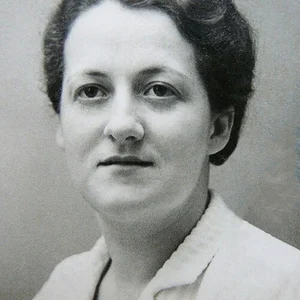

A French ethnologist specializing in the Berber societies of Algeria, Germaine Tillion joined the Resistance in 1940 before being deported to Ravensbrück. A survivor and tireless witness, she dedicated her entire life to human rights and understanding between peoples.
Germaine Tillion(1907 — 2008)
Germaine Tillion
France
9 min read
Frequently asked questions
Key Facts
- 1907: born in Allègre (Haute-Loire)
- 1934–1940: fieldwork in the Aurès region (Algeria) under the direction of Marcel Mauss
- 1940–1942: co-founded the Musée de l'Homme Resistance network
- 1943–1945: deported to the Ravensbrück concentration camp
- 2015: inducted into the Panthéon alongside Jean Zay
Works & Achievements
A foundational testimony about the Ravensbrück concentration camp, written immediately after the Liberation. Germaine Tillion brings her ethnologist's rigor to bear on an analysis of the Nazi concentration camp system, producing both an indispensable work of memory and a scientific document on organized barbarism.
A one-act operetta written clandestinely inside the Ravensbrück camp, weaving together dark humor, lyrical parody, and a denunciation of the horror of the concentration camp system. This exceptional text, secretly performed by fellow prisoners, stands as an act of cultural and moral resistance of rare intensity.
A lucid and courageous analysis of the situation in Algeria during the war of independence, denouncing the impoverishment of rural populations and calling for a negotiated political solution. A text that earned its author death threats from supporters of French Algeria.
A major essay on the Algerian War in which Germaine Tillion argues that the French and Algerians are bound by a shared destiny. She makes the case for dialogue and mutual understanding against the deadly logic of violence and identity-based retreat.
An autobiographical account of her fieldwork years in Algeria in the 1930s, blending personal memories, reflections on ethnological method, and vivid portraits of the Berber populations of the Aurès mountains she studied and came to love.
A scholarly synthesis of her ethnological research on the Berbers of the Aurès, representing the culmination of her fieldwork missions carried out between 1934 and 1940. A major and lasting contribution to the ethnology of the Maghreb and to the understanding of Berber societies.
Anecdotes
At Ravensbrück, despite the inhumane conditions of the camp, Germaine Tillion secretly wrote an operetta titled *Le Verfügbar aux Enfers*, which she had performed by her fellow prisoners to keep up their morale. The work, written on scraps of paper obtained clandestinely, blended dark humor with a denunciation of Nazi atrocities — at the risk of her own life.
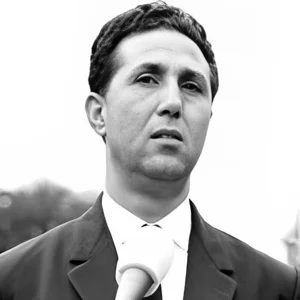
In 1957, at the height of the Battle of Algiers, Germaine Tillion arranged a clandestine meeting with Yacef Saâdi, the FLN's military commander responsible for bombings in the city. She negotiated directly with him a moratorium on attacks against civilians in exchange for a halt to the executions of Algerian death-row prisoners, saving many lives on both sides.
As early as the summer of 1940, just weeks after the armistice, Germaine Tillion was among the first French women to take up active resistance. She joined and helped organize the Musée de l'Homme network, one of the very first underground resistance networks in France, alongside her colleagues — ethnologists and librarians.
Her mother, Émilie Tillion, was deported to Ravensbrück alongside her and died there in a gas chamber in March 1945. Germaine did not learn of her death until after the Liberation. This personal grief strengthened her lifelong commitment to honoring the memory of victims and fighting every form of barbarity.
In 2015, Germaine Tillion was inducted into the Panthéon alongside Geneviève de Gaulle-Anthonioz, Jean Zay, and Pierre Brossolette, in a ceremony organized by President François Hollande. She joined Marie Curie as one of the very few women to rest in that place, sealing a lifetime of exceptional dedication to France and to humanity.
Primary Sources
We were therefore classified as Verfügbar — available — meaning we had not yet been assigned to an external work Kommando. This was the group most exposed to abuse and selections.
I am a Verfügbar, a rather little-known creature, who lives — or rather, who barely survives — in the marshes of central Europe, whose unusual habits deserve thorough study.
Two peoples confronting each other in this war are two peoples equally facing mortal danger, their fates bound together whether they wish it or not.
Misery and terror have descended upon this country together. The growing impoverishment of Algeria's rural populations creates the conditions for every form of despair and violence.
I was twenty-seven years old when I left for Algeria for the first time. I wanted to understand men and women whom history had placed on the margins of several worlds.
Key Places
Birthplace of Germaine Tillion, born on July 30, 1907. She grew up in a cultivated family where her mother Émilie, an art historian, fostered her intellectual curiosity and passion for sharing knowledge from an early age.
A mountainous region in eastern Algeria where Germaine Tillion conducted her ethnological fieldwork from 1934 to 1940, living among the Chaoui Berber communities. This research territory formed the scientific core of her life's work and shaped her deep attachment to Algeria and its people.
A Nazi concentration camp in Brandenburg, 90 km north of Berlin, where Germaine Tillion was deported from 1943 to 1945. There she lost her mother, secretly wrote her operetta, and developed a rigorous analysis of the concentration camp system.
The scientific institution at the Trocadéro where Germaine Tillion worked before the war, and where one of the first major French Resistance networks — the "Réseau du Musée de l'Homme" — began forming as early as 1940, with her active contribution to its organization.
The capital of Algeria, where Germaine Tillion played an active role during the war of independence — most notably in her secret meeting with Yacef Saâdi in 1957 during the Battle of Algiers — and through her work supporting the Social Centres.
The republican monument where Germaine Tillion was inducted on May 27, 2015, in recognition of a lifetime devoted to truth and human rights. She is one of the few women to rest among the great figures honored by the French Republic.
Typical Objects

A notebook in which Germaine Tillion recorded her observations on the Berber societies of the Aurès: family structures, customs, languages, and pastoral economy. These notebooks were the raw material of her scientific work and the foundation of her career as an ethnologist.

At Ravensbrück, Germaine Tillion wrote her operetta on tiny scraps of paper obtained secretly, hidden in clothing or shoes to escape the guards' searches. These writings of survival became an exceptional literary and historical testimony.

The uniform imposed on the women prisoners of the Ravensbrück camp, consisting of a blue-and-grey striped dress bearing a coloured triangle indicating the category of detention. Wearing this uniform erased individual identity and gave physical form to the dehumanisation sought by the Nazi regime.

The central working tool of the post-war intellectual, on which Germaine Tillion drafted her reports, books, testimonies, and correspondence. She wore out several machines over her decades of tireless activity.

During her ethnological fieldwork in the Aurès in the 1930s, Germaine Tillion photographed the life of the Berber populations: dwellings, rituals, costumes, and everyday scenes. These photographic archives complemented her notes and gave a face to the peoples she studied.

Used by the Musée de l'Homme network to pick up BBC broadcasts and pass information to resistance fighters. The mere possession of such a device was punishable by deportation or death under the Nazi Occupation.
School Curriculum
Vocabulary & Tags
Key Vocabulary
Daily Life
Morning
Germaine Tillion rose early, shaped by the discipline of fieldwork and the rigors of difficult years. She began her mornings by reading the press and academic works, before settling at her typewriter to advance her research, her testimonies, or her public stances. Intellectual regularity was, for her, a true way of life.
Afternoon
Afternoons were devoted to meetings, conferences, and her many associative and institutional commitments. Greatly in demand from deportee associations, human rights organizations, and academic institutions, she received colleagues, journalists, and students, always available to bear witness and pass on what she knew.
Evening
In the evenings, she read and replied to a dense correspondence she maintained with intellectuals, former deportees, and human rights activists around the world. She never went to bed without having reflected on a question close to her heart — whether the memory of Ravensbrück or the political situation in the Maghreb.
Food
Shaped by years of fieldwork in Algeria and marked by the deprivations of Ravensbrück, Germaine Tillion had a sober, simple relationship with food. She appreciated Mediterranean cuisine and meals shared in good company, seeing the table above all as a space for conversation and human exchange.
Clothing
Germaine Tillion dressed in a sober and functional manner, with no concern for ostentation — in keeping with her frank and straightforward personality. She readily wore practical outfits suited to her many travels, reserving elegance for official ceremonies and awards presentations.
Housing
She lived for many years in a modest Parisian apartment, surrounded by books, geographical maps, and ethnological documents accumulated over the decades. Her home reflected her intense intellectual life: stacked archives, field photographs on the walls, little superfluous luxury — the essentials in service of work and memory.
Historical Timeline
Period Vocabulary
Liens externes & ressources
Références
Œuvres
Ravensbrück
1946 (édition définitive 1988)
Le Verfügbar aux Enfers
1944 (écrit à Ravensbrück, publié 2005)
L'Algérie en 1957
1957
Les Ennemis complémentaires
1960
Il était une fois l'ethnographie
2000
L'Algérie aurésienne
2001