 flip
flipLentil Dal and Langar Roti
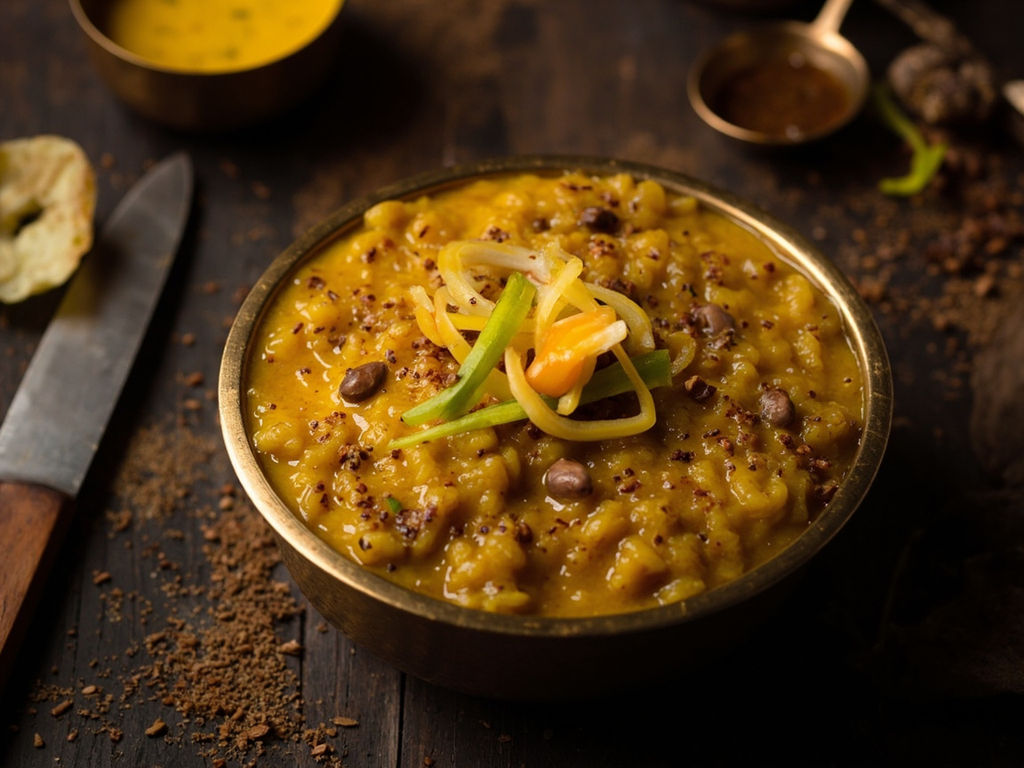
Lentil Dal and Langar Roti
Why this dish? At Kartarpur, where Nanak spent his last years cultivating the land, this dal-roti was served every day in the langar he had founded: the humblest food of Punjab, given equally to the Brahmin and the untouchable, the rich merchant and the hungry peasant.
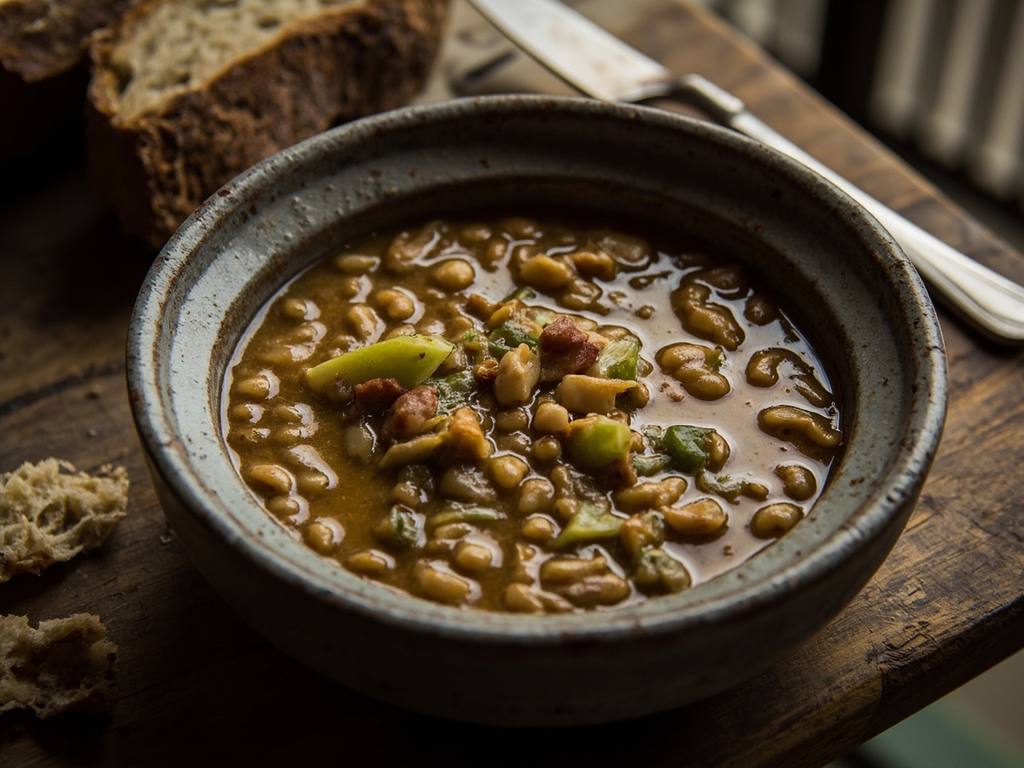
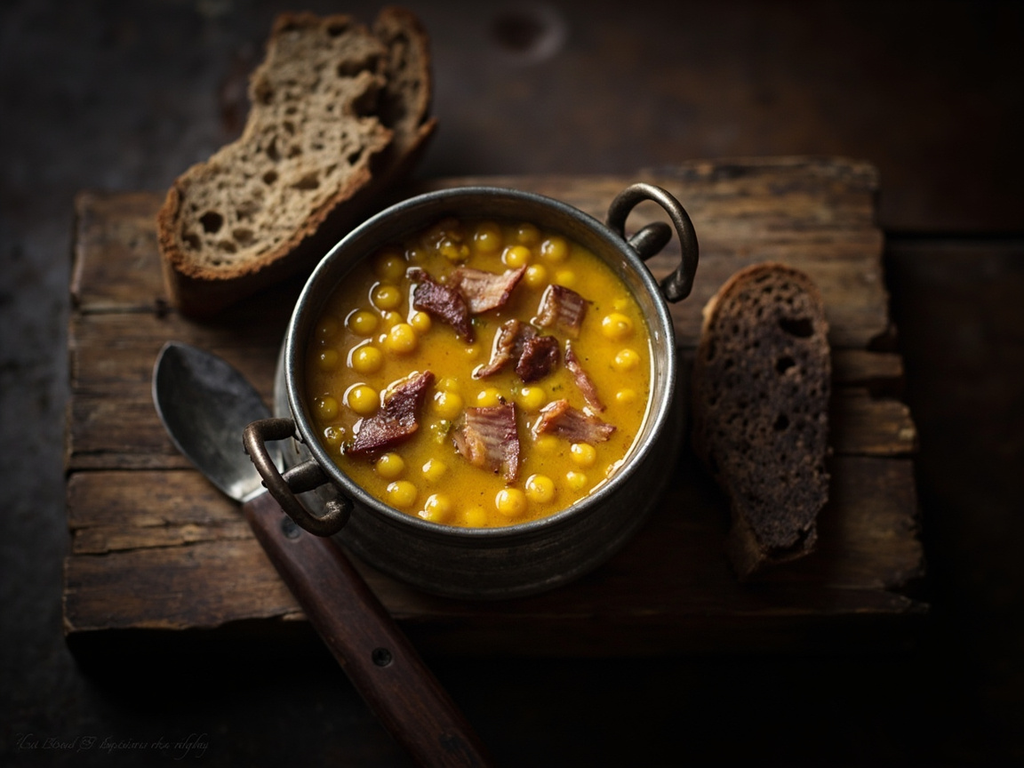
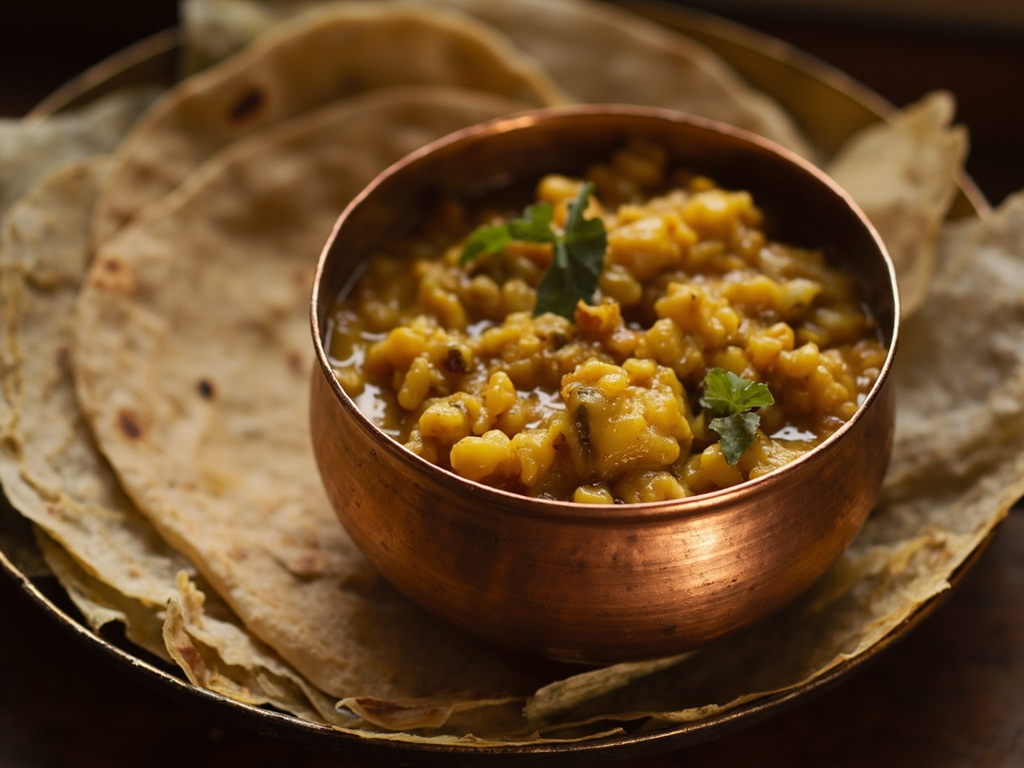
Split lentils simmered until velvety, perfumed with ginger, turmeric, and cumin, served with whole-wheat flatbreads cooked on the tava. The meal that sums up all of Nanak's teaching: simple, nourishing, shared.
Come, sit in the row with the others — here no one is above, no one is below, and the same ladle fills your bowl and mine. First soak the lentils in the morning, then let them melt over a low fire with a little fresh ginger and that powder the color of saffron that warms the belly. Knead your wheat flour, roll the thin flatbread between your palms, and place it on the hot iron until it puffs like a breath. Eat remembering the One who has but One Name, work with your hands, and give food before you fill yourself — that is all the wisdom I have to offer you.
- •Split lentils (masoor or moong dal) — a good measure (nourishing base)
- •Whole wheat flour (atta) — as needed for flatbreads (bread of the meal)
- •Fresh ginger — a grated piece (warmth and digestion)
- •Fresh or dried turmeric — a pinch (color, virtue)
- •Cumin — a few seeds (fragrance)
- •Ghee (clarified butter) — a spoonful (binder, richness)
- •Rock salt — to taste (seasoning)
Lentil Dal and Langar Roti
Split lentils simmered until velvety, perfumed with ginger, turmeric, and cumin, served with whole-wheat flatbreads cooked on the tava. The meal that sums up all of Nanak's teaching: simple, nourishing, shared.
Why this dish? At Kartarpur, where Nanak spent his last years cultivating the land, this dal-roti was served every day in the langar he had founded: the humblest food of Punjab, given equally to the Brahmin and the untouchable, the rich merchant and the hungry peasant.
Come, sit in the row with the others — here no one is above, no one is below, and the same ladle fills your bowl and mine. First soak the lentils in the morning, then let them melt over a low fire with a little fresh ginger and that powder the color of saffron that warms the belly. Knead your wheat flour, roll the thin flatbread between your palms, and place it on the hot iron until it puffs like a breath. Eat remembering the One who has but One Name, work with your hands, and give food before you fill yourself — that is all the wisdom I have to offer you.
Ingredients (period version)
- Split lentils (masoor or moong dal) — a good measure (nourishing base)
- Whole wheat flour (atta) — as needed for flatbreads (bread of the meal)
- Fresh ginger — a grated piece (warmth and digestion)
- Fresh or dried turmeric — a pinch (color, virtue)
- Cumin — a few seeds (fragrance)
- Ghee (clarified butter) — a spoonful (binder, richness)
- Rock salt — to taste (seasoning)
Ingredients
- Red lentils (masoor) or split mung beans — 200 g (base)
- Whole wheat flour (atta or T110) — 250 g (flatbreads)
- Fresh ginger — 2 cm, grated (warmth)
- Turmeric powder — 1/2 tsp (color)
- Cumin seeds — 1 tsp (fragrance)
- Ghee — 2 tbsp (tarka and flatbreads)
- Salt — 1 tsp (seasoning)
- Water — 750 ml + water for kneading (cooking)
Method
- Rinse the lentils, cover with water (3 times their volume) with turmeric and ginger, bring to a boil then simmer for 25-30 minutes until they break down. Salt at the end of cooking.
- Prepare the tarka: heat ghee until foaming, add cumin seeds until they crackle and release fragrance, then pour over the dal.
- For the roti: knead the flour with warm water and a pinch of salt into a soft dough, let rest 20 minutes.
- Divide into balls, roll out thinly, cook on a very hot cast-iron griddle for 30 seconds per side, then hold directly over flame for a few seconds to puff.
- Serve the dal and flatbreads together, all at once, with a drizzle of ghee.
How it was made : Wheat and legumes have been the foundation of Punjabi diet since antiquity. In Nanak's time, cooking was done on an iron tava placed over a fire of dried cow dung, and the dal simmered in an earthen pot. The absence of chili (unknown in India before the Portuguese) means all heat came from ginger, long pepper, and dried ginger (saunth).
The contemporary twist : Serve the dal in a small copper bowl placed on a banana leaf, flatbread folded beside it — a *pangat* plate that reminds us that the humblest meal can be the most beautiful.
Guru Nanak · Charactorium