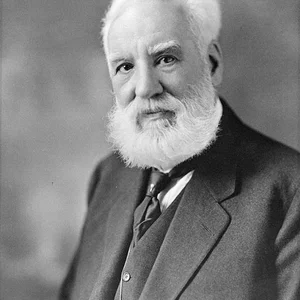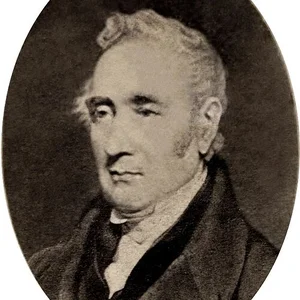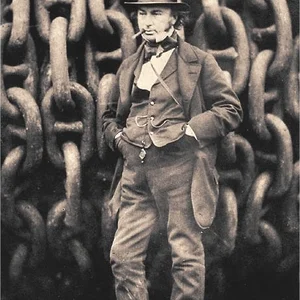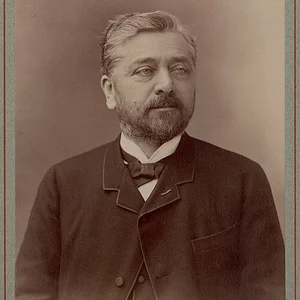

French engineer and entrepreneur (1832–1923), Gustave Eiffel is famous for building the tower that bears his name, erected for the 1889 World's Fair. A pioneer of iron architecture, he also designed the internal framework of the Statue of Liberty.
Gustave Eiffel(1832 — 1923)
Gustave Eiffel
France
9 min read
Frequently asked questions
Famous Quotes
« The tower will have its own beauty.»
Key Facts
- 1832: born in Dijon
- 1884: designs the internal iron framework of the Statue of Liberty
- 1889: completion of the Eiffel Tower for the Paris World's Fair
- 1893: convicted in the Panama Canal scandal
- 1923: dies in Paris
Works & Achievements
Eiffel's first major metal bridge, featuring a 160-metre span arch crossing the Douro River. It established the international reputation of the Eiffel company and set a world record for span length at the time of its construction.
A railway bridge standing 122 metres above the Truyère river, at the time the highest in the world. This viaduct demonstrated Eiffel's mastery of long metal spans in challenging natural environments.
Eiffel designed the iron skeleton supporting the copper skin of Bartholdi's statue. His flexible suspension system was revolutionary, and has allowed the statue to withstand the elements for more than a century.
A 300-metre structure built in 26 months for the 1889 World's Fair, the tower held the title of the world's tallest structure for 41 years and became a global symbol of French industrial power.
Eiffel was commissioned by Ferdinand de Lesseps to design the locks for the Panama Canal. The project came to a halt when the Company went bankrupt in 1889, drawing Eiffel into the judicial scandal known as the "Panama Affair."
France's first aerodynamic wind tunnel, built by Eiffel at the foot of his tower following his turn to scientific research. It served the pioneering work of early aviation researchers and was one of the first facilities in the world dedicated to the systematic study of air resistance.
Anecdotes
Even before its inauguration, the Eiffel Tower sparked a resounding controversy: in 1887, three hundred artists and intellectuals signed a petition demanding its demolition, calling it a “hollow sheet-metal candle” and a “colossal eyesore.” Among the signatories were illustrious names such as Guy de Maupassant, Dumas fils, and Charles Gounod. Eiffel publicly defended his project by asserting that engineers had “their own aesthetic.”
The tower was originally set to be demolished twenty years after its construction, in 1909. It was its wireless telegraphy antenna that saved it: installed at the summit in 1898, it allowed enemy messages to be intercepted during the First World War and provided decisive military communications, making the structure militarily indispensable.
After the Panama scandal, Eiffel reinvented himself as a scientific researcher. He transformed his tower into a laboratory: he installed meteorological instruments there, conducted experiments on air resistance, and in 1909 had France’s first aerodynamic wind tunnel built at the very foot of the tower, which went on to serve the pioneers of aviation.
Eiffel designed the internal framework of the Statue of Liberty, inaugurated in 1886 in New York. He devised an ingenious system of a central iron pylon and flexible struts that allowed the copper skin to expand and withstand the violent winds of New York Harbor without deforming — a mechanical tour de force long overlooked by the general public.
During the tower’s construction in 1888, the workers went on strike to demand a pay raise, citing the exceptional risks of working at height. Eiffel negotiated with them directly and partially met their demands — a remarkable gesture for the era. In the end, the construction claimed no lives on the worksite, which was extraordinary for a project of this scale.
Primary Sources
The wind resistance calculation was carried out with the greatest care. The Tower will be of unshakeable solidity, and the wind, even the most violent ever observed in Paris, will never be able to cause it to sway by more than a few centimetres.
We come, writers, painters, sculptors, architects, passionate admirers of the hitherto untouched beauty of Paris, to protest with all our strength and all our indignation, in the name of slighted French taste, in the name of threatened French art and history, against the erection in the very heart of our capital of the useless and monstrous Eiffel Tower.
For my part, I believe the Tower will have its own beauty. Because we are engineers, does anyone think that beauty is of no concern to us in our constructions, and that while we strive to build solidly and durably, we do not also strive to build elegantly?
The resistances measured on inclined planes and curved surfaces confirm the laws established by theory and provide valuable data for calculating the sails and wings of aircraft.
Key Places
Birthplace of Gustave Eiffel, born on December 15, 1832. It was in this Burgundian city that he grew up before moving to Paris to study at the École Centrale.
A masterpiece built for the 1889 World's Fair, the 300-meter tower was the tallest structure in the world for 41 years. Eiffel had a private apartment fitted out at its summit, where he received guests including Thomas Edison.
A railway bridge completed in 1884 over the Truyère river, standing 122 meters high — at the time the tallest in the world. It was Eiffel's greatest technical achievement before the tower and remains a landmark of French iron engineering.
Eiffel designed the iron internal framework of this colossal monument, inaugurated in 1886. His system of a central pylon and flexible cables allowed the copper skin to move without cracking under the sea winds.
It was in these workshops on the outskirts of Paris that all the metal components of the Eiffel Tower were manufactured and pre-assembled, with precision down to a tenth of a millimeter. Each piece was numbered before delivery to the Champ-de-Mars.
Typical Objects

An indispensable analog calculation instrument for 19th-century engineers before the age of calculators. Eiffel and his colleagues used it to quickly compute material resistance and load calculations for metal structures.

The Eiffel Tower required more than 2.5 million rivets. These metal rods, heated until red-hot and flattened with a hammer, held together the 18,038 pieces of puddled iron — a technique that demanded meticulous organization on the construction site.

Eiffel's offices produced thousands of detailed drawings for the tower, with each component hand-drawn and precisely dimensioned. The blueprints were then sent to the workshops in Levallois-Perret for fabrication before being transported to the building site.

As early as 1889, Eiffel equipped the top of the tower with meteorological instruments that continuously recorded atmospheric pressure and temperature. The tower thus became one of the first high-altitude scientific observation stations in Europe.

A sealed, pressurized chamber used to work on the submerged foundations of bridge piers. Eiffel made extensive use of them on his railway viaduct construction sites, ensuring the stability of foundations in waterlogged conditions.

The emblematic headwear of the 19th-century industrial bourgeoisie, which Eiffel wore at official ceremonies and inaugurations. On construction sites, he would swap it for a more practical bowler hat, as seen in many photographs of the era.
School Curriculum
Vocabulary & Tags
Key Vocabulary
Daily Life
Morning
Eiffel began his day early at his offices on the rue Rabelais in Paris, where his engineers and draftsmen prepared blueprints for ongoing construction projects. He reviewed technical reports from his site managers spread across Europe and personally verified structural calculations, placing paramount importance on mathematical rigor.
Afternoon
In the afternoon, Eiffel frequently visited his workshops in Levallois-Perret to oversee the fabrication of metal components and ensure the precision of assemblies. During major construction phases — such as the building of the tower — he was present daily at the Champ-de-Mars, monitoring progress and resolving unexpected technical problems on the spot.
Evening
In the evenings, Eiffel readily entertained fellow engineers, industrialists, and political figures at his Parisian apartment. A prominent figure of the upper bourgeoisie under the Third Republic, he moved in business circles and learned societies such as the Société des ingénieurs civils de France. After the Panama scandal, he devoted his evenings to personal scientific research.
Food
Like the industrial bourgeoisie of his era, Eiffel enjoyed a hearty and refined diet: meats, vegetables, and Burgundy wines, of which he was particularly fond as a native of Dijon. Business meals at grand Parisian restaurants were an integral part of his professional life and networking.
Clothing
Eiffel wore the formal attire of the prosperous entrepreneur of the Belle Époque: a frock coat or morning coat in dark wool, waistcoat, lavallière cravat, and top hat for ceremonies and official visits. On construction sites, he swapped the top hat for a bowler hat or cap better suited to fieldwork.
Housing
Eiffel lived in a fine upper-bourgeois apartment on the rue Rabelais, in the 8th arrondissement of Paris, close to his company's headquarters. He had a private apartment fitted out on the third floor of the tower to receive distinguished guests — Thomas Edison was notably hosted there during his visit in 1889. He also owned a property in Sèvres.
Historical Timeline
Period Vocabulary
Liens externes & ressources
Références
Œuvres
Pont Maria Pia, Porto (Portugal)
1877
Viaduc de Garabit, Cantal
1884
Charpente intérieure de la Statue de la Liberté
1884
Tour Eiffel, Paris
1889
Écluses du canal de Panama
1887
Soufflerie aérodynamique du Champ-de-Mars
1909